The World is Running Out of Water
Around Half of Today’s World Population is More Likely to Experience an Extreme Water Crisis, in the Course of Their Lives
Our earth is a blue planet. There is no shortage of water on this planet. There are 326 million trillion gallons of water in the world. 18 zeros after 326 (326,000,000,000,000,000,000,000). Such a large number cannot be expressed in millions or crores. This enormous amount of water is in the form of liquids in various oceans of the world, frozen in some areas, and the form of water vapor in the air.
Although there is so much water on our planet, the fundamental problem is that 97% of this water is saline, which is not drinkable. The remaining 2% of freshwater is frozen in the form of ice. And the entire human race survives on only 1% liquid freshwater. This water is also running out quickly. At the same time, we have a habit of wasting water. In this article, we will learn about the world’s clean water crisis.
Water Crisis in the World -
Earth’s water is running out, meaning one percent of fresh water is running out. Most of this freshwater is underground, which is difficult to extract. So people have always settled in areas where surface water is available, such as rivers or lakes. Even today, 90% of the world’s people live in regions that have freshwater systems within ten kilometers.
The number of people in the world is increasing day by day. At the same time, the demand for water is increasing manifold. In the last hundred years alone, the world’s water use has increased sevenfold. Water is being extracted from the ground to meet the immense water demand in urban areas. The water that is under the earth is called aquifers or groundwater. There are many harmful aspects of extracting water from the ground. This extracting can cause landslides in any area.
In some places, Mexico City is subsiding as much as 9 inches per year. In just ten years, northern India has lost 29 trillion gallons of groundwater. Because of high water consumption in all parts of the world, groundwater will deplete in a few years. Rainfall and snowfall have decreased at an alarming rate. As a result, rivers and lakes in all parts of the world are drying up. Because of climate change, the dry season has been going on longer than usual in many areas.
Value of Water -
At present, seven out of ten households in the world have a water connection. Because of getting water so easily, we have forgotten that human society has had to wait for thousands of years to get water from the tap. All the civilizations of the past developed around the source of water.
Many settlements have been destroyed in the past and now because of a lack of water. Conflicts have already arisen in various regions over water. Water was one reason for the war in Darfur, Sudan. The 2006 drought also had a profound effect on the Syrian civil war. By 2040, it is expected that not enough water will be available to meet the needs of people around the world.
Investment bank Goldman Sachs predicts that water will become more expensive than petroleum in the 21st century. Many private companies have already started stocking vast amounts of water, hoping to sell at higher prices.
Cape Town, one of the largest cities in the world, was the first to run out of water. After July 9, 2018, the city’s water supply was to be cut off forever. This day of running out of the water was called Day Zero. The issue came up for discussion just 92 days before Day Zero. Since then, everyone in Cape Town has consciously consumed water. Between 2014 and 2018, Cape Town residents were able to reduce their water consumption by more than half.
Not only Cape Town but also London, Tokyo, Istanbul, Melbourne, Sao Paulo, Barcelona, Dhaka, Jakarta, Beijing, Mexico City, and many other cities will soon have a water crisis. Even all the cities will run out of water one day. Now it remains to be seen who will run out of the water first.
Use of Water -
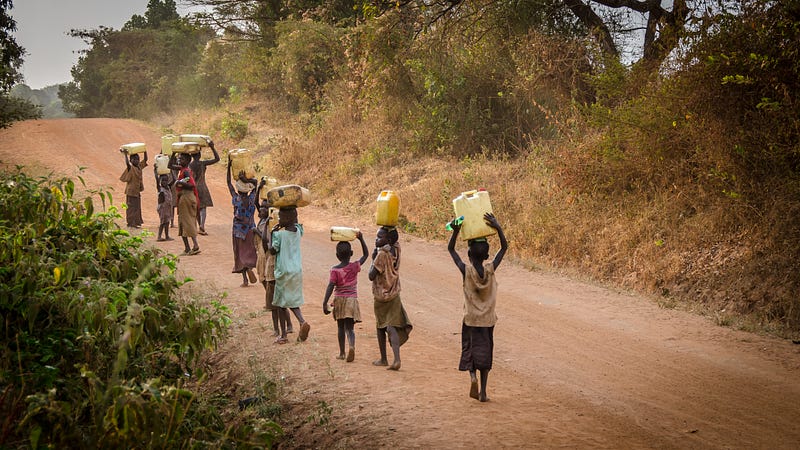
If the water crisis had ended here, there would have been no problem. The actual problem is how we use one percent of the world’s water. People should drink about four liters of water every day. Besides, brushing teeth, bathing, washing hands, cooking food, and washing dishes consume over fifty liters of water per person. Once you flush the toilet, five to eight liters of water go away. Only eight percent of the world’s annual water consumption is spent on daily work.
Most of the water is used in agriculture and industry. About 70% of the world’s water is used for irrigation, and 22% for the industry. Different countries cultivate agricultural products in their driest regions, where the demand for water is much higher. Most of the world’s agricultural lands are irrigated very inefficiently. The field is submerged in water by turning on the waterline.
If we understood the value of water, then water would not be wasted in this way. Now let’s look at the industrial factory. It takes 28 liters of water in different steps to make only 600 ml of Coca-Cola. And it takes 7 liters of water to make a bottle for it.
It takes 130 liters of water to make a cup of coffee. You might think it takes one cup of water to make a cup of coffee. But no, that’s the amount of water that is consumed from growing coffee on land to processing in the factory.
It takes 2500 liters of water to make a T-shirt. In this way, a tremendous amount of water is used in every industrial plant. Industrial production is also growing to meet our growing demand. Since we have gotten used to enjoying more than we need, we have to pay the full price.
Water reserves and prices are not the same in all countries. Kuwait is the poorest country in the world in terms of per capita water, and Canada is the richest. Canada has ten thousand times more water than Kuwait.
In many states, the desalination process has doubled over the past decade to meet freshwater needs. But it has produced not even one percent of the amount of water we use in this process. It takes a lot of energy and money to desalinate seawater, which can never be a substitute for natural freshwater.
Conclusion -
We don’t realize the value of having water in our house today. Thousands of liters of water are wasted in many households because of water overflowing after filling water tanks. These waters seem to have no value. Think about it if you don’t have water in the house for just a day. You need to realize how precious water is and ensure its planned use before the water runs out.
Many of us may wonder what my problem is, even if the water runs out. They may think, “I won’t run out of the water to survive”. That idea is wrong. About half the people in the world today are more likely to see an extreme water crisis in their lifetime. Even if we do not suffer from water scarcity, our next generation will surely see a water crisis.