

The World In 2s — Wage Growth And Inflation
The Fed is willing to sacrifice the job market for lower inflation
Today’s episode of the The World In 2s is about wage growth or the lack thereof in inflation adjusted terms.
Pic 1: Where’s the real wage growth?
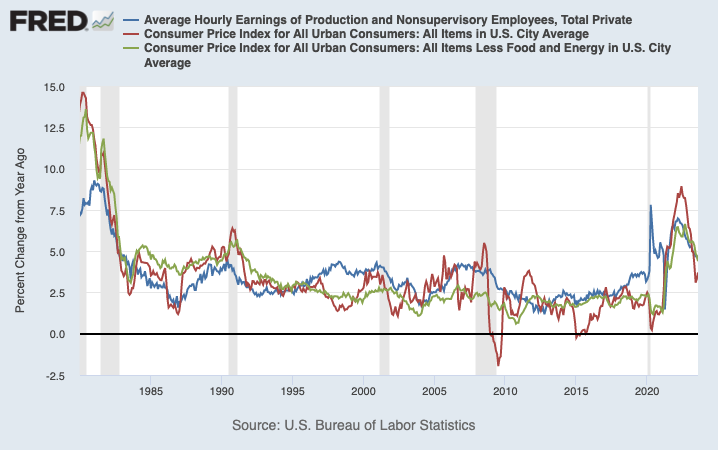
It makes sense that wage growth and inflation are correlated — when wage growth is high, companies’ costs rise, and those companies do their best to pass those increased costs back onto consumers via rising prices. Also, high wage growth tends to also be an indicator of a tight labor market and a fast growing economy — both drivers of aggregate demand and thus inflation. That’s why the Fed keeps indicating that there will be more rate increases to come. Until the labor market weakens further, central bankers maintain that they have no choice but to “stay vigilant.”
But looked at another way, normal people are being gaslighted into thinking that they’re the problem. Basically, policy makers are saying that it’s employees’ faults that prices are rising — people are just getting paid too much. And the only way to keep prices down is to either pay everyone less or to fire a bunch of people. But if you stare hard at the above graph, wage growth (the blue line) often lags behind both inflation (red line) and core inflation (green line). Which means that real wage growth is negligible and often negative (i.e. people are losing buying power) — and the second that positive real wage growth comes around, the Fed slams down the interest rate hammer.
Pic 2: There is no consistent real wage growth thanks to Fed monetary policy
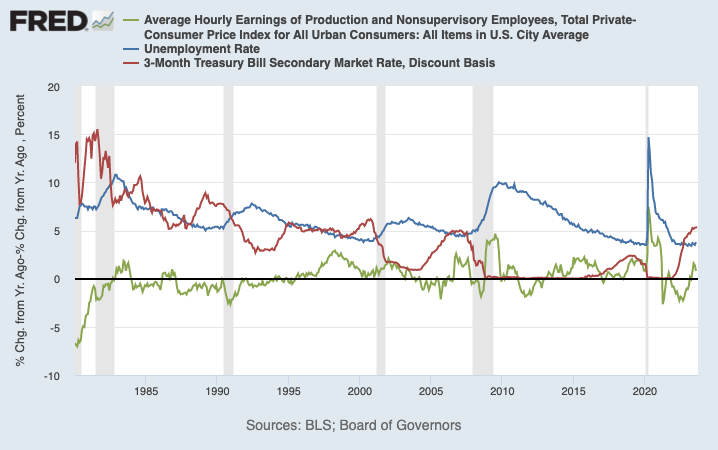
In the above chart, notice two things. First, the green line (real wage growth, a.k.a. wage growth less inflation) is often below zero and some of its largest positive spikes are during recessions when unemployment is spiking and inflation is either zero or negative. Real wage growth during deflationary times is not really growth because many people end up fired.
Second, anytime that real wage growth (green line) enjoys a short period of being positive, as long as we’re not in a recession (gray bars), the Fed raises interest rates (red line) not long after, ultimately producing a recession. Yes, the rate rises are to combat rising levels of inflation but that doesn’t change the unfortunate fact that the preferred cure for inflation kills real wage growth.
Unfortunately, raising rates to fight inflation is easy relative to the alternatives and policy makers prefer easy. It would be much harder to find supply-side solutions such as increasing the supply of housing and so they don’t (also because doing so would hurt asset prices and the wealthy and connected hold the most assets). And so normal people are used as cannon fodder in the war against inflation.


