
The Women In Caliphate
A quick review
*spoiler alert*
A Swedish series called Caliphate is out on Netflix, and it revolves around an impending ISIS attack on Sweden. The drama- thriller depicts what life is like under the Caliphate in Syria and follows the victims' and perpetrators' stories on both sides of the war.
It is incredibly layered and well done. I wanted to analyze the women who appeared in the series to make sense of the ongoing crisis in Sweden and Syria and why my experience growing up in the Middle East- was so different.
The series follows a group of female students who escape from Sweden to join the Caliphate; and a mother inside the Caliphate trying to go back home to Sweden. The irony is insane. The inter-generational trauma is deep. And everyone’s experience is different.
It begs the question: How do people become radicalized? Why? How did Western women in Sweden end up in the Caliphate or women? Do they get to come home now? Who is to blame? Are they to blame alone? What do we do with this humanitarian crisis?
Pervin is the woman inside the Caliphate trying to get out. The sad part is, she is second-generation Swedish, she sort of went to Syria out of her own will. Now people will call me biased for saying sort of, but let me explain.
Her options were really limited. Like, really limited.
Suleika is a high school student who lives in Sweden and comes from a fairly progressive Muslim family. You could say her parents are your typical first-generation Arab immigrants who are doing a good job assimilating into Swedish society. While it was seemingly easy for her parents to assimilate, it’s not for Suleika, even though you would assume immigrating young is what makes people assimilate.
Suleika faces racism in school, and that is what makes her hold onto her roots even more. She knows that she will graduate and get a low-paying job because of where she comes from. She is definitely having an identity crisis and feels out of place. But she is defiant about her situation.
Then comes along the older charming student assistant, Ibbe, who works at her school, and finally, someone makes Suleika feel like she belongs. Slowly, you see Ibbe sell her this magical dream of how amazing life is back in the Caliphate. And how serving them guarantees you eternal paradise.
Maybe going back home is not such a bad idea; people hate her in Sweden anyway- That’s how Suleika gets caught up, or at least that’s what I think.
Kerima is the sweet, impressionable Swedish girl who comes from an abusive home. She also becomes entangled in the magical world of the Caliphate that Ibbe- the student counselor- is selling. He is kind, and he protects her from her violent father; he provides structure in her lost and lonely world. They become friends- a community- her, Ibbe, and Suleika.
She is promised eternal heaven. Friendship. Love. God. That’s how she becomes the main victim in the story; the suicide bomber. She believes she has nothing to lose in this life anyway. It’s really sad because Kerima is just a kid. I hate seeing young girls get used like that.
That's how Kerima falls into the trap.
Just as sad is Suleika’s younger sister, Lisha, who didn't make a big appearance during the show but, in the end, just wanted to be like her big sister.
Also, influenced by Ibbe, the same student counselor, Lisha is lured into the Caliphate with her older sister and their friend Kerima. But she is the only one who doesn’t escape the camp. It seems season two will revolve around her horrible fate inside the Caliphate. She’ll be married off immediately, I guess. That's literally what she is there for. It makes me sick.
A fourteen-year-old Swedish girl stuck inside the Caliphate. A second-generation Arab- Swede who doesn't even speak a word of Arabic. One with progressive Muslim parents. How did this happen? Why?
Agent Fatima reminded me of my cousin who lives in Sweden, in the same sense that they are both second-generation Arab- Swedes who completely assimilated into Swedish society. Agent Fatima is trying to uncover the bomb plot impending in Sweden through Pervin- the mother trying to escape the Caliphate.
Agent Fatima’s dilemma is that she gets it. She gets why Pervin went to Syria. She gets why Pervin had no choices. She gets that Pervin knows she made a mistake. She gets it because they are cut from the same cloth. But Pervin is now an asset for the Swedish government, and their priority is not to help her escape but to get as much information on ISIS.
It’s deep.
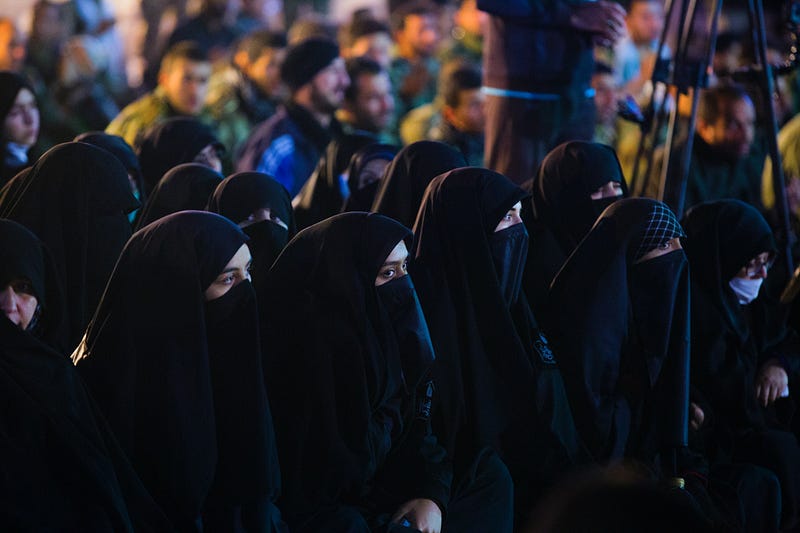
The female footsoldiers of the Caliphate. These were the women inside the Caliphate who upheld the ISIS principles. They were the most difficult to watch.
You know, the women who go around whipping and beating other women into submission. It’s like the only thing that gives them purpose. That's how the men respected them and perhaps how they avoided getting abused themselves. It’s that cliche; when the oppressed becomes the oppressor. Like aunt Lydia in The Handmaids Tale if you watch it. I hate her.
When it comes from another woman, the stab is so much deeper. I find myself hating on them way more than pitying them. I don't know. Am I wrong to feel this way?
There is so much to unfold in this series. It is multidimensional, inter-generational, cultural, with loads of religious extremism. Who is to blame? The war? Colonialism? Religion? Ideology? Racism? People? All of it? I don't know.
Today, the New York Times posted an article about the ten French women held up in Syrian detention camps because they joined ISIS. They have gone on a hunger strike to make France bring them back home. They are asking society to allow them to pay their dues for joining this ideology and give them a second chance.
I went on Twitter to check the overall sentiment. Shit. People were calling for the heads; and for France to ignore their pleas. Maybe I am biased like Agent Fatima, but I can't help but think if these women were like Pervin, Suleika, Kerima, and Laisha, do they deserve to perish in some detention camp? It’s really sad.
If they had better options, would they have gone? It makes all the difference to understand their story.


