
LITERATURE
How Two Lies Saved a Literary Legacy
Alice Walker and Zora Neale Hurston prove truth is sometimes overrated
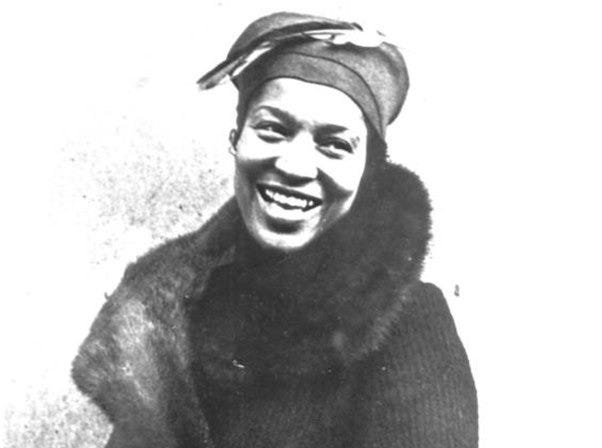
Both women in this story told a whopper, and I'm glad they lied. We are all richer for it.
In 1973, Alice Walker told the people of Eatonville, Florida, she was Zora Neale Hurston's niece. It opened doors. Enough doors so she could track down Hurston's burial site and put a marker on her grave.
Hurston, the author of "Their Eyes Were Watching God," had died indigent fifteen years before. The county buried her in an unmarked grave in a segregated Fort Pierce, Florida cemetery.
In 1975, Walker wrote about the adventure in "Ms. Magazine." At the time, all of Hurston's books were out of print.
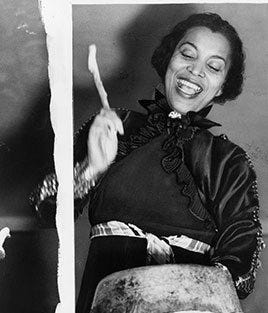

Because I don’t wish to inspire foot dragging in people who might know something about Zora they’re not sure they should tell I have decided on a simple but I feel profoundly useful lie.
Besides, as far as I’m concerned, she is my aunt – and that of all Black people as well.
I asked myself, would I have gotten this far toward getting the head stone and finding out about Zora Hurston’s last days without telling my lie? Actually, I probably would have. But I don’t like taking chances that could get me stranded in Central Florida.
A wise decision.
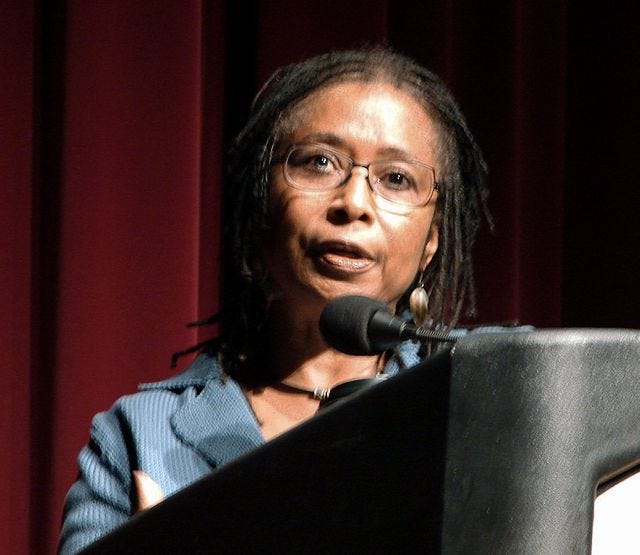
In 1917, Zora Neale Hurston lopped ten years off her age, not out of vanity, but to qualify for a public high school education. She was 26 and had not graduated despite her stellar grades and ambition.
A cataclysmic event stalled Hurston's academic progress. Her mother died when she was thirteen. Lucy Ann (Potts) Hurston supported and encouraged Zora's academic achievements. Since his remarriage, John Hurston showed less interest in his daughter, one of eight siblings.
Zora's father and stepmother sent her to a boarding school in Jacksonville but stopped paying the tuition. She got kicked out. Her world imploded, and she worked low-paying jobs to keep body and soul together.
At 26, she lied about her age. Not only did she lie. She passed as a 16-year-old to attend the high school division of Morgan State University, a Black college in Baltimore, Maryland. She graduated within a year.
The ten candles never made it back onto her birthday cake.
It was a stepping stone. Next, she studied Spanish, English, Greek, and public speaking at Howard University, a Black college in Washington, D.C. After that, Barnard College of Columbia University awarded her a scholarship to study anthropology.
She emerged from Barnard with a B.A. and a desire to learn all she could about Black culture, including hoodoo, spiritual practices created by enslaved Africans and hidden from slaveholders.
It fueled her writing. In a career that spanned more than 30 years, Hurston published four novels, two folklore books, an autobiography, short stories, and plays.
A sharecropper's daughter growing up in rural Georgia read them all. Alice Walker took up reading and writing at eight years old after her brother fired a BB gun, permanently blinding her in the right eye. She wrote,
Her work had a sense of black people as complete, complex, undiminished human beings and that was crucial to me as a writer.
I realized that unless I came out with everything I had supporting her, there was every chance she would slip back into obscurity.
Walker writes hilariously about her efforts to find Zora's burial site with her white friend and colleague Charlotte Hunt. She is waist-deep in weeds, besieged by insects, and scared of snakes.
Hunt is a Floridian. She knows what lurks in the weeds and chooses to wait in the car. Rosalee, an employee at the store that sold Walker the headstone, came at the behest of her employer. She walks beside Alice. They banter as they search.
Finding the grave seems positively hopeless. There is only one thing to do: Zora! I yell as loud as I can causing Rosalee to jump, are you out here?
Rosalee: If she is, I sure hope she don’t answer you if she do I’m gone.
Alice: Zora! I call again. I’m here. Are you?
If she is, grumbles Rosalee, I hope she’ll keep it to herself.
Alice: Zora! (Then I start fussing with her). I hope you don’t think I’m going to stand out here all day, with the snakes watching me and these ants having a field day. In fact, I’m going to call you just one or two more times.
On a clump of dried grass, nearest small bushy tree, my eye falls on one of the largest bugs I have ever seen. It is on its back and is as large as three of my fingers. I walk toward it, and yell Zora!, and my foot sinks into a hole I looked down I am standing in a sunken rectangle about 6 feet long and three or 4 feet wide.
Alice: Well, I say this is the center or approximately anyhow. It’s also the only sunken spot we found. Doesn’t this look like a grave to you?
Rosalee: For the sake of not going no further through these bushes, Rosalee growls, Yes, it do.
Wait a minute I say I have to look around some more to be sure this is the only spot that resembles a grave but you don’t have to come . Rosalee smiles a grin really — beautiful and tough. She says I feel sorry for you if one of the snakes got a hold of you out here by yourself I’d feel real bad she laughs. I done come this far, I’ll go on with you. Thank you, Rosalee I say. Zora thanks you too.
Rosalee: Just as long as she don’t try to tell me in person, she says and together we walk down the field.
Walker had Hurston's stone engraved with the words:
ZORA NEALE HURSTON
“A GENIUS OF THE SOUTH”
NOVELIST FOLKLORIST ANTHROPOLOGIST
1901–1960
The dates are a bit off due to the vanishing birthdays. "Genius of the South" comes from "Georgia Dusk," a poem by Jean Toomer.
Walker's essay brought Hurston to generations of readers that would otherwise have missed out, myself included. "Their Eyes Were Watching God" earned a place on my nightstand. If "Janie Crawford" could survive her tribulations, I guessed I could survive mine.
Alice Walker and Zora Hurston remind me of the sisters "Celie" and "Nettie" in "The Color Purple."
The film adaptation of the book opens with "Celie" and "Nettie" singing "Makidada," an African hand clap song. The lyrics are,
Me and you, us never part. Makidada. Me and you, us have one heart. Ain’t no ocean, ain’t no sea. Makidada. Keep my sister away from me.
https://www.zoranealehurston.com/about
“anytime you catch folks lying, they scared of something.” Zora Neale Hurston
What do you think Zora Hurston and Alice Walker feared?