avatarJayden Levitt

Free AI web copilot to create summaries, insights and extended knowledge, download it at here

4411

Abstract

://www.youtube.com/watch?v=-GlQk_FfD3Q">50%</a> correction of the <i>S&P 500.</i></p><p id="c228">The 84-year-old seasoned pro says — <i>"I think of myself as a realist trying to see the world as it is and not the way I'd like it to be. And sometimes, I succeed, and sometimes I fail in that".</i></p><p id="31aa">The U.S. debt-to-GDP ratio is <a href="https://www.ceicdata.com/en/indicator/united-states/government-debt--of-nominal-gdp#:~:text=United%20States%20Government%20Debt%3A%20%25%20of%20GDP,-1969%20%2D%202023%20%7C%20Quarterly&amp;text=United%20States%20Government%20debt%20accounted,Mar%201969%20to%20Sep%202023.">122.9%</a>, meaning America borrows more money than its economic productivity can absorb.</p><p id="14b4">The government spent <a href="http://debt%20to%20gdp%20-%20https//fiscaldata.treasury.gov/americas-finance-guide/national-deficit/#:~:text=In%20FY%202023%20total%20government,from%20the%20previous%20fiscal%20year.">6.13 trillion</a> last fiscal year, with the total revenue at 4.44 trillion.</p><p id="28cf">It left a substantial deficit of <a href="http://debt%20to%20gdp%20-%20https//fiscaldata.treasury.gov/americas-finance-guide/national-deficit/#:~:text=In%20FY%202023%20total%20government,from%20the%20previous%20fiscal%20year.">1.70 trillion</a>, an increase of <a href="http://debt%20to%20gdp%20-%20https//fiscaldata.treasury.gov/americas-finance-guide/national-deficit/#:~:text=In%20FY%202023%20total%20government,from%20the%20previous%20fiscal%20year.">320 billion</a> compared to the prior year.</p><figure id="8e63"><img src="https://cdn-images-1.readmedium.com/v2/resize:fit:800/0*sSIbi-BzZr6HL7XK.png"><figcaption>Source — <a href="http://debt%20to%20gdp%20-%20https//fiscaldata.treasury.gov/americas-finance-guide/national-deficit/#:~:text=In%20FY%202023%20total%20government,from%20the%20previous%20fiscal%20year.">Fiscal Deficit Data</a></figcaption></figure><h1 id="d29b">One signal to look out for.</h1><p id="aa8f">I'm quickly learning that top investors are using the Manufacturing Index to anticipate future productivity and, in turn, corporate profits.</p><p id="e711">Buffett believes it's a more challenging world for businesses, and the data shows it.</p><p id="227e"><a href="https://www.youtube.com/watch?v=7dHKpR_IrUM">Warren Buffett</a>: <i>"I get a report of what businesses are doing, and in the retail business, they're down 22% in sales."</i> He says, <i>"Some are living off orders placed months ago."</i></p><p id="a4ed">Buffett's Berkshire Hathaway has a substantial market cap of <a href="https://companiesmarketcap.com/">785.7</a> billion, and his sentiment might explain his impressive cash balance of <a href="https://companiesmarketcap.com/">157.2</a> billion.</p><p id="49e3">It could indicate two possibilities — Buffett and his team might perceive limited market opportunities or anticipate a significant market downturn.</p><p id="26c3">Buffet's cash pile is growing at 7% a year, but he prefers to invest Cash in promising businesses rather than let it sit idle.</p><p id="96f6">This time, he's waiting, anticipating the right opportunity.</p><p id="0276">The money alone could buy <a href="https://companiesmarketcap.com/">HSBC</a> (149.68 B), <a href="https://companiesmarketcap.com/">IBM</a> (142.05 B) or <a href="https://companiesmarketcap.com/">Uber</a> ($114.89 B) with spare change to play with.</p><blockquote id="cf43"><p>Buffett: “Supply lines were so impacted (lockdowns) that no economic figures are pure, but I’m telling you my impression — I look at the numbers every day, I look at sales day by day.”</p></blockquote><p id="06d5">He says they're down — and the ISM reflect the same indicators.</p><p id="1c9b">The ISM (Institute of Supply Management) surveys 50,000+ executives from 400 US manufacturing companies monthly to gauge their sentiment on various factors, such as employment, new orders, production, and more.</p><p id="3078">The survey helps predict economic trends.</p><p id="3da4">The ISM index is the lead indicator for the U.S. and Global economy, with a <a href="https://www.fool.com/investing/2023/02/12/3-recession-indicators-havent-been-wrong-56-years/#:~:text=data%20by%20YCharts.-,Gray%20zones%20denote%20recessions.,reading%20below%2050%20implies%20contraction.">70-year</a> track record of predicting every recession.</p><p id="a53c">A score below 50 indicates contraction and may

Options

signal an impending recession. Above 50 signals growth, with over 60 showing a booming economy.</p><p id="0b68">As of publishing, we are at 47 but have shown signs of recovery.</p><figure id="eff4"><img src="https://cdn-images-1.readmedium.com/v2/resize:fit:800/1*KHuEj3SVexqAUul0tcq2kg.png"><figcaption>Source — <a href="http://Trading View">Trading View</a></figcaption></figure><h1 id="3e5e">Just aim to be the last man standing.</h1><p id="38f4">As Buffett says, <i>"Your investment thesis will be right because your data and reasoning are right."</i></p><p id="272f">W.B. is not in the business of making market forecasts — he's trying to deploy people's money in the best and safest way he knows how.</p><p id="b7bb">Warren Buffett — <i>"We just want to be the last man standing, and if it means losing out on price appreciation by not using tools like leverage, then so be it."</i></p><p id="a974">The Oracle of Omaha has successfully navigated six U.S. recessions and dozens of stock market corrections. <a href="https://www.youtube.com/watch?v=RN9jsrTj1uY">He says</a>, <i>"Nobody else can quite make a deal like we can under the right circumstances."</i></p><p id="4e75">Patience continues to be his winning ingredient because when companies struggle or have borrowing issues, sitting on cash presents an opportunity.</p><blockquote id="b267"><p>Warren Buffet — <a href="https://www.youtube.com/watch?v=RXMxuHIJRhA">Source</a></p></blockquote><blockquote id="af9c"><p>“Good companies may not want to sell but just need $20 billion.</p></blockquote><blockquote id="0c7f"><p>There could be a situation where several very decent companies have a very uncomfortable borrowing structure, and money comes due to them at the wrong time — that’s where companies pick up the phone.</p></blockquote><blockquote id="e939"><p>We know the number of phone calls you can make at a time like that is very limited.”</p></blockquote><h1 id="9fe5">Final Thoughts</h1><p id="d90b">There is a lot of short-term focus on what could happen.</p><p id="34e8">I see Buffett not trying to predict the future with some crystal ball but strategically parking himself on a pile of cash.</p><p id="0d7e">I've concluded no one knows what will happen when I listen to experts on both sides of the fence.</p><p id="bd1b">Macroeconomic expert <i>Raoul Pal</i>, who I've also studied religiously, believes we've already seen the bottom of the stock market and the business cycle is set to turn as early as Q3 2024.</p><p id="922f">Pal thinks it's unlikely we'll see further catastrophic failure because there are too many reasons for liquidity to return to the system.</p><blockquote id="5e0e"><p>Raoul Pal — <a href="https://www.youtube.com/watch?v=7O6ECCdBXkc">Source</a></p></blockquote><blockquote id="f5a2"><p>“If I’m right in what I’ve laid out, the economy is slow. We’re in a recession. It’ll recover next year, and we’ll be in the sweet spot where the economy is recovering and earnings are coming back in 2024.”</p></blockquote><p id="9191">The Federal Reserve, clearly not reading from Buffett's hymn sheet and in charge of monetary policy in the U.S., dropped its forecast for a recession altogether because the economy is <i>"resilient."</i></p><blockquote id="8e05"><p>Jerome Powell — <a href="https://www.youtube.com/watch?v=YCGAgk-d25w">Source</a></p></blockquote><blockquote id="3053"><p>“So the staff now has a noticeable slowdown in growth starting later this year in the forecast, but given the economy’s resilience recently, they are no longer forecasting a recession.”</p></blockquote><p id="b303">As Uncle Buffett says — <i>"The only value of stock forecasters is to make fortune-tellers look good."</i></p><p id="4e7b">Sometimes, taking no action is the best thing you can do.</p><p id="f67d"><a href="https://open.substack.com/pub/jaydenlevitt?r=bde5e&amp;utm_medium=ios"><b>Join 2,000 Finance enthusiasts</b></a> who never miss out on my latest articles. It's completely free, and you can opt out anytime you want! Take the chance to stay updated and informed. <a href="https://open.substack.com/pub/jaydenlevitt?r=bde5e&amp;utm_medium=ios"><b>Sign up now</b>!</a></p><p id="08bc"><i>This article is for informational purposes only — it should not be considered financial, tax or legal advice. You can consult a financial professional before making any significant financial decisions.</i></p></article></body>

The Wizard of Wall Street Is Hoarding $158 Billion Growing at 7% a Year, and It's a Market Signal You Can't Ignore.

Stock market investors are leaning in.
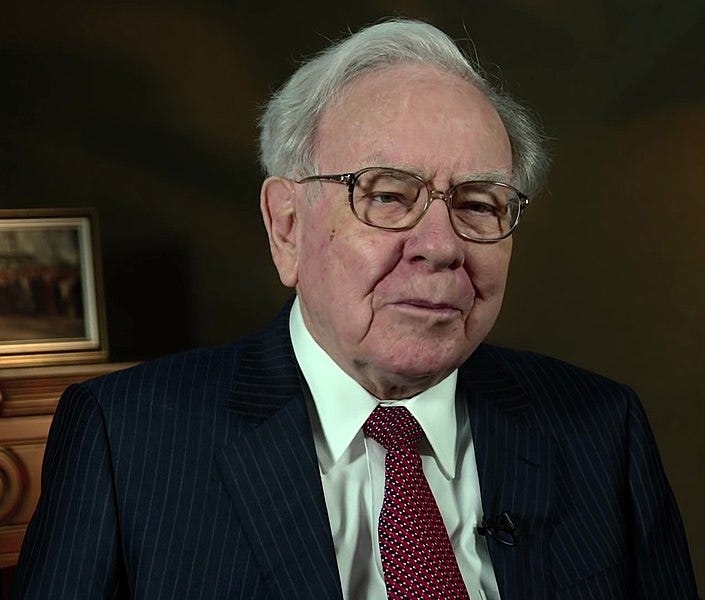
Photo by USA International Trade Administration: Public Domain

Warren Buffett once told a friend that he'd jump off the tallest building in Omaha if he didn't become a millionaire by 30.

He was seven years old, and it was after reading a book called "One Thousand Ways to Make $1,000."

One idea in the book that caught Buffett's attention was the concept of compounding.

He put this phenomenon to work by investing in a scale where people would pay to weigh themselves. It was a mind-boggling idea in the 1940s.

Buffett said, "I thought — that's where the money is. The compounding of it — what could be better than that?"

The freakishly bright, then 14-year-old would later use this same compounding strategy to place pinball machines he owned in barber shops — splitting the revenue 50% with the barber and using his profits to buy more machines.

I used to hold my school canteen to ransom, selling sweets out of my locker, but Buffett's level of business and financial acumen was so far beyond his years that mine pales into insignificance.

Buffett says — “I’m just lucky to have been in the right place at the right time. Another place, another time, I wouldn’t have been as successful. Society enabled me to make my money, and my money should go to society.”

He's the Wizard of Wall Street.

Now, the world's fifth-richest man is hoarding a treasure chest of Cash, and it's a signal investors are finding hard to ignore.

Buckle up, and let's dive into it.

Too many signs point in one direction.

During Berkshire Hathaway's annual meeting, Buffett said, "The incredible period of growth for the U.S. economy is ending."

In one of his last interviews before his death, Warren Buffett's lifelong business partner, Charlie Munger, said, "We should get used to making less."

While I'm getting high on doomsday recession porn Jamie Dimon, The head honcho of JP Morgan and one of the most significant U.S. bankers, says:

“It’s the most dangerous time the world has seen in decades. We had so much fiscal and monetary stimulation. I’m a little more on the cautious side that we are facing a lot of things in ’24 or ’25.”

Asset prices move optically with money printing, and the markets are trying to front-run future anticipated liquidity events.

It explains why the S&P500 has made a significant recovery.

Lower interest rates, falling inflation, and the potential for governments to give out stimulus like a shot in the arm to voters remind me of when it rained free bat virus money.

Renowned British investor Jeremy Grantham, famous for studying market bubbles, believes there's a 70% chance we're heading for a recession that could result in a further 50% correction of the S&P 500.

The 84-year-old seasoned pro says — "I think of myself as a realist trying to see the world as it is and not the way I'd like it to be. And sometimes, I succeed, and sometimes I fail in that".

The U.S. debt-to-GDP ratio is 122.9%, meaning America borrows more money than its economic productivity can absorb.

The government spent $6.13 trillion last fiscal year, with the total revenue at $4.44 trillion.

It left a substantial deficit of $1.70 trillion, an increase of $320 billion compared to the prior year.
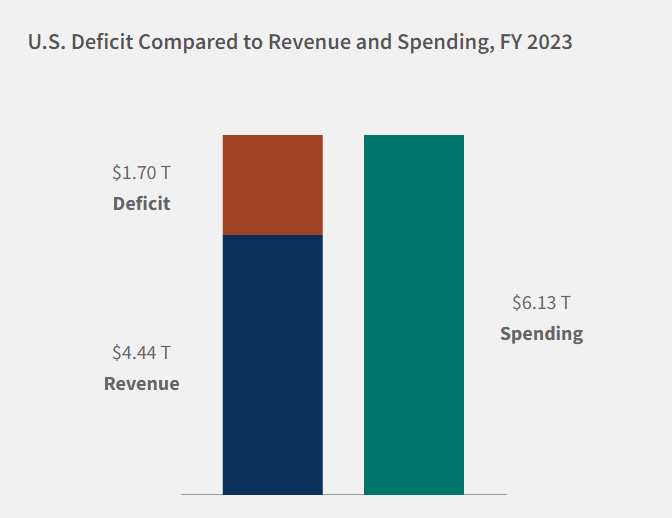
Source — Fiscal Deficit Data

One signal to look out for.

I'm quickly learning that top investors are using the Manufacturing Index to anticipate future productivity and, in turn, corporate profits.

Buffett believes it's a more challenging world for businesses, and the data shows it.

Warren Buffett: "I get a report of what businesses are doing, and in the retail business, they're down 22% in sales." He says, "Some are living off orders placed months ago."

Buffett's Berkshire Hathaway has a substantial market cap of $785.7 billion, and his sentiment might explain his impressive cash balance of $157.2 billion.

It could indicate two possibilities — Buffett and his team might perceive limited market opportunities or anticipate a significant market downturn.

Buffet's cash pile is growing at 7% a year, but he prefers to invest Cash in promising businesses rather than let it sit idle.

This time, he's waiting, anticipating the right opportunity.

The money alone could buy HSBC ($149.68 B), IBM ($142.05 B) or Uber ($114.89 B) with spare change to play with.

Buffett: “Supply lines were so impacted (lockdowns) that no economic figures are pure, but I’m telling you my impression — I look at the numbers every day, I look at sales day by day.”

He says they're down — and the ISM reflect the same indicators.

The ISM (Institute of Supply Management) surveys 50,000+ executives from 400 US manufacturing companies monthly to gauge their sentiment on various factors, such as employment, new orders, production, and more.

The survey helps predict economic trends.

The ISM index is the lead indicator for the U.S. and Global economy, with a 70-year track record of predicting every recession.

A score below 50 indicates contraction and may signal an impending recession. Above 50 signals growth, with over 60 showing a booming economy.

As of publishing, we are at 47 but have shown signs of recovery.
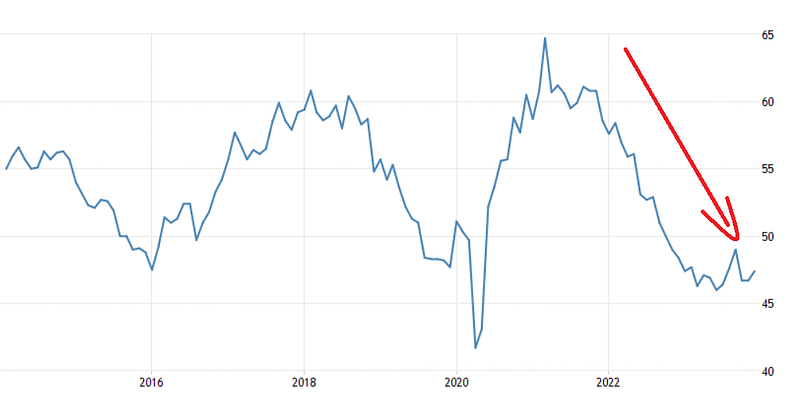
Source — Trading View

Just aim to be the last man standing.

As Buffett says, "Your investment thesis will be right because your data and reasoning are right."

W.B. is not in the business of making market forecasts — he's trying to deploy people's money in the best and safest way he knows how.

Warren Buffett — "We just want to be the last man standing, and if it means losing out on price appreciation by not using tools like leverage, then so be it."

The Oracle of Omaha has successfully navigated six U.S. recessions and dozens of stock market corrections. He says, "Nobody else can quite make a deal like we can under the right circumstances."

Patience continues to be his winning ingredient because when companies struggle or have borrowing issues, sitting on cash presents an opportunity.

Warren Buffet — Source

“Good companies may not want to sell but just need $20 billion.

There could be a situation where several very decent companies have a very uncomfortable borrowing structure, and money comes due to them at the wrong time — that’s where companies pick up the phone.

We know the number of phone calls you can make at a time like that is very limited.”

Final Thoughts

There is a lot of short-term focus on what could happen.

I see Buffett not trying to predict the future with some crystal ball but strategically parking himself on a pile of cash.

I've concluded no one knows what will happen when I listen to experts on both sides of the fence.

Macroeconomic expert Raoul Pal, who I've also studied religiously, believes we've already seen the bottom of the stock market and the business cycle is set to turn as early as Q3 2024.

Pal thinks it's unlikely we'll see further catastrophic failure because there are too many reasons for liquidity to return to the system.

Raoul Pal — Source

“If I’m right in what I’ve laid out, the economy is slow. We’re in a recession. It’ll recover next year, and we’ll be in the sweet spot where the economy is recovering and earnings are coming back in 2024.”

The Federal Reserve, clearly not reading from Buffett's hymn sheet and in charge of monetary policy in the U.S., dropped its forecast for a recession altogether because the economy is "resilient."

Jerome Powell — Source

“So the staff now has a noticeable slowdown in growth starting later this year in the forecast, but given the economy’s resilience recently, they are no longer forecasting a recession.”

As Uncle Buffett says — "The only value of stock forecasters is to make fortune-tellers look good."

Sometimes, taking no action is the best thing you can do.

Join 2,000 Finance enthusiasts who never miss out on my latest articles. It's completely free, and you can opt out anytime you want! Take the chance to stay updated and informed. Sign up now!

This article is for informational purposes only — it should not be considered financial, tax or legal advice. You can consult a financial professional before making any significant financial decisions.

Stock Market
Investing
Finance
Money
Technology
Recommended from ReadMedium