
The Withering Glance
Behind her signature expression was a sister I hardly knew
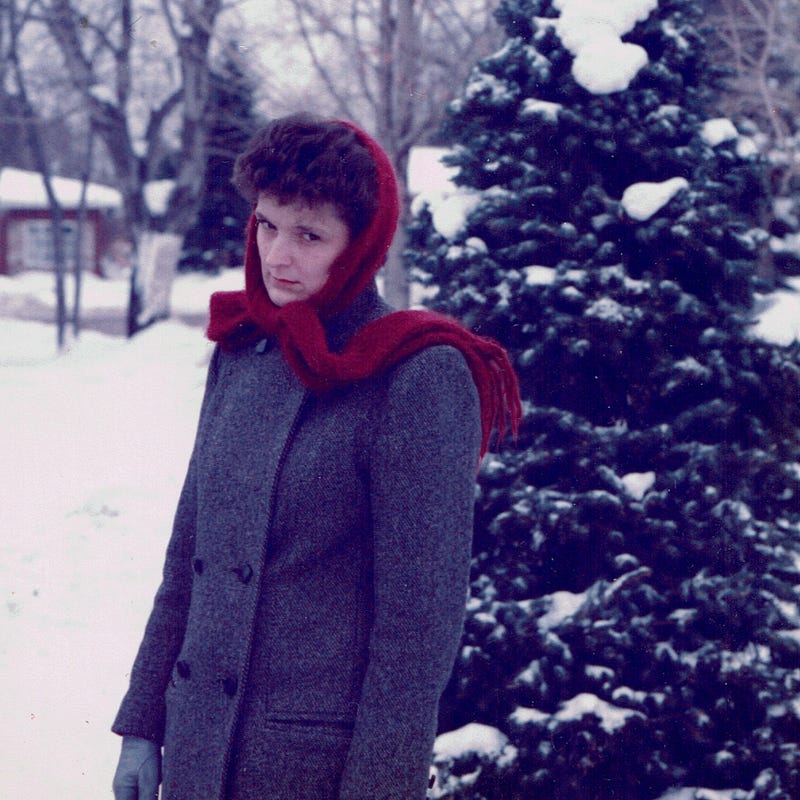
Years before the Internet and Twitter, my sister had a look that was the 1970s version of the hashtag #srsly: “Really?” it said to me. “You really need to take my picture now?” I called it the withering glance.
Carol would have turned 71 this month. She died of a heart attack just before her 43rd birthday, in 1994, felled by the decades-long chain-smoking habit that an autopsy said had turned her cardiovascular system into that of a woman 20 years older. I was 36.
Carol was in high school when I was still in grade school. I remember playing barrel of monkeys with her, the two of us sitting on the floor across from each other at the coffee table, the TV to our side blaring some sitcom.
Saddled with having to bring me along when she was going out with friends, she took it out on me. One failed experiment was seeing if she could swing me hard enough to send me over the bar on the swingset at the playground. She couldn’t.
Another fun time — for her — was building up a head of steam pulling me around the roller rink and then letting go. Needless to say, I never went to a roller rink again, although I did venture onto the ice in grad school to learn to skate, something you’d think a kid who grew up outside wintry Buffalo would’ve mastered as a kid.
Strangely, I don’t recall being angry about any of this. I was a shy, overprotected bookworm of a kid, so good at school that I did her math homework. Carol’s ineptitude with math was a family joke. She couldn’t multiply 8 times 3 in her head. For some reason only she could have understood, at one point in her late 20s, she decided to go to the local community college to study accounting. Guess how long that lasted.
As each anniversary of her death has passed over the years, I rue how little I knew about her. She hated how skinny her arms and legs were, to the point of wearing sweatshirts even in the summer. She was ridiculously popular with the boys, one of whom was so eager to date her that he complied with Mom’s demand he cut his shoulder-length stringy hair.
She liked Chicago, Carole King, and the Beatles, which we listened to on the stereo in our shared bedroom. I remember us listening raptly to a radio show around the supposed hidden messages in the Abbey Road album that revealed that Paul McCartney was dead.
But as to what Carol wanted for her life, what she wanted to be “when she grew up,” I have no idea. Maybe she didn’t either and getting pregnant in high school probably short-circuited whatever dreams she may have entertained.
Why she thought Paul was worth getting knocked up and sucked into marriage at 18, I have no idea. It couldn’t have been to escape from a bad home environment — ours was solidly in the middle of the bell curve for blue-collar families. No abuse, no alcoholism, mostly no money problems. We had a TV in our bedroom, we got new clothes every school year, my Dad, in particular, enjoying the shopping excursion. We never went hungry, even if it meant Dad ate hot dogs so we could have pork chops. But unlike many white-collar middle-class families, we never talked about feelings. Tears were to be shed behind a closed door.
Perhaps that was Paul’s appeal: he was a man of few words, like Dad. Unlike Dad, Paul spent his time out golfing and bowling, anything that took him out of the home, leaving Carol with three small kids at home. The marriage, my sister once told Mom when things started to fall apart, was like being married to a brother, not a husband.
The age difference, the family “no feelings” culture, my own detachment — for whatever reason, I never really found out who my sister was. I’d like to think that if she hadn’t died so young, we would’ve gotten closer — seven years isn’t much of a difference in middle age.
Recovering from surgery a couple of years after her death, I awakened to a powerful scent of her signature perfume. In place of a withering glance, a hug from beyond the grave.