
The wisest advice I never listened to…
I was thirty, married for a year, working long hours building a business empire.
Had cut my honeymoon short to get back to the office. Plenty of time for that later. Must keep an eye on the ball. No room for distractions! Things were going really well.
I was esteemed, admired, and envied by many; my brilliant expertise sought-out by Presidents, Central Bankers, and Ministers of State. I was on my way to the top.
But I wasn’t happy.
Said so myself in an email to my father:
“I am 30, going on 40, happily married but unhappy with who I am.”
Must’ve had that same dreadful feeling you get when seeing time rushing by with little significance or substance. All your footprints wiped clean by time’s relentless wave. “Where has time gone?” we despair, as we try to piece together blurry memories into a meaningful whole like flipping photos of a whistle-stop vacation trying to remember where we were, what we did, what we felt. Was that Rome or Florence?
“So this is it ⎯ what cost me all that time. A man who turned out to be old, a house that turned out to be empty.” ― Jennifer Egan
This next part of my email reveals existential dread. I was inside Egan’s empty house with someone crying in a dark room: What’s the purpose? Who am I?
Listen:
“I am unhappy with what I am, and asking myself: am I really doing what I am doing because I like what I am doing or because I am expected to and can’t figure out why I keep doing it? Is there more to life besides working 16 hours a day?”
I was paraphrasing Jesus of Nazareth: Can man live by bread alone?
Dad’s response:
“There is an underlying angst in what you say…the roots seem to be a dissatisfaction with your subjective self. You are not alone. Most of the Western World is in the same tizzy.”
We have commodified our aliveness. — Maria Popova
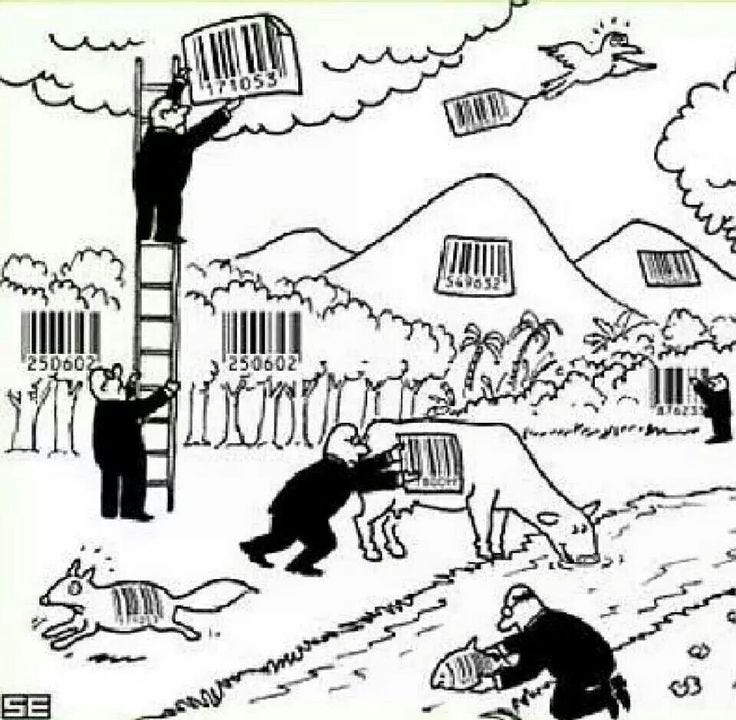
In ‘Hidden Persuaders,’ social critic Vance Packard pointed his finger at the wizards behind this commodification:
“The hidden persuaders,” he said, “see us as bundles of daydreams, misty hidden yearnings, guilt complexes, irrational emotional blockages. We are image lovers given to impulsive and compulsive acts. We annoy them with our seemingly senseless quirks, but please them with our growing docility in responding to their manipulation of symbols that stir us to action.”
“The perfect subject for this ‘brainy’ economy,” added philosopher Alan Watts, “is one whose eyes flit without rest from screens, keeping him in a sort of orgasm-without-release through a series of glimpses of shiny automobiles, female bodies, and other sensuous surfaces interspersed with such restorers of sensitivity — shock treatments — as ‘human interest’ shots of criminals, mangled bodies, and burning buildings. The discourse that goes along with this is similarly manufactured to tease without satisfaction, to replace every partial gratification with a new desire.”
Media: trafficking in outrage to pierce the armor of our indifference. An arms race to the bottom of our brain stem to capture our attention. — Tristan Harris
During the Great Depression of 1929, worried that the production lines would halt, industrialists turned to these hidden persuaders — psychologists and marketers — for help. Whereas before, we bought stuff for their utilitarian value (sensible, durable shoes), the drive of the consumer had to be radically shifted to gobble-up the excess merchandise.
Enter human desire.
“We must shift America from a needs- to a desires-culture,” suggested Paul Mazur, a leading Wall Street Banker of the time. “People must be trained to desire, to want new things, even before the old have been entirely consumed. Man’s desires must overshadow his needs.”
The rest, as they say, is history.
So successful were the hidden persuaders that it earned them this accolade from President Herbert Hoover: “You have taken over the job of creating desire and have transformed people into constantly moving happiness machines.
So, we went from this…

To this:

Dad and I continued corresponding…
“I am your father, 61 going on 30, a Homo Sapiens inhabiting Earth and not happy with the state of same, not for itself, but for what is being done to it. The reason for the doing is at the center of your dilemma and mine, and directly attributable to the objective progression of Western man, now copied by Japs, Koreans, even Chinese. These last had the answers centuries ago but are now caught in the desire for Hyundais rather than inner balance. As I cannot stop this maelstrom of self-destruction, I have chosen to abdicate, like Edward VIII, and cherish the remains of what’s left during my lifetime.”
My father retired in his early fifties, and it wasn’t until quite recently that I began to understand his motives and wrote them down.
The inner balance to which he referred was explained by ancient Chinese philosopher Lao Tzu in these aphorisms contained in the ‘Tao Te Ching’:
VII
The five colors
blinds our eyes.
The five notes
deafen our ears.
The five flavors
dull our taste.
Racing, chasing, hunting,
drives people crazy.
Trying to get rich
ties people in knots.
So the wise soul
watches with the inner eye
not the outward,
letting that go,
keeping this.
XXII
Be empty to be full.
Have little and gain much.
Have much and get confused.
Desires unsettle the heart, echoed Chuang Tzu, two centuries later.
Proper balance is expressed by the Taoist symbol of harmony, or equilibrium, achieved by the conciliation of opposites.

This idea was further developed by pre-Platonist Philosopher, Heraclitus, through his concept of ‘enantiodromia.’
Enantiodromia — enantios, opposite, and dromos, running course — basically means that the superabundance of any force inevitably produces its opposite. It is similar to the principle of equilibrium in the natural world, in that any extreme is opposed by the system in order to restore balance. When things get to their extreme, they turn into their opposite.
A wolf-pack which hunts its prey to extinction will perish.
Swiss psychoanalyst Carl Jung had this to say about it:
“Enantiodromia. Literally, running counter to, referring to the emergence of the unconscious opposite in the course of time. This phenomenon occurs when an extreme, one-sided tendency dominates conscious life; in time, an equally powerful counter position is built up, which first inhibits the conscious performance, and then breaks through conscious control.”
Like a pressure cooker with a clogged release valve, my one-sided focus, at age 30, on work and achievement which dominated every waking hour of my conscious life, was building-up a counter-force to restore my subjective self to equilibrium.
Listen:
“Yes, the underlying message of my first letter is a dissatisfaction with my subjective self. Show me a man who isn’t, and you will have found the essence of mediocrity. I confess having climbed aboard the carrousel that has most of the Western World in a tizzy as you pointed out. The difference being that, having discovered this, I am now looking for a way to climb down, while many seem to have been sold on the idea that it is the best ride in the park. Despite this desire, the carrousel appears to be moving at too great a speed, thus I have not found a safe way to alight — yet. Perhaps, the problem is that, unlike you, I never thought of gaining ‘inner composure’ or balance before entering the ‘real world’ and must now try to attain it while mired in the maelstrom of the material realm — quite a feat while working 16 hours a day.”
“16 hours a day at work is a psychotic aberrance unless you are a Benedictine monk (which you may become as your wife rebels against such idiocy!) You’re supposed to be a brain man, and after 6 hours, your thought processes atrophy. Oh, Little Grasshopper…why is it not possible for you to find within you own writings the answers to your conflicts? The ability to reason is precisely what allows you to reach happiness. It is emulation and competitiveness that make people unhappy. And here, of course, arises my most unbearable frustration: being father to three of the most intelligent male heirs in the world and watching them toil at matters which do not matter, at the expense of love, family, self-satisfaction (not esteem), and the sheer joy of living. Regarding the merry go round: please bear in mind it is of your own construction, you built the mechanism of the infernal machine, so wherever it takes you is your own doing, your volition and desire. You can stop it! You are caught in the Western credo that a man’s worth and measure is the size of his bank account. You should delve into deep thoughts regarding life: Does death precede life? Is ice cream better, before, or after the main course? Do trees really house spirits? Unless your mind can purge itself of 16 hours of material preoccupations, which probably even extend into your sleep, all your creative visions, or visionary creations, will come to naught in the objective plane. Sooner or later, your mind will snap, and you won’t be 30 going on 40, but 35 going straight into the abyss. A hell of your own making!”
He missed the mark by only a year.
I stayed on the infernal merry-go-round until a savage opposing force threw a monkey-wrench into the gears and catapulted me, at 36, straight into the abyss.
Enantiodromia at its most-sublime.
It wasn’t until twenty years later that I found these emails. By then, my ‘empire,’ my reputation, esteem and self-esteem lay in ruins. I was divorced, living paycheck to paycheck.
But I was finally happy.
Because I had discovered my essence. I knew who I was. I was finally taking the time to delve into those deep questions Dad suggested; not about ice cream and tree-spirits, but fundamental questions of purpose and meaning; of what it means to live a flourishing life.
Tragic though, is the time I squandered. Twenty years!
Lost time is never found again. — Benjamin Franklin
What’s puzzling is why the young won’t listen to their elders. It’s been going on for millennia. As early as 4th Century B.C.E., Aristotle bemoaned the fact that “[young people] are high-minded because they have not yet been humbled by life nor have experienced the force of circumstances. They think they know everything.” (I can see his eyes roll).
It was Aristotle who coined the phrase ‘Golden Mean,’ which is basically the spot between two extremes. Hubris, or excessive pride, for example — which to ancient Greeks was one of the greatest sins — lies at the opposite end of considering oneself worthless. In this case, the golden mean is modesty: knowing your worth, but neither exaggerating or deflating it. Prudent or wise action is the sweet-spot between being impulsive and not acting at all; courage, lies between rashness and cowardice, etc.
Aristotle tutored none other than Alexander the Great, but it seems young Alex was half-asleep during his lessons. At age twenty, he became King of Macedonia and began a campaign for world domination. In thirteen short years, Alexander defeated the mighty Persians, conquered Egypt, and ruled over the largest empire in the ancient world. Not only greedy, but full of himself, Alexander allowed his success to go to his head to the point that he thought himself a God. He kept pushing himself and his troops harder and harder. At one point, his exhausted soldiers refused to fight further. They told Alexander that a truly great leader knows when it’s time to stop fighting. His empire collapsed and he died at the early age of thirty-two.
Sounds familiar…
Those who do not learn history are condemned to repeat it. — George Santayana
Why do the young insist on making the same mistakes over and over? Isn’t evolution supposed to get rid of organisms which fail to adapt?
Soon after finding my email correspondence with Dad, I began to worry about my daughters as they entered adulthood and wrote them this:
“I know the world for you right now seems chaotic, ruthless, unjust, and fraught with danger. Imagine you’re dropped into the depth of a jungle. What would you do? How would you feed yourself? How would you know which plants to eat and which to avoid? How would you protect yourself from the elements? Now imagine that the only thing you can take with you are either tools (knife, waterjug, flint) or a survival manual written by a hunter-gatherer who lived in that same jungle years ago. Which would you choose?”
Weeks later, driving one of them home from work, berating her for something she had done — or not done, I asked her why kids refused to learn from their parents. If we had already traversed the jungle, been battered and wounded, fought and slain tigers, and crossed victorious over to the other side, why insist on going through the same suffering? Isn’t that the value and beauty of adaptation in the process of natural selection?
In her characteristic wisdom, she responded:
“Because they wouldn’t be or feel like our own victories. We want our own scars suffered in honorable combat with our own tigers.”
I was stumped…
Later reflected…
And then wrote her my response:
“There are wounds you do not want, trust me.
I am not proposing to be your North Star or compass, but simply your lighthouse, because, as poet Philip Larkin said: ‘An only life can take so long to climb clear of its wrong beginnings and may never.’
My intention is to spare you from the deadliest tigers.

In primitive, oral cultures, the young find their orientation in their world through stories and song. They learn about their origins, how the world was created, how humans emerged, and — to my point — how to survive.
In the mythology of Aboriginal Australia there is something called ‘Dreamtime’: the dawn when the totem Ancestors first emerged from their slumber and began to sing their way across the land in search for food and shelter. These meandering trails, or ‘Dreaming Tracks,’ are auditory signposts of visible and tactile phenomena. The Ancestors were singing the names of things and places into the land as they wandered through it. The song then, is kind of an auditory road map through the wilderness. To make its way through the land, an Aboriginal person has only to chant the local stanzas of the appropriate Dreaming.
In Aboriginal belief an unsung land is a dead land. If the songs are forgotten, the land and its people will die.
I propose that an unsung story awakens the Tiger.”

My father sung me his Dream Track. I ignored it. The tiger woke and laid waste to twenty years of my life under the spell of the Hidden Persuaders. For two decades, I lived a one-sided existence chasing one chimeric desire after another.
Without doubt, the heavy price I paid is one of the main factors now driving my work on ‘The Hero in You,’ a book for boys meant to guide them on their path to authentic, generative manhood.
I wish to warn them about the deadliest tigers out there.


