Summary
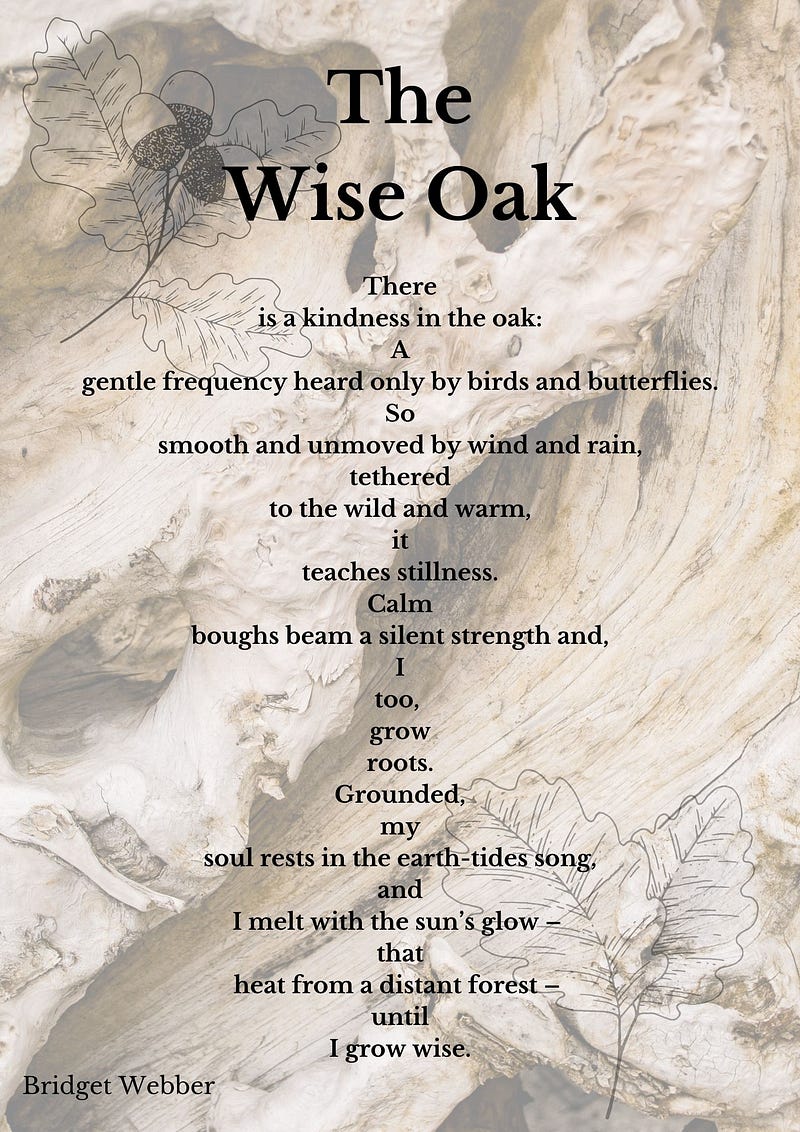
"The Wise Oak" is a reflective poem by Bridget Webber that draws a parallel between the steadfastness of an oak tree and personal growth and tranquility.
Abstract
The poem "The Wise Oak" by Bridget Webber captures the essence of nature's wisdom as embodied by an oak tree. It describes the oak as a symbol of strength and stillness, unaffected by external elements like wind and rain. The tree, which communicates through a frequency understood only by creatures like birds and butterflies, serves as a metaphor for personal growth and inner peace. The speaker finds solace and strength in the oak's presence, likening their own journey of becoming grounded and wise to the tree's rootedness and resilience. The poem concludes with the speaker's aspiration to achieve a similar sense of harmony with nature, as they draw warmth from the sun and the earth's rhythm, aiming to embody the oak's wisdom.
Opinions
- The oak tree is portrayed as a source of kindness and a teacher of stillness, suggesting a deep respect for nature's influence on personal development.
- The poem conveys a sense of wonder and appreciation for the natural world, particularly the oak's ability to remain calm and strong amidst the wildness of nature.
- The author expresses a desire to connect with the earth on a profound level, as demonstrated by the speaker's yearning to grow roots and rest in the earth-tide's song.
- There is an underlying theme of the interconnectedness of all living things, as the speaker aspires to emulate the oak's wisdom and resilience.
- The poem suggests that the author values the nurturing aspects of nature, which provide warmth and comfort to the human soul.
- The inclusion of a copyright notice and a call to support the author's writing indicates the importance of acknowledging and compensating creative work.