
The Wisdom of Wonder: A User’s Guide
Reflections on Getting Curious About Yourself, Others, and the World
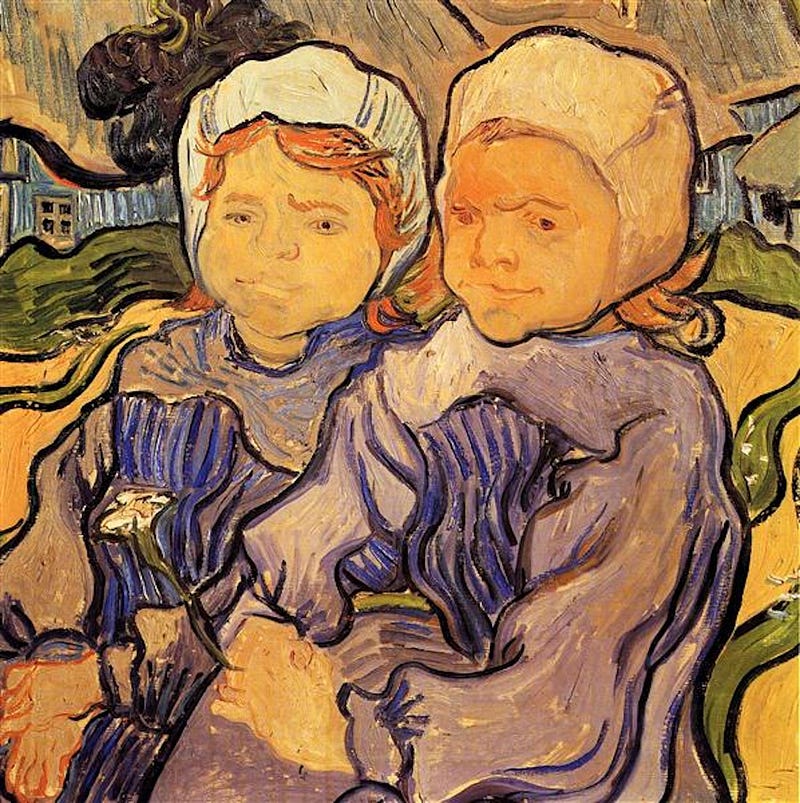
Have you ever seen a toddler look at ants? My four-year-old squats down to look closely at ants, flowers, and virtually everything. He is far more curious about the world than I am on most days. Although regardless of our age, we can (and should) continue cultivating our curiosity.
My conversation with Scott Hershovitz (author of Nasty, Brutish, and Short) discussed why kids are naturally good philosophers. Herschovitz explained,
“I think there are two reasons kids make good philosophers. The first is they’re just new to the world. And they’re constantly confused by it. So they’re asking questions, and they’re questioning everything. Like they don’t yet know what the standard explanations of things are. They don’t know what adults take for granted. So I think just like being perplexed by something, it helps them see what’s puzzling. And the second reason I think they make good philosophers is that they’re not afraid of sounding silly. When they ask questions, they’re not afraid of getting things wrong when they try to answer questions. Silly, as I like to say, is the business that kids are in. So, they are willing to put their ideas out there and make arguments.”
How many of us have a New Year’s resolution to practice curiosity? Probably not too many. But maybe it's time to get intentional about the wisdom of wonder.
On Wonder
In the book Curious, author Ian Leslie writes that children do not adhere to cultural knowledge; they are agents of their own learning. Anyone who has watched a baby knows first-hand how quick they are to lick, put in their mouth, and get into absolutely everything. Scientists at the National Institute of Child and Human Development discovered that “the more actively a baby explores his or her environment, the more likely they are to achieve academic success as an adolescent.”
However, Leslie writes our intellectual zeal tends to wane and settle into equilibrium as we age. Educational psychologist Susan Engel states curiosity begins to fade around four years old and often results in adults with fewer questions and more unconscious actions. According to the astrophysicist Neil deGrasse Tyson: “Kids are born curious about the world. What adults primarily do is unwittingly thwart the curiosity of children.”
According to Hershovitz, kids spontaneously raise questions about philosophy. “I think most kids do, and many adults miss them. So that’s great if your kid raises these questions on their own, but you don’t have to wait for them to raise philosophical questions. One of my favorite resources is a website called Teaching Children Philosophy. If you Google those words, teaching children philosophy, you’ll find the website run by the Prindle Institute for Ethics.”
On Not Knowing
In the Wisdom of Not Knowing, author and psychotherapist Estelle Frankel (another previous podcast guest) suggested that being receptive to the unknown enables us to become open, curious, and expansive in our lives. Frankel writes that failing to bring mindfulness to our experiences leads to us going into sleep mode (similar to electronic devices). Our brains are wired to transition to autopilot when we engage in repetitive tasks to preserve energy. Although this autopilot is a helpful feature for developing healthy habits, it can also dull our perception and rob us of life’s wonder.
Similarly, one of my favorite books on well-being is Start Here by Eric Langshur and Nate Klemp. The book combines ancient wisdom and modern neuroscience to provide a guide to optimal well-being. A central theme of the book is the practice of being AND doing. The authors define “being as a state of awareness that arises when you wake to each moment,” and doing is when your actions integrate with this state of being or awareness. When we live outside the present moment, we fall asleep to the here and now (and the wonder of life).
The neuroscientist John Cacioppo explained: “People spend a lifetime striving to become something they think they should be. A hint to the route from becoming to being is in the words themselves.” Come means to travel toward a target. By eliminating the effort to travel toward something different and embracing and being grateful for what is, the striving to become disappears, and you are left with being.
Langshur and Klemp write it all starts with noticing. They describe noticing as the act of observing the mind. Spiritual and philosophical traditions use words such as witnessing, consciousness, and awareness to describe this state of mind. The process of noticing (or nonjudgmental awareness) is the first step to training our attention which opens us up to shift or redirect that attention to the present moment.
On Questions
In the new book, The Socratic Method, author Ward Farnsworth explains that questions teach us to think. “Socrates didn’t question people to teach us how to question people. He did it to teach us how to think.”
The poet Rilke wrote in Letters to a Young Poet,
“Be patient toward all that is unsolved in your heart and try to love the questions themselves, like locked rooms and like books that are now written in a very foreign tongue. Do not now seek the answers, which cannot be given you because you would not be able to live them. And the point is, to live everything. Live the questions now. Perhaps you will then gradually, without noticing it, live along some distant day into the answer.”
Wonder requires us to have the patience to let life unfold.
The scientist and theologian Pierre Teilhard de Chardin observed that we are naturally impatient to reach the end without delay. We should like to skip the intermediate stages. We are impatient of being on the way to something unknown, something new.
Final Thoughts
Spiritual and philosophical traditions advise us to look to saints and sages as guides. But we should also remember that toddlers are excellent guides to help us practice the wisdom of wonder. To remind us of the beauty and mystery. As we approach the new year, it is interesting (and wise) to reflect on how to be more curious about ourselves, others, and the world.
Thank you for reading; I hope you found something useful.
P.S. If you’d like daily meditations on the art of living, check out the Perennial Meditations newsletter.