The Winter of Our Discontent
After two years of the pandemic, at Christmas, the question “What if it never ends?”
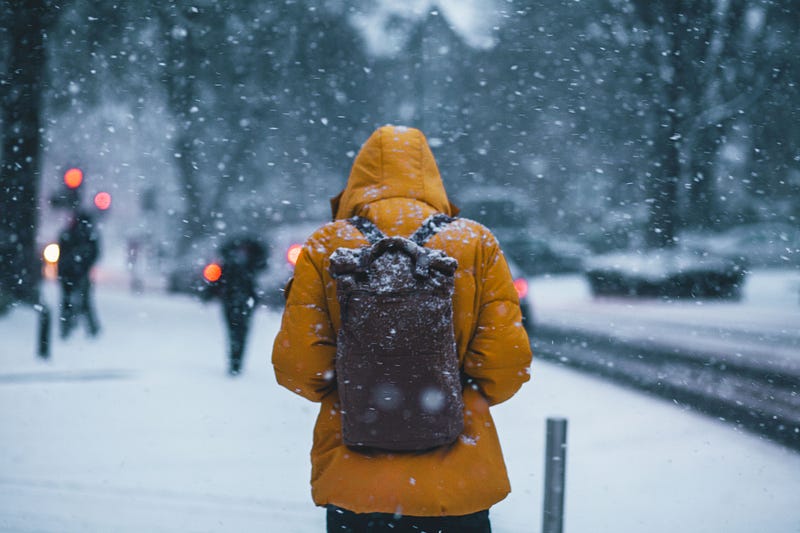
And so after almost two years of the pandemic, we are not at a full stop but we cannot even say that we are safe. Vaccines are allowing us to avoid the more serious consequences of Covid-19 and death, but the non-immunized population groups are still large enough to allow the virus to continue spinning and changing, giving life to the feared variants: the latest it is the famous “Omicron”, the South African one so named by the World Health Organization. Meanwhile, Christmas is approaching, bringing with it the worry of not being able to live the holidays completely serene for the second consecutive year. In short, we are still “in the winter of our discontent”.
This tangled situation gives rise to more and more doubts and uncertainties in everyone’s hearts. The question of questions, however, returned to the forefront through thoughts such as that of the important writer and professor Antonio Scurati in an editorial in Corriere della Sera, one of the major Italian newspapers: “And if Covid never ends? The duty to imagine a future beyond this infinite winter” reads the title of his article, “We have long avoided giving voice to our unpronounceable fear”, he underlines in the first lines.
Scurati’s text explains that, as we have become accustomed to both the perennial climatic and environmental emergency and the now “chronic” migratory crises, in the same way, we will metabolize this coexistence with the Coronavirus, which is confirmed to be long and tiring. On the other hand, over time, the pandemic has already forced us to accept as “normal” situations the masks on the face, the social distancing between us and other people, the limits imposed on freedom of movement, work difficulties, and closures of economic activities.
Hope doesn’t have to die, of course, and we want to continue being optimistic and confident, but we’re certainly not stupid. In fact, it has long been foreseen the possibility that Covid will become a virus from which one must periodically defend oneself, such as the flu and other diseases. So ultimately there is a basis of truth in this reasoning, albeit a bit obscure and pessimistic, and it is better to start putting yourself in the right perspective in the face of such arguments.
“One era has ended, another has begun”, concludes the editorial: we must therefore adapt to the novelty, without resignation or anger or individualism but, indeed, with a kind of generous collaboration that involves the whole “human species”. The ultimate prize will probably be survival. “The year that is coming in a year will pass, I am preparing myself, this is the novelty” sang already forty years ago an unforgotten Italian singer-songwriter, the Bolognese Lucio Dalla, in the prophetic song “The year that will come”, with a visionary text that described an almost war scenario and distance between two friends.


