
The Winning Ticket
Thirsty Work — Chapter 3: geographic solution
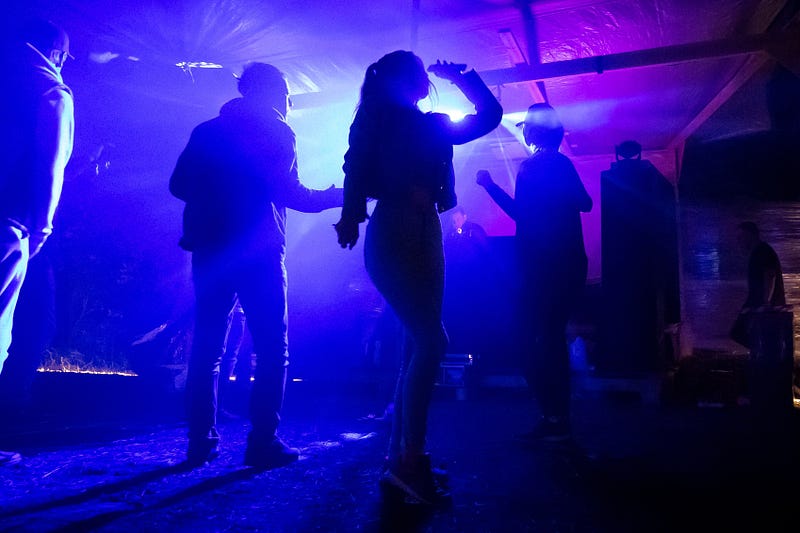
Two young women from California travel to New Orleans in search of redemption after the death of their mother. Carolee thinks she will show her little sister the world, but what they find in the barrooms of the French Quarter at Mardi Gras is more than she knows how to handle, or could have imagined back home. This is the third chapter of the novel Thirsty Work.
I knew it was the answer, the invitation Cathy wouldn’t refuse, the minute it issued from Doug’s red wine lips at Bristol House. He was sitting at my feet when he said it, his customary spot and the chief reason I liked him, the way he communicated mutely to the room at large that I was a woman worthy of adoration. Not everyone understood that yet, after all. Certainly not in this house, where Stiff and Budgy entertained a steady stream of high school and college students of all varieties: bright and dim, kind and cruel, homely and beautiful. Worthy of adoration and worthy of shit.
“Carolee, lee, lee,” Doug chanted with the musical urgency that always accompanied his fourth Budweiser, his bright blue eyes seeking to pull mine away from the riot of activity surrounding us, into them. Doug sat on the floor with his feet tucked gracefully to the side, like a girl’s. There was no hint in his posture of his high-testosterone status as a college football player. A big star, they tell me, a fast running man, though he seems small for football, and I’ve never seen him in the skin tight pants and exaggerated shoulders of the University of the Pacific Tigers, catching ball; only here, at Bristol House, the Mecca of young people who like to drink but haven’t yet managed to leave their parents’ homes.
The big star was shimmering faintly beside my scuffed shoes, training all his available light on me. His hand rested on the chair arm, respectfully, not even brushing my thigh. There was nothing between us; couldn’t be. He was a good friend of my boyfriend Johnny’s. But I was exquisitely aware of the tight sinew running the length of his forearm; the light brush of black hair curling over brown skin; the translucent fingernails, short, round and hard, making a slight impression on the worn fabric of the chair. I leaned forward to hear him over the music, presented my full attention like a gift.
“I’m going to New Orleans in February,” he said with uncharacteristic excitement. “Going to Mardi Gras. A couple of my friends are meeting me there. We’re going to rent an apartment. Stay maybe a month. It’ll be all parties and parades and big, sweet magnolia blossoms,” he ducked his head and chuckled softly at his own attempt at poetry. Then he turned his blue eyes back on me, hard and bright. “You oughtta come.”
I could see the two of us there right away. Away from Stockton. Away from Johnny. Away from the dull, steady somnambulist that was my father since the funeral, drinking whiskey and watching television, day after miserable day. Away from this noisy party house, teeming with the curious eyes of friends. I could see Cathy there, too. Dancing and laughing. Swinging her thin, white arms wide with freedom and escape.
“That’s a great idea!” I said loudly, surprising him with my sudden enthusiasm. “That’s just what I’ve been looking for!” I leaned over and squeezed him by both shoulders, pouring my energy into him as into an empty cup. I pulled him to his feet and gave him a boisterous hug. Then I pushed him away slowly, with significance. I was flirting shamelessly. It was fun. He stood happy and slightly dumbfounded, as loose and pliable as a yarn doll.
Just then a new party of people entered through the front door, laughing loudly. Stiff was in the back bedroom, turning the music up. A young man pushed behind us with a six pack dangling over his index finger. He passed the cans out like party favors to the people on the couch. As the music swelled, I began dancing, holding Doug’s attention with my steady eyes and swaying hips. People stood up to join us. The small room was dense with bodies. Someone tapped me roughly on the shoulder, handed me a joint. I put it to my lips and took a deep drag, then passed it to Doug. Doug took a drag and handed the joint to somebody behind him. Then he put his hand on my upper arm, leaned his mouth to my ear, the vibrations of his voice tickling my ear drum. “It’s too crowded! I’m getting out of here!” he shouted. I smiled and nodded, shooing him away magnanimously. As he pushed through the people behind him, I kept dancing, watching his broad back recede. I could still feel the warm impression of his fingers on my arm.
I left Bristol House myself about 10 minutes later, escaping out the front door into the cool, black night. As I climbed in my car, I smiled smugly to myself. This would get her. This would seduce her. I had the winning ticket, the perfect plan. I drove down Bristol Street carefully, aware of the alcohol tingling in my upper arms, loosening my thighs, creating a slight pressure behind my eyes. I slowed down to 15 miles per hour for every intersection. I ignored the shiver that invariably crossed my shoulders whenever I passed the corner of Bristol and Rose, where I’d gotten into an accident on the day that Mom told me she was dying.
Out on Pershing, I turned left, drove past the UOP stadium, where an orange and black tiger face was displayed on the press box in the stands. Behind the stadium were the ivy-covered brick buildings where my mother and father first met, where all my aunts and uncles graduated, where my grandmother graduated at the unheard of age of 50 and worked for 20 years in the registrar’s office, where I would never even consider going to college. This town was too small.
Driving north I left the neighborhood of smaller, older homes behind me — the neighborhood where both my parents had grown up, where my grandmother still lived, where even a couple of college kids like Stiff and Budgy could afford to rent. On my left was the vast, fecund field which used to stretch all the way to my house. Now it was being swallowed quickly by Quail Run, the development of charmless, monotonous, California ranch style homes that was eradicating the gray birds with the ridiculous topnotch for which it was named.
I’d picked tomatoes in this field, once, when I was nine. I went out to join a crew of mostly Mexicans sweating in the sun. The foreman didn’t mind paying me a buck a box just like the others. The pickers beside me wore yellow hats to shade them from the sun and filled their boxes quickly with rough, red hands. There were a few other children in the field, picking. Brown children with dusty feet and thin, hard arms. They worked fast. I was confident that I would work faster. But my back and arms started aching before my box was half finished. I brought it to the foreman. He said it wasn’t full; he wouldn’t pay. I finished the box resentfully, but didn’t take another one. I decided I didn’t really want another buck.
This was also the field of Cathy’s nightmares. The one old Mrs. Hodges across the street told her was full of escaped inmates from the “state farm.” Mental cases. Psychos. Murderers. People in white shirts with exceptionally long sleeves that they tied together in the back when they got out of hand — at least that’s how I pictured them. People with a couple days growth of beard on their chins and dirty pants and intense, piercing eyes. People like my cousin Jerry had been before he committed suicide. Like Dad sometimes when he was in one of his “moods.”
No, not like Dad. Much worse than Daddy.
“Your mother shouldn’t be leaving you alone,” Mrs. Hodges told Cathy meanly. “You come right over here and tell me if she does. I’ll call the police. It’s a crime the way she leaves you on your own. You never know when one of those crazy men will come breaking in the back door.”
I didn’t blame Mom for getting a job when Cathy went into Kindergarten. She’d been home with five babies for 20 years by that time. And then there was Daddy’s peculiar attitude about money — never giving her enough to keep food in the fridge, or make the house look good. But Mrs. Hodges was wrong about the crazy people. No one ever broke into the house. In fact, I never even saw one from a distance. And they shut down the state facility when I was 11 years old. But that didn’t stop Cathy from hiding under the kitchen table when she came home from school at lunchtime, clutching her brown paper bag in white, papery hands, thinking every creak and groan in the house was a madman with a knife.
It used to be, when I was younger, that you could stand in my back yard see all the way across this field to Stagg High School. One year, when they let it go to grass, the grass grew so tall you were hidden the minute you stepped into it. We’d flatten paths through the slender, green fronds, lay down on the soft blades and feel we’d fallen entirely off the planet. The world was that different. That private. That green. I’d lie down on a bed of grass as quickly and quietly as I could while Candace called out my name and searched for me. I’d lie there, stifling giggles, until an army of tiny aphids made my skin itch like crazy. Then I’d jump up to tease her. “Here I am! Over here!” Then sink down in the cover again and run.
But now all there was beyond our back yard was the brown back of a dull home, almost an exact replica of the home on either side of it, and of all the homes that would eventually fill the field all the way to Stagg High, spreading like a cancer, or a family of dullards, producing one offspring after another, each with the same blank eyes.
I turned left on Longview, drove down to the end of our street, parked. I saw mom’s old white Buick in the driveway, where it had been sitting since she went into the hospital two months before and never came out. I hoped Cathy was home. When I walked through the front door, I saw my father sitting on the couch watching television.
“Hi Daddy,” I said brightly.
“Carolee,” he answered tonelessly, his eyes never leaving the screen.
“Where’s Cathy?”
“I don’t know. She’s around here somewhere.” He made a dismissive gesture with his hand. I saw the cocktail glass on the table beside him, heard Mr. Smith berate the robot on Lost In Space. “You bubblehead! You metal monstrosity! You oversized oaf!” The television audience laughed. But Daddy just stared.
I found Cathy in the kitchen, eating a bowl of Cheerios. “Hi Cathy. How ya doing?” I sat down beside her in a rush.
“Okay.” She sounded down.
“What are you doing home? I thought you were going out with Rick tonight.”
“I didn’t feel like it,” she shrugged.
“I’ve got a great idea. I heard something wonderful tonight.” I leaned forward excitedly, dangling the bait.
“Oh yeah?” She looked at me levelly, unimpressed. A few slow seconds passed before she asked, “What?”
“It’s Doug. He’s going to New Orleans next month. To Mardi Gras. He’s going to rent an apartment there with some college buddies. He invited us to come!”
She put her spoon down and looked at me suspiciously, leaning back slightly in her chair, cocking her head. “He invited us?”
“Yes, us! You and me. Let’s do it, Cathy. Please! It’s just the thing I’ve been looking for. I’m dying to get away from here.”
I held my breath.
Cathy turned away noncommittally to look at the refrigerator. It hummed. She looked around at the mustard-colored linoleum, the avocado wallpaper, the bright orange plastic cereal bowl at her chest. She picked up her spoon deliberately, swirled a few soggy Os around the bowl. Seconds passed. She said nothing. She took a deep, noisy sigh. It seemed she was torturing me, savoring my discomfort. A cold clot of disappointment threatened the excitement growing in my chest.
Then she broke into a wicked grin. When she looked up from the cereal, her eyes were bright with mischief.
“Okay, Carolee. Let’s do it.”
“Yippee!” I erupted.
Her eyes slitted as I burst from my chair to envelop her in a boisterous hug. She pulled away from me, shook her head and muttered, “You win.”
Follow the free chapter links above or buy a digital copy of the whole book:
Copyright © 2020 by Patsy Fergusson. All rights reserved.
My writing is always free to readers who follow my links from Twitter, Facebook, and LinkedIn, but if you’d like to browse more, click here to join Medium and help support my work at the same time. Want an email when I publish a new story? Click here. Find more of my fiction, including another novel, on this List. And for more of the good stuff, follow Fourth Wave, where we’re changing the world for the better, one story at a time. Got one of your own? Submit to the Wave!


