
The Windmills of Southern Africa.
Symbols of Hope.
The Old Windmill.
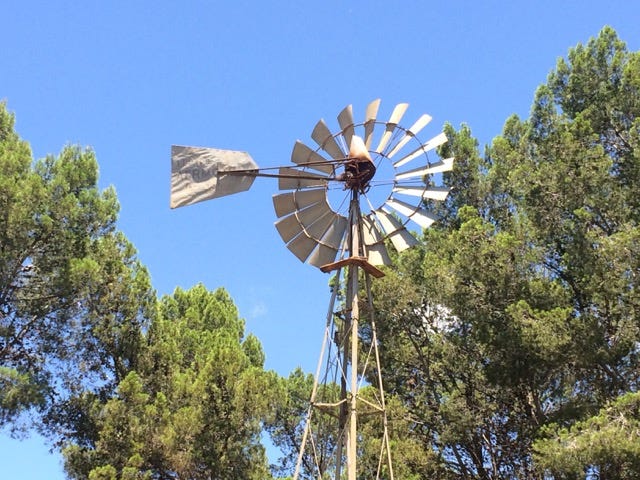
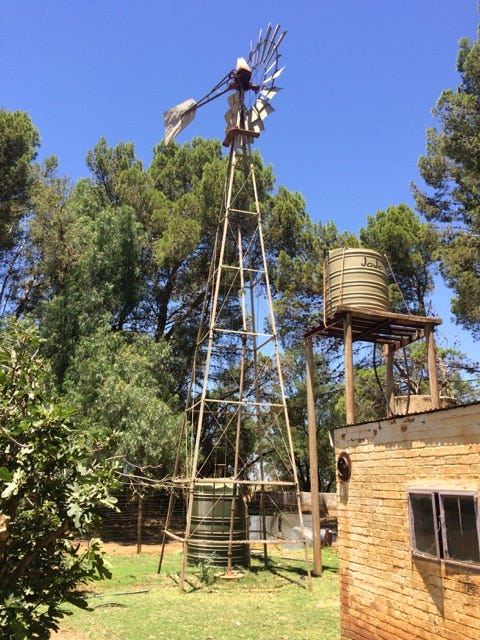
There is an old windmill standing here where grasses and tall trees, set amidst lush maize fields, create a little paradise. Horses graze, spotted eagle owls make their home, two black and white cats catch mice, birds build nests, and the days roll on, sunrise following sunset in an ordered sequence.
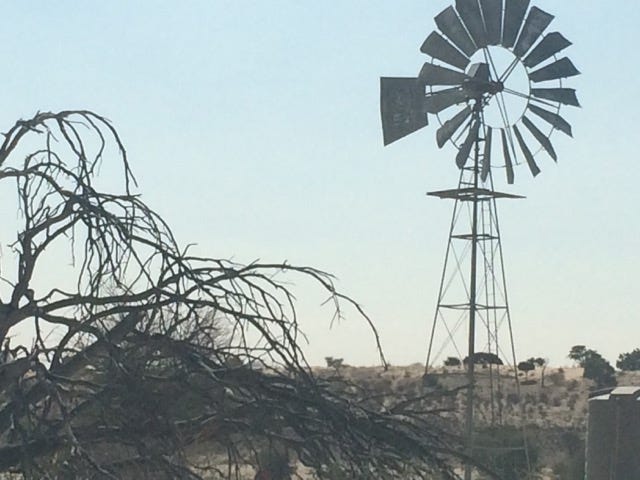
When the wind blows, the old windmill groans, complaining like an old man walking in pain. Yet the windmill reaches into the sky, silhouetted against the moving clouds, tall and proud, pumping life-giving water for the house, the animals and the garden. It needs a small repair, but it keeps turning, faithfully doing its duty.
A Symbol of Life:
“And the Windmill turns,
And the windmill swings,
As fast as it (possibly) can,
And the windmill turns, And the windmill swings,
And the water runs into the dam”.
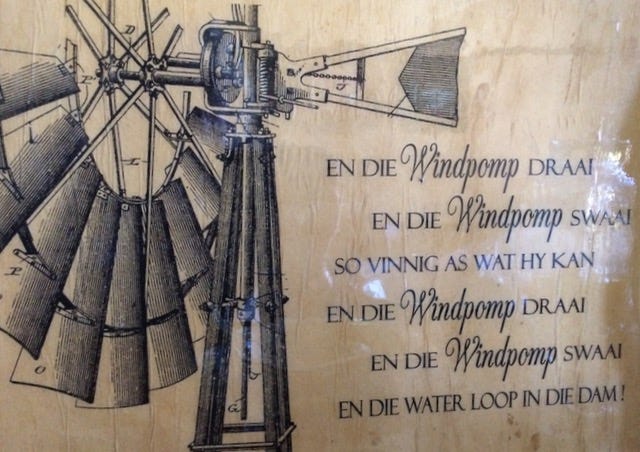
For South Africans, the picture and words are evocative. Windmills symbolise a life carved out in harsh, inhospitable lands to which their forefathers trekked by ox-wagon to reach the vast interior, seeking a new life away from the bothersome politics and rule of their day; reminders of the desire to live in peace, though it should be in arid places.
Here they built their small white-washed homes in the semi-desert, raised their flocks of sheep and attempted to grow crops; here the faithful windmill stood, bringing water up from the depths below the rocky outcrops and dry earth.
Travelling through South Africa.
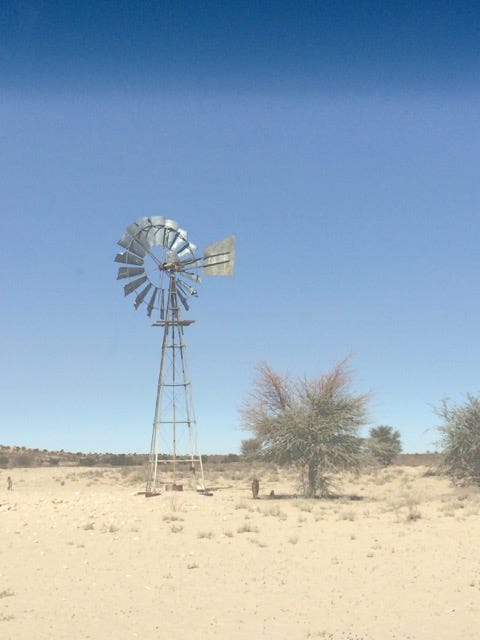
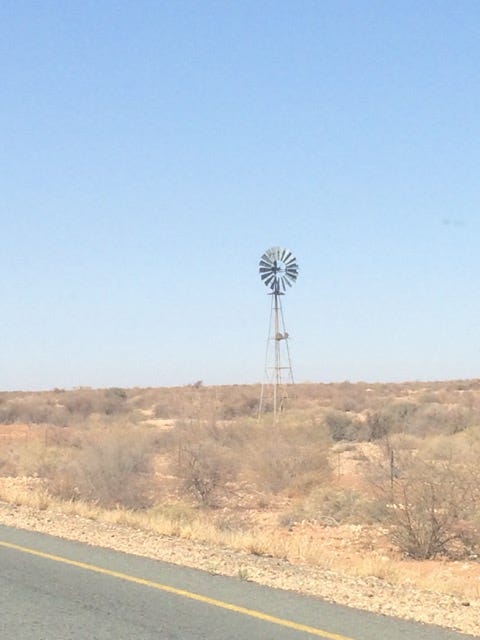
You see a windmill standing alone in the bare landscape; a few scantily clothed thorn bushes are scattered alongside, goats nibble amongst the branches, and a few sheep brace themselves against the relentless wind.
You trace the winding road, barely perceptible in the brown haze, to a simple, small homestead far in the distance, a lonely beacon of human life; you note the house has long since been abandoned, the walls are crumbling and the roof has disappeared; the desolation is poignant, as you imagine children playing, a mother placing loaves in the clay oven outdoors, and clothes flapping in the breeze.
Yet others you glimpse along the way are homes of intrepid farmers, hoping and praying for rain in the coming season to break the drought of last year, and the year before that, and the year before that.
A Symbol of Perseverance.
Windmills wait patiently for the wind, for they cannot leave their places. I have been told of an Afrikaans saying that speaks of this, the patience we have to exercise while we wait for providence to bring the wind our way.
Maybe, the old windmill groans not in physical pain, but in the pain of waiting, anxiously waiting for the signs of rain to quench the parched earth. The promise that it will surely come fills the old man with hope.
The Lush Farmlands.
You will see windmills throughout the country, wherever there are farms. Everywhere, they are emblems of the South African way of life, reminiscent of homely kitchens where aromas of fresh coffee, bread in the oven, jam making, fruit bottling and typical farm meals are prepared in the traditional way, the recipes passed down from mothers to daughters throughout their generations.
Homesteads in prosperous farming areas are large, usually with a ‘stoep’ ( an open verandah) running the length of the house, where the farmer traditionally has morning coffee. On the farms, the families gather and the children come for weekends from their boarding schools in the towns.
Songs tell the Story.
There are songs and poems in South African literature which illustrate the nostalgia for the South African lifestyle. However, it is the poignancy of loss and struggle, the identity we have with hardship, that most associate us with the lonely windmill, standing proudly in drought-ridden defiance of all that life brings its way. “The water runs into the dam”, bringing the life-giving water, and that is what matters.
Writer’s Note: This story complements Walking With Horses: https://readmedium.com/walking-with-horses-7f9dc44a0562?source=friends_link&sk=f2051a8be2565558622feea7df96f02f
Copyright: Lynette Clements. 2020.