
The Wild Life of Isaac Newton
Isaac Newton is one of the most important figures in the history of both science and math. He laid the foundation for classical physics and invented much of modern calculus. Much of his genius was to generalize the work of Galileo, Descartes, and Kepler. The physics that he described was our best understanding of how the world works until Einstein came along: nearly 350 years later! It’s difficult to overstate how influential this guy was.
Yet, Newton definitely had his quirks. He lived during a time of tremendous upheaval, and his book Principia is usually seen as the beginning of the Enlightenment. Being a transitional figure makes some of his work seem rather odd. A large amount of his works was devoted to alchemy: an early form of science that tried to do things such as find an elixir of immortality and turn lead into gold. I love this description of Newton given by John Keynes, an admirer of his:
Newton was not the first of the age of reason. He was the last of the magicians, the last of the Babylonians and Sumerians, the last great mind which looked out on the visible and intellectual world with the same eyes as those who began to build our intellectual inheritance rather less than 10,000 years ago. -John Keynes
Given his fame, a person like Isaac Newton can seen as rather unapproachable and alien to us. However, his life was full of weird occurrences and odd stories. This is amplified due to the period that he lived in: at the boundary between magicians and scientists. In this article, I’m going to share some of the weird things that happened in Newton’s life that will hopefully help humanize him. This will be a fun and interesting dive into the life of a great man, so let’s get started!
Great Plague
Newton went to Trinity College in London beginning in the year 1661. Since he did not come from much money, he had to subsidize his tuition by working in various jobs around campus during his studies. He was a fairly unremarkable student and became very interested in the work of Galileo: math was his favorite subject but he also greatly enjoyed theology.
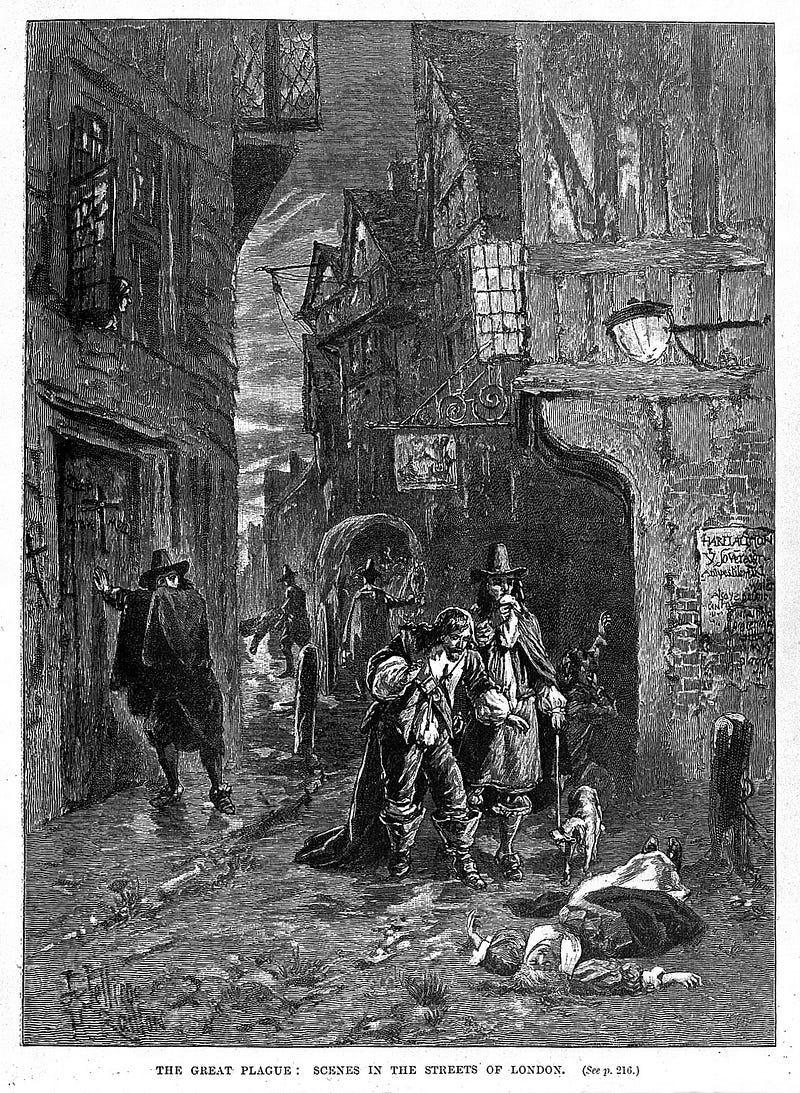
That all came to a grinding halt when a terrible plague hit London. Called “The Great Plague,” it was a breakout of the bubonic plague that hit London especially hard. About one-quarter of London’s population was killed. Schools shut down, and students were sent home. Sound familiar?
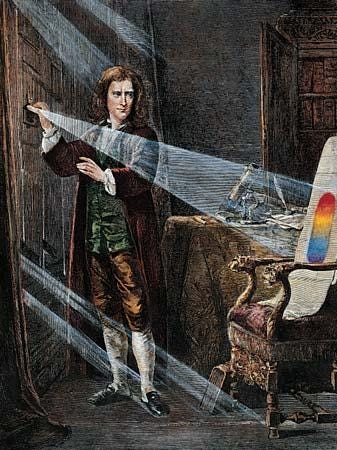
Newton returned to his childhood home and turned his bedroom into a study. It was during this period that Newton did almost everything that we now know him for. He laid out the laws of calculus, experimented with glass prisms, and laid the groundwork for his landmark theory of gravitation. It was here that he made the connection between the moon orbiting Earth and the everyday occurrence of objects falling. The popular story about the apple tree was said to have occurred during this time, but it is unfortunately just a myth. This period is also when some of Isaac Newton’s quirks began to reveal themselves.
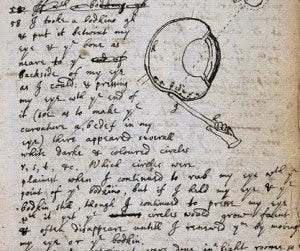
Obsessed with light, Newton tried many experiments to attempt to understand what it was made of. This line of thinking would eventually lead to his famous work with prisms, but there were a few interesting steps along the way. One of them involved sticking a needle under his eye and applying pressure to see how his vision was impacted. He would move it in different ways while recording in his notebook. Ouch! Another experiment involved looking directly at the Sun and recording how his vision was altered. Newton truly was willing to do anything to answer the questions he had about the universe!
Without this pandemic, Newton might have never had the time to discover so many amazing ideas. Returning back to school, he finished his studies and eventually became a professor at Cambridge. Over the next few decades, he would slowly refine and publish the work he did during this time. He would also become increasingly obsessed with the fascinating protoscientific field of alchemy.
The Alchemist
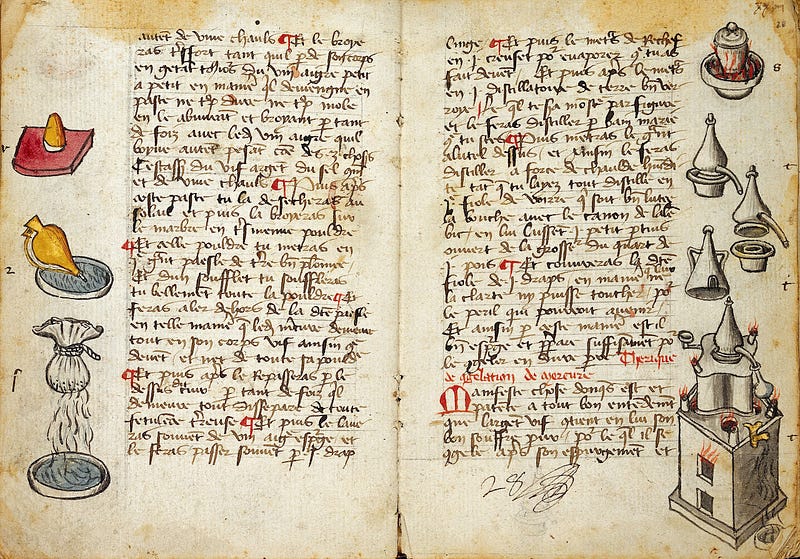
Newton made no distinction between what we now think of as science and alchemy. This highlights how he was living in a truly transitional period. Alchemy was banned in England during this period, so all of his work had to be done in secret. This interest began in childhood when Newton lived above an apothecary shop. Since Newton lived before the foundations of modern chemistry, alchemy lacked much of a standard practice at the time.
The majority of his work was devoted to finding the Philosopher’s Stone: a rumored object that could turn lead into gold. Some of Newton’s methods involved creating an object called “Diana’s Tree.” This metal substance would appear to grow within liquid under the right circumstances.
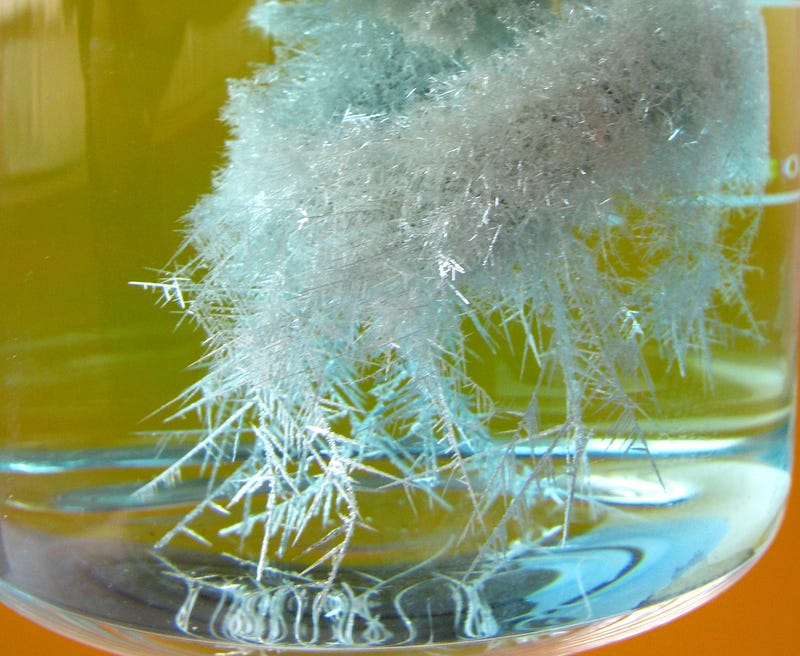
Newton and other alchemists believed that new metal was being created as the tree grew. They could make this work with silver, and they spent a lot of time trying to reproduce it with gold. This way, they could create new metal. We know today that no metal is created during this process, the growth comes from metal atoms that exist within the liquid already. However, you can see the basic groundwork for modern chemistry being established here.
All of his work in alchemy caught up to him. Newton suffered several nervous breakdowns during his life. His later letters show that he was becoming erratic and suffered frequent health problems. Later analysis showed that his body contained incredibly high amounts of mercury, and he was likely suffering from mercury poisoning from all his time in the lab. We know from his notes that he would eat mercury directly and record his thoughts about the taste.
While Newton was trying to create gold, he was also spending time publishing the work he had done during the Great Plague. This led him into an unexpectedly tricky situation…
Feuds
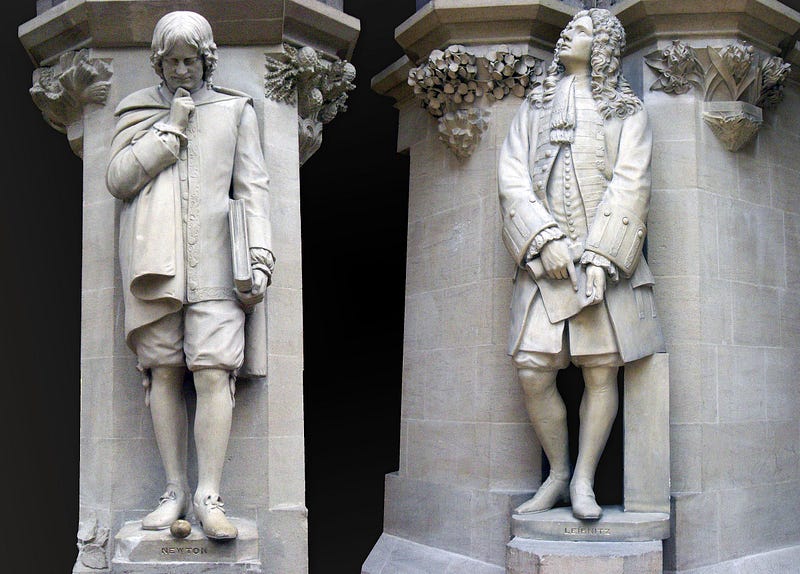
Newton also famously had a temper. This was most apparent when it came to the calculus controversy. After coming up with the basics of calculus, Newton did not publish it due to fear of criticism. However, he received word that a German scientist, Gottfried Leibniz, was publishing work that also used calculus. Newton quickly began to attack Leibniz and accused him of plagiarism.
He devoted several decades to destroying the reputation of Leibniz using his position within the Royal Society in England. This fight continued until Leibniz died in 1712. We now know that both men independently invented calculus as their equations use very different symbols. However, due to Newton’s position of power relative to Leibniz at the time, he often gets sole credit for the theory. Newton was given a state funeral when he died, while Leibniz died poor and in total dishonor.
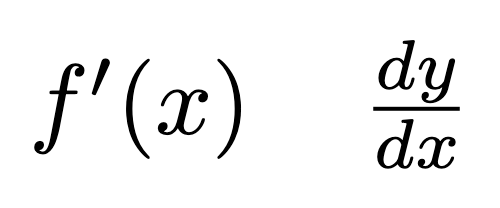
However, maybe Leibniz was the final winner as his notation has become much more commonly used. If you’ve taken calculus before, you’ve probably seen both of their methods.
Going Further
I hope you learned something! Isaac Newton is a fascinating character in history with many different aspects. While his contributions to science and math and monumental and deserve praise, he was more complicated than we often give him credit for. If you want even more insight into this man, I’ve provided some links below for you to check out.
- James Gleick has an incredible biography about Isaac Newton linked here. I highly recommend any book by Gleick, he has a way of making science come alive and you always learn a lot from his books.
- It’s historical fiction, but the Baroque Cycle by Neal Stephenson has Isaac Newton as one of the central characters! Stephenson clearly did his research here and I recommend this book for an amazing dive into the time period and a unique take on Newton’s personality.
- I also enjoyed this video by Biography about the life of Isaac Newton linked below
- This amazing website is entirely devoted to documenting Isaac Newton’s work in alchemy. There are many cool things to check out here.
- I’ve attached a video below of Diana’s Tree growing, it’s pretty cool!
I also have some similar articles to this one that you may be interested in, check them out!
If you liked this article, then consider clapping for it! You also may want to follow me for more stories like this, or subscribe to my email list! I publish weekly about math and science.


