
The Widow, The Boy and The Girl Who Gave All They Could

Reflecting upon three Christmas stories which show the heart of Christ-mas.
The Widow And The Mite
And He looked up and saw the rich putting their gifts into the treasury, and He saw also a certain poor widow putting in two mites. So He said:
“Truly, I say to you that this poor widow has put in more than all; for all these out of their abundance have put in offerings for God, but she out of her poverty put in all the livelihood that she had. ←-Luke 21:1–4
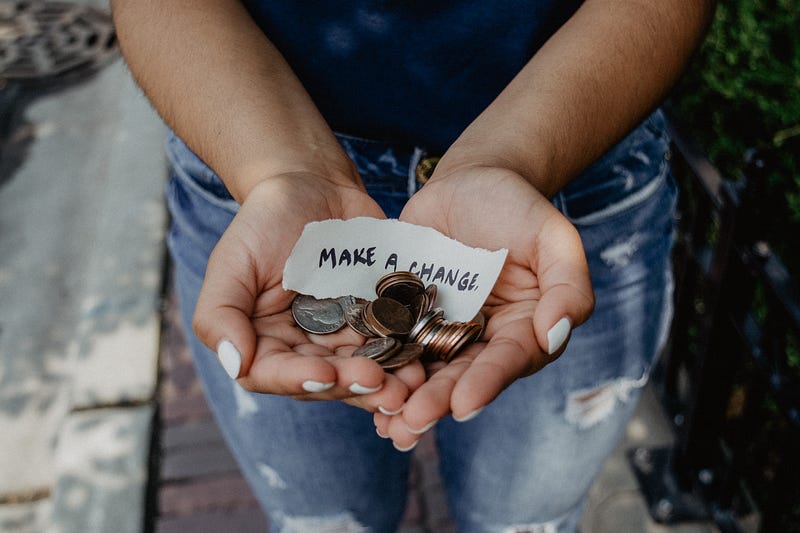
The mite, also known as a lepton, was a Jewish coin and the smallest used in New Testament time. It was worth 1/64 of a denarius. A denarius was a day’s wage for a common worker. But 2/64 of a denarius, or two mites, were all that the widow had.
This is not to say that a person has to live in poverty and give up everything they could have to look after someone else. It is a story or a parable illustrating the generosity and faith of a genuine kind and caring heart.
The woman had no husband to support her, yet she gave all that she could, trusting that somehow she herself would be supported.
Jesus’ message to his disciples is clear: The rich people gave out of their abundance, yet she, out of her poverty, put in “everything she had, all she had to live on” (Mark 12:44).
This story challenges us to ask ourselves what truly motivates our giving?
Is it because we wish to offer as much as we can, while having faith in our needs being met, or because we are being pious or feel obliged to help out?
The Girl And The Imperfect Giving
In 1987 a 24 year old girl, living in Australia, became aware of devastating floods in Bangladesh. She wished to make a difference and thought that a financial donation to an overseas aid agency could help.
Upon looking in her bank account, the girl decided to gift all of her savings, which was over one thousand dollars, to the agency.
The money would be used to get resources to those who needed it and for infrastructure repairs. However, unfortunately, later the girl discovered that the Chief Executive Officer (CEO) of the charity had embezzled a lot of the funds, so the financial impact was lessened.
Now, before anyone tells the giver off or laughs at her for being gullible, and before anyone rushes to ask this person for donations; let me say this.
That girl was me, and at 24 years of age, I had no reasons for keeping that money. Having gone through all sorts of trauma in my life, I neither loved myself or properly looked after myself, and I didn’t have any goals either.
A wise person (or a few) once said “there’s a reason for everything.” The reason why I gave so much was not that I was foolish or gullible, but was because I truly wished to help those impacted by the flood.
Plus, I had an income stream and trusted that I wouldn’t starve or not have my bills paid. I gave all that I could, like the widow with her two mites, not to be confused with being pious.
If there’s only one piece of advice I could give to everyone it would be this:
“Take a step back and take the time, the care, the patience, the tolerance, and the depth to look at WHAT happens and at the WHY to understand both. And THEN interact accordingly, whether that be to take constructive action or non-action, whichever is helpful for everyone.
This is at the core of resourceful or helpful relationships if you want them.”
You may wonder did I stupidly rush to give away all of my savings? Not at all. I looked up the track record of the organisation that I made a donation to and I trusted them. The CEO was caught out and had to make amends.
I am not a paper cardboard cut-out. I have engaged with voluntary welfare work for much of my life, including helping Oxfam, the Australian Red Cross, the Slow Learning Children’s Group of Australia, and the Conservation Council.
And just because this charity was compromised at that time doesn’t mean that all charitable organisations are, of course. And I learned from this experience; that I should and could broaden my view to find organisations that genuinely financially support those in need.
For example, a person can give financially only to small groups or other organisations personally known and trusted by themselves or their friends or family.
If you know that a convoluted or biased “system” (or process) holds up or stops money being used to support others via a certain channel, don’t put money into that channel.
There’s a ripple effect with what you consciously do in life. For example, you can invest money in a local educational group. And who knows, maybe a member of that group will rise up and later or sooner head up an ethical organisation that makes sure that money goes to where it should go.
This story challenges us to ask ourselves do we have to be perfect with our giving?
From my experience, the ripple effect was that I learned to accept imperfection, while looking at the energy underlying the interactions and learning from them.
It’s okay to make mistakes that we try not to make and that we learn from. And if we truly give authentically from the heart we can be at peace with ourselves.

The Drummer Boy Who Gave A Song
.
“The Little Drummer Boy” Lyrics
Come thy told me Pa rum pum pum-pum A newborn King to see Pa rum pum pum-pum
Our finest gifts we bring Pa rum pum pum-pum To lay before the king Pa rum pum pum-pum Rum pum pum-pum Rum pum pum-pum
So to honor Him Pa rum pum pum-pum When we come
Little baby Pa rum pum pum-pum I am a poor boy too Pa rum pum pum-pum
I have no gift to bring Pa rum pum pum-pum That’s fit to give our King Pa rum pum pum-pum Rum pum pum-pum Rum pum pum-pum
Shall I play for you Pa rum pum pum-pum On my drum
Mary nodded Pa rum pum pum-pum The ox and lamb kept time Pa rum pum pum-pum
I played my drum for Him Pa rum pum pum-pum I played my best for Him Pa rum pum pum-pum Rum pum pum-pum Rum pum pum-pum
Then He smiled at me Pa rum pum pum-pum Me and my drum
“The Little Drummer Boy” is a timeless Christmas classic. In the lyrics, the singer relates how, as a poor young boy, he was summoned by the Magi to the Nativity of Jesus.
Originally called “Carol of the Drum” the song was written by the American classical music composer Katherine Kennicott Davis in 1941. She based it upon a traditional Czech song.
Without a gift for the infant, the little drummer boy played his drum with approval from Jesus’ mother, Mary.
The little drummer boy recalls, in this song:
“I played my best for him” and “He smiled at me”.
The lesson in “The Little Drummer Boy” is simple and timeless. As the boy with a big heart, learned, the gold, frankincense, and myrrh or rich gifts from some resourced people are just as precious as uplifting music played from someone’s heart.
The story of the drummer boy also challenges us to think about what truly motivates our giving.
This song represents the importance of pouring one’s heart and soul into whatever gifts we offer.
Did the drummer boy and the widow and the 24 year old girl panic over choosing what they could give?
Did they get angry with themselves for not having something different to give?
Or did they look deeply into their hearts or souls to determine what seemed fitting for them as a genuine or authentic measure of the goodwill they wished to share?
These three stories, a parable from the Bible, a folk song, and a true story illustrate that it’s not the gift itself that’s most important.
It’s the intention or energy behind it that is the shooting star. The ripple effect will inform and illuminate the true impacts of the giving.
The giver and the receiver together create the cosmic dance and balance. The scales weigh our true intentions. And when our actions and behavior align with sincere intentions of co-creating peace, health, and all needs met on Earth, then the lessons of being human will have been learned by each one of us.