

The Wicked Affair of the Golden Emperor
A Charles Goodfoote Mystery in Old San Francisco
Chapter 16
The Smoking Horse on the Iron Road
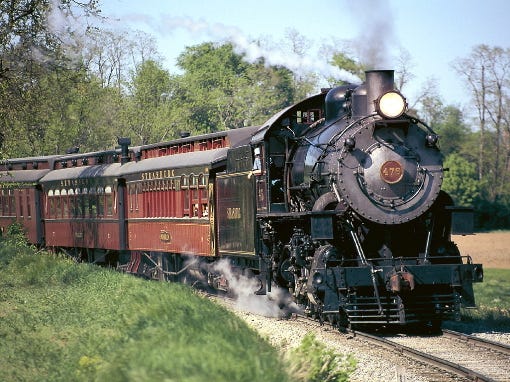
The Smoking Horse was larger than Kaya had remembered. It was all metal and smelled like gun oil. She shook off a sense of foreboding and watched the men, women and children milling around the depot. She noticed that the dark men gave the White-Eyes in a cage ten coins, pesos Dashante had called them. Then the man in the cage would give the men a piece of paper they showed to another man dressed in blue. He seemed to be a gatekeeper, for he let the people onto the train.
The dark people, some in families, were put into a large train-wagon with no roof. For several minutes, Kaya watched the people get their paper and move into the train-cars.
Finally, Kaya stepped up to the man in the cage. He was tall and dressed in a white shirt with a black ribbon around his neck. Kaya could smell the sharp odor of his sweat.
“How far you goin’, son?” the man asked. He spoke in English and Kaya could understand him, but she knew she must answer in Spanish or the man would wonder how a sheepherder leaned to speak the language of the White-Eyes.
“To the golden mountain,” Kaya answered.
The man laughed. “San Francisco is a long ways off,” he said in Mexican. “I can get you as far as San Diego in California, but it will cost you twenty pesos. You can transfer there, but it will cost you. Do you have that much, young man?”
Kaya counted out ten pesos. The man shook his head. She counted out ten more. “Okay. Give this ticket to that man over there and he’ll put you in a car with the other Greasers.”
The gatekeeper took her ticket and pointed. Kaya jumped easily into the open car and moved to the far end, away from the Mexican families. No one watched or looked at her. The metal floor was covered in wooden planks, so it wasn’t as hot as the woman-warrior had feared. After awhile, a cart drawn by two mules came alongside and a man threw straw into the car over the people. Kaya and the rest of the passengers pulled the straw under their blankets and welcomed its softness.
Soon, a loud whistle blew which caused Kaya to grab the handle of her knife under her poncho. Her eyes grew large and her heart beat fast. She had never heard anything so shrill. With a jerk, the train started forward. Kaya’s journey had begun.
The Wicked Affair of the Golden Emperor
A Charles Goodfoote Mystery in Old San Francisco
Chapter 17
Goodfoote interviews the shocked ladies of the Mission House
It was after midnight when my cab arrived at the Mission House. As I suspected, the place was ablaze with lamp light. After tonight’s events, sleep would have eluded the women. They would be up talking it out, I reckoned, and my presence would not be unwelcome.
Mrs. Banfrey, the housemaid, admitted me, and I was quickly thronged by Emily O’Rourke and her retinue who came rushing into the foyer, questions pouring from them like a mountain creek during a spring thaw. I was practically dragged into a sitting room where a cup of tea was thrust into my hand. Besides Miss O’Rourke and Miss O’Shannahan, five or six other women in various stages of attire surrounded me. I noted Miss McMasters, the woman who screamed when she’d seen the headless body, was slumped against another woman. She had a glazed look in her eyes. Emily understood my glance. “We do keep something stronger, Mr. Goodfoote, if you feel the need to calm your nerves.”
“The tea will do fine, Miss O’Rourke.”
“Now, Mr. Goodfoote, what can you tell us of tonight’s extraordinary events?” she asked as she sat forward in her chair. There was a consenting murmur from the other women, but they fell silent when I started speaking.
“Extraordinary, indeed, Miss O’Rourke,” I began. I looked around at the ladies’ expectant faces. “But now, I need to know the nature of the meeting you had scheduled with Administrator Dillman. I cannot fathom what plans or ideas you could have been set to discuss that would lead to such a horrendous murder.”
Emily looked at each of her “sisters” in turn. She dropped her eyes briefly as if in thought, then focused her attention directly on me.
“Our meeting had to do with new laws, Mr. Goodfoote. The total emancipation of the Chinese people in California. A law that would give equal status to all immigrants, be they Irish, Polish, German, or Chinese. All would be allowed to vote after five years of residency, swear out complaints in our courts, own property anywhere in the state, and even testify against a Whiteman.”
I took a sip of tea. In the silence that held after Emily’s sweeping statement, I heard Miss McMasters soft snores.
“Some of the unburned papers indicated a bill of that kind,” I nodded. “But it seems a poor excuse for murder. Something of that nature would have been defeated in committee long before it ever got to a vote.” I shook my head. “And an Administrator can’t introduce a bill. He’d need a representative to do that for him. Does he have such a colleague?”
“He was working closely with members of the Collective, especially Misters Walker and Darrigan. Mr. Walker had urged him to convince the representatives from this area to bring the bill to committee. He even offered to lend his considerable support.”
“Miss O’Rourke, the answer to this heinous act lies outside legislative shenanigans. As contentious as state politics can be, a beheading is not normally a substitute for vigorous debate.”
“The Triads under this proposed law would be directly under the authority of the US Judiciary, and subject to control by federal marshals,” she answered. “Could that be a reason this poor man was attacked in such a vile manner? What possible motive, other than the Chinese question, could lead to this…this…?”
“The investigation has but began, Miss. All motives will be explored as we progress.”
And here she finally broke down. As she began sobbing, the other women rose in a body and surrounded her with coos and pats. The rest of the conversation, such as it was, uncovered no new information. Soon, I rose to my feet to bid the ladies goodnight.
“It would be best to curtail your activities for the time being, Miss O’Rourke. Prudence calls for you and your sisters to remain behind locked doors when darkness falls. Just until we catch this madman.”
“Thank you for your concern, Mr. Goodfoote.” I noted she hadn’t agreed to stay off the streets at night.
I caught a cab to my hotel where I hoped to catch as much sleep as possible before the public clamor over the death of State Administrator Dillman commenced.
The Wicked Affair of the Golden Emperor
A Charles Goodfoote Mystery in Old San Francisco
Chapter 18
Kaya journeys deep into enemy territory
Kaya spent the first day of her journey sitting on her blanket on the straw. She kept her head down, shaded by her large sombrero. From beneath the hat’s rim, she watched the other passengers and tried to learn from them how a Mexican boy should act. A family was at the other end of the car, a father, mother, son, and a little girl. The son, of about twelve, sat quietly, speaking only when the father or mother asked him something in Spanish. They shared a water bag and food, and didn’t speak much.
An older man with a white beard sat alone against the wall on Kaya’s right. His face was sad, and he didn’t look at the other travelers. Three younger men, also sheepherders by their talk and dress, played some game with fists and fingers. Kaya had never seen this game, but it looked similar to one the men and boys in her village played.
Although the sun wasn’t bothersome to Kaya, she was glad she had the shade of her large hat, and was grateful for the warm water in her canteen. In a pouch inside her poncho, Kaya had a good supply of pemmican made from dried deer meat pounded with berries. Dashante had made sure she had enough for many suns.
The train stopped three times, each time jolting and hissing. At the first stop, the three young men got out. One glanced at Kaya, but didn’t say anything. Other men climbed into the train-wagon, and sat and slept. At the third stop, a young man dressed in white shirt and pants jumped aboard. He came straight back toward Kaya and sat down with a sigh.
“Where you going, boy?” the man asked. Before Kaya could form an answer, the man continued. “I’m headin’ to San Diego, California. Ever heard of it?”
Kaya shook her head. No.
“Good money to be had in San Diego, boy. I got a cousin who can get me a job there. He runs a big restaurant. The biggest in California. I’m a cook, and a very good cook, too. You a cook, boy?”
Another shake of her head.
“No, I don’t s’pose you are. When I get a job in my cousin’s restaurant, I won’t be riding in this goddamn gondola car no more. I’ll be riding in style inside with the Gringos.”
Kaya said nothing and finally the man tipped his hat over his eyes and went to sleep.
On the second day, the man dressed in white went to sit with some other men who were talking among themselves. They had a jug and shared its liquid with the man in white. As the day warmed, Kaya took off her heavy poncho and loosened her collar. She closed her eyes and her head sagged, but awakened suddenly, ready to fight. Someone was standing right in front of her. When she looked up, she was surprised to see the young boy from the silent family. He handed her a rolled up corn cake filled with beans. She took it gratefully and even managed a smile before she wolfed it down.
At the next stop, the family got off. Before departing, the father went to Kaya and said quietly in Spanish. “If you want to pass as a boy, don’t show your chi-chi’s when you sweat.” He handed her a pouch of food, then jumped off the train. Kaya realized her shirt had become soaked with sweat and quickly made adjustments to her garments.
On the third day, the car she was riding in was emptied. A White-Eyes who came into the car said, “This is the end of the line. Everybody off.”
The old man with the beard asked where they were. “El Rio de Lodo,” the train man said. “Still in Arizona Territory.”
The town they were in was larger than any Kaya had even seen. Horse droppings and smoke from the train made up most of the smells of this village. The car in which she had been riding was taken away and put with many other train-wagons. Confused about what to do next, she followed the others who had shared her space in the car. Many went up to another White-Eyes dressed in blue and showed him their tickets. This man then directed them to different parts of the Smoking Horse corral by pointing.
Kaya waited until all the other passengers had spoken to the man, then approached him and held up her ticket.
“All the way to San Diego,” he said. “Get aboard The Western over on track three. That’s right over there.” He pointed in the direction of another train that was sitting on the Iron Road. It looked to Kaya as if the Smoking Horse was drinking water from a log. She knew both the wood for its fire and the water it was drinking made the big train move. It helped to think it drank the water and ate the wood, like a horse drinks from a stream and eats grass for food. Someday, she would learn about the White-Eyes’ things made of metal, but now she must think only her journey.
Kaya found the train the man in blue had pointed out, and another man in the same kind of clothing looked at her ticket. Both men had hair above their lips, but this White-Eyes’ mustache, as Goodfoote once called it, was longer and curled up at the ends. Kaya had seen this hair on many White-Eyes soldiers she had fought.
“Where you heading, Greaser?”
“The golden mountain by the big water,” Kaya answered in Spanish.
“You mean San Francisco, but this will only take you to San Diego,” he said in English. “Then it will cost ten more dollars to get you up the coast. You got ten more dollars?”
Kaya pulled a gold coin from her pouch and showed it to the man. He didn’t return her ticket right away. He held it while he studied her face. Kaya felt her back shiver. Would she have to kill this White-Eyes, and then run? Her trip would be more difficult with many men chasing her. The man glanced around as if looking for someone.
“Biscoe,” someone shouted. “Let’s get this train rolling.”
“Get aboard, Greaser,” the man called Biscoe said as he punched a hole in her ticket.
Kaya stepped into a closed car. There were many seats. She had to move between Mexicans sitting on the floor on blankets. There were a few seats no one used, but the dark people seemed to like sitting on the floor in their family groups.
Kaya sat alone near the front of the train-car on a seat with a hard surface. She pulled her feet up under her and kept her head bowed under her hat. Someone pushed past her and sat down in the seat facing her. She smelled him and knew what he was before she peered from under the rim of her sombrero. Kaya recognized him as one of the People of the Many Colored Robes, who the Mexicans call Navajo.
He was a large man with long black hair and a small sombrero with silver conches around the brim. Kaya grasped the hilt of her knife, ready to fight.
The Wicked Affair of the Golden Emperor
A Charles Goodfoote Mystery in Old San Francisco
Chapter 19
The Coroner reveals some useful clues for Charles
In the morning, a fog rolled up from the docks but was soon scorched by the sun and fled. Despite the fine weather, the somber nature of my journey put me into a pensive mood as my carriage made its way up the long slope of Summit Avenue to Canary Street. I was surprised the street outside the undertaker’s parlor was quiet, with no throng of reporters and gawkers.
The Bradshaw Brothers House of Eternal Peace was a two story frame structure built near the top of a small hill, with the front entrance gained by a long flight of stairs, and the back, livery entrance, level with an adjoining alley. After paying the cabbie, I climbed the stairs to the glass-paneled double door and pulled the bell. A proper maid, complete with white apron and cap answered my ring, did a little bob and bid me enter. George Bradshaw, youngest of the proprietors, arrived quickly and led the way toward the back of the building. Despite the flowers in every nook and cranny of the viewing rooms, and several fat candles giving off tendrils of smoke, the sweetish odor of recent death lingered.
“We’ve contacted the family in Sacramento,” Bradshaw said in his hurried manner as his quick step bounced us through what seemed an endless number of rooms. “They want our ultimate casket. It’s the first cherry-wood coffin we’ve sold in nearly a year. The last one was Mr. Heidegger, of the Heidegger Emporium. We’ll be putting Administrator Dillman aboard a special funeral car on the Phoenix this very afternoon, and he’ll be laid out in the capitol in a day or two.” He prattled on until we reached a closed door discretely hidden behind a maroon drape trimmed with gold braid. I knew from past experience this was the preparation room.
Doc Thorp, glanced up as I pushed open the door behind the curtain. He had put on a rubber apron and was tying its laces behind his back, all the while keeping a close eye on the disrobing of the corpse by two livery men.
“Mr. Goodfoote of the Pinkerton Detective Agency,” the coroner welcomed. “Come to join the party, I see. You really need a better hobby, Charles.”
The Coroner pulled an oil lamp closer to the body and picked up a large hand lens. “Bonk,” he addressed one of his helpers, “the light from the window isn’t going to be enough. Get two more lamps from Bradshaw.”
As he began to examine the front section of the body, he chuckled, “You’ll notice we are unencumbered by the gentlemen of the press. Someone put a whisper in the ear of a certain well-known editor that we were doing the post-mortem at St. Bart’s on the other side of town. Clearly, the informer was misinformed.”
“I’m glad you didn’t misinform me, Doc.”
“Wouldn’t think of it, Charles.” Thorp hummed while he continued his examination of the body, and I didn’t distract him with my questions.
“I hear you were once a US Marshal,” he said as he studied the remains of the neck. “What made you hire on with Pinkerton’s?”
I moved in closer. “Pay’s better, for a start.”
Thorp nodded. He handed me his hand lens. “Take a look at this, Charles. No hesitation marks at all. One quick, clean blow.” He used large forceps to pull on the skin. “Whoever wielded this sword is strong and practiced.”
“Are you sure it was a sword? Not an ax?” I peered through the glass at the edge of the wound.
“This blow, Mr. Goodfoote, was struck with a sword. It could have been a katana in the skilled hand of a Japanese Samurai. But seeing as how we’re living in the midst of about twenty-five thousand Chinese, I’d opt for a weapon known as a dao, not the better known jiàn.”
He must have read my blank expression. “A jiàn is a large Chinese sword with a double-edged straight blade. The dao is single bladed and curved. I’d vote for the dao, but I’ll need to examine the head to make sure.” Which he did. And it didn’t change his opinion in the least.
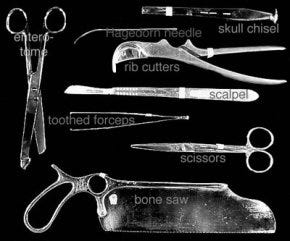
“He has no cuts anywhere else,” he continued. “No blows from a mallet, no rope marks. His last expression was probably one of complete surprise.”
He took off his soiled apron, tossed it onto a nearby table, and began to wash his hands in a pan of water. “So there you have it, Charles. Death by misadventure, I’d say. If you’re interested, stop by my place sometime this afternoon and I’ll show you the difference between Chinese and Japanese swords.”
“How does two o’clock sound?” I would be grateful for any information, including weaponry, of the Chinese.
“Two would be fine. I’ll have finished my rounds, and barring interruptions from patients, we’ll have enough time for a proper confabulation.”
After drying his hands on a towel, Thorp picked up a note from a metal stand near the body and handed it to me. “We found this pinned inside his vest. I’m sure you’ll give it to the police if it has any value. We also found this wallet inside his suit pocket.”
The note simply read “Walker” and “Darrigan,” the two richest men in San Francisco, maybe in all of California. Both men had been at the scene of Dillman’s murder, and here their names were pinned inside his vest. A valuable piece of evidence, or a planted clue implicating community leaders, I wondered, as I folded it and put it inside my pocket book. I would need time to ponder its place in the mosaic of this puzzle as it began to take form.
Dillman’s wallet contained two hundred dollars cash, and an account book from the California Citizens Bank of Sacramento. He had deposited a thousand dollars a month for several months, far above his government salary. But the deposits had stopped two months past.
I returned the wallet, money, and account book to the Coroner. “Bradshaw can give this to the family. They may need the money.”
“Now,” Thorp said, “ I have an unopened bottle of brandy that belonged to that scamp Napoleon Bonaparte himself. If you’ll join me in the next room, we’ll explore a drop or two of pure French bliss.”
It’s always a pleasure to consult with Doctor Franklin X. Thorp.
Doc led the way to a small chamber furnished with comfortable chairs and a velvet-covered settee. “You may never have seen the results of a beheading like this before, Charles,” he began after handing me a small glass of brandy. “but I have.”
He settled back in one of the stuffed chairs, held his glass up to the candlelight, and peered through its amber liquid.
“Put your feet up, Charles, and I’ll educate you on what makes these Celestials tick.”
I sat back and prepared to be lectured to. I knew from experience that whatever this Coroner had to say would be enlightening.
For the better part of an hour, Doctor Thorp gave me part and parcel of Chinese history, going back a good five thousand years. He finished up with the current state of turmoil in the Heavenly Kingdom.
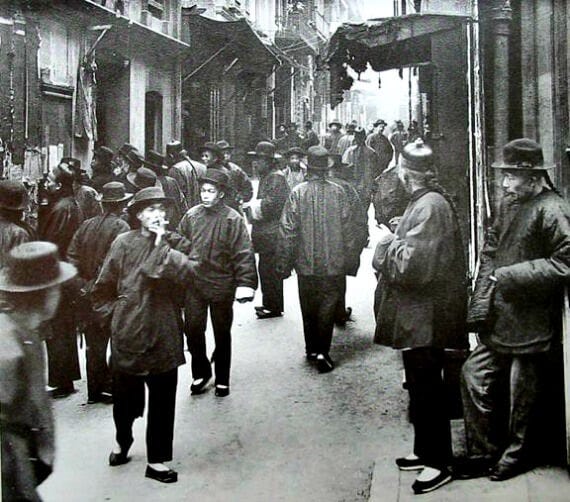
“The Chinese have more secret societies than hairs on a grizzly’s ass,” Thorp said, “most with some high-fluting names. You have your White Lotus Society, your Red-Eyebrows, your Yellow Turban gang. All the colors of the rainbow are represented in clubs and triads. And the Iron Lances, the Short Swords, and the Fiery Dragons are also always around. Every few years, one or more decide to overthrow the Dragon Throne and all hell breaks loose. The government chops off a bunch of heads and restores peace…for awhile.”
I broached a subject that had been rattling around in my head.
“Have you ever heard of the League of Righteous Tigers?”
Doc Thorp again studied his glass of brandy, tipping it so the light from a lamp caught its golden glow. He looked at me sideways.
“Traveling swordsmen at first. Paid soldiers who fought for one or more kings. Some became spies, some, assassins for hire. At one point, about two thousand years ago more or less, they got together and formed their own little secret society.” He leaned forward and said quietly. “Probably the most dangerous gang in all China.”
“So a triad is a criminal organization, then,” I said. John Fong had not steered me wrong. If this band of brigands was after Emily and the Mission House, the danger was real and just getting started.
“Quite a group,” he nodded. “They trained their children, boys and girls, from the cradle on, to run, ride, fight, climb, and kill. Rumor has it, the best of the lot were invisible, supposedly cast spells, and used magic to destroy their enemies — or the enemies of whoever paid them.
I was on the hunt for someone who could scale walls in the dark. Who could be invisible in a dark room filled with police. Maybe be audacious enough to drive a coach and four at a young woman in the middle of a crowded street.
So if this was a formidable paid assassin, for whom did he or she work?
“They were completely destroyed over a thousand years ago,” Thorp said, as if reading my thoughts. “So don’t go chasing your tail.”
There was a discrete knock on the door and George Bradshaw stuck his head in. “Boy came by and said you’re wanted at Mrs. Perrot’s laying in, Doc. He said Millie the midwife needs you.”
Thorp put down his glass and rose to go. “By the way, Goodfoote. I had a body in here two nights ago. One John Skaggs, late of the Barbary Coast. Had a nasty knock on his head. You know anything about that?”
“Some,” I replied. “I was in the saloon when a fight broke out and Skaggs went down in the melee.”
“I thought you’d be involved, the late Mr. Skaggs being known for his clandestine information. It may be of interest to you to know the cosh on his head didn’t kill him. Someone stuck an ice pick into the back of his neck, right up into his brain.”
The Wicked Affair of the Golden Emperor
A Charles Goodfoote Mystery in Old San Francisco
Chapter 20
An enemy becomes a helpful friend
The Apache and Navajo were not at war, but they were not friendly either. The man was staring at Kaya and nodded.
“Long way from home, little sister,” he said in English.
Kaya’s eyes hardened as she stared at the big Navajo. They sat and watched each other for a long moment. Kaya could see the man who took her ticket moving up the aisle toward her. She remembered another trainman had called him Briscoe.
“Let me see your ticket, boy,” Briscoe said in English.
“He doesn’t speak English,” the Navajo said to the White-Eyes. “Show him your ticket, son,” he continued in Spanish.
Kaya handed Briscoe her ticket. “This ticket is to San Francisco,” he said. “That’ll cost you ten dollars. That’s one hundred pesos, boy “
The Navajo translated it for Kaya, although she knew what was said.
“One gold eagle, boy, or get the hell off this train.” Briscoe must mean the yellow metal with the bird on it. She dug into her pouch and handed him a ten dollar gold piece.
“That’s it. Now how in hell did a kid greaser like you get an American ten dollar gold piece? You must have stole it. Is that right, boy? You robbed someone for it?”
The man’s breath smelled strongly of alcohol, like the Whiteman she had seen drunk when once she was in a town. Kaya could see his yellow teeth and curled mustache. It would be easy to cut his throat, she thought, and her hand tightened on her knife.
“His father sold his sheep,” the Navajo said. “He’s sending his son here to stay with a priest in San Francisco.”
Briscoe pulled his face from Kaya’s and looked at the Navajo. “That right? Kid got the money from his old man? All right. A priest, huh?
“You got a ticket, Redskin? You going to the Golden Mountain, too?”
The Navajo handed Briscoe his ticket. “This will take you to San Diego,” Briscoe said, as he handed the ticket back to the Navajo. With another look at Kaya, the White-Eyes turned and headed back up the aisle.
“Your ticket is now good all the way to San Francisco” the Indian said. “That snake was going to try to get all the money you had. What stopped him was that he was afraid if you told the priest about it, it could cost him his job.”
He leaned close across the aisle. “Little Sister, I don’t know what you’re up to or why, but don’t show that money around to anyone. The yellow metal makes the Whites crazy, and they’ll do anything to get it.” He leaned back in his seat, folded his arms, as the train followed the setting sun, went to sleep.
San Diego was even bigger than El Rio de Lodo. Kaya watched out the window at the turmoil of men, wagons, horses, and dogs. There were more Mexicans and White-Eyes than Kaya had ever seen in one place before. It was night, but the street was bright with lamps burning on poles that lined the street.
The Navajo told Kaya she must get off the train. This train, too, was tired, and she must get on another that was fresh and would take her to the Golden Mountain.
“Remember, don’t show the gold to the Whites. Just give them one piece of gold at a time and keep the rest hidden.” The big Navajo was about to leave, his pack slung over his shoulder, but then turned back. “Come with me, Little Sister. I don’t want you wandering around lost in this town.”
The rain began as soon as they started to walk along the street. Most of the people that Kaya saw ran to the doorways and overhanging balconies. This is a male rain, Kaya thought. She knew it would bring flooding to the arroyos and rivers of her land.
“Someone must have done a brings-rain dance,” the Navajo said. “We’d better get you into some shelter for the night.”
Kaya followed the big Indian along the wooden sidewalk beneath the balconies. They passed the open door of a saloon and Kaya could smell the hated liquor. A drunken cowboy staggered out, nearly running into the Apache woman, but she nimbly stepped aside and let him fall into the muddy street. He lay face down for an instant before he turned over and laughed as the rain hit his face. White-Eyes are all crazy, she thought. Gold, liquor, and lust for women make them go mad.
Maybe the old man in the cave is right, she thought. Maybe Goodfoote will throw me out. He is half-white and maybe his white blood will make him crazy and he’ll reject my red blood.
She gave her head a quick shake to send the idea away.
The pungent odor of horses and manure caught her attention. Just ahead was a stable, and the Navajo was heading straight for it. Should I steal a horse and ride the rest of the way to the Golden Mountain? she wondered.
“This isn’t the best bed in town, but I think you’ll be comfortable here,” the Navajo said. The stable had a large double door with one open.
“Hello,” the big Indian called. “Anyone here?”
A small Mexican man came to the door. “Si, Senor?” He was dressed in a faded blue shirt, tight black pants, and a straw sombrero.
“Any chance of a straw pile for this kid here?” the Navajo said in Spanish. “We’ll pay five pesos for the night.”
The man glanced at Kaya. “A horse, who I must feed and curry, costs only two pesos. The boy can stay for one.”
“He’ll need some food. We’ll pay the extra four pesos for his chow.”
“He can share my dinner. Still only one peso.”
“You drive a hard bargain, my friend. I’ll leave him with you.” The Navajo handed the Mexican a peso. The man took the coin and retreated into the interior of the stable.
“Remember what I told you,” the Indian said to Kaya. “Your train leaves in the morning and you already have your ticket to San Francisco. Don’t give the men at the train any more money.” Kaya nodded. She watched the Navajo walk away in the rain, his pack over his shoulder dripping water.
The Mexican held up a lantern, pointed to a stall filled with clean straw, and sat down at a table. Kaya just watched him from the doorway. The rain pounded on the roof, the stable stayed dry. After a while, the Apache woman put her blanket roll on the straw, but kept her poncho and sombrero on.
“My wife makes a good dinner for me,” the Mexican said. “but it is too much for me to eat.” He stood and handed Kaya a metal plate with two corn tortillas filled with mutton. A green sauce covered the rolled up food. To Kaya, it smelled like deer meat.
This man is sharing his food with me, she thought. He means me no harm. Kaya took the plate and sat on the straw. After she ate, she took the plate to the man who took it, cleaned it, and put it in a pouch.
“I’m leaving for the night,” he said. “I will be back in the morning. If you have nothing to do, clean the excremento from the stalls. I will leave the lantern so you won’t be in the dark.” He pulled his poncho over his shirt, slung a pouch over his shoulder, and went out the big door into the rain. Kaya watched as he closed it behind him.
After the Mexican left, Kaya went to the big door and opened it a crack. It was not locked. She was not trapped, and she spent the next half hour checking the inside of the stable. She found a back door that was secured from the inside by a crossbar. Six horses were in stalls in the big room, and a wooden ladder led to a loft filled with hay. Another room held sacks of oats and some other grain that Kaya had never seen.
For the first time since she had started her journey, Kaya had the opportunity to wash, so she stripped naked and went out the back door to sit in the rain that poured off the roof like a waterfall. Then she washed her clothes in the rain barrel at the rear of the stable. After hanging up her clothes in the stable, she rubbed herself down with a horse blanket. It concerned her that both a Mexican on the train and the Navajo had seen she was not a boy, and she vowed to be more careful. She made a bed up in the straw pile, blew out the lantern and was soon asleep.
During the night, the beating rain stopped. Kaya awoke and listened, and heard nothing but the slight movement and nickering of the horses in their stalls. She got up and dressed herself in her still moist clothes. The rain barrel was overflowing. She filled her canteen, took a long drink, and went back inside. She found matches next to the lantern and lit it. The horses had eaten all of their hay, so Kaya filled their mangers with more hay from the loft. A can measure was in the room with the oats and she gave each horse a helping. Then she cleaned the stalls with a pitchfork and shovel. Before she left, she took ten pesos from her pouch and put them on the table where the man had sat to eat his supper. After piling her hair under her sombrero, she went out the front door.
Kaya no longer thought of the train depot as the “Smoking Horse Corral.” After listening to Mexicans and White-Eyes for the past several suns, she had picked up many new words that had originally been strange to her. The train-wagons were called “cars”, or “coaches” and the open cars were called “gondola”. Dark people were called either “Mexicans” or “Greasers” by the White-Eyes. And Mexicans call the White-Eyes “gringos,” so maybe that was what they called themselves. She wasn’t sure, so said nothing to anyone.
The train depot was empty when she arrived before dawn. Again, she sat against a wall and pulled her hat down over her eyes. She had learned the White-Eyes ignored her if she sat like that. She became part of the landscape. After a short time, the sun came up and people began to gather. A train arrived and people climbed on, but she needed to go north, and this train was heading in a southerly direction. She looked for the Sun Hawk and didn’t see him so continued to sit. When the right train arrived, her Power would let her know.
After a short time, she heard the screech of the hawk, and got to her feet. A train arrived within minutes going in the right direction. Kaya stayed at the rear of the crowd of White-Eyes who were getting on board. Finally, she was the last left on the platform, and she gave her ticket to the man in blue. This man had round eyeglasses and a white mustache. His blue eyes twinkled and he smiled at Kaya.
“Heading for San Francisco, I see. Welcome aboard, son.” He took Kaya’s arm to help her up the steps. She thought he was going to hold her back, and she tensed her muscles, ready to fight.
“Up you go, boy. Get a good seat. You’ve a three day journey in front of you.”
Kaya relaxed. This man meant her no harm. She noticed there were no Mexicans in the car and all the seats were filled. Women, in their long dresses, were fussing over their children, blocking the aisles. When she walked up to them to pass, they stepped out of her way and smiled. She had never seen so many smiles before. Even the men smiled at her as she went past.
The next car was only half filled so she went all the way to the front and sat down. On this train, no one could sit opposite her because there was no seat across from her, only stacks of boxes the Whites called “suitcases”. The glass on the door between cars reflected the entire aisle behind her, so it was as if she had eyes in the back of her head. She settled down and waited for the train to start.
Within a few minutes, the train whistle screamed and the train jerked forward. Now, she thought, I will find Goodfoote.