

The Wicked Affair of the Golden Emperor
A Charles Goodfoote Mystery in Old San Francisco
Chapter 21
A strategy is plotted and a lady comes to call
Doc Thorp’s carriage set me down on Market Street where I was able to catch a cab to Chinatown. I wanted John Fong’s take on Dillman’s death, and its tie to Chinatown and the triads. But Fong was not home, his whereabouts unknown to the people with whom I spoke.
I returned to Pinkerton’s where Jubal joined me in my office over a pot of tea. The news of Dillman’s death was thundering through the city, and the details in the press were based on speculation, not fact. Headlines in half the newspapers in town screamed that the anti-Chinese elements, specifically The Hounds, were to blame, and the other half roared against Chinese triads. The Vigilantes and police were arming themselves, anticipating a riot.
“Your night out with the church ladies wasn’t quite the boring evening I had predicted,” Jubal said, as he folded himself into a chair, newspaper in hand.
“No, boring is not how I would characterize it. Surprising how a quiet evening with good Christian gentlewomen can erupt into bedlam. Murder and mayhem, JT. Brutal murder. And we have a killer who will be hard to bring to heel. He’s a remarkable man, the devil himself, according to the police. We’ve run up against some dangerous hardcases in the past, Jubal. But this killer is like none I’ve ever seen.”
I then told Jubal what had happened at the hotel, and what the tracks and Doc Thorp had told me.
“Do the police have any idea who did this?”
“Not that I know of. I met a Sergeant named Monaghan and he looks to be a straight shooter. Captain Bullump was there, along with the Chief. They seemed to know Dillman.”
“Bullump was there?” Jubal’s eyes opened wide. “He’s usually only involved in harassing the Chinese.”
Clomping footsteps on the stairs caught our attention. A moment later, Pike Hobbs stuck his head around the door. “So you’re back, Bedford,” he said. “Looks like you had yourself a punch-up. Hope the other guy looks worse.” Pike Hobbs, a smallish, thin man, with a thick black mustache that wobbled when he talked, always dressed in well-cut, expensive suits. His shirt gleamed bright white, his cravat a dusty gray.
Henry squeezed past Hobbs and brought in an apple pie and wedges of cheese. He took away the teapot with a promise to brew another batch.
“Have a seat, Pike. I’m just bringing Jubal up to speed. Grab a hunk of that pie.”
“No to the pie, thanks just the same,” Pike replied. “But I will sit for a minute.” His normally pink face was pale.
“You look a little peaked, Hobbs,” I said. “And I never knew you to refuse Henry’s pie.”
“A man getting his head cut off in his own hotel room can spoil any man’s appetite.”
“Maybe you should have a cup of Henry’s tea. It’ll be ready in a minute and it cures all ills.”
Jubal T. was gazing out the window. “One question is bothering me,” he said, as he turned. “We’ve had run-ins with Captain Bullump before. Why didn’t he just chase you out of the room? As far as he knew, you had no right to be there, and we know how he likes to throw his weight around.”
“He was ordered by William Darrigan to leave me be,” I said. “Remember that case out at Darrigan’s home a few months back? The employee who had gone missing with a prize horse? I met him back then.”
“So what was Darrigan doing at the murder scene?” Jubal asked.
“He and Stanley Walker were in the ballroom with the Police Chief for some politicking when the commotion broke out.”
“Throw in Bullump,” Jubal said, “and you had yourself a star-spangled viewing party. Anyone suggest anything useful?”
“Out of the blue, with barely a glance at the body, Bullump sent his coppers after the Chinese. ”
I thought for a moment. “But there was something about the body that made Bullump uneasy. I noticed he kept grinding his teeth, shrugging his shoulders, and even making bad jokes.”
Jubal dug his fork into his pie. “Seeing a headless corpse probably made even that slug nervous,” he said. “No reason to read too much into his reaction.”
“That’s right,” Pike agreed. “He probably was jarred by what he saw. By the way, who’s our client on that one? Mr. William Pinkerton says we need more clients.”
“If you’re worried about the bills, Pike, we have the Six Companies paying the freight.”
“The Chinese are paying us? To find Dillman’s killer?”
“They hired us to protect the ladies of the Mission House, and this is just a continuation of that job,” I said.
I started in on my dessert, although I still hadn’t had breakfast.
Hobbs cut himself a small piece of pie. In the past, Pike may have objected to Henry as a clerk, but he never objected to Henry as a cook.
“Well,” Jubal said, reaching for a second slice. “If I were you, Old Hoss, I’d watch my back. Bullump may have let you have your fun because he knows you won’t be around to put it to any use.”
I smiled, I had been pondering the same idea. “I’ll keep a wary eye on the ridgeline, Jubal T. But right now, I need a man in Sacramento to do some snooping. Any chance you’re free for a day or two?”
Pike, his face now its normal pink, slowly shook his head. “You’re spreading this office awfully thin, Goodfoote, sending Bedford out again. Can’t we get the same information right here in the city? I could visit the Imperial tonight and see what I can find out.”
I shook my head. “Dillman lived in Sacramento so it’s an important place for us to look. But check out the Imperial, and while you’re at it, stop at Woo Fat’s place. This murder has a Chinese look to it. Listen to gossip, and to what the gamblers are saying. In this city, gamblers know more than the police about what’s going on.”
Hobbs nodded and hustled to his office.
“Sending Hobbs to Woo Fat’s gambling den is like sending a drunk to a brewery,” Jubal said quietly.
“Yes, I have the same reservations, but Hobbs is familiar with the place and won’t attract attention. He spends most of his free time either there, or at the Imperial. Nobody will notice him, while you or I would stand out like a grizzly at a church supper.” I put down my folk. “How’s your schedule look, JT?”
“I’m always free for a trip out of this city, Charles.” Jubal took a big forkful of pie and chewed it slowly, eyes closed. “If I wasn’t worried that Triumph would get jealous, I’d see if Henry had a hankering to move in with me.”
“That horse of your’n can’t bake a pie like that, now can he?” Henry said as he came in with a fresh pot of tea, and a smile that crinkled his blue eyes. “And I’d sooner move in with your horse than the likes of you. He smells better.”
“Henry,” I said as I opened my desk drawer. “Take a look at this rope. Have you seen anything like it before?” I handed him the rope and three-pronged hook from the hotel roof.
After looking it over, the old sea dog said, “No, Capt’n. I never seed a rope like that. She ain’t a ship’s line.” He inspected the metal hook. “But this here is a boarding hook all right. Some call ’em grapplin’ hooks.”
“What about the knot tying the hook to the rope?”
“She’s a ‘round turn and two half hitches’, Capt’n. She’d hold a whale, if need be.” I told Henry he had been a big help, and he fairly strutted back to his cubby.
After closing the door behind him, Jubal said, “I’m thinking you need me to talk to Dillman’s family and friends.”
“Them and anyone who can shed light on his activities. Find out if there was something he was up to at home that could have led to his murder. And check out his recent enterprise in the capitol. Maybe he riled someone who can jump out a window and run up the side of a building in the dark. Take the train over. It’s a lot quicker. Triumph will understand.”
A minute later, Henry knocked politely. Jubal and I knew his quiet knock meant a female was in the waiting room.
“Beggin’ yer pardon, Capt’n,” Henry whispered. “There’s a lady come to call. I’ll fetch fresh tea cups and some cakes.”
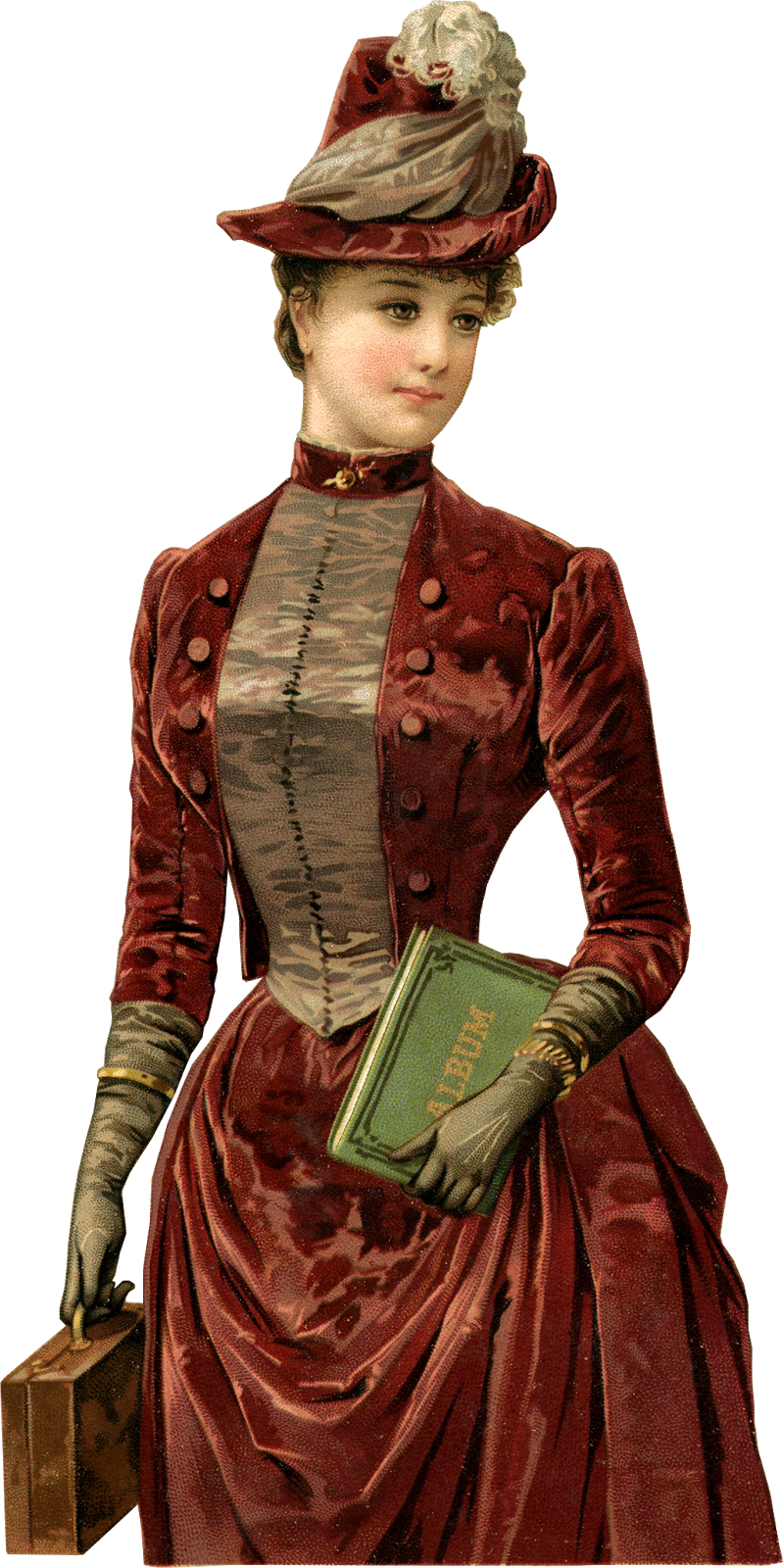
In the waiting room, I found Emily O’Rourke standing looking out of the window. When she heard me, she turned, her eyes red-rimmed, her face layered in sadness and grief.
“Mr. Goodfoote, this message came an hour ago.” She handed me an envelope with a slip of stationery inside. I noticed her hand trembled slightly. “I’m afraid I’ll be unable to comply. But if you could…”
“Miss O’Rourke,” the letter ran, “ Please honor me with your presence at 2:00 tomorrow afternoon. Some information has come into my possession that you may find of interest. I would impose upon your person to have Mr. Goodfoote accompany you.”
“The address is in a good part of town, and the letter is signed by someone named Lo Ping. Are you familiar with him?” I asked.
Emily seated herself. “His name is known to me, but I’ve never met the man. He works with merchants here in San Francisco to benefit the Mission House, and he’s reputed to be one of the wealthiest men in Chinatown. I’ve been told much of the rice consumed on the West Coast comes from China aboard his ships, and is stored in his warehouses.”
Henry arrived with a tray containing tea and a plate of small cakes. Emily graced him with a smile as she accepted a cup, which resulted in his bald dome turning bright red. He fled back to his cubby.
Still standing, I said, “My curiosity is certainly piqued by this Lo Ping. He asks for both of us, so it’s not just something about the Mission House. The timing of his invitation suggests the meeting may well concern the murder.”
She took a small sip of tea. “Perhaps he came across some rumor, some gossip that could prove pertinent to us.”
I nodded. “It won’t hurt to talk to him, see what he has to offer. Considering his position, he may have heard a word or two about Dillman. I’ll go of course.”
Emily returned her cup and saucer to the tray and gracefully rose. “I’m sorry I’ll be unable to accompany you, Mr. Goodfoote. I’m leaving shortly for Sacramento, to offer my condolences to Administrator Dillman’s remaining family. You may have heard of the recent passing of his wife and young daughter when cholera swept Sacramento two months ago? So much tragedy for a family to bear.
“My plans are to return Monday aboard The Phoenix. Miss O’Shannahan and Miss McMasters will accompany me. We all thank you for your assistance in this dreadful matter, Mr. Goodfoote. If Lo Ping hadn’t mentioned you specifically, I wouldn’t have troubled you.”
I smiled. “We can’t make bricks without clay. All information is welcome.”
“Of course,” she said. “I’m greatly relieved that you’ll see this through.”
“If you’ll permit me, I’ll have Henry fetch a cab for you.” I took her arm and steered her toward the door.
“No need,” she said with a weak smile. “I have one waiting. Please be careful.” She put her hand on my arm. “I now feel there is great danger for anyone who helps me. Mr. Fong was correct in hiring your agency.”
“Lo Ping summoned us to his residence to meet him in broad daylight,” I said. “If he had suggested we meet on the docks during the hours of darkness, I would share your concern and bring Jubal and Henry along.”
“Perhaps all will be well,” she said. “Yet I can’t deny my feeling of dread. This horrific murder of such a fine man has shaken me, Mr. Goodfoote.”
I walked her downstairs to her waiting carriage, offered a few more words of support, and saw her safely off.
My arm still tingled from her touch as I strode to Jubal T.’s office where I told him of Emily O’Rourke and her sisters’ planned trip to the capitol. I then handed him the envelope and invitation. Before the war, Jubal had been one of the young privileged gentlemen of the Southern culture who was well schooled in all areas of gracious living, including proper communication. He turned the envelope over several times, pulled a lens from his desk, and studied the swirling handwriting. He then took out the note out and examined it.
“It’s written in an educated hand,” he said. “And the paper is high quality, watermarked by a company in London.”
I nodded. “Is the writing that of an educated Chinaman, as the letter purports?”
“Well, this wasn’t written by an American, Charles,” he said, leaning back in his chair. “There’s a foreign feel to the writing. He says, for example, ‘impose upon your person.’ I would say it’s genuine.”
I walked to the window and gazed out. “The Chinese connection to these crimes grows and grows. Hobbs may be right. Sacramento may be another dead end. But we’ve got to follow every thread.”
“Like I said, I’m always ready to leave town. But what about Pike? With his background in bookkeeping, he may be the better man to go over Dillman’s financial records.”
“No. Hobbs is good at the books, but I need someone who will dig a little deeper. Did Dillman play the horses? Visit whorehouses? Gamble at cards? None of that will be in his financial statements. We can get Pike to check the Administrator’s bank accounts and spending here in San Francisco. The bank book was from the San Francisco Trust Bank. If need be, I can always send him to Sacramento to further follow up on any financial leads there.”
“And you want me to keep a keen eye on the church ladies,” Jubal said with a grin.
“Yep,” I said, smiling back, “that too.”
The Wicked Affair of the Golden Emperor
A Charles Goodfoote Mystery in Old San Francisco
Chapter 22
Kaya’s journey continues to the Golden Mountain
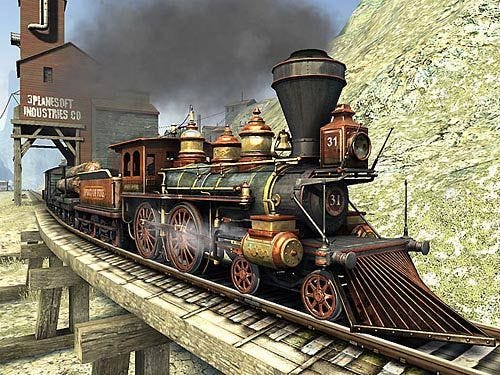
The train on which Kaya now rode was faster than those she had previously been on. She watched the valleys, vibrant in spring greens, fly past, and saw gray and purple mountains rise and fall as she sped along. Buildings in small towns came and went, the train seldom pausing for rest.
Kaya let her mind wander. It would take many suns to make this journey on horse, and many seasons to make it on foot. These White-Eyes have all this, yet they come into our land to kill Apaches. She shook her head. The ways of these people cannot be understood.
The man with the white mustache and blue eyes behind round eyeglasses came up the aisle and took her ticket. He used a hand tool to punch it, smiling at Kaya all the time. The man seemed happy and Kaya thought that she could not kill him, even though he was an enemy. Later, two women approached Kaya. They were dressed in long dresses, black shoes, and large hats with feathers fixed on their heads,.
“Do you speak English, young man?” one of them asked. She had gray eyes and a brown mole on her nose. Kaya didn’t respond.
“We are the Ladies of the Presbyterian League of California.” When Kaya remained silent, she showed the Apache woman a gold cross. “Christian ladies,” she said loudly. Kaya still just stared. “I’m Mrs. Benkerheim and this is Mrs. Yana. We are giving out box lunches and want you to have one.” A box tied with string was handed to Kaya, who took it, although puzzled.
The ladies smiled and returned to their group. Kaya opened the box slowly and found a piece of cheese, some bread, and four eggs. After a few moments of experimenting, she found the eggs were cooked hard, and the cheese was much like the goat cheese she had eaten when she had visited the trading post. The bread was a little different from her people’s, but tasty. She washed the food down with a long drink from her canteen.
That night, Kaya made up a bed on the train seat and slept with difficulty, waking often whenever anyone came past or the train lurched. She was wide awake before the sun came up and watched it flood the car with its light. Soon, the train slowed and stopped in a small town. For a rest, the Apache woman thought. A man came through and announced “Valle Sagrado.”
Kaya had never heard of it. Everyone else in the car got up, filed down the aisle to the door, and got off the train. Since they left their clothing and boxes behind, they must be returning soon, Kaya thought. It would be good to get off for a short while and get fresh water.
Kaya was the last off the train. She didn’t follow the other passengers into the depot, but went behind the buildings to the rain barrel. But the barrel was half empty and a dead rat was floating in it. She went elsewhere to find water she could drink.
It didn’t take long. A horse trough with a water pump sat in front of a building near the depot. Kaya, feeling more secure now that she was near the end of her journey, rinsed her face and arms. She pumped fresh water into the horse trough and filled her canteen. Refreshed, she went back aboard the train and found several other people had also returned. The woman called Mrs. Yana spoke to her in loud English as Kaya passed her in the aisle.
“We have several of these box lunches left over,” she said slowly, enunciating each word. “And we’re afraid the food will spoil. Please take one or two. We don’t want to throw them away.”
Kaya took two of the boxes and smiled quickly. She nodded her head to the woman, as she had seen Whites and Mexicans do when given something. Mrs. Yana gave a wide smile. “Bless you,” the woman said.
Kaya returned to her seat with a full canteen of water and enough food for several days if she stretched it out. The pouch where she kept her pemmican was nearly empty, but her Power was watching over her, she thought, sending these gifts. She silently gave thanks, and knew, with the help of her Power, she would soon be near the yellow mountain.
The Wicked Affair of the Golden Emperor
A Charles Goodfoote Mystery in Old San Francisco
Chapter 23
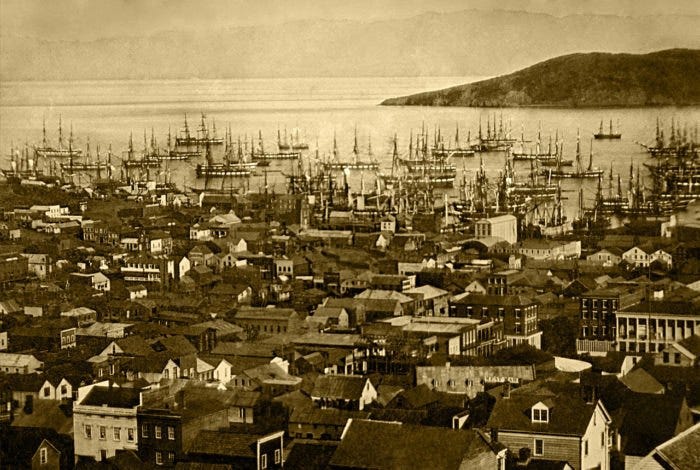
A rude visitor comes a’calling with his attack dog
Barely an hour later, Jubal and I were back in my office going over his itinerary with the door closed, when the street-level bell sounded. I heard Henry descend, followed briefly by his bellow, and then a clatter on the stairs. A string of curses preceded Captain Bullump before he unceremoniously slammed into my office. He had with him Grues, a man with a fearsome reputation even among the rougher sort of criminals. Bullump stopped short, his face red as a turnip, when he saw he was looking down the barrels of both Jubal’s Colt and my Remington.
“Easy with them smokewagons,” he said, his hands raised in front of him. “No need to turn this into a bloody mess.”
I eased up on the hammer. Jubal slowly followed suit and Henry, who had moved in behind the intruders, lowered his heavy gauge coach gun.
“You look like a man who could use a cup of tea,” I said. “And Henry may have some pie left.”
“I’m here for just one thing, Goodfoote,” Bullump said, in a voice just short of shouting. “And you better tell me true.”
Grues grinned at me, showing yellow, crooked teeth. I noticed his left hand sported a red and black tattoo that I thought for a moment I had seen a short time before, but couldn’t now place.
“I’m always at the beck and call of the officers of the law,” I smiled.
“Sam Clemens came up here with a poster he tore off a wall in Ross Alley. And I want it. Now.”
I spread my hands. “I won’t lie to you, Captain. That poster is neither here, nor in my possession.”
“Then you know where in hell it is,” Bullump snarled as he thrust a finger at me.
I sat down behind my desk. “Well, I admit the reporter brought a poster here. Not much to it. A bunch of Chinese scribbles, other than Mr. Clemens’ name. As of this moment, the whereabouts of that poster would be mere speculation on my part. Have you asked Mr. Clemens?”
“You know he ain’t in town. You put him aboard a ship yesterday.” He put his hands on my desk and leaned toward me. “You are withholding evidence in a criminal investigation, and I mean to have it.”
I rose slowly from my chair and stood to my full height, a head taller than the policeman. “And I’m wondering why you’re chasing a piece of paper instead of solving the murder of Administrator Dillman.”
“That’s none of your business, Breed,” Bullump sputtered, his face twitching. “We’ll meet again, Goodfoote. And next time, you won’t see me coming.” He closed his hand into a fist and gave it a twist.
Grues was still grinning, but his red-tinted eyes had narrowed. Bullump was a bully and a blowhard, but this Grues was plain unhinged.
“It wouldn’t surprise me,” I responded. “That’s the way you work.”
Firing a glance at Jubal that could have frozen the flippers off a penguin, Captain Bullump and his lackey turned and left. Henry followed them down the stairs and I heard the bolt on the door slam home.
Jubal sat down while Henry went back to his cubby. Hobbs hadn’t shown himself. “Now what was that all about, Charles? He had that poster and gave it up. Now he wants it back, and wants it bad.”
“Damned if I know.” I began to dig around in the bowl of my pipe. Calling me a “Breed” was intended as a hurtful insult, but I never viewed it that way. It’s what I am.
Deep in thought, I tapped spent tobacco into my ashtray. We both sat in silence until Henry arrived and poured us two cups of tea. Rather than returning to his listening post, Henry leaned against the wall, his gaze far off.
“Obviously,” I began, “there’s more to that poster than I thought. But for now, Dillman’s murder is first in line. I’m going to look into the backgrounds of Darrigan, Walker and the rest of that Nob Hill Collective gang. There were two names on that note pinned to Dillman’s vest. I need to find out why. I’m looking for as many connections as I can find.”
“That means Jeremiah Pottle,” Jubal said. “Any dirt on the rich in this city, Pottle knows about it.”
Hobbs came into my office. “That was a damnable thing, wasn’t it? Bullump slamming in here like that?” Pike had gone pale again.
“Yep,” I agreed. “A damnable thing.”
“Good thing he didn’t get that poster,” Hobbs continued.
“It’s safe for now,” I said.
“Maybe we should get it back and lock it in the file room. Keep it from getting into the wrong hands.”
“Like I said, it’s safe for now.”
Hobbs nodded and headed back down the hall. I heard his office door close.
Henry, who usually tosses in his own observations, had remained curiously silent. “Steer clear of that Grues, Capt’n,” he finally said quietly.
“What do you know about Grues, Henry?” I asked. “I’ve only seen him pop up now and then with Bullump holding his chain.”
“He’s as mad as a dervish on hash, and would as soon cut out yer giblets and use ’em fer earrings. I seen what he done to a gambler over a two dollar bet, down the Listing Scow. It were unattractive.”
“I noticed he didn’t carry a gun. None visible anyway.”
“He don’t need no gun, Capt’n. He used his bare hand on that gambler, and he’s damn quick. He hit the man in the throat with two fingers and the bugger went down liken he was poleaxed.”
“Has he been in town long, Henry?”
“Come ashore ‘bout a yar back. He were a topsa’l man ‘board the Endeavor, a 72 gun Man-O-War durin’ the China wars, back when I first seed ’em. Swung ‘round them riggin’ lines like an ape with ants. Heard he were fearsome with a saber in his paw.”
I nodded. “He has a dagger tattooed on the back of his hand. Red and black. Any idea what that’s about, Henry? That mean something?”
Henry shrugged. “All seafarin’ men have tattoos, Capt’n. Most likely he got it in some Macau skin-painter hole.”
Where, where had I seen that tattoo before? I wondered.
“And he were put in a Limey brig, in Shandong it were, fer skewing a bo’s’n ‘board the Endeavor,” Henry continued.
I know I saw that tattoo on a seafaring man, sometime recently, I thought. That means the docks, or one of the saloons where sailors liquored up. Someplace I had recently visited.
“Some rebel group busted him out, I heard, when them Chinee went to kickin’ out fur’ners.”
For a long moment there was silence in the room.
Then I stood, and Jubal jumped to his feet and retrieved his hat. “I have my marching orders,” he said. “The Phoenix has an afternoon run so I better get my gear. Henry, guard the fort.”
Jubal went out the back of the building and I left from the front. I glanced at our office windows from the opposite side of the street and saw Henry had raised the sash in his cubby. He was scanning Montgomery Street, his coach gun just visible.
The Wicked Affair of the Golden Emperor
A Charles Goodfoote Mystery in Old San Francisco
Chapter 24
Jeremiah Pottle tells a tale or two about the wealthy
I knew Financier Jeremiah Pottle as a collector of information about the well-to-do of San Francisco. Not a true blackmailer, he simply employed a network of well-placed “friends” who told him who was buying and selling, what they were purchasing, who was winning at the money game, or who was taking a nose dive into penury. Many of the wealthy paid Pottle a quarterly fee to learn the real story behind the purchase of a building, failure of a gold stock, or history of an investor.
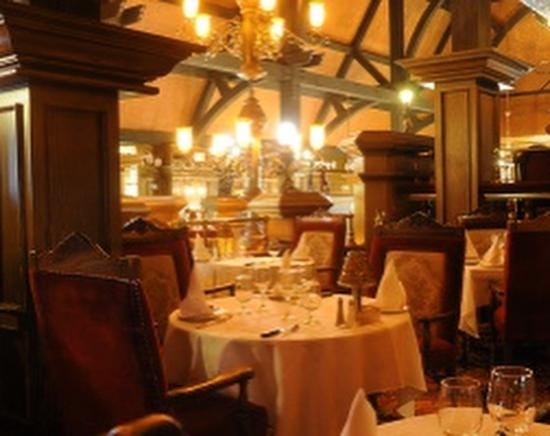
Pottle didn’t conduct business anywhere near his rooms at the Palace, but could be found most days at the Hunt Club Establishment, a coterie eatery that levies a hefty assessment for the privilege of belonging. Of Scottish descent, owner and manager Robert Cavendish had the place decorated in tartan wall hangings, claymores, and oil paintings of wild Highland scenes. On the gastronomical side, the Club offered a first-rate chef in charge of an extensive menu, and a rare wine cellar. The discreet wait staff fulfilled every culinary desire with speed and grace. The doorman was Kumo, a former Japanese wrestler who weighed in at over 350 pounds, little of it fat. Just inside the door sat a slim man with a tie-down, cutaway holster in which sat an ivory handled sidearm, and he had a reputation for skill in using it. He never spoke, but only nodded when addressed while his squinty eyes searched the foyer for any riff-raff that may have eluded Kumo.
I was known at the Hunt Club. There was a small matter of a scandal some months back I resolved for Sir Robert, as he was popularly known, without much fuss. It had to do with a confidence man becoming a member so he could fleece the clientele. Not a lot to it, but my quick, and discreet, resolution got me a free pass at the door.
“Well, Mr. Goodfoote,” Jeremiah Pottle began after taking a sip of his Bordeaux, “What can I do for you this fine day?”
“Just a quick question or two regarding The Collective.”
“Ah yes, our own aristocracy. Anyone in particular?”
“By my count, there are four men. Three made their fortune with railroads, and one with shipping. At least, that’s the general public information. What do you know that may go a little deeper?”
He sat back and folded his hands across his wide stomach. “Before we start filleting the moneyed pillars of this community,” Pottle said, waving to a waiter, “I insist you dine with me. Business must never be conducted on an empty stomach.”
This bonhomie with Jeremiah had come about shortly after my arrival in San Francisco. Pottle’s daughter had been suspected of shooting her paramour, the scion of a wealthy New York family, and she faced the rope. When the financier came to Pinkerton’s, he was bereft of hope, for the girl had been incarcerated despite the prominent lawyers he had hired. The solution of the case was a simple matter which had been overlooked by Captain Bullump and his police department.
With a brief display of common sense, a few interviews, and a smidgen of gunplay, I was able to prove it had been impossible for the young lady to have done the deed. Unfortunately for my relationship with Bullump, I was able to show it was his own nephew who had committed the crime. The lad was last seen on a fast horse headed for the wilderness, and I became the police captain’s hated enemy. Since then, Pottle had made his vast knowledge available to me whenever I needed it.
Before I had a chance to order, three waiters appeared bearing trays of food. The spread looked as inviting as one at Annie’s Pot of Glue, the difference being cost. Prices here at the Hunt Club would have given a Vanderbilt apoplexy.
“Let’s start with Stanley Walker,” Pottle said as he studied the soufflé in front of him and picked up a fork. “Probably the richest and most ambitious of the bunch. He came to California a few years back.” Pottle’s egg dish began to disappear.
“Walker was already wealthy. His grandfather founded the family fortune by making carriages and harnesses. Then, just as the great cultivation of crop land in the Midwest began, farm wagons and plows. The money, as they say, rolled in, and our young Stanley received the best education it could buy. He graduated from Yale Law, not at the top of his class, but close enough to move into a prominent New York firm. It wasn’t long before he was involved in some shady politics with Tammany Hall, being close to ‘Boss’ Tweed, but his family’s long purse kept him out of prison and he just got richer.”
The financier traded his fork for a spoon to clean his soufflé dish. “When the war started, he invested heavily in the armament industry, and increased his fortune ten fold.”
“So he had political experience and money,” I said, between bites of my roast pork.
“Money? I’ll say he had money. When he hit this city, he had a chest of gold he parlayed into an even bigger fortune by building the Western Central Railroad. Its stock is public, but Walker is its major holder.”
“So his income is mainly from the railroad?”
“That and land. He’s been buying up huge swaths of land in the central part of the state. From what I hear, he’s gone into cattle ranching, moving the herd to market in his own cattle cars.”
“Ranching? Right now, with the price of meat, that could bring in some extra cash.”
Pottle chuckled. “Since gold and silver were discovered and towns started springing up like toadstools, the price of beef is ten times what it was before the boom. Extra cash indeed.”
“Other than his ties to New York politics, what’s the real dirt on Walker?”
The big man played with his spoon for a few moments before looking directly at me. “I can only repeat rumors, you understand. Mr. Goodfoote, I can verify nothing of what I’m about to tell you, and must depend on your absolute discretion.”
I nodded. Here, I thought, is the pit inside the plum.
His voice dropped to where I barely heard him. “It’s said that Stanly Walker likes girls.”
I sat back. “Show me a man who doesn’t,” I said.
“I don’t mean women,” Pottle looked to both sides. “I mean girls. Young girls, of any race or country of origin.”
This was disturbing news, if accurate. It explained his interest in the Mission House, a haven for young Chinese girls. But it could’ve been just a tale started by someone with a reason to hate the Robber Baron. I knew I’d need much more than a scandalous whisper before I took any action.
“A rumor? Can you tell me the source of this rumor? Who told you this?”
Pottle shook his head and resumed eating. “No, Mr. Goodfoote. I can’t because it’s a tidbit known to many, but spoken by few. Remember, I told you nothing. Just passing on a vague whisper in the breeze. Probably nothing to it. Nothing at all.”
I sat for several minutes as I sipped from my water glass and pondered Jeremiah Pottle and his information. Starting a rumor of this type against a prominent community leader could be just a coward’s way of wounding an enemy. And I knew Walker had enemies. But it was something needing investigation and I determined to discover its accuracy, for it impacted directly on the Mission House ladies and their work. In the past, Pottle had been factual in his knowledge of the moneyed class of the city, but I was becoming awash in whispers and rumors. I decided to tuck it away until I had more information.
“What about Darrigan? Is he as wealthy? ”
Pottle again chuckled as he started in on a small dish of something dark brown. “Oh yes, Mr. William Darrigan. A bit rougher than Walker. Also from the East, also with a genteel upbringing. His father was a judge in one of the courts in Pennsylvania. A good man by all accounts. Little Billy however, couldn’t stay out of trouble, so to teach the lad some discipline his father shipped him off to school in Prussia. The scar on his left cheek is a saber scar from dueling at a Heidelberg school where it was encouraged.
“The record on Billy is spotty, but he did serve a term as an officer in the Prussian Army during the Hanover War. There was some scandal, mistreatment of prisoners I believe. But, as I said, the record is unclear and that may just be rumors started by his competitors.
“He came here with a lot of money and a pile of stock certificates in maritime shipping. Lives out in Darrigan’s Crag like a monk. Looks like a monk, too, with his hard face and skinny body.” Pottle leaned forward. “They say he practices saber fencing an hour a day, rain or shine.”
“I’ll keep that in mind if he challenges me to swordplay.”
“You may want to check with Doc Thorp. I’ve heard Darrigan’s fencing partners don’t always end up with just a sweaty workout. It seems our Billy likes to hurt people.”
I kept quiet while I sampled platefuls of flavorful dishes. Finally, coffee was served from a gleaming silver pot by a Chinese waiter.
The other two members of The Collective were, for the most part, middling honest businessmen. Wealthy, a bit shady, but of little concern. Their railroads were in Nevada and the southern part of California. My interest was in the men who could move people and goods between San Francisco and the goldfields. That meant Walker and Darrigan.
I took my leave of Pottle a good hour later, thanked him for the meal and his information. But I still had more questions than answers.
The Wicked Affair of the Golden Emperor
A Charles Goodfoote Mystery in Old San Francisco
Chapter 25
Kaya arrives at the Golden Mountain
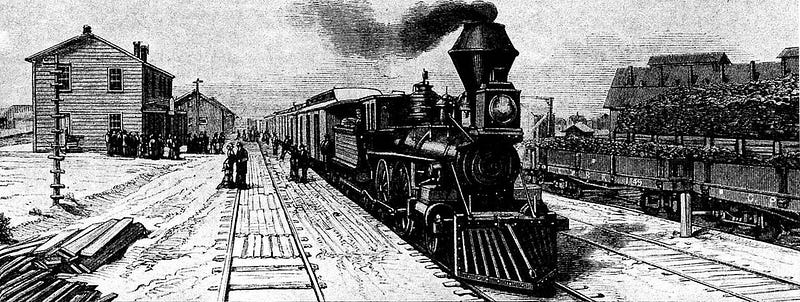
It was the final day of her train journey. Most of the people in the coach were sleeping or trying to, tired from their long trip. Even the children were napping. Kaya let her mind wander, wondering what was to come. Out of the window across the aisle, a great body of water appeared. Kaya took a deep breath and smelled the saltiness of the ocean. She smiled. Now to find the Golden Mountain. Outside her side of the car, she saw a field of sunflowers waving gently, golden in the morning sunshine . Quietly, she gathered her small belongings and walked to the other end of the coach. She opened a door onto a small platform between the cars.
At that moment, the train began to climb a steep grade, slowing as it struggled and puffed. The land fell away next to the tracks, and the sides of the ravine were covered in trees and long grasses. As she leaned out from the platform, Kaya could see a deep valley and a bridge ahead. She knew she must jump before the train reached the bridge.
As the train made the top of the grade, it was moving so slowly Kaya simply stepped off, bounded into the deep grasses along side of the Iron Road, and crouched down until all the cars had passed. She watched as the train speeded up and started across the bridge. Overhead, she heard the hunting cry of a red-tailed hawk.
The ravine was dry and gave Kaya good cover as she ran along the trail at its bottom. She was moving due North. Although the stream bed twisted and turned, sometimes doubling back onto itself, Kaya knew her direction was true as she loped along. Shortly, she shed her sandals and put on a pair of low moccasins she had carried in her pack. She tossed her sombrero, but she kept the heavy poncho rolled up and tied into a bundle slung across her back.
Running, her black hair flying , Kaya felt freed from the pretend person she had been forced to portray. Although deep in enemy country, surrounded by thousands of the deadly White-Eyes, her heart felt no fear. Kaya’s profound trust in her Power and a belief in her own skills left no room for doubt. The landscape she moved through gave itself well to concealment. To her front, flying a few hundred yards ahead, was her Power, the Sun Hawk.
For the first time since she had started this journey, Kaya felt in complete balance with her own spirit.
As darkness fell, Kaya looked for a camp site. She would sleep under the stars for the first time in many days. The heavy brush in the ravine gave her plenty of cover from anyone who might happen to come along, but she had some concern about flooding. In her land, the dry arroyos become raging torrents when the spring thaw in the mountains sent a wall of water down their creek beds. She studied the landscape in the failing light and felt, if a surge did come, she would awaken and climb the slope before the force of the water hit. Unusual for an Apache, Kaya was a strong swimmer. She had learned in the rivers and lakes of her homeland when she and Dashante were very young.
The Apache woman moved off the trail and spread her blanket on the soft sand. After covering herself with her poncho, she lay looking at the sky ablaze with stars. It was nearly the time of the dark moon, when the Old Woman in the Moon hid her face from her husband the Sun.
Watching the stars, she thought about how those same stars, with the same stories and meaning, were being watched by Dashante and her family so far away. It was the stars and moon that tie all places together, and therefore all people. While she hated the Mexicans and White-Eyes for coming into her land and killing her people, she had learned that many of both colors were not all bad, not all soldiers and government agents cheated and betrayed the Apache. They all dwelt beneath the same stars and moon. They all must have stories about the sky and earth. And their stories, like the stars and moon, meant all peoples of good heart were the same.
Kaya rested her head on her pack and listened to the night insects. A saw a bird fly silently into a tree across the trail. It paused for a few seconds, then started its call. The Apache woman didn’t recognize the bird, but its song gave her a peaceful feeling. Far away, across the land, came the howl of a coyote, lulling Kaya to sleep. Although far from home, in this strange land of her bitter enemy, without a horse or rifle, Kaya slept in dreamless peace.
False dawn spread over Kaya and she awoke. As was her long habit, she lay listening to the sounds of the world around her coming to life. Mostly, she listened for sounds of an enemy, some movement of stealthy approach, some crunched leaf, some shifted sand. Her senses were open to any odor in the breeze, a stone turned by a careless foot, the snap of a dry twig.
As dawn was beginning to lighten her world, she caught a sound that didn’t fit into the pattern of the land. It was just up the ravine, the way she had come looking for her hiding place. Her tracks were gone, as she had taken great care to obliterate them. But a good tracker might find the small disturbances that showed where her prints had been rubbed out. She heard a branch snap back against another. Only humans are so careless.
Slowly she lifted her upper body, then peered through the leaves of the surrounding brush. As a warrior, she rose soundlessly to a crouch, her scout knife in hand. She breathed deeply through her open mouth, and remained perfectly still.
Several minutes later, a White-Eyes boy, carrying an old, single-shot rifle, moved slowly down the trail. His eyes were fastened on the ground in front of him. Kaya could have reached out and touched him, yet he didn’t see her. She masked her anger and hatred so the boy wouldn’t know the danger he was in, wouldn’t feel her watching him with murderous intent. As the boy passed, unseeing, a second White-Eyes came along behind the boy. This one was older, and had a wild black beard and a flop hat on his long hair. Both were dressed in dark shirts with braces holding up their wide pants. The man’s eyes were scanning the bushes, glancing at the ground only intermittently. He, too, carried an old rifle, but it looked newer than the one the boy had.
“You seeing any tracks, yet?” the man whispered to the boy.
“No, Pa. No deer tracks, no elk tracks. Not even a coyote paw print,“ the boy replied.
“Wal, I knows thar in here somewheres. Thet six-pointer I brought home March was jest up ahead. You keep yer eyes peeled, Jamie. We’ll get us one.”
And the man’s eyes shifted, looking into the brush where Kaya crouched ready to spring. She smelled the acrid sweat on him, could see his yellow teeth as he breathed through his mouth. He stared just over her head, then looked away. She watched his head swing to gaze at the brush on the other side of the trail.
“Maybe they moved on, Pa. You maybe kilt the last one.”
“Nah, boy. Somethin’ just spooked ’em out a here, that’s all. Prob’ly a bear come through and spooked ’em out.”
“Ain’t no bear tracks here, neither, Pa. I would a’ seen bear tracks iffen there was a bear.”
“Just shut yer mouth, boy. All yer talkin’ is what spooked ’em. We may as well go back to the high ground. Maybe we can get one ‘a them there.”
Kaya watched the two hunters climb out of the ravine and head back the way they had come. Slowly, she climbed after them and lay in the grass behind a willow tree while the men, rifles over their shoulders, walked and talked. She stayed where she was until they were out of sight.
It took only moments for Kaya to roll up her belongings and take the ravine bottom at a trot. She had become complacent, thinking all White-Eyes were blind and stupid. When she removed her tracks, she should have left the deer and elk hoofprints. An Apache would have seen the blank trail and have known someone had been there. Animal sign, including insect and bird tracks, are part of the earth of any land, and she hadn’t taken the precautions she would have in her own territory.
The ravine ended in a jumble of rocks several miles from where Kaya had slept. The land began to rise, and Kaya could smell the saltiness of the ocean as she made her way along a hill covered with pinyin pine. Within a few miles, she topped a summit and saw the great expanse of water, water without end. And in the distance, the woman warrior could see a yellow rise of ground on the landscape. She had come to the golden mountain by the salty sea.


