The Whistling Language of La Gomera
A mysterious whistle from the past echoes in the mountains of La Gomera
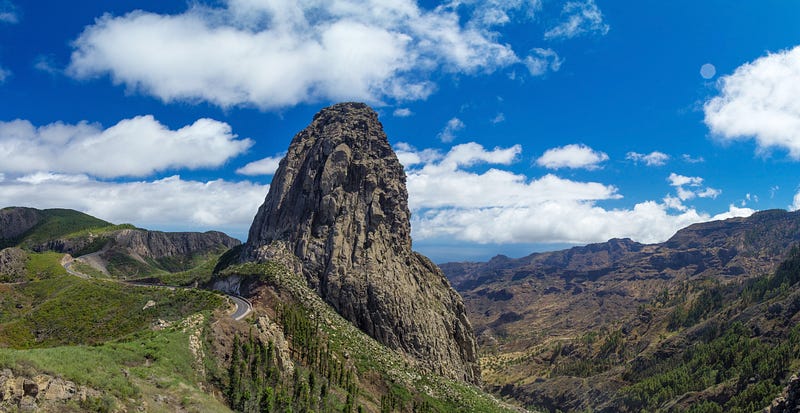
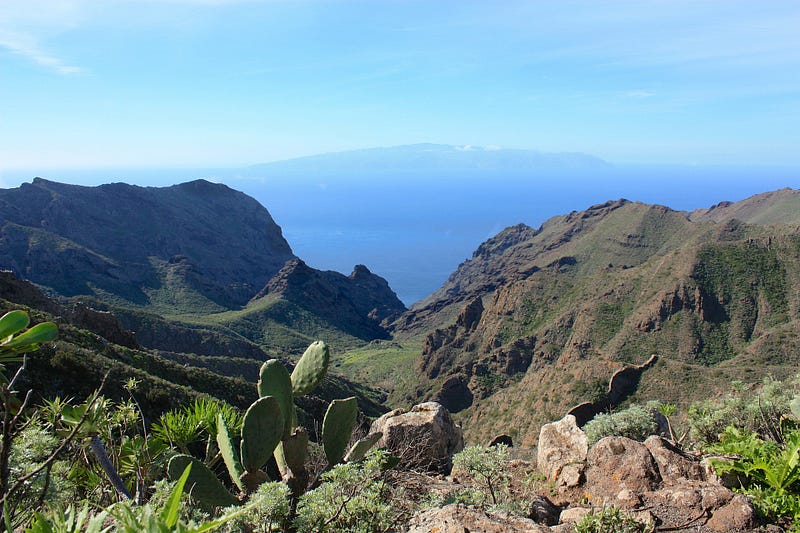
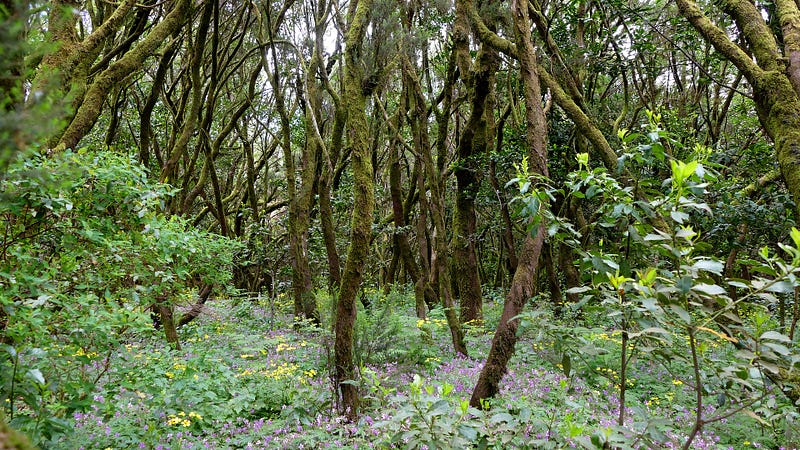
Mountain after mountain, valley after valley as far as the eyes can reach, this landscape keeps repeating itself infinitely. These emerald green mountains and valleys with their constantly repeating pattern make up the roller coaster-like Canarian landscape. The landscape itself holds the secret and reason behind why the whistling language developed here.
Without a direct way of communication due to the inaccessibility of the landscape, one can easily understand the need for a whistling language. It must have made daily life easier in a revolutionary way for the Guanches, the original inhabitants of the Canary Islands at the time.
Studies show that external communication, between the islands, was scarce due to insufficient knowledge of sailing. The internal communication, within an island, was also difficult because of the complexity and inaccessibility of the landscape, especially before the arrival of the whistling language.
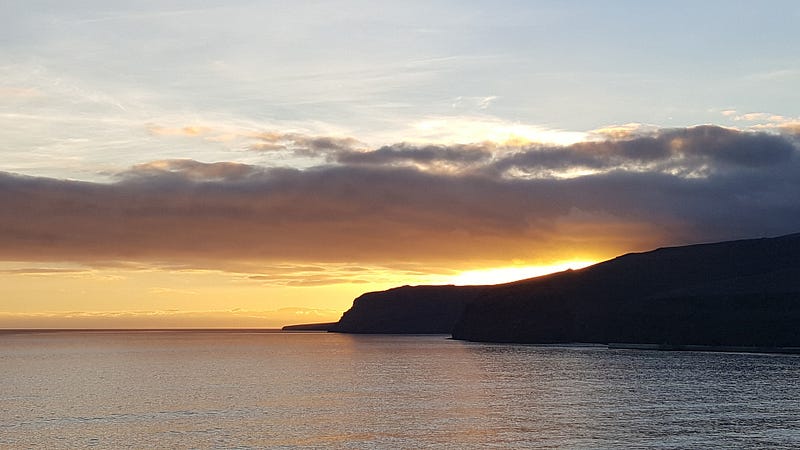
The Canarian whistling language or the “Silbo” is a tonal language, which is still practiced by many inhabitants in the Canary Islands today. The reason for the language is to be able to communicate with others over large distances, through mountains and valleys. The ones practicing the language are known as “whistlers”.
Practically, any language can be transformed into the Silbo, as it is translated into tunes recognisable from a distance.
From the beginning, it was used for the original language of the native inhabitants the “Guanches”. After the disappearance of the Tamazight or Canarian Berber it has come to be used with the Spanish language.
With the Silbo from La Gomera, it is possible to exchange messages in distances up to five kilometres! This whistling language uses six different sounds, two for vowels and four for consonants, with these sounds it’s possible to express more than 4.000 words.
There are also other whistling languages elsewhere. Some of these tonal languages have four sounds for vowels and four for consonants, thus a total of eight different sounds. Common for all these languages is that the sounds are approximates to the original language, variations are common and confusions possible.
There is very little information available about the original language of the Guanches, but we do know that it probably originated in North Africa.
We also know that the whistling language was created by these native Canarians, as a tool of communication, and it was originally used in El Hierro, Tenerife, Gran Canaria and La Gomera.
After the conquest of the Canarian archipelago in the 16th century, the last prehispánic natives in La Gomera finally adapted the Silbo to Spanish, the reason for this was most probably the extinction of their own language. The Silbo gradually disappeared from the rest of the island but still lives on in La Gomera, the second smallest island in the archipelago.
The whistling language had a much more profound impact here than on the rest of the islands and this proved to be the key to its survival.
Speaking of survival, in the 20th century with the arrival of mobile telephones and other ways of communication, in addition to emigration of the Gomeran population in search of a better life, there was a steep decline in the use of the whistling language.
In 1990 started a revitalization campaign led by the Canarian government including educational and legislative measures together with efforts of the population as a whole. These efforts resulted in great progress for the Silbo.
The government adjusted the education by adding the whistling to the educational system and making it compulsory, and in 1999 they also declared the Silbo patrimonial heritage. A decade later the Gomeran whistle gained world recognition when UNESCO registered it in the list of intangible cultural heritage.
Today, the whistling language is a mandatory subject in schools in La Gomera with at least one hour of class weekly.
Did you know that on average, around 25 languages disappear each year? Check out Andawn F.’s story to learn more fun facts about world languages.
Conclusion:
As per the report of UNESCO in 2009, a big majority of the population in La Gomera understands the whistling language, especially those born before 1950 as well as students attending school from 1999 onward.
The Silbo in La Gomera coexists with other tonal languages in the world, including those of Evian, an island in Greece and Kuskoy, in the east of Turkey and in the French Pyrenees. Nevertheless the “Gomeran whistle” is the only tonal language to have been studied thoroughly, as well as the one with most practicants.
Tonal languages are interesting from the point of view of being simple ways of communication; it makes it possible for us to study how a language first appears and then how languages develop in general.
The recognition and prestige the Gomeran Silbo has gained in the last years have had unexpected consequences. There are even competitions between native whistlers in Gomera to gain tourists’ attention.
We can finally conclude that the efforts of revitalization of the Silbo in La Gomera have been highly successful. Until now the Silbo has been passed on from generation to generation, we surely hope that it will continue that way and that we might be able to discover even more of the Guanches secrets!


