
“Amateurs talk about tactics, but professionals study logistics” Gen. Robert H. Barrow
The West will bury Russia in production. Ukraine’s allies will ultimately deal Russia a poverty driven crushing defeat
Ukraine’s counter-offensive inflicts unstainable losses on Russia. Several Ka52 Alligator helicopters were shot down and Russia lost close to 11.000 confirmed vehicles.
Daily map updates can be depressing, but we must keep the bigger picture in mind. Ukraine’s operational security is excellent, which is a good thing. The fog of war is thick. Let us zoom out to paint some broad strokes with the brush. The offensive is going roughly according to plan. We will need patience. Ukraine might surprise us to the upside once more.
It's good that we still can't tell whether Ukraine plans to push down toward Mariupol or Melitopol.
It is good that we are confused as to what is going on exactly. That is how it should be at this stage of the campaign. The progress of Ukraine is modest for now, but steady. The loss of three more helicopters is massively painful for Russia. The training of the pilots takes years, and the loss of these pilots weighs even heavier than the actual loss of the helicopters.
Russia’s modern equipment is full of Western tech, which they can’t easily replace. For example, the ejection system of this helicopter is often malfunctioning. This war will end most of Russia’s weapon exports to big customers such as India, for example.
As it turned out, none of that modern stuff is “made in Russia.” These weapons are all full of Western spares, and those won’t be there any longer.
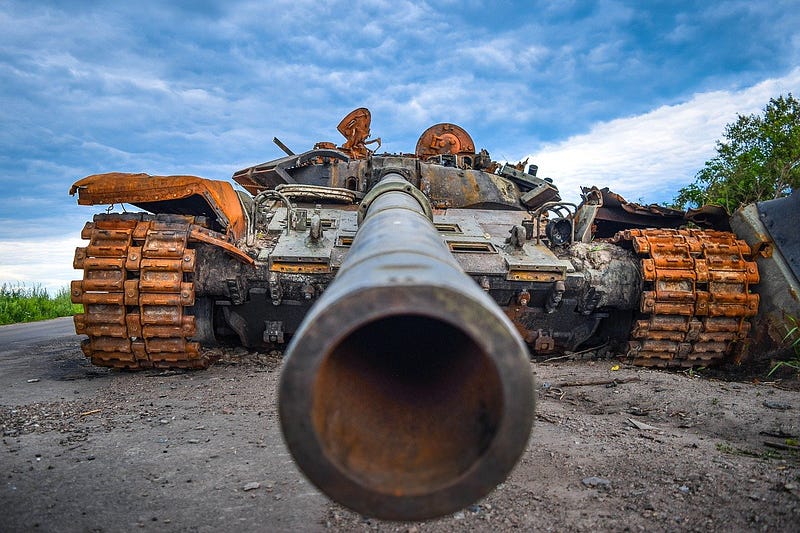
This is near peer combat. This isn’t Afghanistan. In wargame simulations of NATO vs. Russia, from 5 years ago, the West accounted for entire BRIGADES being destroyed in a single day. These simulations assumed that whole companies of tanks and infantry would evaporate. So, losing less than 10 percent is a good result. We can replace the armor. We can’t replace a well trained tank crew. Let’s have a look at how these losses would impact combat effectiveness.
Here is the US army “gumball chart”
The following numbers combine men and equipment lost.
A unit with 85 percent of its manpower and equipment intact counts as “green” which means “combat capable”
At 70–84 percent, or “Amber”, it means that the unit is still “combat capable with minor deficiencies”
At 50–69 percent, the unit goes into “Red”, which means “combat ineffective. The unit has major losses or deficiencies”
Once the unit sustains losses of more than 50 percent, it goes into “Black,” which means “The unit requires reconstitution before next mission.”
Most men in war don’t die from bullets
Soldiers often die from vehicle accidents, hunger, exposure to elements, and diseases. Russia has invited all four riders. War, famine, plague, and death. Blowing up the dam and then continuing to drink the water is leading to cholera outbreaks. A look at history shows that typhoid and trench fever had claimed 3 million deaths in the east during WW1.
Overall, 75% of Ukraine’s troops haven’t been committed to the offensive yet
Whichever push yields, the most promising breakthrough gets the bulk of the forces and attention. I’m open to a surprise alternative, too. As the Russians fortify these locations, it would be interesting to see if Ukraine finds a weakness that is significant enough elsewhere in the area and jumps on that opportunity. However, that said, I recognize this is unlikely.
Russia may be hollowing out the north’s reserves and defenses to shore up the vital southern defenses, and this decision might then come back to haunt them. We had a similar situation last summer, and Russia ended up losing in the South and the North.
If Ukraine hits the land bridge, Putin might order to divert all resources to the South, exposing the eastern flank
This ammo dump near Rykove looks like a massive ammo dump just across the isthmus of Crimea, down along the M-18 road through Melitopol, options open in order to pursue whichever thrust looks the most likely to succeed. If these recon and shaping missions keep Russia guessing, then Ukraine should be able to exploit these weaker defenses and cut Russia’s supply lines.
The Russian ammunition stockpile that went up in the air in Rykove, South Cherson, has been used to supply the Russian army in the Saporishia region
At least 52 Russian soldiers and Kadyrovites died as a result of the explosions. The explosion continued for over 6 hours. This ammo dump is right on the only rail line capable of supplying the front above Melitopol with any haste. If Ukraine indeed took out the rail line and a massive depot for that end of the land bridge, the entire corridor from Crimea up along the M-18 and to Vasylivka is now vulnerable.
Russia relies heavily on centralized storage of ammo for a wide area. Russia moved those massive ammo dumps out of the HIMARS range but not out of Storm Shadow range
This ammo dump likely supplied most of the Southern Front. We all know that "Russia has bad logistics," but the devil is in the details. Their military lacks any institutional knowledge of modern transport mechanisms.
Their logistic system hasn’t changed since the 1950s. Russians don’t have shipping palettes. They don’t even have forklifts
Russia doesn’t use computerized itemization. They don’t itemize, for that matter. An overall stock count is made rather than giving individual items tracking IDs. To ensure that places have enough ammo, Russia works with an old-school, "slop and slack" system of just shipping more than needed. Russia lets the overflow handle the shortages.
This system is built for a nuclear war. In a modern war, these push logistics are vastly inferior to Western pull logistics
I’m going to be generous, and I suggest that maybe the Russians aren’t all completely incompetent. As I said, this ammo dump was supplying the M-18 corridor (from Crimea up through Melitopol and to the front by Vasylivka) and the Eastern side of the land bridge is probably supplied from Mariupol and Berdiansk ports. The rails from there lead up through most of the East end of the land bridge there is only one link from that side over to Tokmak.
The Russian army needs rail, they can’t cope with smaller supplies by road. Russia is in a very tricky spot, especially along that M-18 corridor.
Ukraine might be doing a massive push in the Kremmina direction to roll up all of northern Luhansk as well. However, southern Ukraine and Crimea are easier for Ukraine to attack and harder for Russia to hold given proximity, location, railways, access, and anti air cover. The South is easier to liberate in the long run, and it is Crimea that Russia just can’t lose. Putin would even rather give up Donetsk instead in a “good will gesture.”
Crimea is the priority for Putin, and therefore, the land bridge is vital
If Putin loses Crimea, he might as well end himself in a bunker. It’s almost that bad if he loses the land bridge. Once this happens, he can buy the revolver and the cyanide capsule. Putin will do everything he can to hold that southern line. Hitting the South in a highly strategic way could considerably speed up the end of the war. Of course, a few skirmishes to keep Russians busy elsewhere (Bakhmut) would be useful. For purely strategic reasons, and to save lives and time, the main axis of advance will be in the South.
It makes sense to head down to Melitopol because there’s literally only one rail supply link there, from Crimea. Ukraine has likely destroyed it for the time being. The railways from Mariupol and Berdiansk to Crimea run through Tokmak before they go through Melitopol. Once Tokmak is taken or bypassed and cut off, the only railway supplying Crimea and Melitopol is the one over the infamous Kerch Bridge.
Ukraine doesn’t need to liberate any of those cities all that quickly
Ukraine needs to methodically advance the line of their “fire control” over Russian transport routes. Ukraine can do that from outside of urban areas. The UAF will need their own logistics routes, of course. But for their goals, a paved road with a modicum of a road junction area will work in the short term.
Ukraine is going to focus on one weak point, which leads from Vasylivka down the M-18 corridor to Melitopol onwards to the Crimean Isthmus of Perekop
Ukraine isn’t aiming for a single city here. Ukraine repeats a winning strategy from their last major offensives. Ukraine goes for Russia’s supply lines. At every point where the UAF is pushing, they are a fortification line away from an important railway line. Once it is severed, it would almost completely cut Russia’s supply west of this point downstream.
Once those lines are cut, Russia would have to leave the South within 2 to 3 months
The timing of the US posturing about sending ATACMS capable of taking down the Crimean bridge would leave the Russians with the thought of a solid chunk of their army trapped with virtually no supply lines.
The village of Piatykhatky, which actually means "5 huts," is important here
Ukraine’s army might have sidestepped the fortifications in front of Piatykhatky from the fields in the east, which Ukraine has conquered recently. The UAF captured the village before, but then they had to retreat again. This is what Igor Girkin is afraid of as once the Ukrainian Army reaches Piatykhatky, it will soon be game over for the Russians.
All the juicy targets lie ahead then. Mariupol, Melitopol, Tokmak, Berdiansk, and other roads or railways, which are leading to Crimea, will be within range of HIMARS and artillery systems. These supply routes are either going southwest to Crimea or they are going eastwards. My bet is the UAF will go eastward and leave Crimea for the moment to starve it off Russian military supply and support.
“The sinews of war are infinite money.” Marcus Tullius Cicero
Ultimately, the side with more stuff and more money wins the war. Russia has lost another 3 Ka52 helicopters this in the last couple of days. That is another 48 million dollars that went up in smoke, and the crews also died.
These helicopters might be operated closer than many people think. The only anti-tank guided missiles (ATGMS) used by the KA-52 are having beam-riding guidance. This has several advantages, but it requires a line of sight (LOS) from the helicopter.
Depending on the terrain getting LOS from 10 kilometers out, it can require enough altitude to expose the helicopter to medium-range air defenses a relatively safe distance from the frontline
Operating at low altitude from just behind the closest obstruction may be safer overall. However, there’s some vulnerability to short air defense missiles (SHORAD) without accurate information on hostile positions. It would surprise me if all of these reports are accurate. Aside from the possibility of deliberate misinformation, mistakenly overclaiming shootdowns over hostile territory has been endemic since the earliest days of air combat.
Wikipedia says 133 in 2022, but the actual number depends pretty heavily on whether that means the start of 2022 or the end of the year. Also, we can’t know how many have been built this year. The sanctions surely slowed down or even halted production. For the sake of argument let’s say 133 of these things existed at the end of 2022. At least half would be busy elsewhere with maintenance, training, or by being deployed somewhere else. This makes every loss significant.
Summary and Conclusion
There are only three supply points for Russia along that southern front. We are discounting slow road transport because if they rely on only road and trucks, Russia might as well give up today.
The first one is Sevastopol, with its rail link through Melitopol. This one was hit this morning in Rykove. Then it goes up to the front by Vasylivka.
The second is the port of Mariupol. This one has rail links from there to several branches into the north of the land bridge.
The third is Berdiansk port, with one rail link up to Chernihivka, which then branches out to Tokmak, Polohy, and Dubove.
These three locations have been repeatedly hit by Ukraine over the last few months. These disruptions have been picking up pace recently. Ukraine is obviously hitting the rail supply lines. Ukraine knows Russia lacks supply trucks and can’t maintain their lines by road alone. Ukraine knows how to defeat this enemy better than any of us. Death by a thousand cuts.
Ukraine just needs to break the land bridge in one spot.
I say “just” like it’s no mean feat. What I mean is that the UAF only needs to successfully push through in one spot to snap that bridge, and Putin is going to s*** himself inside-out.
Putin cannot lose that land bridge. If he does he’s almost certainly lost Crimea (it’s all about time and patience after that), which would be the end of him. This is why that front has been so heavily fortified over the last few months. Putin knows the risk of losing the land bridge.
Please feel free to share your own take with me in the comments. A war isn’t won on a map. It’s won by soldiers, strategy, and logistics. Russia is hopelessly outmatched, outspent, and outgunned.
Dear reader, thanks for reading my article.
Please consider clapping, commenting, or following me on Medium.
Before you go, please scroll to the bottom of the page.
Take care and be well.
Sources:
We are approaching 11.000 confirmed lost Russian vehicles


