avatarSteve QJ

Free AI web copilot to create summaries, insights and extended knowledge, download it at here

3290

Abstract

objects to the proposal, arguing that there’s a meaningful difference between minority students voluntarily absenting themselves and white students being compelled to stay away. In an email to colleagues, he wrote:</p><blockquote id="5cf0"><p>On a college campus, one’s right to speak — or to be — must never be based on skin color.</p></blockquote><p id="1841">This plea for racial harmony leads to <a href="https://youtu.be/2cMYfxOFBBM">weeks of volatile protests</a>, repeated school closures, and over <a href="https://www.washingtonpost.com/news/grade-point/wp/2017/06/05/evergreen-state-college-reopens-after-violent-threat-and-property-damage-on-campus/">$10,000 worth of property damage</a>, after which Weinstein…well, you get the idea by now.</p><p id="663c">In their 2015 essay , “<a href="https://www.theatlantic.com/magazine/archive/2015/09/the-coddling-of-the-american-mind/399356/"><i>The Coddling Of The American Mind</i></a><i>,”</i> Jonathan Haidt and Greg Lukianoff sounded the alarm about a cultural shift on college campuses:</p><blockquote id="bc28"><p>…The press has typically described these developments as a resurgence of political correctness. That’s partly right, although the current movement is largely about emotional well-being. […]</p></blockquote><blockquote id="e633"><p>The ultimate aim, it seems, is to turn campuses into “safe spaces” where young adults are shielded from words and ideas that make some uncomfortable. And more than the last, this movement seeks to punish anyone who interferes with that aim, even accidentally.</p></blockquote><p id="9beb">If anything, they undersold it.</p><p id="7e39">In 2017, Jeannie Suk Gersen, a professor at Harvard Law School, <a href="https://www.newyorker.com/news/news-desk/trouble-teaching-rape-law">wrote in the New Yorker</a> about a student who asked her professor to stop using the word “violate” in class (as in; “does this violate the law?”) because it’s “triggering.”</p><p id="0511">In 2020, Jason Kilburn, a law professor at the University of Illinois Chicago, was suspended for including the <a href="https://www.thefire.org/news/lawsuit-professor-suspended-redacted-slurs-law-school-exam-sues-university-illinois-chicago">first letter of a slur</a> on an exam paper.</p><p id="9bb8">Last week, the University of Southern California <a href="https://twitter.com/steevqj/status/1613637903598379008">banned the word “field”</a>from its curriculum because, and I quote, “<i>phrases such as ‘going into the field’ or ‘field work’ may have connotations for descendants of slavery and immigrant workers that are not benign.</i></p><p id="543d">And most infamously, there’s Stanford University’s “<i>Elimination of Harmful Language Initiative</i>”, which lists over 150 “triggering” <a href="https://stanforddaily.com/wp-content/uploads/2023/01/Stanford-EHLI-Harmful-Language-List.pdf">words and phrases to avoid</a>, including, ironically enough, “trigger warning.”</p><p id="8968">Universities have bought into the idea that students need to be protected from offence in the same way that nut allergy sufferers need to be protected from nuts; all traces must be removed, no matter how insignificant, if there’s a chance that even a single student will suffer a reaction.</p><p id="56ec">And while th

Options

is makes sense when the stakes are life and death, it’s not such a good idea when all that’s at stake is a difference of opinion, as Haidt and Lukianoff also point out:</p><blockquote id="1d40"><p>A campus culture devoted to policing speech and punishing speakers is likely to engender patterns of thought that are surprisingly similar to those long identified by cognitive behavioral therapists as causes of depression and anxiety.</p></blockquote><p id="c1b3">Yep, it turns out that teaching young people to think of <a href="https://www.scotsman.com/news/politics/ngozi-fulani-said-buckingham-palace-reception-like-an-interrogation-and-that-she-felt-forced-to-denounce-british-citizenship-3938080">insensitive questions as hate crimes<i></i></a><i> </i>or <a href="https://twitter.com/winniemais/status/1615774112562954254">disagreement as an existential threat</a> or that they can be <a href="https://level.medium.com/the-self-infantilisation-of-black-people-b064ac516982">as cruel as they like</a> to anyone above them on the victimhood hierarchy, doesn’t produce happy, mentally resilient human beings.</p><p id="4216">It produces a generation battling <a href="https://www.bu.edu/sph/news/articles/2022/mental-health-of-college-students-is-getting-worse/">depression</a> and <a href="https://campusreform.org/article?id=18208">self-censorship</a>. It produces “anti-racists” who discriminate based on skin colour. It produces weak, intolerant crybullies who prefer vandalism and violence to the prospect of an uncomfortable conversation.</p><p id="89c0">Maybe I’m just too fragile, but that doesn’t sound like a very “safe space” to me.</p><p id="c077">It’s tempting to think of the students as the villains of this story. To see them as spoiled and self-centred and manipulative. And sure, some of them are. But kids have <i>always</i> been spoiled and self-centred and manipulative.</p><p id="191b">Kids learn to manipulate the adults around them before they can walk. They see the world through the narrow filters they’ve had time to accumulate. They rebel against the status quo, blissfully ignorant of their <a href="https://en.wikipedia.org/wiki/There_are_unknown_unknowns">unknown unknowns</a>.</p><p id="11cb">That’s what kids are <i>supposed</i> to do.</p><p id="61ce">And what <i>adults</i> are supposed to do is channel those instincts towards something <i>useful</i>.</p><p id="8485">Teachers who help their students differentiate between legitimate grievances and petty tantrums should be the rule, not the exception. They should be supported by their colleagues, not sacrificed to the mob. They deserve to be held up as examples, not forced to resign.</p><p id="9776">Because children only inherit wisdom if they learn how to listen. They only inherit resilience if they learn to deal with adversity. They only inherit compassion if they understand that their way isn’t the only way.</p><p id="c123">And whether or not they learn these lessons, they’ll inherit the Earth.</p><p id="3e6a">Want more? Check out <a href="https://steveqj.substack.com/"><b><i>The Commentary</i></b></a>. A selection of compassionate, cathartic and chaotic conversations about race, politics and culture. Sign up <a href="https://steveqj.substack.com/"><b>here</b></a>.</p></article></body>

The Weak Shall Inherit The Earth

The poisonous power of victimhood
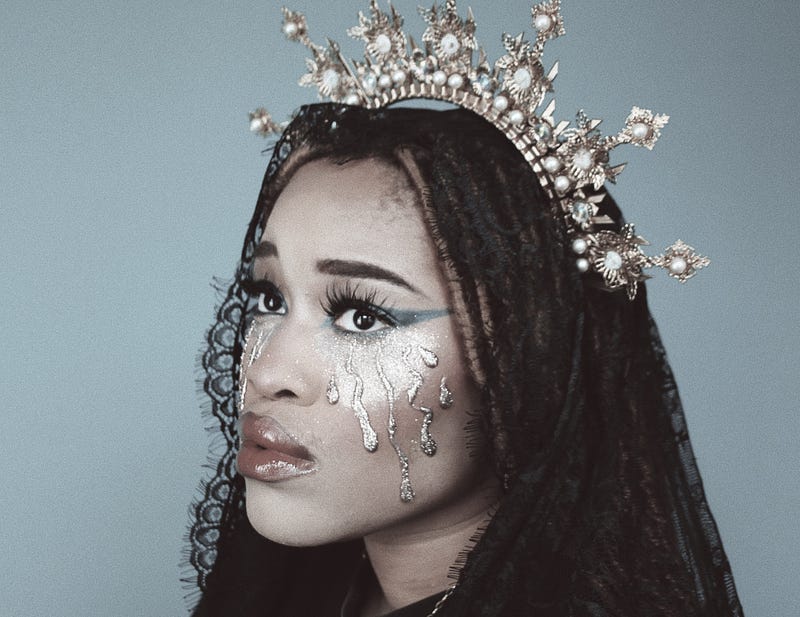
Photo by Simi Iluyomade on Unsplash

October 2015. Lisette Espinosa, a student at Claremont McKenna College, publishes an article in the student newspaper about her feelings of inadequacy and anxiety on campus.

Mary Spellman, the dean, emails Espinosa thanking her for speaking out and inviting her to discuss the issues in person. Unfortunately, Spellman’s well-intentioned email includes the following clumsily worded sentence:

…we are working on how we can better serve students, especially those who don’t fit our CMC mold.

Espinosa doesn’t reply to Spellman’s email, but she does share it on Facebook, highlighting the above line. After weeks of national media scrutiny and protests over a single line in an email, Spellman is forced to resign.

November 2015. Hoping to avoid a repeat of past controversies, administrators at Yale University issue guidelines to students regarding acceptable Halloween dress.

After hearing that several students felt frustrated by the restrictions, Erika Christakis, a member of the faculty-in-residence team, sends an email acknowledging the concerns but encouraging students to engage with each other instead of relying on adults to police their behaviour. The email includes the following suggestion:

…if you don’t like a costume someone is wearing, look away, or tell them you are offended. Talk to each other. Free speech and the ability to tolerate offense are the hallmarks of a free and open society.

Students respond to Christakis’ suggestion that they speak to each other with a petition demanding that she and her husband resign, leading to increasingly tense confrontations on campus and vandalism of their home. The couple eventually steps down.

May 2017. Black undergraduates at Evergreen State College discuss their “Day of Absence," an annual tradition where students, faculty and staff leave the campus for a day to highlight their contributions and discuss racial issues. This time they suggest that white students and faculty leave instead.

Bret Weinstein, a professor at Evergreen, objects to the proposal, arguing that there’s a meaningful difference between minority students voluntarily absenting themselves and white students being compelled to stay away. In an email to colleagues, he wrote:

On a college campus, one’s right to speak — or to be — must never be based on skin color.

This plea for racial harmony leads to weeks of volatile protests, repeated school closures, and over $10,000 worth of property damage, after which Weinstein…well, you get the idea by now.

In their 2015 essay , “The Coddling Of The American Mind,” Jonathan Haidt and Greg Lukianoff sounded the alarm about a cultural shift on college campuses:

…The press has typically described these developments as a resurgence of political correctness. That’s partly right, although the current movement is largely about emotional well-being. […]

The ultimate aim, it seems, is to turn campuses into “safe spaces” where young adults are shielded from words and ideas that make some uncomfortable. And more than the last, this movement seeks to punish anyone who interferes with that aim, even accidentally.

If anything, they undersold it.

In 2017, Jeannie Suk Gersen, a professor at Harvard Law School, wrote in the New Yorker about a student who asked her professor to stop using the word “violate” in class (as in; “does this violate the law?”) because it’s “triggering.”

In 2020, Jason Kilburn, a law professor at the University of Illinois Chicago, was suspended for including the first letter of a slur on an exam paper.

Last week, the University of Southern California banned the word “field”from its curriculum because, and I quote, “phrases such as ‘going into the field’ or ‘field work’ may have connotations for descendants of slavery and immigrant workers that are not benign.

And most infamously, there’s Stanford University’s “Elimination of Harmful Language Initiative”, which lists over 150 “triggering” words and phrases to avoid, including, ironically enough, “trigger warning.”

Universities have bought into the idea that students need to be protected from offence in the same way that nut allergy sufferers need to be protected from nuts; all traces must be removed, no matter how insignificant, if there’s a chance that even a single student will suffer a reaction.

And while this makes sense when the stakes are life and death, it’s not such a good idea when all that’s at stake is a difference of opinion, as Haidt and Lukianoff also point out:

A campus culture devoted to policing speech and punishing speakers is likely to engender patterns of thought that are surprisingly similar to those long identified by cognitive behavioral therapists as causes of depression and anxiety.

Yep, it turns out that teaching young people to think of insensitive questions as hate crimes or disagreement as an existential threat or that they can be as cruel as they like to anyone above them on the victimhood hierarchy, doesn’t produce happy, mentally resilient human beings.

It produces a generation battling depression and self-censorship. It produces “anti-racists” who discriminate based on skin colour. It produces weak, intolerant crybullies who prefer vandalism and violence to the prospect of an uncomfortable conversation.

Maybe I’m just too fragile, but that doesn’t sound like a very “safe space” to me.

It’s tempting to think of the students as the villains of this story. To see them as spoiled and self-centred and manipulative. And sure, some of them are. But kids have always been spoiled and self-centred and manipulative.

Kids learn to manipulate the adults around them before they can walk. They see the world through the narrow filters they’ve had time to accumulate. They rebel against the status quo, blissfully ignorant of their unknown unknowns.

That’s what kids are supposed to do.

And what adults are supposed to do is channel those instincts towards something useful.

Teachers who help their students differentiate between legitimate grievances and petty tantrums should be the rule, not the exception. They should be supported by their colleagues, not sacrificed to the mob. They deserve to be held up as examples, not forced to resign.

Because children only inherit wisdom if they learn how to listen. They only inherit resilience if they learn to deal with adversity. They only inherit compassion if they understand that their way isn’t the only way.

And whether or not they learn these lessons, they’ll inherit the Earth.

Want more? Check out The Commentary. A selection of compassionate, cathartic and chaotic conversations about race, politics and culture. Sign up here.

Cancel Culture
Racism
Race
Ideas
Education
Recommended from ReadMedium