avatarGrace Mary Power

Free AI web copilot to create summaries, insights and extended knowledge, download it at here

7551

Abstract

ing, and with the feelings that you experience upon waking, and write down your dreams and any associations with them, that immediately come to mind.</p><p id="2a3a" type="7">Look at the symbols in your dreams over time and think about whether there is a mythological or cultural symbolism to any dream components, through your knowledge gained by researching Symbols across time and place.</p><p id="42a6">When we interpret dreams, one of the most important steps is to move from an objective approach, in which we consider everything for what it is (your mother represents your mother), to a subjective approach, in which every image represents an aspect of the self.</p><p id="a4f1">Rather than get upset, angry or bogged down with trying to name the people or elements in your dreams as an archetype, examine what they are doing or what happens symbolically.</p><p id="4d43">Studies of the analysis of dreams (see <b>Books on Jungian Psychology </b>section) will help you look at your own dreams. For example, I once had a dream where I was in an enormous rage with someone, and when I woke I knew that it was a Shadow dream. The undifferentiated person that I was murderous within my dream was me.</p><p id="7dbe">I had repressed my own Self which had become my shadow and appeared as something that even in my dream I hated. Once I realized that (due to traumatic experiences) I had repressed my normal healthy functioning personality, and had too high expectations of it (thus was in a rage with it), I let go of the need in conscious waking life, to be perfect.</p><p id="a53d">Dreams do not always contain archetypal images, which are impersonal and take the form of a symbol or a motif, but often do. Free association of dream elements may show that a dream is a commentary on common everyday experiences.</p><p id="66f9">The manifest content or literal content of a dream may be the only meaning, for example, you dreamed about killing a mouse, and in waking life you did kill a mouse; but you suppressed that memory because your conscious thoughts are not to kill mice. The dream meaning is “don’t kill mice, you feel bad about that.”</p><p id="9906">Your associations and what happens with or to a character or a figure in the dream is important to work out the meaning of the dream.</p><p id="0c0e">If a mouse in your dream had symbolic importance, it would probably not manifest as you killing the mouse in the dream, if you had really killed a mouse.</p><p id="a965">If you pushed away or repressed feeling small and insignificant, this feeling may appear in your dream as seeing or being a mouse, symbolizing being small and insignificant, but not killing a mouse (especially if you really had killed a mouse in waking life).</p><p id="d421">If you hadn’t killed a mouse in waking life, then this dream scenario may symbolize you identifying yourself as small and insignificant, and wanting to hurt yourself; but the meaning of the dream act and the symbol depends upon what makes sense to you, as a “mouse” can also symbolize other things.</p><p id="3228">Nightmares have the function of showing the dreamer suppressed (consciously hidden) or repressed (unconsciously hidden) tendencies of thoughts, beliefs, and feeling, through symbols, which are the face of archetypes.</p><p id="ee6d">It takes time to amplify your dreams. The worse thing you can do is to look at them superficially and lock in a single convenient meaning or “interpretation” to them, as the “be-all and end-all.” Openness is required to work with dreams.</p><h1 id="1b31">Dream Symbols</h1><p id="f67d">Your studies of Jungian Psychology by reading a lot of recommended books will facilitate your understanding of dreams, because the field of the collective unconscious is a complex and technical area, which if you are attracted to it, will yield great rewards of understanding how Life is metaphorical or symbolic, and how to accept and learn from your dreams.</p><p id="6142" type="7">Symbols are representations in consciousness, of underlying archetypes.</p><p id="74c1" type="7">Jung explains that the conscious mind can perceive and experience symbols. It can be said that symbols are, in a way, representations in the conscious mind of archetypes per se, and that when an archetype manifests in real time, we speak of a symbol.</p><p id="1d0c" type="7">Jung explains that symbols are archetypes that are determined by the hidden archetype per se. Yet this is only a potential symbol. Symbols always have their basis in the unconscious archetype, but the conscious mind gives them their form.</p><p id="8029" type="7">And the archetype becomes a concrete image and acts like a vehicle which transports itself into the conscious mind.</p><p id="aba0">Source: <a href="https://appliedjung.com/complex-archetype-symbol/">https://appliedjung.com/complex-archetype-symbol</a></p><p id="d2fa">Upon waking, take time and solitude to carefully feel what the characters in your dreams evoked, and mull over whether there’s a somewhat mundane or everyday message or connection over their appearance, or if it is “a big dream”.</p><p id="1ad0">You will know that you have had a “<b>big dream</b>” from the powerful effect that it leaves you with, upon waking. Quickly write down the dream, so that you can amplify it, by considering the characters, happenings, and setting, and the symbols across time and place, and reflect upon what your personal unconscious (perhaps via the collective unconscious) may be trying to tell you.</p><p id="2152">Click <a href="http://www.peaceinpractice.iinet.net.au/Dreamanalysis_Spider.htm">here</a> for a big dream that I had, which had a spectacular series of events in it, that made me feel empowered when I woke up.</p><p id="84ec">What the person does, as well as the setting, the other characters, and what actions and colors in the dream occur, can all be symbols.</p><p id="aef1">For example, the Sun shining on a scene can be a symbol of something life-giving, whereas dark skies and rain may symbolize a mood of dread or depression or anxiety.</p><p id="c181" type="7">You will need some excellent references on SYMBOLS to look at your dreams, such as “The Book of Symbols” Reflections on Archetypal Images.”</p><p id="b5f2">Jung called dream analysis “<b>amplification</b>” and true Jungian Analysts would not be happy with a person mentioning the examination of dreams as “dream interpretation” because this implies a restrained or stilted linear approach, where time and understanding must be used to experience what the subconscious is trying to convey.</p><p id="5fe4" type="7">Amplification is Jung’s signature method for identifying and accurately applying mythic, historical, cultural and universal analogies to unconscious material of a collective nature. This can foster engagement with deeper resources in the personality, facilitating individuation.</p><p id="92ae">Source: <a href="https://link.springer.com/referenceworkentry/10.1007%2F978-0-387-71802-6_24">https://link.springer.com/referenceworkentry/10.1007%2F978-0-387-71802-6_24</a></p><p id="dbd7">Some Dream Dictionaries will suggest meanings for symbols, such as a House representing the Self, but unless the house has a numinous quality, it will more likely be a presentation of the inner world than of the Self archetype, if it is the expression of an archetype.</p><p id="13c6">The House appears often in dreams and is a symbol of personality or of space that a person occupies.</p><p id="3d13">The article below gives step by step instructions

Options

on how to look at your dreams.</p><div id="debf" class="link-block"> <a href="https://readmedium.com/dream-meanings-or-how-to-interpret-your-dreams-or-how-to-interpret-a-dream-670aa7286ee8"> <div> <div> <h2>Dream Meanings or How to Interpret Your Dreams or How to Interpret A Dream</h2> <div><h3>How do I interpret my dream — how to interpret your dreams</h3></div> <div><p>medium.com</p></div> </div> <div> <div style="background-image: url(https://miro.readmedium.com/v2/resize:fit:320/1*xW83wjlmhWmTBmHuS8FgBg.jpeg)"></div> </div> </div> </a> </div><h1 id="90c3">Books on Jungian Psychology</h1><p id="178a">Here is a list of the books which I have in my personal library, related to Jungian psychology, for interest.</p><p id="e612">Beginner’s Guide to Jungian Psychology, by Robin Robertson. Nicolas-Hays Inc York Beach, Maine. 1992</p><p id="99fc">C.G. Jung: Aspects of the Feminine. Translated from the German by R.F.C. Hull. Ark Paperbacks, London and New York 1989</p><p id="6b85">She, Understanding Feminine Psychology by Robert A. Johnson. Revised Edition. HarperPerennial 1989.</p><p id="1a38">Man and His Symbols: conceived and edited by Carl Jung. Picador edition, Aldus Books 1964.</p><p id="e3d2">C.G. Jung, The Fundamentals of Theory and Practice by Elie Humbert. Chiron Publications 1989.</p><p id="c0ab">Animus and Anima- Two Essays by Emma Jung. Spring Publications 1985.</p><p id="fbed">Living with the Heavenly Woman, Understanding and Integrating the Feminine Archetypes in Men’s Lives, by Robert A. Johnson. HarperSanFrancsico 1994.</p><h1 id="0ac4">The Way of the Dream by Marie-Louise von Franz</h1><figure id="545e"><img src="https://cdn-images-1.readmedium.com/v2/resize:fit:800/1*hp_TOyB4dlpisSeAf-fRXA.jpeg"><figcaption>I attended a two day Film Seminar on “The Way of the Dream” — photo provided by Celine Lai</figcaption></figure><p id="a42b">I am fortunate to have attended a two day screening of 12 hours of interviews of <b>Marie- Louise von Franz</b> by Fraser Boa for “The Way of the Dream” series, in 1990.</p><p id="ccfe">The following web page below gives information, shown below, though I’m not certain that Windrose Films exists today as I’ve not been able to find a trace of it.</p><p id="3f6b"><a href="https://www.marie-louisevonfranz.com/en/biography.html">https://www.marie-louisevonfranz.com/en/biography.html</a></p><p id="dce9" type="7">1988</p><p id="b3c5" type="7">“The Way of the Dream” Produced by: Fraser Boa & Windrose Film Productions, Toronto, Canada.</p><p id="7aeb" type="7">Featuring interpretations of dreams gathered by Fraser Boa from ordinary men and women on the street and interpreted by Marie-Louise von Franz. The film can be ordered at: Windrose Films LTD, c/o G. Chalmers Adams, 1255 Yonge Street, Suite 100, Toronto, M4T 1W6, Canada.</p><p id="8ef0" type="7">The film transcript was published by: Boa, Fraser (1994) The Way of the Dream: Conversations on Jungian Dream Interpretation with Marie-Louise Von Franz. Boston & London: Shambhala.</p><p id="f838">Marie-Louise von Franz was a Swiss Jungian psychologist and scholar, renowned for her psychological interpretations of fairy tales and of alchemical manuscripts.</p><p id="0f63">I am very grateful to own the First Edition of the 1988 companion book to “The Way of the Dream” documentary film series. More information about Marie-Louise Von Franz at the site below.</p><div id="ccc2" class="link-block"> <a href="https://www.marie-louisevonfranz.com/en/homepage.html"> <div> <div> <h2>Marie-Louise von Franz</h2> <div><h3>Marie-Louise von Franz earned her doctorate in philology at the University of Zurich. From 1934 onwards, she worked…</h3></div> <div><p>www.marie-louisevonfranz.com</p></div> </div> <div> <div style="background-image: url(https://miro.readmedium.com/v2/resize:fit:320/)"></div> </div> </div> </a> </div><figure id="f8db"><img src="https://cdn-images-1.readmedium.com/v2/resize:fit:800/1*k_E7lNeoVyEAaqg6DjZ47g.jpeg"><figcaption>Photo provided by Celine Lai</figcaption></figure><figure id="3bd3"><img src="https://cdn-images-1.readmedium.com/v2/resize:fit:800/1*BTnq3ZqAOru3XyqpUZ4xOA.jpeg"><figcaption>Brochure for “The Way of the Dream” Film Weekend. Photo provided by Celine Lai</figcaption></figure><figure id="b3f7"><img src="https://cdn-images-1.readmedium.com/v2/resize:fit:800/1*hEgcN6cCgkutzyYn4tl_jQ.jpeg"><figcaption>Brochure for “The Way of the Dream” Film Weekend. Photo provided by Celine Lai</figcaption></figure><figure id="1119"><img src="https://cdn-images-1.readmedium.com/v2/resize:fit:800/1*5YNLnj-EckQOOijUX4KwFg.jpeg"><figcaption>Companion book to “The Way of the Dream”. Photo provided by Celine Lai</figcaption></figure><figure id="3676"><img src="https://cdn-images-1.readmedium.com/v2/resize:fit:800/1*jXF9Vi9tCfb81e4398D6WA.jpeg"><figcaption>Companion book to “The Way of the Dream”. Photo provided by Celine Lai</figcaption></figure><figure id="f243"><img src="https://cdn-images-1.readmedium.com/v2/resize:fit:800/1*k2bqlbP2GlQ93k1cvAnD1g.jpeg"><figcaption>Companion book to “The Way of the Dream”. Photo provided by Celine Lai</figcaption></figure><figure id="44c8"><img src="https://cdn-images-1.readmedium.com/v2/resize:fit:800/1*csvHIJRuz8C84xegEueYzA.jpeg"><figcaption>From the book “The Way of the Dream”</figcaption></figure><h1 id="2cbf">REFERENCES</h1><p id="5cd7"><a href="https://iaap.org/jung-analytical-psychology/c-g-jung">https://iaap.org/jung-analytical-psychology/c-g-jung</a></p><p id="8fae"><a href="https://www.thesap.org.uk/resources/articles-on-jungian-psychology-2/carl-gustav-jung/">https://www.thesap.org.uk/resources/articles-on-jungian-psychology-2/carl-gustav-jung/</a></p><p id="adea"><a href="https://www.psychologistworld.com/cognitive/carl-jung-analytical-psychology">https://www.psychologistworld.com/cognitive/carl-jung-analytical-psychology</a></p><p id="4d7a"><a href="https://iaap.org/resources/academic-resources/collected-works-abstracts/volume-9-1-archetypes-collective-unconscious/">https://iaap.org/resources/academic-resources/collected-works-abstracts/volume-9-1-archetypes-collective-unconscious/</a></p><p id="17f7"><a href="https://brandsbyovo.com/expertise/brand-archetypes/">https://brandsbyovo.com/expertise/brand-archetypes/</a></p><p id="271e"><a href="https://appliedjung.com/complex-archetype-symbol/">https://appliedjung.com/complex-archetype-symbol/</a></p><p id="285a"><a href="https://carljungdepthpsychologysite.blog/2018/12/26/the-trickster-is-a-forerunner-of-the-savior/#.XU0cRkcRWos">https://carljungdepthpsychologysite.blog/2018/12/26/the-trickster-is-a-forerunner-of-the-savior/#.XU0cRkcRWos</a></p><p id="f3f3"><a href="https://carljungdepthpsychologysite.blog/2018/12/26/the-trickster-is-a-forerunner-of-the-savior/#.XU0cRkcRWos">https://iahip.org/inside-out/issue-7-winter-1991/rescuing-the-feminine%E2%80%A8-the-problem-of-the-animus-%E2%80%A8in-women%E2%80%A8</a></p><p id="145d"><a href="https://frithluton.com/articles/womans-animus-development/">https://frithluton.com/articles/womans-animus-development/</a></p><p id="0aad"><a href="https://lonerwolf.com/the-anima-and-animus/">https://lonerwolf.com/the-anima-and-animus/</a></p></article></body>

The Way of the Dream: Part Three-Amplification, Symbols & References

The Way of the Dream: Amplification, Symbols & References
Amplification, Symbols, and References

This is Part 3 of an original 3 part series written by Celine Lai.

Part 1 (Introduction, Complexes and Concepts) can be read at this link HERE.

Part 2 (Archetypes) can be read at this link HERE.

How do you know which Archetype is in your Dream?

Note, reading Parts 1 and 2 of this Series will benefit you, if you are not familiar with the Archetypes of Jungian Analysis.

The way I decide this is to use my knowledge of symbols and archetypes and look at all components of the dream, including the behaviour of any character(s) in my dream.

If an unknown male figure in a woman’s dream or an unknown female figure in a man’s dream are showing you traits which you feel uncomfortable with in your conscious life; they may be the Animus or the Anima, if they are not in conflict with you and thus part of the Shadow.

Whereas the anima in a man functions as his soul, a woman’s animus is more like an unconscious mind. It manifests negatively in fixed ideas, unconscious assumptions and conventional opinions that may be generally right, but beside the point in a particular situation.

A woman’s animus becomes a helpful psychological factor only when she can tell the difference between her inner man and herself.

Source: https://frithluton.com/articles/womans-animus-development

The developed animus may appear in the dream of a woman who has integrated her Shadow, as a group of men or as an individual man, or as a Hero or God, and the developed anima may appear in the dream of a man who has integrated his Shadow, as an elemental (fairy or sprite or similar) or as a Goddess or an individual female figure.

The Animus is a helpful figure to look at, because it is the masculine drive in women, that if not used properly, can separate women from their femininity.

The animus is both a personal complex and an archetypal image of man in a woman’s subconscious. The anima is a personal complex and an archetypal image of a woman in a man’s subconscious.

The animus and anima are only fully integrated after the Shadow is integrated.

I could ask myself is a male character in my dream a figure of authority giving orders or caring for someone or something, or expecting or demanding something, i.e. the Father Archetype?

The Father Archetype arises from the Animus and may manifest in dreams as a critical, authoritative voice or character in a woman’s dream.

If you dream about a father figure pulling out your teeth, the symbol of “teeth” as a grounding force or as a foundation is apparent. Dreams are rather incongruous because they are spontaneous images and impressions arising from the collective and/or the personal unconscious.

If it is a father figure (rather than a Doctor or a Dentist or a female) extracting teeth, this dream could mean that your hidden authoritative side is bent on pulling out your foundations. The results and how you feel and other connected happenings in the dream have bearing upon the amplification.

For example, in some cultures, it may be a “real father figure” like a medicine man, who pulls out teeth, so this may impart a nuance such as a real visit to the dentist pending.

Dreams may have dual or several meanings, and only the dreamer can feel or sense (or intuit) for her/himself if a dream has a literal meaning and/or a metaphorical/symbolic meaning.

Maybe a female figure in my dream is being secretive or subversive in my dream, in conflict with me, and thus is presenting the Shadow to me.

The Shadow archetype is quite likely to appear a lot in our dreams because it arises from material which has been suppressed (consciously ignored or pushed away) or repressed (subconsciously ignored or pushed away).

Robin Robertson in his book “Beginner’s Guide to Jungian Psychology” states that when you find someone in conflict with you in a dream, consider that it is the Shadow.

When our conscious resources are inadequate to deal with some new issue in our life, and we need qualities that have been relegated to the unconscious from denial or neglect, those qualities show up as shadow figures in our dreams.

Shadow figures usually appear first as non-human, confronting us with their unwanted, though unavoidable, presence. Over time they evolve into human figures of the same sex of ourselves and later may appear as friends or lovers of the same or opposite sex.

If you fail to fully recognize the message of the Shadow, Robin writes, don’t get discouraged, just understand that the shadow issue will resolve itself if you are aware that there is an issue to address.

As the Shadow figure in your dream appears more ambiguous, the closer you are coming to fully amplify its message, if you pay close attention to the symbols and to any mythological or cultural elements.

Likewise, the other Archetypes in the screenshot above may be experienced in dreams by all of their nuances, e.g. the Persona may appear as yourself changing clothes, or the Wise Old Woman appears as an elderly woman.

Recall the stages of development are manifested through the Shadow, the Animus or Anima, and the Self.

In dealing with our Shadow, most of our struggles are with personal complexes in our personal unconscious, complexes which arise from archetypes in the collective unconscious.

With the Animus or Anima, we are dealing largely with the collective experience, in dealing with the problem of relationships to other people.

Wholeness is our essential nature, the function of a self-regulating psyche, and the Self archetype can also appear as a derivative, in the form of the “Wise Old Man” or “the Wise Old Woman” archetypes.

The Self appears when the conscious and unconscious selves or parts are unified. Experiences of the self possess a numinous (supernatural) quality.

Jung believed there was no essential difference between the self as an experiential, psychological reality and the traditional concept of a supreme deity.

It might equally be called the “God within us.”

[“The Mana-Personality,” CW 7, par. 399.]

A few words of warning here: it is not compulsory to identify figures or characters and events in your dreams as named Archetypes or helpful to try to force a dream element into a named Archetype or a Symbol.

Rather, go with the feelings that your dream evokes while you are dreaming, and with the feelings that you experience upon waking, and write down your dreams and any associations with them, that immediately come to mind.

Look at the symbols in your dreams over time and think about whether there is a mythological or cultural symbolism to any dream components, through your knowledge gained by researching Symbols across time and place.

When we interpret dreams, one of the most important steps is to move from an objective approach, in which we consider everything for what it is (your mother represents your mother), to a subjective approach, in which every image represents an aspect of the self.

Rather than get upset, angry or bogged down with trying to name the people or elements in your dreams as an archetype, examine what they are doing or what happens symbolically.

Studies of the analysis of dreams (see Books on Jungian Psychology section) will help you look at your own dreams. For example, I once had a dream where I was in an enormous rage with someone, and when I woke I knew that it was a Shadow dream. The undifferentiated person that I was murderous within my dream was me.

I had repressed my own Self which had become my shadow and appeared as something that even in my dream I hated. Once I realized that (due to traumatic experiences) I had repressed my normal healthy functioning personality, and had too high expectations of it (thus was in a rage with it), I let go of the need in conscious waking life, to be perfect.

Dreams do not always contain archetypal images, which are impersonal and take the form of a symbol or a motif, but often do. Free association of dream elements may show that a dream is a commentary on common everyday experiences.

The manifest content or literal content of a dream may be the only meaning, for example, you dreamed about killing a mouse, and in waking life you did kill a mouse; but you suppressed that memory because your conscious thoughts are not to kill mice. The dream meaning is “don’t kill mice, you feel bad about that.”

Your associations and what happens with or to a character or a figure in the dream is important to work out the meaning of the dream.

If a mouse in your dream had symbolic importance, it would probably not manifest as you killing the mouse in the dream, if you had really killed a mouse.

If you pushed away or repressed feeling small and insignificant, this feeling may appear in your dream as seeing or being a mouse, symbolizing being small and insignificant, but not killing a mouse (especially if you really had killed a mouse in waking life).

If you hadn’t killed a mouse in waking life, then this dream scenario may symbolize you identifying yourself as small and insignificant, and wanting to hurt yourself; but the meaning of the dream act and the symbol depends upon what makes sense to you, as a “mouse” can also symbolize other things.

Nightmares have the function of showing the dreamer suppressed (consciously hidden) or repressed (unconsciously hidden) tendencies of thoughts, beliefs, and feeling, through symbols, which are the face of archetypes.

It takes time to amplify your dreams. The worse thing you can do is to look at them superficially and lock in a single convenient meaning or “interpretation” to them, as the “be-all and end-all.” Openness is required to work with dreams.

Dream Symbols

Your studies of Jungian Psychology by reading a lot of recommended books will facilitate your understanding of dreams, because the field of the collective unconscious is a complex and technical area, which if you are attracted to it, will yield great rewards of understanding how Life is metaphorical or symbolic, and how to accept and learn from your dreams.

Symbols are representations in consciousness, of underlying archetypes.

Jung explains that the conscious mind can perceive and experience symbols. It can be said that symbols are, in a way, representations in the conscious mind of archetypes per se, and that when an archetype manifests in real time, we speak of a symbol.

Jung explains that symbols are archetypes that are determined by the hidden archetype per se. Yet this is only a potential symbol. Symbols always have their basis in the unconscious archetype, but the conscious mind gives them their form.

And the archetype becomes a concrete image and acts like a vehicle which transports itself into the conscious mind.

Source: https://appliedjung.com/complex-archetype-symbol

Upon waking, take time and solitude to carefully feel what the characters in your dreams evoked, and mull over whether there’s a somewhat mundane or everyday message or connection over their appearance, or if it is “a big dream”.

You will know that you have had a “big dream” from the powerful effect that it leaves you with, upon waking. Quickly write down the dream, so that you can amplify it, by considering the characters, happenings, and setting, and the symbols across time and place, and reflect upon what your personal unconscious (perhaps via the collective unconscious) may be trying to tell you.

Click here for a big dream that I had, which had a spectacular series of events in it, that made me feel empowered when I woke up.

What the person does, as well as the setting, the other characters, and what actions and colors in the dream occur, can all be symbols.

For example, the Sun shining on a scene can be a symbol of something life-giving, whereas dark skies and rain may symbolize a mood of dread or depression or anxiety.

You will need some excellent references on SYMBOLS to look at your dreams, such as “The Book of Symbols” Reflections on Archetypal Images.”

Jung called dream analysis “amplification” and true Jungian Analysts would not be happy with a person mentioning the examination of dreams as “dream interpretation” because this implies a restrained or stilted linear approach, where time and understanding must be used to experience what the subconscious is trying to convey.

Amplification is Jung’s signature method for identifying and accurately applying mythic, historical, cultural and universal analogies to unconscious material of a collective nature. This can foster engagement with deeper resources in the personality, facilitating individuation.

Source: https://link.springer.com/referenceworkentry/10.1007%2F978-0-387-71802-6_24

Some Dream Dictionaries will suggest meanings for symbols, such as a House representing the Self, but unless the house has a numinous quality, it will more likely be a presentation of the inner world than of the Self archetype, if it is the expression of an archetype.

The House appears often in dreams and is a symbol of personality or of space that a person occupies.

The article below gives step by step instructions on how to look at your dreams.

Books on Jungian Psychology

Here is a list of the books which I have in my personal library, related to Jungian psychology, for interest.

Beginner’s Guide to Jungian Psychology, by Robin Robertson. Nicolas-Hays Inc York Beach, Maine. 1992

C.G. Jung: Aspects of the Feminine. Translated from the German by R.F.C. Hull. Ark Paperbacks, London and New York 1989

She, Understanding Feminine Psychology by Robert A. Johnson. Revised Edition. HarperPerennial 1989.

Man and His Symbols: conceived and edited by Carl Jung. Picador edition, Aldus Books 1964.

C.G. Jung, The Fundamentals of Theory and Practice by Elie Humbert. Chiron Publications 1989.

Animus and Anima- Two Essays by Emma Jung. Spring Publications 1985.

Living with the Heavenly Woman, Understanding and Integrating the Feminine Archetypes in Men’s Lives, by Robert A. Johnson. HarperSanFrancsico 1994.

The Way of the Dream by Marie-Louise von Franz
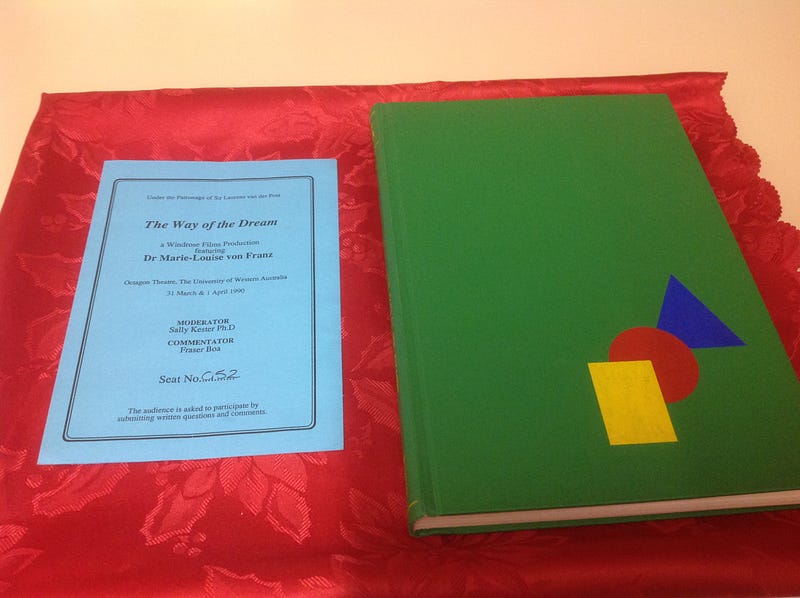
I attended a two day Film Seminar on “The Way of the Dream” — photo provided by Celine Lai

I am fortunate to have attended a two day screening of 12 hours of interviews of Marie- Louise von Franz by Fraser Boa for “The Way of the Dream” series, in 1990.

The following web page below gives information, shown below, though I’m not certain that Windrose Films exists today as I’ve not been able to find a trace of it.

https://www.marie-louisevonfranz.com/en/biography.html

1988

“The Way of the Dream” Produced by: Fraser Boa & Windrose Film Productions, Toronto, Canada.

Featuring interpretations of dreams gathered by Fraser Boa from ordinary men and women on the street and interpreted by Marie-Louise von Franz. The film can be ordered at: Windrose Films LTD, c/o G. Chalmers Adams, 1255 Yonge Street, Suite 100, Toronto, M4T 1W6, Canada.

The film transcript was published by: Boa, Fraser (1994) The Way of the Dream: Conversations on Jungian Dream Interpretation with Marie-Louise Von Franz. Boston & London: Shambhala.

Marie-Louise von Franz was a Swiss Jungian psychologist and scholar, renowned for her psychological interpretations of fairy tales and of alchemical manuscripts.

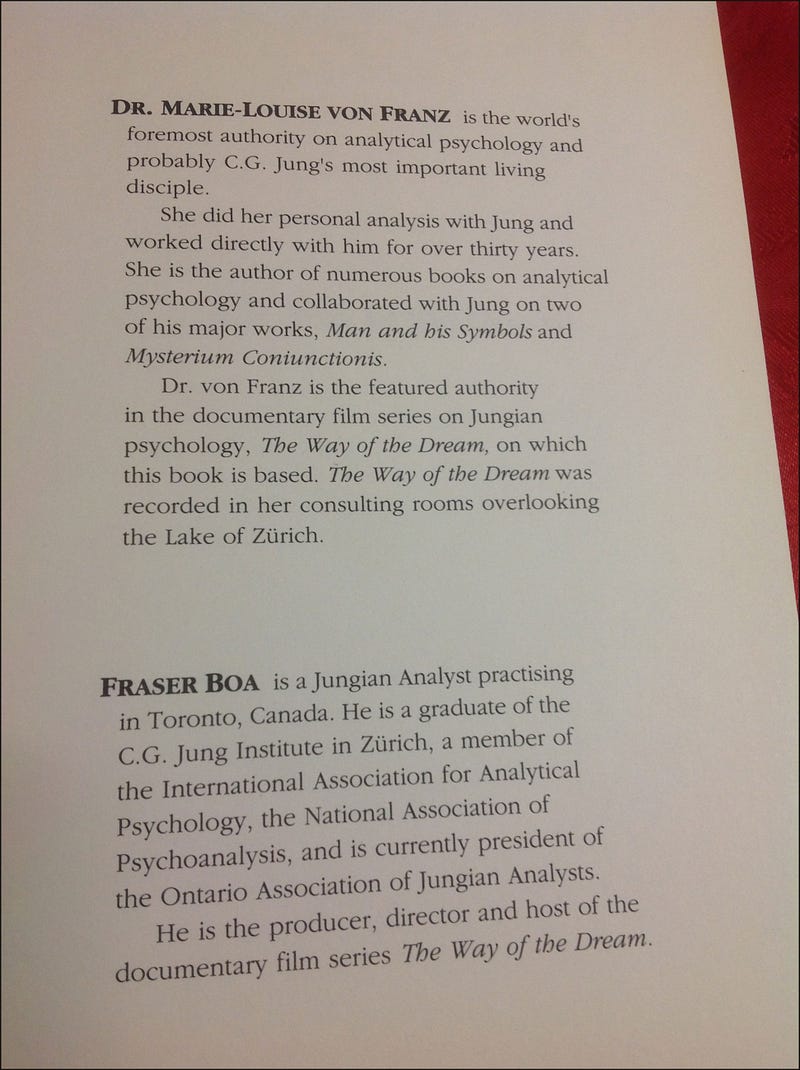
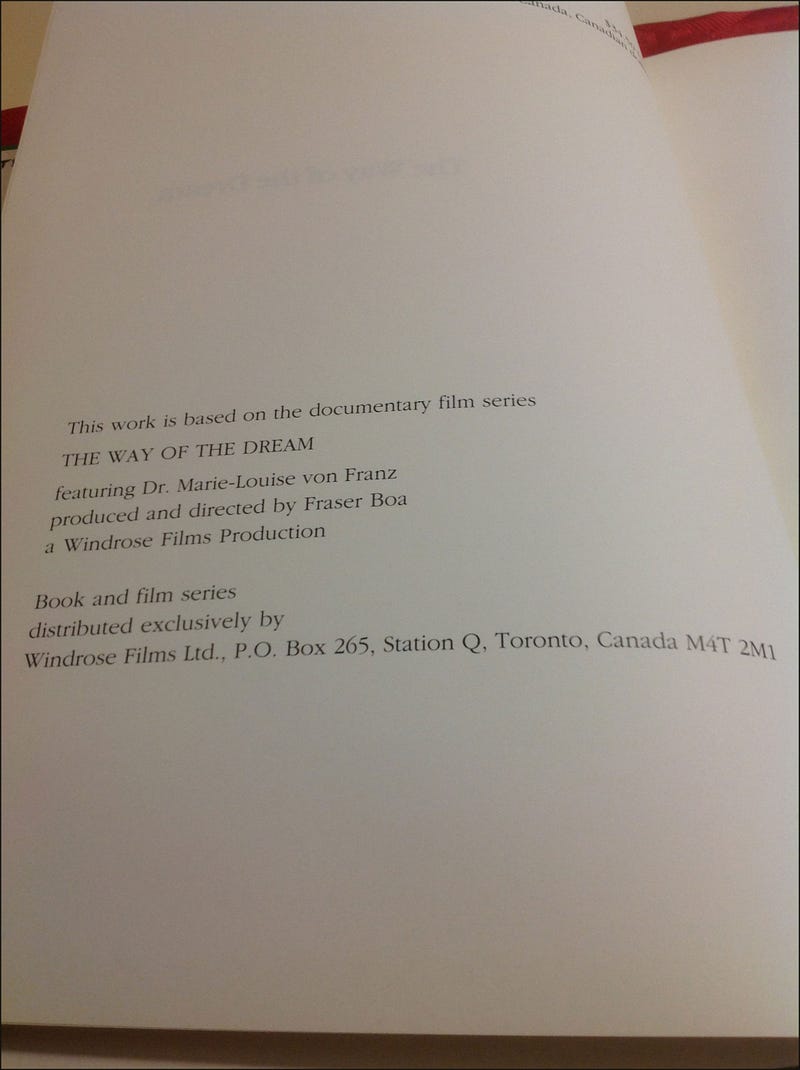
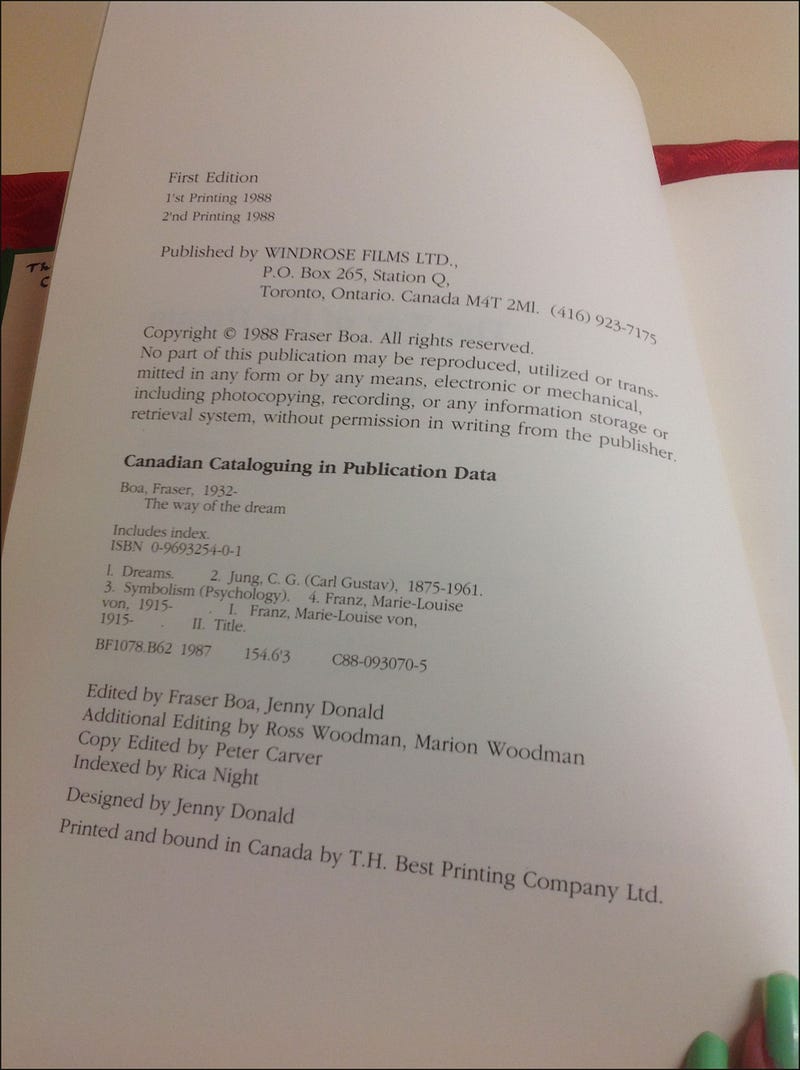
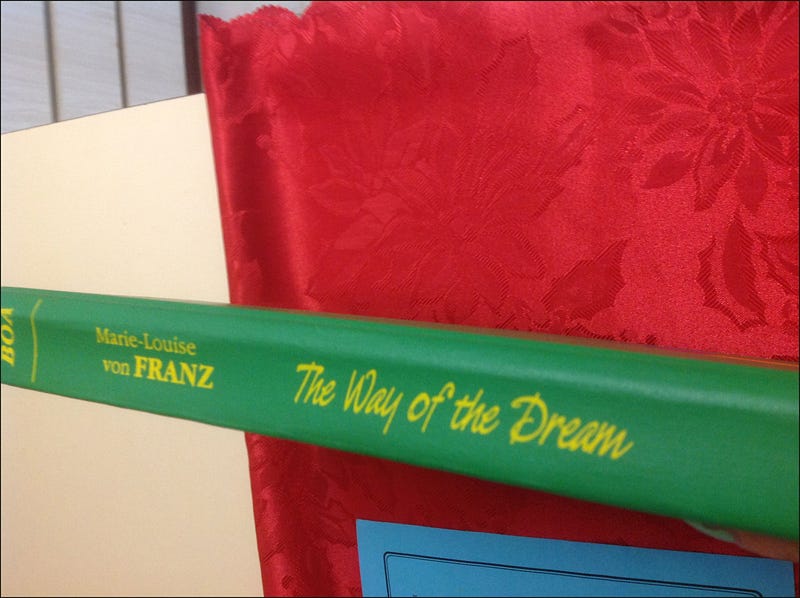
I am very grateful to own the First Edition of the 1988 companion book to “The Way of the Dream” documentary film series. More information about Marie-Louise Von Franz at the site below.
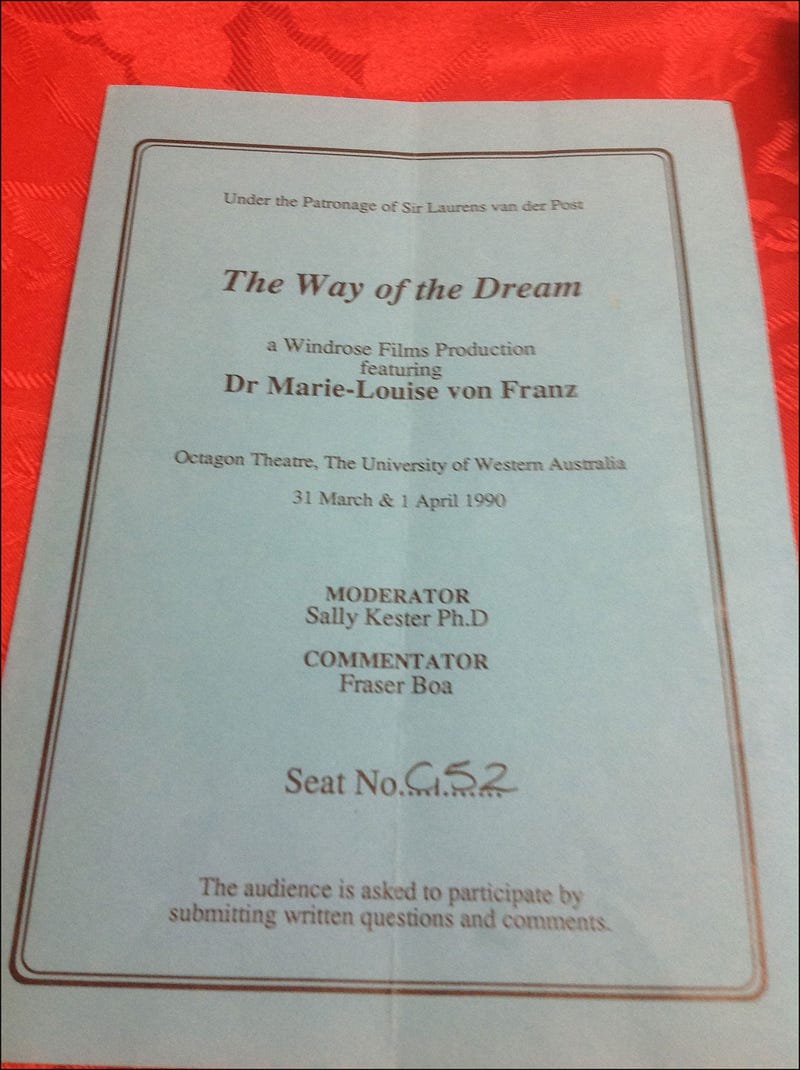
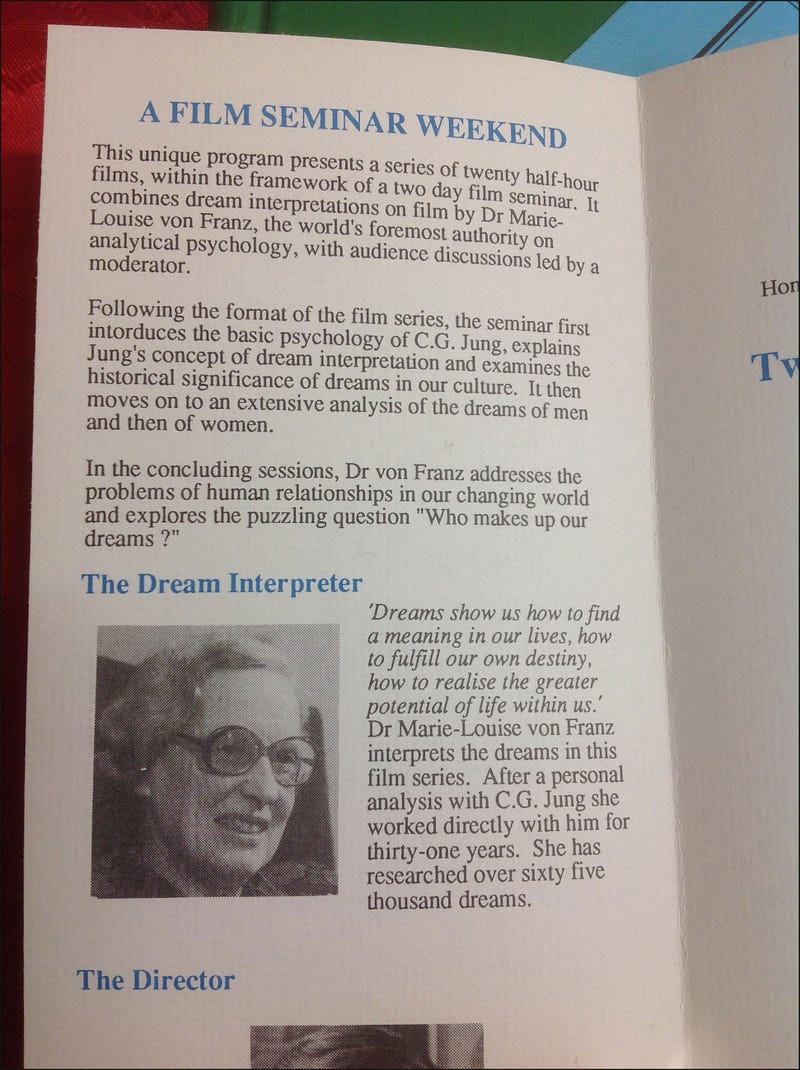
Photo provided by Celine Lai
Brochure for “The Way of the Dream” Film Weekend. Photo provided by Celine Lai
Companion book to “The Way of the Dream”. Photo provided by Celine Lai
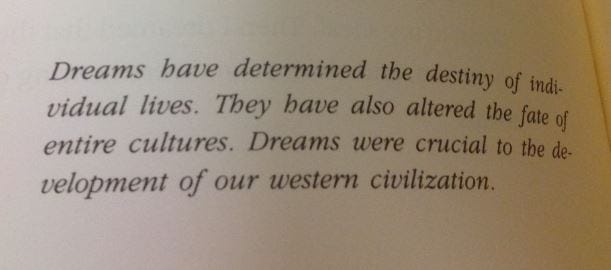
From the book “The Way of the Dream”

REFERENCES

https://iaap.org/jung-analytical-psychology/c-g-jung

https://www.thesap.org.uk/resources/articles-on-jungian-psychology-2/carl-gustav-jung/

https://www.psychologistworld.com/cognitive/carl-jung-analytical-psychology

https://iaap.org/resources/academic-resources/collected-works-abstracts/volume-9-1-archetypes-collective-unconscious/

https://brandsbyovo.com/expertise/brand-archetypes/

https://appliedjung.com/complex-archetype-symbol/

https://carljungdepthpsychologysite.blog/2018/12/26/the-trickster-is-a-forerunner-of-the-savior/#.XU0cRkcRWos

https://iahip.org/inside-out/issue-7-winter-1991/rescuing-the-feminine%E2%80%A8-the-problem-of-the-animus-%E2%80%A8in-women%E2%80%A8

https://frithluton.com/articles/womans-animus-development/

https://lonerwolf.com/the-anima-and-animus/

Psychology
Dreams
Jung
Symbols
Dream Analysis
Recommended from ReadMedium