
The Walking Dead: Saints and Sinners is Weird and Worth Playing
You can’t open any of the current VR game digital storefronts without tripping over a huge pile of zombie games. Whether you’re on a Quest, SteamVR, or PSVR you’ll be quickly inundated with games about fighting the undead, usually with guns.
Arizona Sunshine kicked this zombie trend explosion off years ago, followed by other legends like Zombieland: Headshot Fever, Drop Dead, Resident Evil, or today’s featured title The Walking Dead: Saints and Sinners. Like other popular zombie VR shooters, it’s available across all of the major VR gaming ecosystems, but it recently entered my orbit thanks to a half-off discount on the Quest store (still running for a day or two as of this writing!) and a new graphics patch for the Quest 3 headset.
I don’t have much of a personal affiliation with or love for The Walking Dead as an IP. I haven’t read the graphic novels, nor have I seen more than an episode or two of the long-running TV series. I played the first season of the old Telltale adventure game series before I lost interest, as I’m one of “those people” who preferred that company’s classic adventures to their more cinematic fare. Still, I like zombie action games quite a bit, and this is one of the highest rated ones out there so it seemed like a solid pick.
What I wasn’t really prepared for was how strange, deep, thoughtful, and immersive-sim like the game is. The well-made action is almost secondary, serving more as an impediment and cost balance against the true core of this game: crafting.
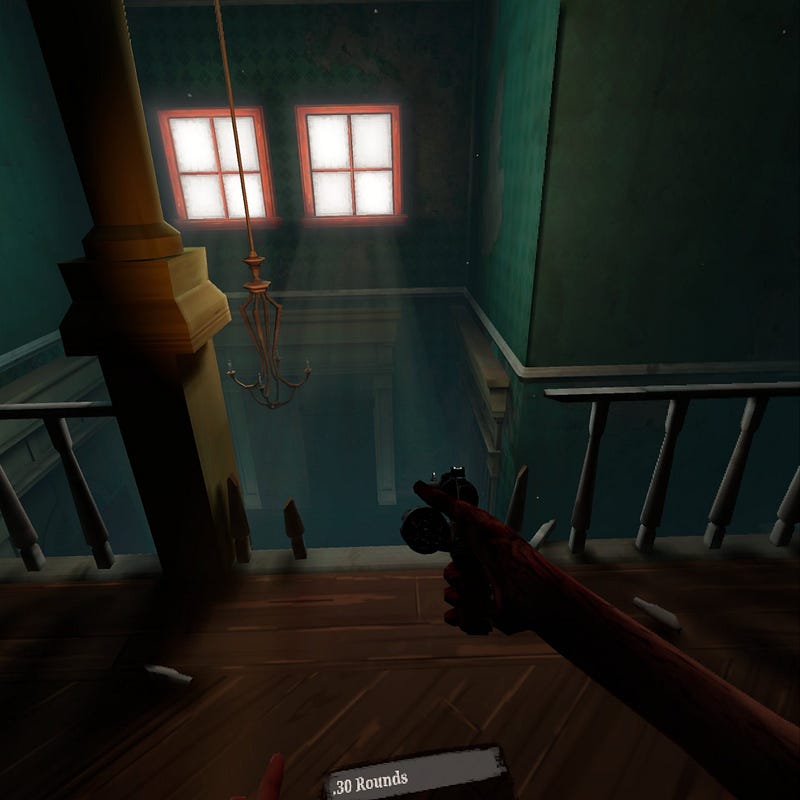
Saints and Sinners casts you as “The Tourist,” a character of your own creation that roams a flooded New Orleans fighting zombies and completing quests. The core gameplay progression revolves entirely around scavenging for resources, and then using them to both build and upgrade your gear and character. The skill trees in the game double as crafting menus, where you can invest materials to either go up a tier of available options or make individual goods. Weapons and ammo are hard to come by out in the world, and there’s no real currency in the game other than your ever-growing pile of resources. One of the four zombie enemy types consistently drops materials, but the rest of them are just there to get in your way, alongside humans with guns who show up from time to time.
The action in the game is very fun and polished, with a layer of physics and heft that some other VR games lack. Two handed weapons actually require you to use two hands in order to wield them properly. Bladed options can get stuck inside of zombies, requiring a sharp tug to retrieve them. Guns demand careful aim and precise reloading so you don’t drop precious bullets. And everything has a durability rating, meaning you’ll need to spend some of those magic resources to keep your gear supply intact when your old stuff breaks.
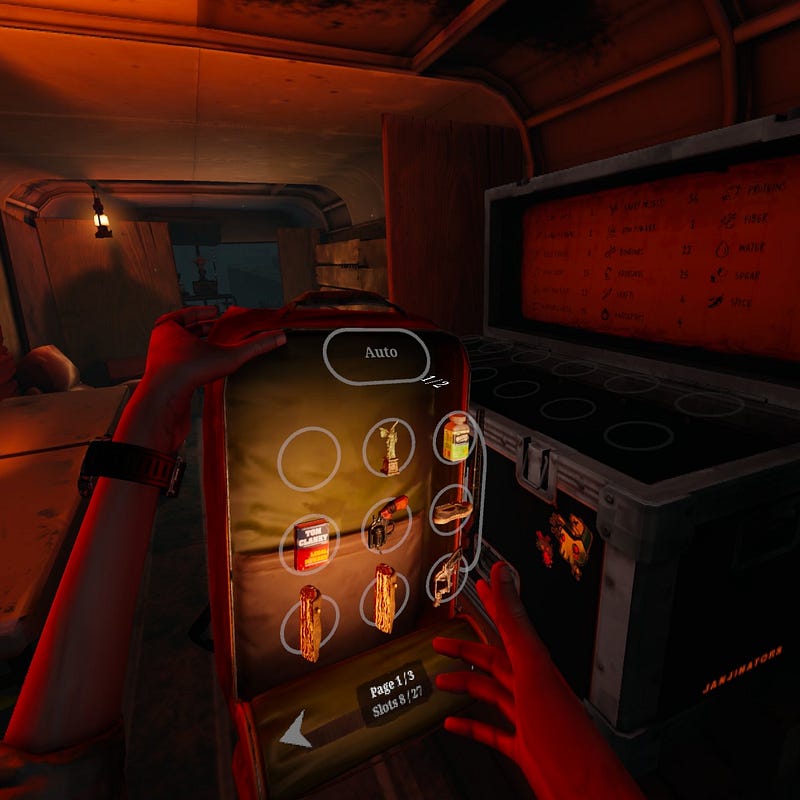
Materials aren’t simply gathered up and ready to use. Rather, you’ve got to shove junk into your detailed fiddly mechanical backpack and then take it back home and throw it into a hilarious recycling bin. This loop is unusual at first. The heavy combat and lack of loot falling out of enemies makes the game feel more like a survival/crafting grind and less like other breezy zombie VR games. But once you get into the groove of picking up the stuff you need and hauling it back to the weird bus you live in, it becomes just as focused and satisfying as any other loot game. Saints and Sinners draws much more from the Immersive Sim genre territory populated by games like System Shock and the second Prey than you might be expecting. The closest counterpart I can think of is Ubisoft’s underrated and underplayed ZombieU.
This isn’t at all an easy game, and it’s also not great at telling you about the interplay between all of its systems. I had to play the opening hour a couple of times before I felt like a got off to a good start, and that was further helped by watching some “tips” videos on YouTube. If you die out in the field, you have to do a corpse run to get your loot back, and if you fail at it you lose everything you had on you. As materials serve as the game’s lone resource and weapons are hard to hoard in the early game, it’s more brutal than the XP penalty in something like Elden Ring. So, know that this game means business. There’s a “Story” difficulty that ramps things down a fair bit, but I think that also dampens some of the elements that make this game unique on the market.
The game design and story have a surprising amount of depth and replayability baked into them. There are several branching decision points throughout the reasonably long campaign, which lead to different story outcomes for your individual character. There’s also a healthy degree of randomization to material placement, safe codes, enemy strength, and more aspects of the game’s world. Also, as you progress through the game’s virtual calendar, it will populate fewer resources into the world, alongside more enemies, ramping this disparity up with every passing day. Again, this game isn’t messing around. But if you get into it, you’ll really get into it.
Zombie combat is visceral to the point of almost feeling too gross, requiring you to stab or decapitate them with a lot of detail and squishing sounds. Combat against humans is more like a standard first-person shooter — but one where the enemies are super dumb yet also brilliant at aiming. Humans don’t do an amazing job of detecting your presence when crouched on the default difficulty, which is good because they’re weirdly adept at doing damage once they finally realize where you’re located.
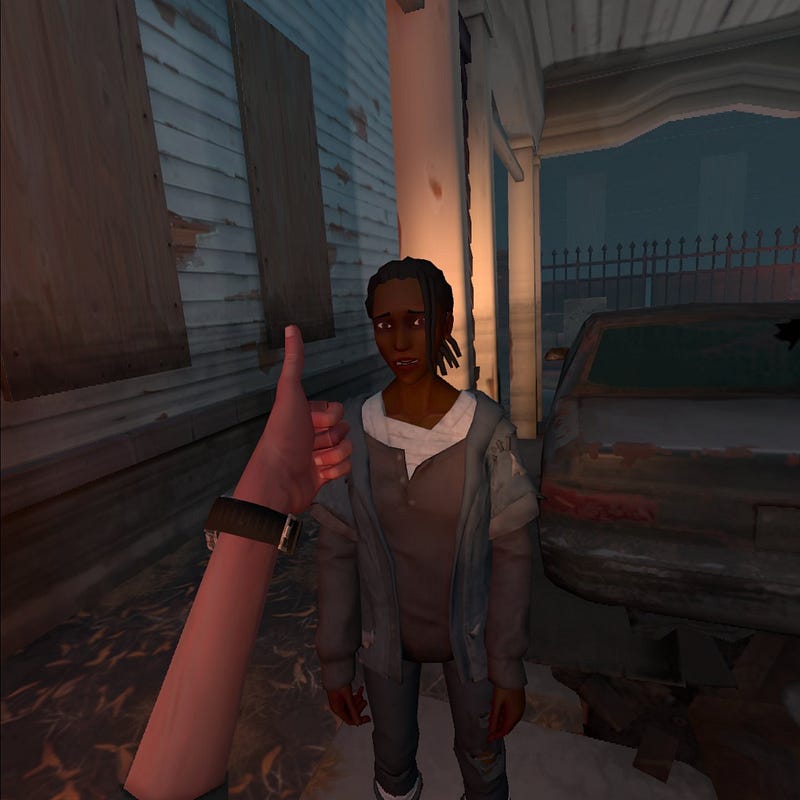
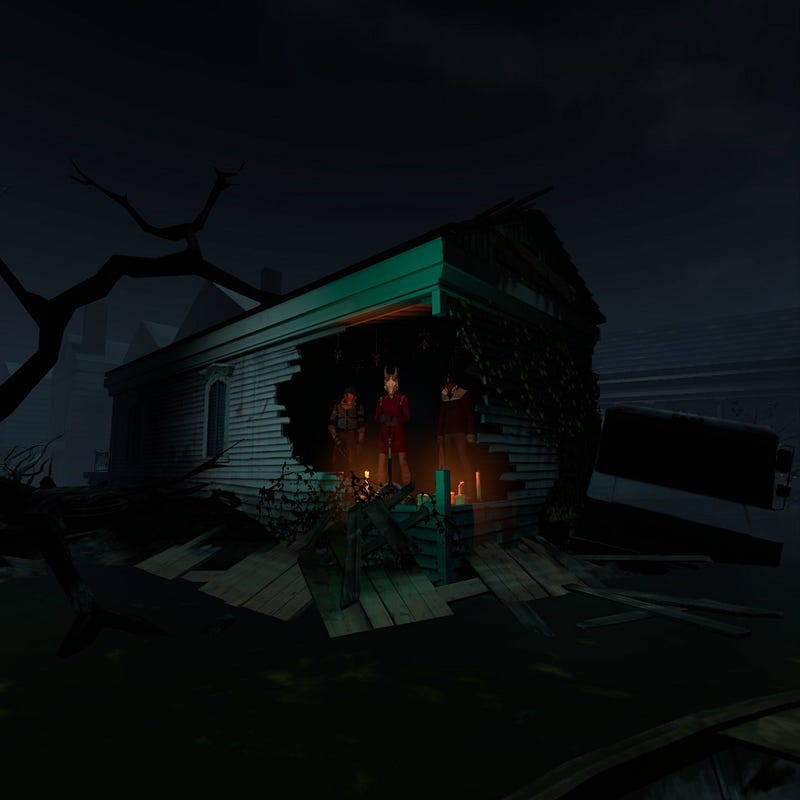
Graphically, the game benefits massively from its recent Quest 3 patch if you have that hardware, bringing the game much closer to its PC and PSVR counterparts. The Quest 2 version has worse textures, fewer enemies on screen, worse lighting, and no shadows from your flashlight. I spent a healthy amount of time with the game on both of Meta’s current consumer headsets, and while I honestly found the Quest 2 version just fine to look at, the Quest 3 version is a dramatic and immediately noticeable step up. Every object in the game looks so much more detailed on the beefier hardware.
The game got a sequel that wasn’t as well received. That second title is also on sale right now but I haven’t played it at all. It’s worth noting that Chapter 2 was meant specifically for fans of the first game. It takes place right after the original and you can even import your character into it. The game is apparently more linear, and didn’t review as well as the original, but I’m still planning to check it out some day.
Saints and Sinners is a great place for those of a more hardcore slant to begin their zombie VR journey. It’s slow, tactical, and completely obsessed with crafting. If you like to micromanage your inventory space and hoard objects you’ll have a great time here. If you’re down to balance a time crunch against tactical gunplay, or you’ve ever gone in deep on a Souls game, this is a zombie game for your temperament. If you just want to have fun blasting zombies, there are about a million other better choices for VR headsets out there. The blasting here is fun, but if you don’t get invested in the rest of its systems, you’ll quickly struggle to get anywhere.
I wasn’t asked or compensated by the publishers of this game to write about it.