
The Voiceprints of Rhythm
You Can't Take Away Our Native Tongues
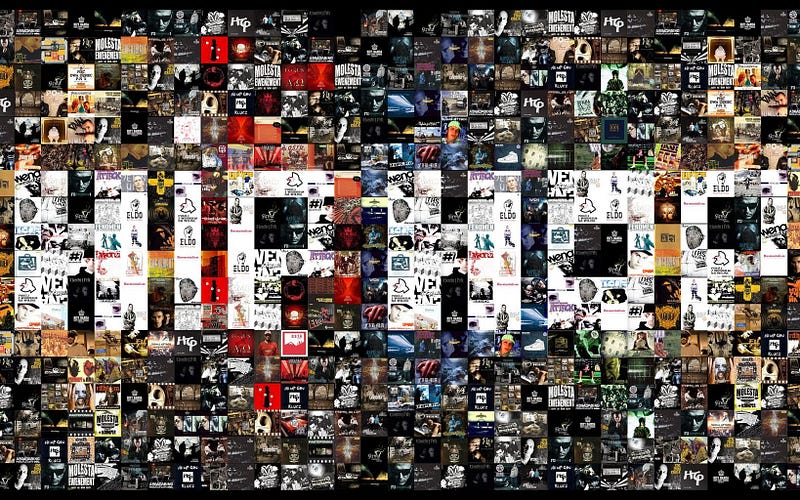
~A ghazal after Hip Hop
I.
Rapture reins the voice of the coolest breeze, seeking the rhythm; on the verge of words left where they may fall, speaking in rhythm.
In maiden voyages of youthful expression, masters of ceremony "bomb atomically," freaking the rhythm.
They deliver writes of passage manifested by the muse of a righteous blues humming in the air, reeking of rhythm.
Behind every beat is an untold groove and each memory a soundtrack with wax as the medium, tweaking the rhythm.
II.
Dear World, open your eyes to the sounds of aural graffiti as you make one more trip 'round the sun 'fore sleeping in rhythm.
With ears of understanding, listen to new refutations of vibration as if these words were art, reaping in rhythm.
This art, sparked by the sunflower sown in the music of the spheres, is an interstellar cipher leaping in rhythm.
Caught up in the rapture of a world shadow is tomorrow stepping through the door of the cosmos while keeping in rhythm.
III.
It's in people's instinctive travels on their paths, to exist and just be, letting their passions run free, seeping with rhythm.
It is this kaleidoscopic vision of connect the dots that makes music ubiquitously human, weeping with rhythm.
Universal is the language of my personal soundtrack yet true to the rudiments of our loom, deep in the rhythm.
It is I, 21st Century Griot, who vamps in verse as though it were my improvised solo, steeped in the rhythm.
Quote is from a verse by Inspectah Deck in the song entitled “Triumph” by Wu Tang Clan.
Allured by Jessica Lee McMillan’s “Pictures of You,” I decided to write this ghazal of twelve couplets inspired by the golden age of hip hop, especially the Native Tongues, a collective comprised of De La Soul, A Tribe Called Quest and the Jungle Brothers, but also the likes of Public Enemy, Gang Starr, and Wu Tang Clan. I’m sure I broke a rule or two in a couple spots due to the somewhat restricting nature of this form.
The ghazal is a centuries-old, popular form of poem and song in Persia (Iran), Pakistan and India. It consists of a series of couplets (two-line verses), with each line containing the same number of syllables. A ghazal has at least five couplets, but not more than fifteen. Most ghazals are about 7–12 couplets long. Every verse ends with a refrain which is the same word or group of words (radif), preceded by a rhyme (qaafiya). Additionally, both lines of the first verse end with the qaafiya and radif.
2021 MDSHall, in collaboration with the Writes of Passage, “forged on the wordwrights’ anvil,” and the Muse Echo Collective, Purveyors of the Poet Tree of Discoursing Drums beating by any dreams necessary.


