
The Vital Differences Between Sadness and Depression and How to Spot Them
It’s like comparing a puddle to an ocean.
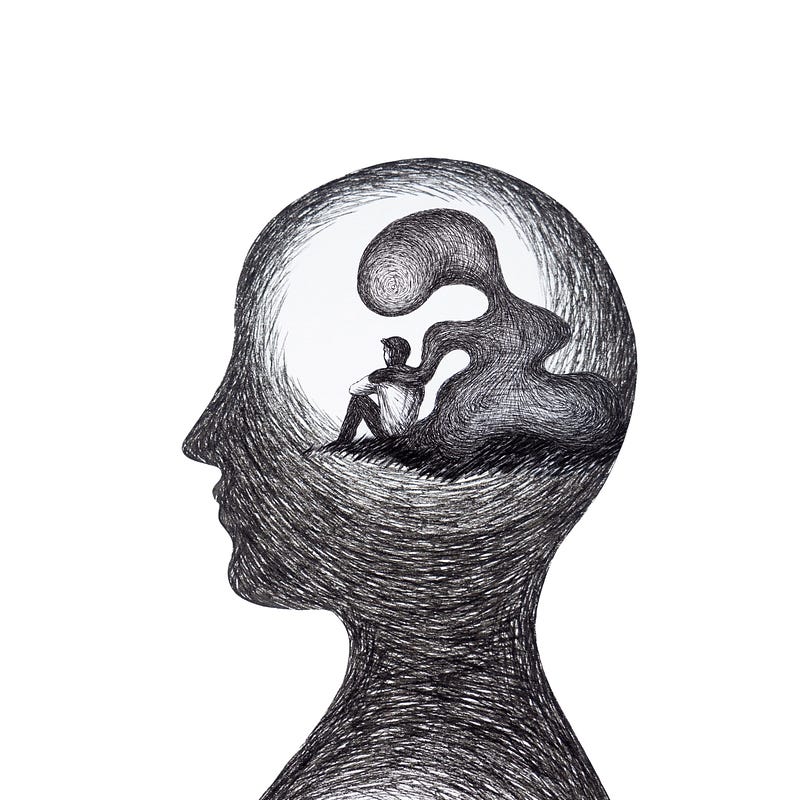
I couldn’t get out of bed. I felt as if I was stuck in a treacle and every part of me felt heavy. Until then, I never knew the weight of anguish, but now it was crushing me. I’d awoken into a nightmare.
As I began getting up — a process that took about 30 minutes — I noticed the world had lost its color. Everything was grey and cold. I felt dead inside.
Death would have been a respite, but I wasn’t so lucky. I feared suicide. I feared the pain, the suffering it’d cause my family, and the possibility of bodging it. This was a spiritual no man’s land. Dead but still breathing.
I had no interest in anything: no concentration or energy. Worse, a wall, as strong as any in the physical realm prevented love from getting to me. My family was there, hugging and reassuring me, but I didn’t feel any of it. My mind imprisoned me. Everything I’d ever done wrong came back to haunt me.
This is depression; I felt like this every day for three years.
So what’s sadness?
Sadness is a normal emotion. It’s so routine that we might not even notice. Life is full of sadness and heartbreak. We don’t get everything we want or deserve. People don’t treat us as we hoped. Loved ones leave us. Sadness comes in many forms and intensities.
The fact that sadness is normal doesn’t make it pleasant. You can have extreme sorrow, and the pain can feel agonizing. I don’t want to minimize such suffering.
I felt extreme sadness when my dad died in 2019. I pined for two years. I cried daily as every pleasant memory tortured me.
Like a kaleidoscope, I relived our favorite holidays in Scotland. Kicking a ball around, playing cricket in the garden (I decided I wasn’t allowed to be out on the first bowl!), and going for long walks in the mountains with a backpack full of drinks.
I remembered my dad trying to dip in the freezing Scottish water. He made it as hard as possible as he would tiptoe in so slowly that his whole body felt the sting. I used to go straight in and tease him until my patience ran out, and I splashed him from head to toe. He would squeal and back away.
I relived Christmas from my childhood. I used to love slot machines, so one Christmas, he left late at night to pick two up that he’d stored at his shop. He lifted them all by himself and got them into the house, so I never noticed.
He once made an entire model wood with various characters he had created in the children's books he used to write for me.
Losing him was devastating. But I still felt a connection to life. I could still feel and give love and comfort. I was still interested in things and could resume my daily activities.
I could feel the sadness, yet still appreciate my life. My unhappiness was temporary.
Sadness vs. Depression.
Sadness will fade of its own accord. Medication isn’t needed. Therapists are only called upon in extreme cases.
Depression often doesn’t even have an identifiable cause. It can last for years, with medication being the only relief. I know someone who has had depression for decades. It’s her default state. She has medication that takes the edge off, but she’s a long way from happy. It doesn’t matter whether she has problems — depression is her baseline.
My depression was caused by having to medically retire from the police due to PTSD. I lost my purpose, my security, and my identity. I went from being someone important to a big bag of useless trash overnight, and it hurt more than I can describe.
The mental health professionals I used to see on calls as a police officer now saw me as a patient.
Taking the pressure off will help sadness. Resting can make you feel better, as can eating your favorite food, listening to music, etc.
None of that’ll help your depression. As you watch tv, you’ll be criticized by your inner self for being an underachieving loser. You’ll be insulted for being a fat slob if you eat your favorite food. Depression provides no respite. I was bullied for years as a teenager, but that never came close to the abuse I gave myself every minute of the day during my depression years.
Depression requires professional help. You need to see a Doctor, and you need to be honest when you do. Mental illness makes liars of the most honest people. We keep our worst moments to ourselves. We keep how close we come to suicide private so as not to hurt anyone. We tell people what they want to hear — how much better we feel today. But your recovery relies on telling a doctor the truth.
Promoting mental health awareness to dispel ignorance.
The reason people mistake depression for sadness is that they don’t know any better, and because everyone’s been sad, they’ll accuse you of being a weak, workshy slacker.
People need to know that sadness is to depression what a puddle is to an ocean. That education should start in school. Maybe teachers should forego the lesson about the angles of a triangle and teach students about mental illness.
We need to bring mental illness out of the shadows. It’s still a taboo subject. People “support” mentally ill people as long as they follow the rules. If you don’t do anything risky or say anything disgusting, you’ll be “supported.” You'll be cared for if you toe the line and reduce mental illness to quirky personality traits.
But actual mental illness is shocking and gross — unpalatable and intimidating. Ask any person with schizophrenia how supported they feel. Compare that to someone whose “OCD is playing up again” because they washed their hands twice before dinner.
The color returned.
This morning I woke up and jumped out of bed immediately into a world of color. I’ve spent all day doing what I love — trading, investing, and writing. I hugged my mum, and we said we love each other. I hugged my girlfriend when she came home, and I felt their love.
My life contrasts sharply with the suffering I endured for all those years. I never thought I’d get here. I still have times when I struggle, but depression can’t kill me.
Recovery is always possible.
Click here to join my Substack newsletter about recovering from mental illness, by a former police officer who has overcome PTSD, Depression, and Schizophrenia. Featuring regular Q&As from experts and survivors.


