
The Verdict is In: Deficits Don’t Matter
The Republican tax bill is the nail in the coffin.
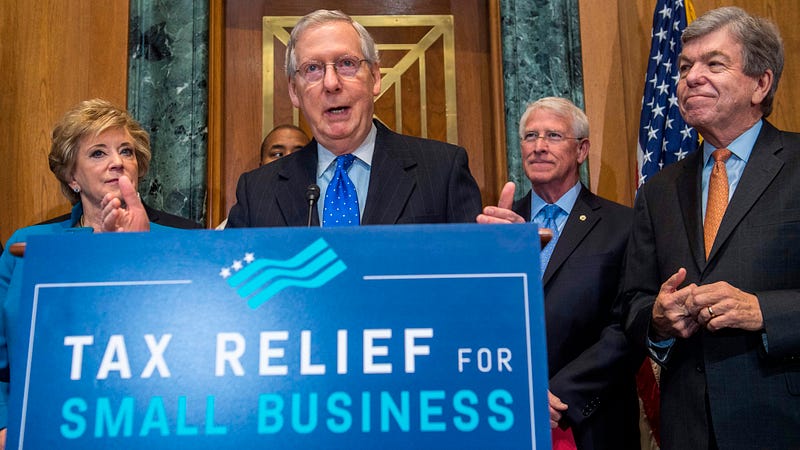
Last Friday, the Republican-led Senate passed a horrific tax reform bill that will disproportionately benefit the wealthy in this country. This comes at a time when the United States already faces the greatest income and wealth inequality in history. This bill, or the one the House of Representatives passed will only exacerbate the wealth and income gaps.
Outside of these inequalities, the economy is in fair shape. Unemployment is low and growth is starting to pick up some. Companies are sitting on record amounts of cash so there is no need for a stimulative tax cut for the richest Americans. Why would big corporations suddenly create even more jobs when they already have tons of excess cash laying around? Logically and theoretically, trickle down economics has never worked.
Multiple analyses have shown that this bill will add as much as $1.5 trillion dollars to the deficit over the next decade. That’s a lot of revenue the government is giving up. The sad part is that the money will just end up in the pockets of the wealthy.
What is most striking is how little the Republicans seem to care about deficits and the national debt now. The previous eight years, they sought to hold the government hostage over the debt. Unsurprisingly, they left their fiscally responsible principles behind. And I’m glad they did. Hopefully, the Democrats do not stoop to the same level as the Republicans and oppose the bill based on the addition to deficits. Attack the actual policy, which is essentially a handout to the very wealthy with very little benefit to the middle class, especially in higher taxed states. Democrats should offer alternative visions to this tax bill in response.
How about instead of cutting tax revenues by $1.5 trillion, we keep the money and we wipe out public student loan debt? It just so happens to be around the same amount of money. We could solidify Social Security for years to come by increasing benefits for retirees. We can invest in higher education for all by providing free tuition to public schools.
Imagine the jolt to the economy if we wiped out student loan debt, which holds back so many prime-aged Americans from buying a house or making other big purchases that drive the economy. It would open so many opportunities for millions of college graduates. And providing more assistance for current and future students would do the same.
It seems the political class and media elite are finally coming to the realization that deficits don’t matter all that much. We’ve seen yearly deficits over $1 trillion at times and here we are with low interest rates still and inflation well under control. What matters is not the size of the deficit but rather, what we use our deficits for. Remember, a public deficit is equal to private surplus. We need these surpluses to go to the working and middle classes.
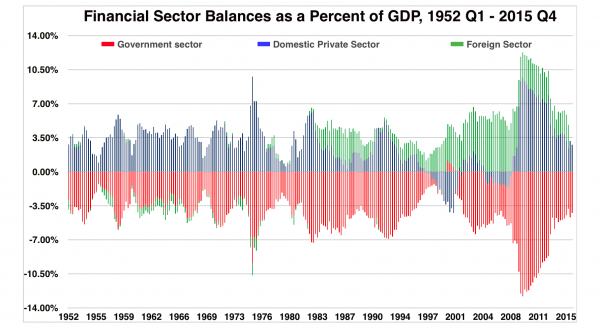
A fake debt crisis has held back policy-making for a long time. We need big ideas more than ever in the United States before the wealthy truly have everything. Let’s not use our deficits to line the pockets of executives. Instead, we need to invest in people who truly drive the economy — workers. We can create a federal jobs program to ensure everyone who wants a job can get one. We can start a program to relieve millions from crushing student loan debt. We can finally move to universal health care through a single payer system. We can rebuild the nation’s infrastructure and upgrade to the latest technology. In the words of the 2008 Obama campaign: YES WE CAN.
Alan Greenspan let the cat out of the bag back in 2005 in response to a Paul Ryan question over the solvency of social security,
I wouldn’t say the pay-as-you-go benefits are insecure in the sense that there is nothing to prevent the Federal Government from creating as much money as it wants and paying it to somebody. The question is, how do you set up a system which assures that the real assets are created which those benefits are employed to purchase?
We must learn from the precedent the Republicans have now set that deficits don’t matter. No more compromising with the other side because of deficits, like the Democrats did while they were in power. The Democrats sabotaged their own efforts when they had control of all branches of government by insist everything was “paid for” or deficit neutral. This only held back the recovery of the economy and left us with a less than ideal health care system.
Moving forward, we aim for big ideas that can help ordinary Americans obtain a better life. Budgeting and deciding what we spend on is a set of ideals for each party and for the country. It’s been far too long since we attempted new policies and ideas. It’s easy to get down over the Republican-led government at the moment but be ready when progressives take back the country to use the deficits for good.


