
The “Venus of Willendorf” Was Not A Pin-Up Girl
Confusing the sacred with the pornographic is off-base
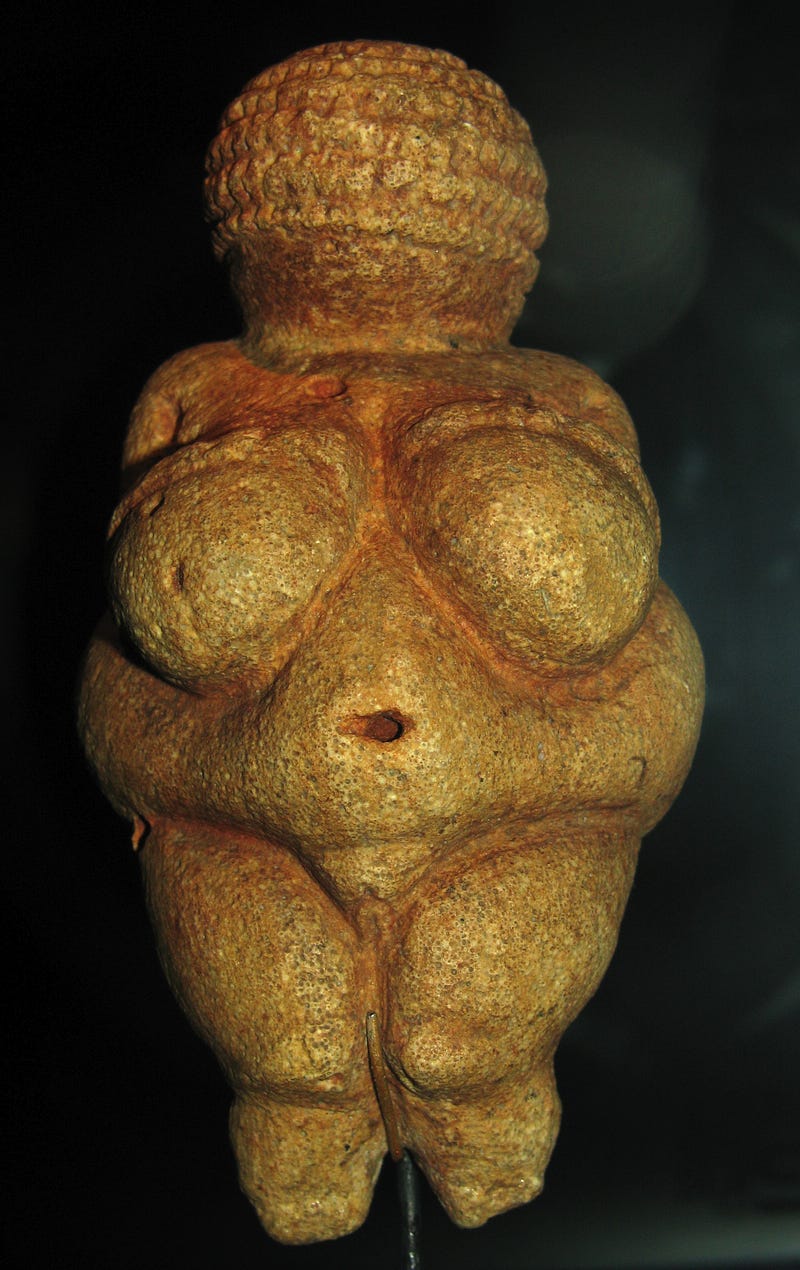
The Venus of Willendorf or the Woman of Willendorf, as she is more appropriately called, is a small carved statue of a woman, approximately 4.4 inches long. She dates from around 30,000 BCE and was discovered during an archeological dig in 1908. Although originally assumed to be a depiction of a love goddess by a team of men deeply steeped in patriarchal beliefs about the roles of women, contemporary scholarship indicates that this was not actually the case.
Clearly, the Paleolithic sculptor who made this small figurine would never have named it the Venus of Willendorf. Venus was the name of the Roman goddess of love and ideal beauty. When discovered outside the Austrian village of Willendorf, scholars mistakenly assumed that this figure was likewise a goddess of love and beauty. There is absolutely no evidence though that the Venus of Willendorf shared a function similar to its classically inspired namesake. However incorrect the name may be, it has endured, and tells us more about those who found her than those who made her. Dr. Bryan Zygmont
Art historian, Christopher Witcombe has also criticized this incorrect term: “The ironic identification of these figurines as ‘Venus’ pleasantly satisfied certain assumptions at the time about the primitive, about women, and about taste.” In other words, it fit the assumptions made by the men who found them based in their own culture and bias.
In 1987, Riane Eisler, a multi-disciplinary researcher, published The Chalice and the Blade, a book that became an international sensation and has been translated into 26 languages. This book is most broadly on the topic of social systems as relates to males and females, and it explores in detail the largely egalitarian goddess-worshipping cultures frequently found in the ancient world. “New findings support its thesis of earlier gender equality as part of a more peaceful and equitable social system.” Wikipedia
“This revolution (moving away from looking at the ancient past through the patriarchal lens of Western culture) also affected the analysis of the thousands of statuettes (note: among thousands of statuettes around 200 were of women) of buxom women that have been discovered. In line with previous archaeological assumptions, they were called ‘Venus statuettes.’ Eisler argues that this label was a reflection of stereotypical archaeological thinking, according to which the ancient world spent all its time in orgies and prostitution. A more nuanced and respectful view of these statues looks at them as more than sex objects or even fertility talismans. “This is the prevailing approach in archaeology today.” (1)
There is considerable archeological and anthropological evidence that early human cultures were goddess-worshipping. (2) This would make sense since Paleolithic cultures were largely egalitarian, and women’s ability to give birth makes for a natural equation with being the source of life. Reverence for ancestors was a common part of Paleolithic life also and so in their earliest incarnations, these statues may have been a depiction of a Clan Mother or Divine Ancestress, someone even more personally powerful than later conceptions of a disembodied Goddess. The seven rows of beads (or braids) around the head reflect a lucky number, and the diminutive size and lack of feet suggest that one purpose of the statues may have been as a kind of good luck charm for hunters to carry with them, although these kinds of statues were also found in caves and Paleolithic settlements. (3)
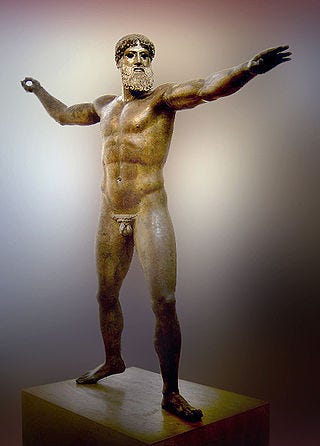
Similar figures have been found throughout Spain, France, Germany, Austria, Czechoslovakia, and Russia and they appear to be a part of a Great Mother religion. Many were found in the places where small settled communities inhabited by non-nomadic Mammoth hunters lived. (4) A Great Mother or Clan Mother would have represented much more than fertility alone, and in fact, would have been the primary deity. If these statues were a representation of such a figure, which seems to be the most commonly held archeological theory at this time, to classify them as having any kind of pornographic meaning is missing the mark by a mile. After all, naked depictions of Zeus do not imply that he is a sex god or some type of aphrodisiac. He is still the king of the gods, whether naked or clothed.
Indeed, when these figurines were first excavated in the 19th century, the men who found them in millennia-old caves seemed to think they were an ancient kind of pornography, and called them Venus figures (a term still used today). But these sculptures are highly stylized, often pregnant, and sometimes with no facial features — hardly the stuff of pornography. So today this notion has largely been discarded. Wikipedia
An ancient male deity such as Yahweh is a God, the focal point for a religion, but an ancient female deity is the goddess of a “fertility cult” from a traditional archeological standpoint. This chauvinistic outlook has led to a great deal of incorrect interpretation about the Woman of Willendorf and the great Goddess that she represents.
“In most archeological texts the female religion is referred to as a ‘fertility cult,’ perhaps revealing the attitudes toward sexuality held by the various contemporary religions that may have influenced the writers. But archeological and mythological evidence of the veneration of the female deity as creator and law-maker of the universe, prophetess, provider of human destinies, inventor, healer, hunter, and valiant leader in battle suggests the title “fertility cult” may be a gross oversimplification of a complex theological structure.” (5)
© Copyright Elle Beau 2020 Elle Beau writes on Medium about sex, life, relationships, society, anthropology, spirituality, and love. If this story is appearing anywhere other than Medium.com, it appears without my consent and has been stolen.
(1) Male and Female Created She Them, Haretz
(2) Fertile Goddess, Brooklyn Museum
(3)World History Chronology, Woman of Willendorf
(4) When God Was A Woman, Merlin Stone, page xix
(5) When God Was A Woman, Merlin Stone, page 13


