
SHORT READS
The Vending Machine Killer
The irony of how the act of kindness unknowingly aided in 12 murders in Japan.
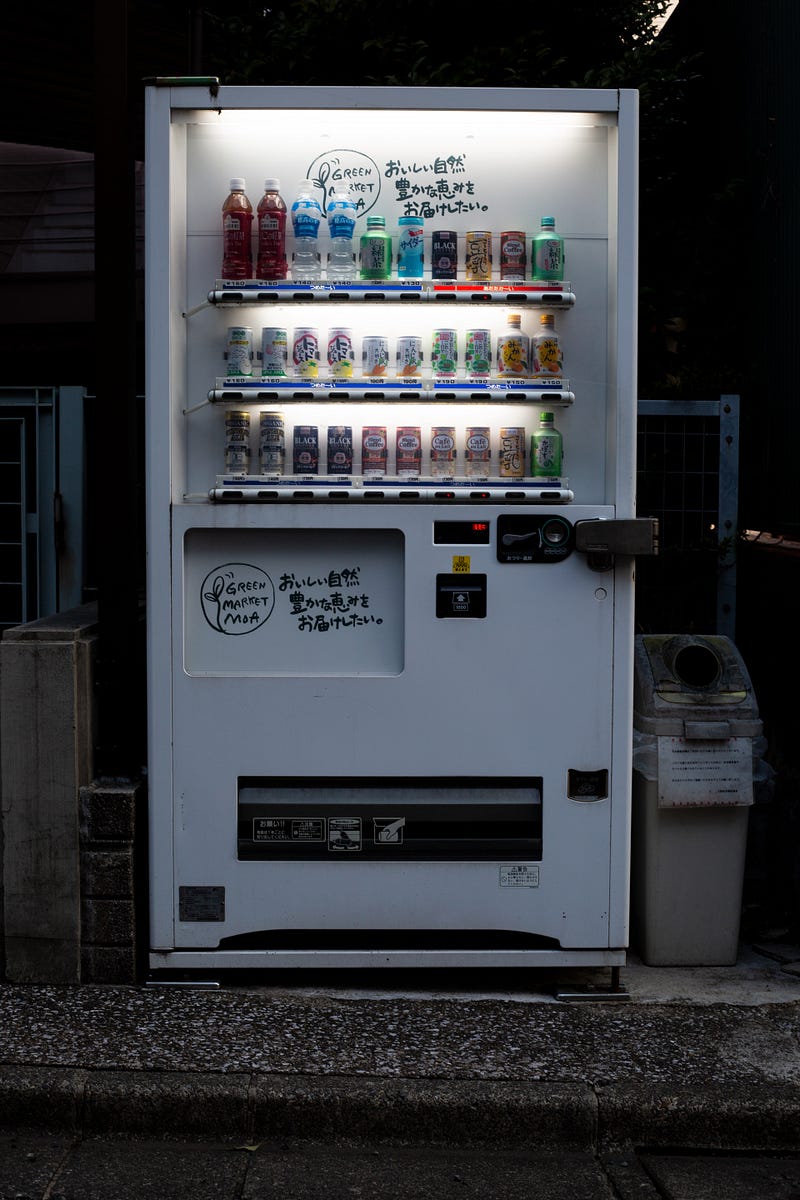
In 1985, the Otsuka Pharmaceutical Company was promoting a health drink, Oronamin C, to the public by automatically dispensing a free Oronamin C bottle whenever the public buys any of the drinks from a vending machine.
For context, vending machines are immensely popular in Japan. It has the most widespread vending machines across the country, so it is similar to getting a free product sample attached to the product that you are already buying.
The irony of how the act of kindness has somehow unknowingly aided 12 murders in Japan.
In Japan’s culture, at times, people would leave any unwanted drinks at the vending machine for anybody who does not have the means to buy one themselves and this had led to the string of ‘vending machine murders’.
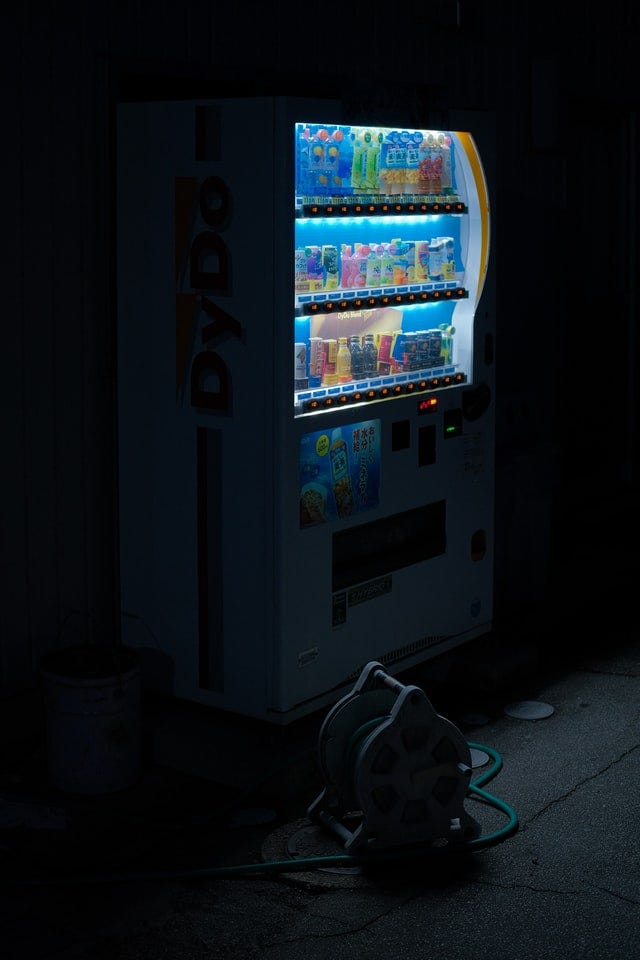
The first murder happened on April 30th, when a 45-year-old truck driver bought a drink from a vending machine. It was just another regular vending machine like the many vending machines scattered in the country. He realized that there was a free Oronamin C bottle on top of the vending machine. Unknown to the dangers of it, he simply took the free Oronamin C along with his drink. The next night, he passed out and died from poisoning.
During the investigation, they found traces of Paraquat. Paraquat is a weed-killer that is so deadly that it has been banned by 32 countries in the world. It is capable of chemically burning your skin on contact. Ingesting it would only be much, much worse. It caused inflammation and burned all the way down the victim’s throat, surely sealing his fate.
Unfortunately, it was not a one-off situation as the murders continued. The next victim was a 52-year old man, a 22-year-old college student and 8 others.
All these victims intended to get or buy a drink from the vending machine and found a free drink on top, in or under the vending machine slot. None of them actually saw the free drink being dispensed. All of the victims were also male until the 12th and last murder, a 17- year old girl where it just, simply stopped.
The tragedy does not just end with the 12th murder. It gets worse with copycat crimes where poisoned milk cartons start appearing in elementary schools. Thankfully, nobody lost their lives.
The police investigation went cold as they did not find any new leads to find the murderer(s). This could be partially due to the randomness of these murders and the aftereffects of the ‘Monster with 21 faces’ which happened the year before and continued into 1985. This group targeted Japan’s food manufactures where they claimed that they laced candies with cyanide.
It sent the public into panic to the point Glico, the manufacturer of the product, had to pulled off its product from the shelves. With most of the public attention on this case, the vending machine murders received less publicity and thus, less attention from the police.
There were many speculations on these murders. Some thought that the ‘Monster with 21 faces’ had a hand in this string of murders but it was unlikely to be the case as ‘Monster with 21 faces’ never caused any deaths. The ‘Monster with 21 faces’ also left a note that said they would stopped extorting food-making companies and they were never heard from again.
Some said that the murderer was a female and the targets were males as Oronamin C was marketed towards men. However, this theory was disputed as there was not any way to accurately target men as females can also purchase these drinks as proven by the last murder. It could be possible that the victims were mostly men as female were more unlikely to eat free items. Of course, all of these are merely speculations with no hard evidence nor facts. Some speculated that the murders stopped as the murderer was caught for other actions or something has befallen upon the murderer.
Otsuka Pharmaceutical Company began redesigning their bottle to prevent tampering and the Japan Soft Drink Bottler’s Association printed 1.3 million warning labels and stuck them on the vending machines, warning people to be cautious.
But, the murderer was never caught.

Many of these questions remained unanswered.
What was the murderer’s intention or motive? It was unlikely for the murderer to get off from watching the pain of the victims as people usually take the drinks elsewhere.
Who was the murderer’s target? It seemed likely to be random with the murder’s weapon of choice but based on the list of victims, they were mostly middle-aged men.
Who was the murderer? Was it a female as speculated?
With the statute of limitation on poisoning in Japan set to 15 years, these questions will forever remain unanswered.
Probably best to heed those warnings that you always see on seals.


