The Value of Understanding “Cognitive Sloth”

The Principle of Least Action is a pervasive concept, not only in physics, but also in the way our brains work. It is nature’s tendency to prefer the minimal expenditure of energy (or work) to achieve the same thing. The Principle of Least action can be interpreted in our modern world as efficiency. Americans have a pronounced disposition of expecting and seeking out efficiency in many things we do.
Our minds gravitate to using systems that are efficient. This is because efficient systems are also the same systems that are most convenient. Systems that are convenient are available on demand and frictionless in its use. We are conditioned to seek out instant gratification on everything. We seek out whatever is easy to do. Our minds are naturally lazy. Our minds have a tendency towards a deadly sin known as sloth. Our minds favor Cognitive Sloth.
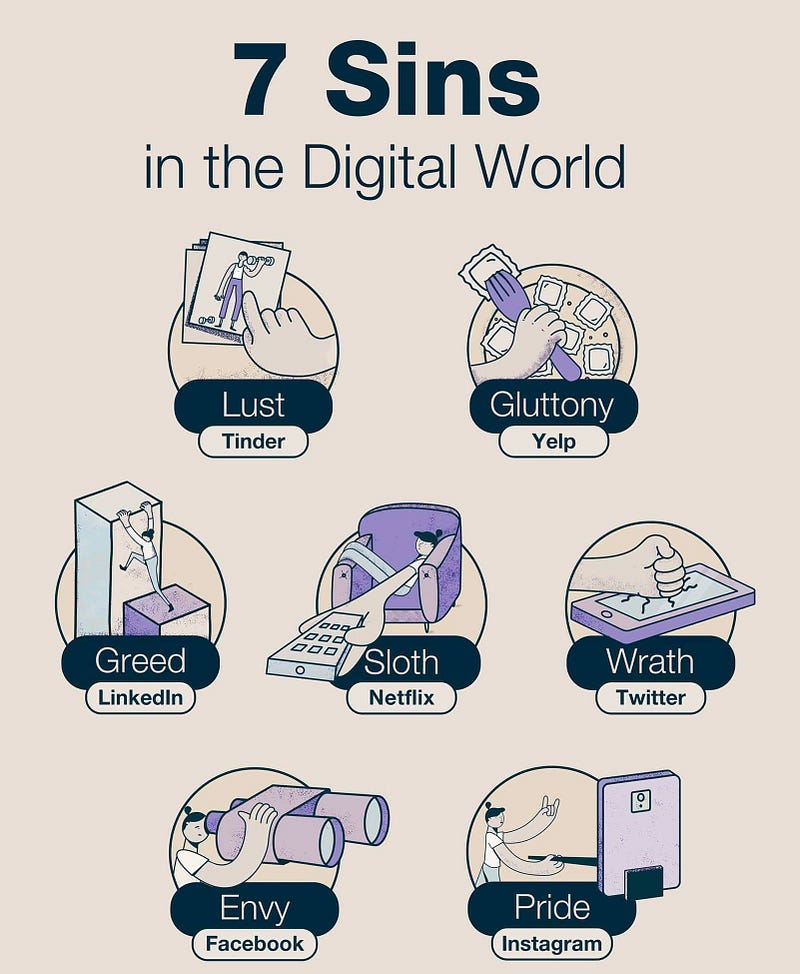
Physical laziness is easily recognized and it is universally disdained. However, cognitive laziness is less transparent and it something that is internal to our own thinking and is harder to recognize. Our minds are biased towards anything the requires less effort.
A recent study published in the Journal of Experimental Social Psychology (see: Contextual and personal determinants of preferring success attribute to natural talent or striving) has established that there is a preference for people who are successful due to talent over those who strove for that success. Said from the lens of laziness, we are attracted more to the people who did less to achieve their success. Why is this behavior true? Perhaps it is easier to see ourselves becoming successful with the least amount of effort? This is goes against the truth that you can’t conjure up talent but you can definitely guarantee making an effort. The seductive appeal of cognitive laziness is ubiquitous and its pervasive in many cultures.
The tyranny of convenience has a detrimental effect on our own personal psychology. Mel Robbins says that “Motivation is Garbage”:
Mel Robbins argues that seeking motivation is a crutch we use to hide our true tendencies to avoid effort. Our minds naturally will avoid effort, it is our own consciousness that should make the decision to avoid laziness. Discomfort is the price of admission to a meaningful life.
Our personalities are in fact inversely aligned with the degree of laziness we exhibit. The empirically verified Big Five Personality traits are: Openness, Conscientiousness, Agreeableness, Stability, Extroversion. People who are extremely successful are those people with personality traits that require the maximum amount of effort. People who are incarcerated are those found in the other end of every trait. Cognitive sloth is a universal metric that applies to all our personality traits. Unfortunately, we recognize personality as being a talent despite the more obvious reality that to have any of possess these traits means that you need to exert more cognitive effort. (BTW, personality are inherited traits, those lucky enough to have the right set require less conscious effort).
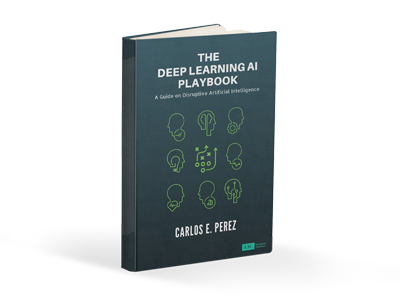
In my book, “The Deep Learning AI Playbook”, I explore the idea of cognitive load as being the cause of human cognitive biases. The utility of AI (or any cognitive tool) is to reduce our own cognitive loads. Tools that reduce the need to memorize, reduce information overload, discover meaning or allow us to decide quickly are tools that aid us in handling more demanding thinking. It allows us to scale our knowledge discovery and creation. The value of AI can be compacted in this equation: Value = Context + Resources. When AI delivers cognitive resources in the right cognitive context, then it creates tangible value.
Knowing that our brains have the tendency of Cognitive Sloth is extremely valuable. This implies that people will prefer cognitive resources that are most convenient to use. This is why the Jobs To Be Done (JTBD) approach is important for identifying the needs of a potential customer. This is the first step in creating a product or service of value. However, we also need to address the discovery problem. Customers need to know that your offering exists and it should be immediately obvious as to what need it addresses (See: Viral product development).
Conveying an offering’s value demands appealing to Cognitive Sloth. An offering must be framed in the context of a customer and it should be intuitive as to how it can make easier a person’s Job To Be Done. It is simply too big a cognitive leap for a customer to fill in the gaps of how a new technology can be used to fix one’s own problems. The problem with the marketing of AI is that the expectations are unreasonably high. The expectations are that AI is expected to replace the thinking of customer. This appeals to our natural laziness, but this is an expectation that every vendor must manage correctly. It is unrealistic to expect today’s AI to replace thinking. It is more realistic to expect that AI can reduce existing cognitive load.