
SELF-MASTERY
The Value of Contemplating Death
Meditating on the idea of death is common in many cultures but lost in the Western world.

I saw recently on LinkedIn a post by Gary Vaynerchuk with his best advice for entrepreneurs: “You will die”. I mean I’m pretty sure he has also answered that question differently before but I liked that answer. The reason he gave was that it keeps you sharp, makes you work hard and helps you prioritise radically. Don’t worry he’s not one of those CEOs who believe in hastening the process by only sleeping 2hrs a night. He strives sensibly.
But it got me thinking about the contemplation of death. It’s always something I have done but I know many who haven’t. The most read book on my bookshelf is the Tibetan Book of Living and Dying (TBLD) by the now-disgraced Sogyal Rinpoche (I suspect it was ghostwritten but either way it has some gems about dying). It was also my most gifted book before the scandals came out.
“There would be no chance if getting to know death if it happened only once. But fortunately, life is nothing but a continuing dance of birth and death, a dance of change. Every time I hear the rush of a mountain stream, or the waves crashing on the shore or my own heartbeat, I hear the sound of impermanence… They are death’s pulse, deaths heartbeat, prompting us to let go of all the things we cling to.” — Tibetan Book of Living and Dying
In Tibetan culture, there are people, typically those who have dedicated their life to Buddhism, whose job it is the shepherd of the dying. Dying well is ingrained in their culture. I am struck by the mismatch in mine and indeed most cultures are reluctant to discuss death. So aside from the benefits I outline below, I hope that contemplating death more in the West might cause those outside of medical and spiritual professions to consider supporting the dying of others. If not directly, then by support hospices and palliative care organisations wherever you are.
When I first read TBLD it felt like my brain was growing new parts. I really changed my outlook on life. I also valued all life. To this day I kill nothing in my house. Not spiders, ants, or snails. In fact, I often pick up snails in the street I think are likely to get squashed and move them. I cut down meat consumption slightly. All of this helped me to come to terms with my own life or death through a universal respect for living forms. My internal philosophy is more akin to leaving no footprint than having a tremendous impact — strange in the West.
In fact, we have a problem when it comes to initially contemplating death. If it isn’t part of your culture, it can make you more punitive, more extreme in your religious and political views and make us strive to seek immortality rather than the more practical solution of making more of what we have.
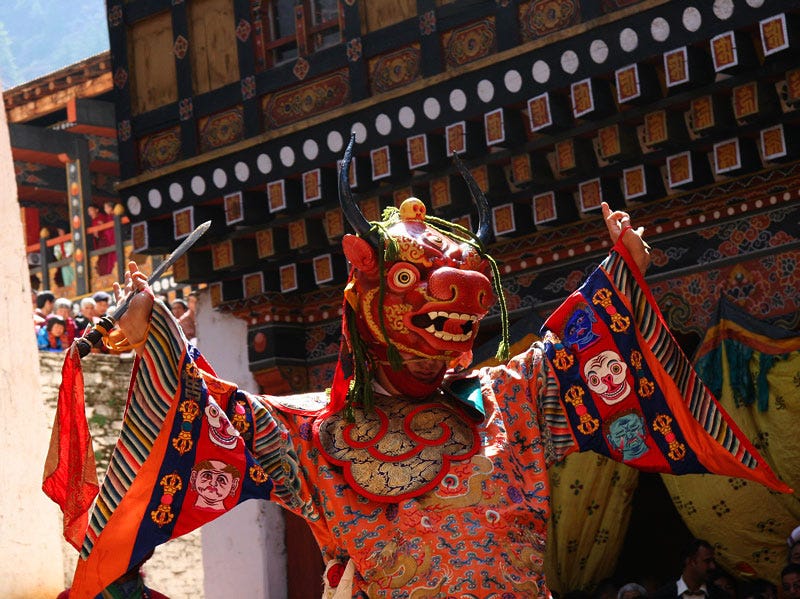
But there are potential benefits and since one culture who is happiest in the world contemplates death the most, I would suggest that some studies above are biased by the temporary nature of the contemplation and by the cultures in which the experiments were carried out. So is there evidence of more positive benefits?
- The Stoic tradition, which has taken hold of a lot of silicon valley CEOs, has the momento mori (remember you die) designed to remind practitioners to seize the moment.
- Yamamoto Tsunetomo (1659–1719) wrote in the Hagacure: “If by setting one’s heart right every morning and evening, one can live as though his body were already dead, he gains freedom in the Way. His whole life will be without blame, and he will succeed in his calling.” Made famous by the film Ghost Dog, the philosophy of contemplating death was to allow a calmness to live in the heart of a warrior even in potentially fatal circumstances.
- In The Catholic Approach to Dying Fr Neil McNicholas says: “What kind of send-off do we give our children and spouses when they, or we, leave home in the morning for school or work? Could we, or they, live with the memory of the last thing that was said or done in the tragic event that it actually was the last thing?”. And whilst I'm not sure you should watch all your words as though they could be your last, it can be a profound practice to increase your level of kindness and forgiveness.
- Many people diagnosed with incurable diseases change how they live their life. Partly because they have less time but also because it creates a level of focus. We fuss about things that might not happen often, forsaking very present and real ways of being better now.
At my age and location (between 35 and 45, UK) and being a man, my chance of dying in the next year is about 1 in 700 from all causes. So whether I contemplate death, it could be around the corner. Death doesn’t care whether you think about it. When I think like that a tiny voice says in my head “But I can’t, I haven’t… [insert some thought]”. My response? “So do it”. Of course, I can’t speed up seeing my kids into old age, as one example of a thought. And I can’t do everything my heart desires. I will not borrow a million pounds on the assumption I’ll never have to pay it back. But it focuses on my thinking.
I worry about what might happen in my fifties sometimes, to the detriment of actually doing things now.
I worry about changing the world — very few people can change the world, but we can all change someone’s world. In fact, many of us often do impact others unintentionally and sometimes with unintended consequences. We increase the chances of unintended consequences if we cannot live in the moment — back to my ‘live small’ and ‘leave no footprint’ philosophy. Whether you believe in Karma, the idea of minimising harm whilst maximising good resonates for most people. But practically, as a species, we actually put off the doing good (e.g. looking after the planet) and prioritise short-term wins with little thought to the long-term consequences. As a species we can think ourselves out of this, by studying the long-term effects and legislating for it, but we are very poor at it. A ‘live small’ philosophy, or when that’s not possible a ‘live smaller’ philosophy helps to counteract the short-term over long-term human habit.
A practice for contemplating death
I have often used this practice with people I have trained and coached. Whilst it might seem unconventional for a corporate setting, I have also used it in leadership training and I have undertaken the exercise myself too.
The aim of the exercise is to write two obituaries. You can write three and sometimes people stop at one. But you want to ensure that you see yourself, and the life you live, through a different lens.
Obit 1 — Now
You die now. Aside from the obvious ‘suddenly and tragically’ comments what would people say. Imagine that this obit is 100% candidly written from the testimonies of those closest to you.
My very strong suggestion is that you actually write this. If you haven’t read an obit before please do so. I have tried this as bullets with a group I was training one as we were short on time — It really lacked the emotional impact. By all means, start with bullets but you need to actually write it.
As with all of these, it doesn’t have to be long but it needs to cover the key areas:
- Family
- How you live your life
- Your passions
- Achievements
Obit 2 — Trajectory Option
This exercise is to think about where you are headed. None of us know for sure but think of this like your best time travel sci-fi fodder. Without any intervention where do you end up? Pick your death date but be realistic. In fact, if you don’t want to pick try https://www.death-clock.org/. This will give you a calculated average death based on your broad circumstances. What is also useful about this is that you can go back and change your circumstances. As someone who probably drinks twice a week my expectancy is 79. If I change that to once a week I get an extra 5 years. It really made me think.
If you have a pattern of procrastination and distraction, you probably won’t end up completing your opus. If you aren’t nice to people on a daily basis, they probably won’t speak warmly of you after death.
As with Obit 1 — write the detail, make it count. It can of course be an extension of Obit 1 — depending on how far away death is for you.
Obit 3 — A Christmas Carol Option
OK, so now you are going to change your ways. It doesn't have to be about becoming nicer for more generous like Ebenezer Scrooge. Perhaps you keep letting a destructive force back into your life because you don’t believe you deserve better? Perhaps you are so in service of others that you forget to live happily for you?
The key thing is to think of no more than one or two habitual changes that you would make, and think how that might change things. Remember you can literally change overnight but far more likely is that you build change up over 30 years to end up in a very different place. As a metaphor, if you change the angle of a laser beam, pointing at a wall 500m away, by just two degrees, it would point at a spot more than 15 meters away from where it started. Accumulated behaviour over time matters.
You can be as unrealistic as you like but the people that get the most from this exercise write it from the perspective of just one or two changes and their ‘best selves’. This exercise is what motivated me to do more writing.
Overall
This exercise is as powerful as you allow it to be. Take your time to really think about what choices you are making daily and what impact they have or might have.
Life looks like it’s created by big moments but what we never know is what else might have come along if it wasn’t for that apparent turning point. Life only makes sense in the rearview mirror. So perhaps a more effective way of determining your life is positive habits instead. Think of the life you want, maybe the end you want, and who you have to be to get there.
I found that the person I wanted to be at the end of my life happened to be the person that I want people to remember me as every time I walk out the front door (to my possible death from a road traffic accident). By being who I want to be remembered as then, makes me a better person now.
Final Words
With something as poignant as death it is hard to come up with appropriate words to finish. So I leave you with the words of Linda Ellis in her poem The Dash
I read of a man who stood to speak at the funeral of a friend. He referred to the dates on the tombstone from the beginning… to the end.
He noted that first came the date of birth and spoke of the following date with tears, but he said what mattered most of all was the dash between those years.
For that dash represents all the time they spent alive on earth and now only those who loved them know what that little line is worth.
For it matters not, how much we own, the cars… the house… the cash. What matters is how we live and love and how we spend our dash.
So think about this long and hard; are there things you’d like to change? For you never know how much time is left that still can be rearranged.
To be less quick to anger and show appreciation more and love the people in our lives like we’ve never loved before.
If we treat each other with respect and more often wear a smile… remembering that this special dash might only last a little while.
So when your eulogy is being read, with your life’s actions to rehash, would you be proud of the things they say about how you lived your dash?
By Linda Ellis, Copyright © 2020 Inspire Kindness, thedashpoem.com