
The Value of Art Appreciation
In defence of enjoying art
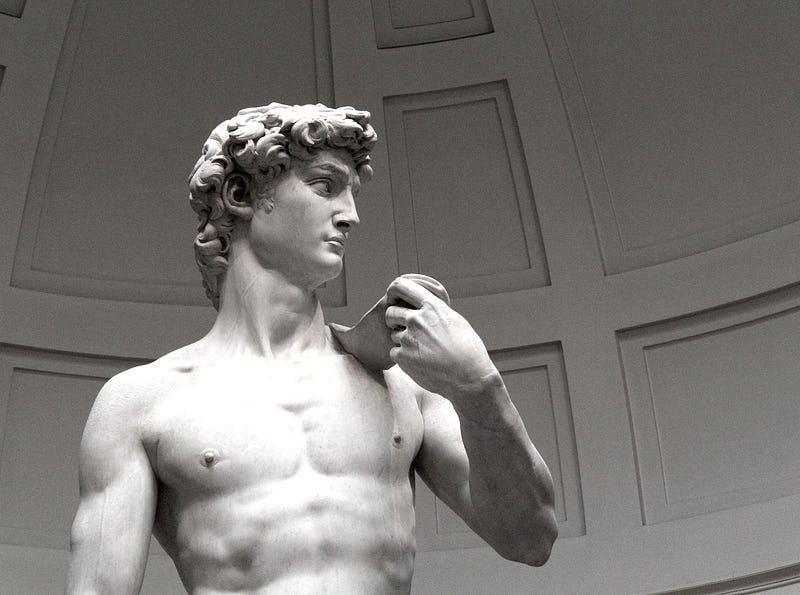
The artworks that we come to admire tend to find their way into our hearts not only by merit but also for more personal reasons.
For me, I doubt I will ever forget the first time I saw Michelangelo’s David: I was 18 years old and travelling around Europe on a three-month trip — my first extended time away from home.
When I visited Florence, I arrived by train with a group of new friends I’d made during my travels. I remember walking around the Galleria dell’Accademia alongside a particularly ebullient Californian who wasted no time in telling me that David was one of the most astonishing things he’d ever seen. He simply couldn’t get over the veins and muscles of the statue’s limbs, their life-likeness and clarity in the stone. He spoke about it for days after.
My own response was more circumspect. I saw a tall and prestigious object rising above me, utterly familiar from all the reproductions I’d seen on TV and in books.
And yet I found it strangely distant at the same time. The precision of the carved stone gave the work a poised coolness that I only later came to appreciate as being a vital part of the statue’s meaning. Over the years since then, as my relationship with David came to include facets of academic study and repeated trips back to Florence, several new layers of awareness and attachment came to shape my current thoughts about the sculpture. Still, nothing quite displayed that initial encounter alongside my Californian friend.
Art appreciation is made up of these peculiar vagaries, chance encounters and private associations, often laying the bedrock for how we think about individual works of art for years to come.
If the goal of the artist is to communicate with the viewer on a personal level and stir the imagination through the use of visual medium, then art appreciation — looking at art and taking pleasure in it — plays a vital role in opening up the transmission.
Close attention to the basic elements of art, including colour, line, composition, texture, space and light, encourage us to consider different — sometimes challenging — points of view. Through these, we can come to some kind of understanding of the artist’s purpose, not only deepening our contact with the work but also forming an idea of the person who created it.
In the flux of our closest connections with art, it is likewise helpful to understand the historical context and period in which a piece of art was created, as artworks nearly always reflect aspects of the society in which the artist lived and how art was valued at the time. The approach of art historians can be useful here, whose methods usually seek an unbiased account of an artwork’s genesis and potential meaning. They look for facts — about the cultural setting, patronage, the art market, the social standing of the artist and the conditions of artistic production. The virtue of art appreciation is that it can accommodate the personal connection as well as the more objective one, prompting the viewer’s imagination to look past what meets the eye and open their mind to a more intimate response.
These investigations lead us back to the territory where we began: of standing face-to-face with a painting in an art gallery and forming a response.
They remind us that the relationship between object and meaning in art is a complex one. The same artwork can hold different meanings for different people, and can involve looking from a particular perspective or through a certain lens that includes technical methods and the historical moment, or else new modes of study like gender, race or sexuality.
They also remind us that a specific, singular reading of a work of art cannot take place — and that art appreciation is a valid part of both the historian’s and viewer’s method.
Someone who takes joy in art is not confined to either one but can traverse from one to the other.
Art appreciation takes in the full gamut of meaning. It opens up the stream of the subconscious and stimulates thought and reflection. The meaningful experience, rooted in taking the time to look and discover, is awoken in the moment of exploration, and it is this transformation that makes the act of engaging such a vital part of enjoying art to the fullest.

If you liked this, you may also be interested in my book Masterpieces of Art Explained, an examination of some of art’s most enthralling images.
Would you like to get…
A free guide to the Essential Styles in Western Art History, plus updates and exclusive news about me and my writing? Download for free here.
Join me…
… On Instagram for more great artworks on-the-go!


