
The Use of Awe-Inspiring AI Technology Made Revolutionary Results Happen
Some Writers Love Attractive AI Technology — Others Hate It Article Three of a Four Article Series. DEP AI vs. HI book

Introduction
This is article three of a four-article series. In this article, we will check out additional capabilities and practical applications of AI, computer vision, ARTS, robotics, narrow AI use, expert systems, capabilities of AI, advantages and disadvantages of AI, and benefits of AI tools. We believe that through the use of AI, things could become easier for humans. We hope you see what we mean while reading this article.
Additional capabilities and practical applications of AI technologies
Computer vision
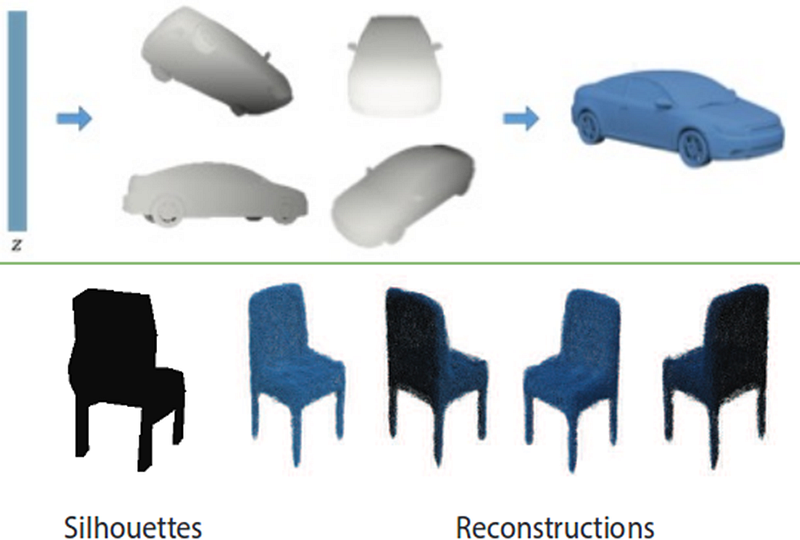

Computer Vision can be trained in Narrow AI applications to interpret and analyze the visual world. Intelligent machines identify and classify objects within images and video footage.
Applications of computer vision include:
- Image recognition and classification
- Object detection.
- Object tracking.
- Facial recognition
- Content-based image retrieval
Computer vision is critical for use cases involving AI machines interacting and traversing the physical world. Examples include self-driving cars and machines navigating warehouses and other environments. I once worked as a supply technician for a robotic platform used to render safe Improvised Explosive Devices (IEDs) and Unexploded Ordnances (UXOs). (“Klette, 2024) (40,41)
All-purpose Remote Transport System (ARTS)
There has been much talk over the past twenty years or longer about Improvised Explosive Device (IED) and Unexploded Ordnance Object (UXO) devices. You may remember that the enemy was using these devices against United States and Allied forces that were deployed to Iraq and Afghanistan in wartime environments. The device’s purpose was to maim or kill.
I provided logistics and retrofit service for one Air Force Explosive Ordnance Disposal personnel robotic platform. The All-purpose Remote Transport System (ARTS) is a Kevlar-tracked remoted controlled 3.5-ton loader.
Various tools can be attached to the platform, transforming it into a forklift, a backhoe, an unexploded ordnance object clearance vehicle for after-attack airfield recovery, or a vehicle used to deploy specialized explosive ordnance disposal tools that support force protection response.
ARTS was a machine that allowed the people who used it to send the machine in to render the IED or UXO safe. This machine was used in an environment that posed a great danger to EOD personnel. This machine lessened the danger and risk of sending people in to do the clearance job.
Before robotics were used, the only Civil Engineer support personnel the Air Force had lost were EOD personnel. That was because the EOD personnel would travel ahead of convoys to attempt to clear the explosive devices. This is and was a very highly technical and extremely dangerous task that must be accomplished to keep convoys safe.
This machine removed much of the considerable risk from the dangerous operation. It also helped to lessen the concern that more people would be hurt or killed.
The operator of the platform used an operator control unit to remotely control the machine and attachments. The platform had attached cameras and digital radios that transmitted command signals from the operator control panel to the platform from up to three miles away.
Robotics
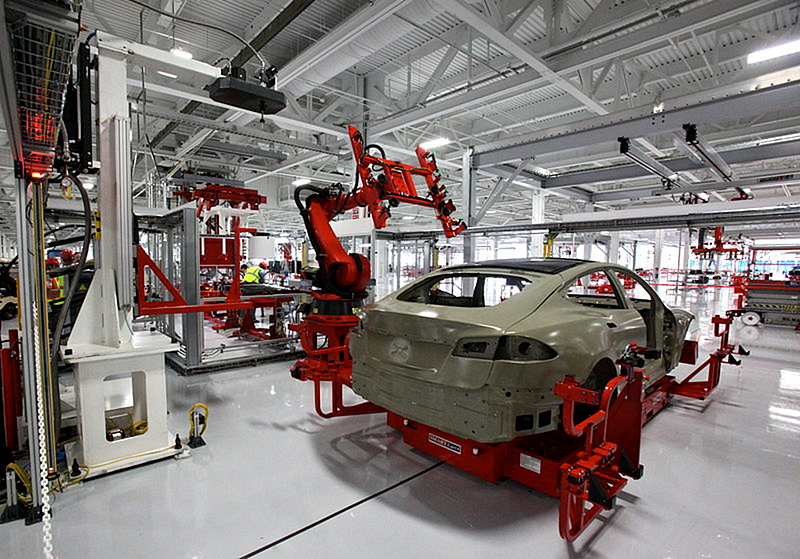
Robotics has been very popular in the past couple of decades. Advancements made are incredible. We have robots that clean our homes and work in manufacturing. Technology allows the robot to choose color and behavior recognition and perform automated assembly, machine, and tool casting.
A robot arc welder can weld faster than a human and stay with the job about 90 percent of the time, while a human can muster 30 percent maximum. In 1985, V. Daniel Hunt, then the President of Technology Research Corporation, wrote Smart Robots, a handbook of intelligent robotic systems. (Hunt, 1985) (42,43)
In his book, Hunt covered AI and robots, sensors, manipulators, AI for smart robots, sensor-controlled robots, machine vision robots, and natural language processing. He also looked at expert systems for robotics and computer-integrated manufacturing. (Hunt, 1985) (42,43)



Narrow AI Use
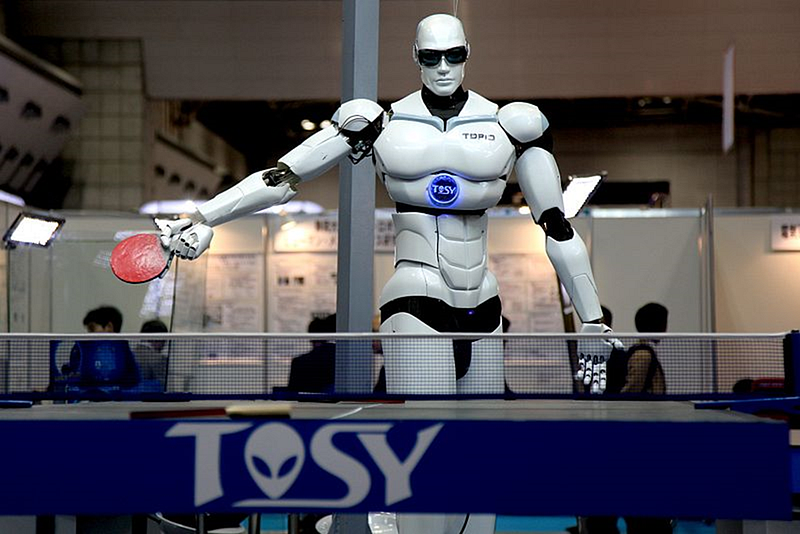
There has been a surge in applications; robots are now doing jobs that before required advancement in the performance characteristics of robots. The computer age and other associated electronics have brought microcomputers, microprocessors, and programmable controllers into existence. Electronic advancements brought integrated success to most robots.
Industrial robots have succeeded in blue-collar jobs. OSHA and the EPA have removed certain types of jobs from human involvement. (Hunt, 1985) (42, 43)
An example of how robots have improved production is in the metalworking industry, where an attrition rate was untenable, and subsequent output saw rapid declines. The robot controls about a third of the blue-collar sector jobs that humans performed before. Japan has developed competent machine shops that run without humans. The future looks bright and hopeful for any industry that embraces robots concerning production capabilities. (Hunt, 1985) (42,43)
Narrow AI is used in industrial settings in robots to perform routine, repetitive tasks that involve materials handling, assembly, and quality inspections. In healthcare, surgeons use robots equipped with Narrow AI to monitor vital statistics and detect potential issues during procedures. Narrow AI allows agricultural machines to engage in autonomous pruning, moving, thinning, seeding, and spraying. (Hunt, 1985) (42,43)
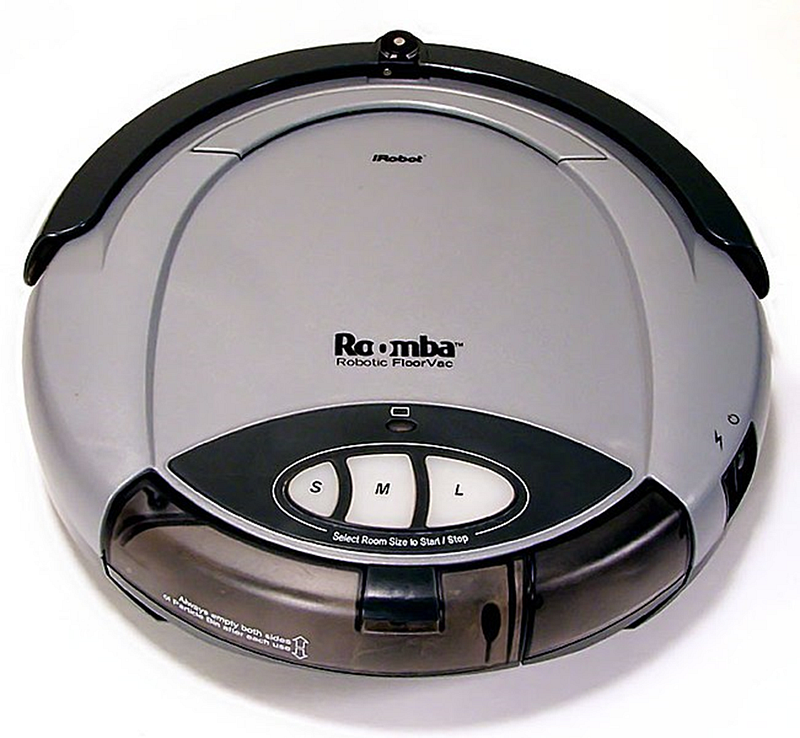

Smart home devices such as the iRobot Roomba can navigate a home’s interior using computer vision. It uses stored data in memory to understand its progress. I once met the inventor of this product and listened to her speak. She spoke about the planning process for the development of the machine. She also covered production, testing, and fielding. This talk was fascinating.
Expert systems
Expert systems use a collection of naturally occurring language texts chosen to characterize a variety of languages. These systems use trained Narrow AI capabilities. The process emulates human decision-making processes and applies expertise to solve complex issues.
Expert systems can evaluate vast amounts of data and uncover trends and patterns for decision-making. These systems can help you predict future events and to understand why things that happened in the past occurred. (IBM Team and AI Team, 2023) (44)
Capabilities of AI
AI brings many capabilities to the table. Smart money will embrace the abilities of AI to help in production and to do some of the more mundane, repetitive jobs that humans do not want to do. The following are some of those capabilities:
Capability to diagnose disease.
Capability to personalize social media.
AI can monitor the weather and execute sophisticated data analysis.
AI powers chatbots to handle customer service requests.
Capability to assemble cars.
Capability to minimize radiation from wildfires. (Digital Aptech) (45,46)
Okay, now let’s look at some of the advantages and disadvantages of using AI. As you can imagine, the benefits can outweigh the disadvantages. Still, we must be careful about what we ask AI to do for us. AI should assist humans in their work. AI should not be used as a replacement for human effort. We do not have to allow AI to replace human effort. We also should not allow anyone to build AI that replaces us.
Advantages and Disadvantages of Using AI
Advantage: AI systems learn from vast amounts of data
Advantage: AI systems are better suited for processing unstructured data like images, videos, and natural language text.
Advantage: AI systems learn from new data and experiences (as in machine learning).
Advantage: AI systems improve their performance over time.
Advantage/Disadvantage: AI programs offer more scalability than traditional programs but less stability.
Advantage: Automation and continuous learning enable developers to scale processes with relative ease.
Advantage: AI technologies can run 24/7 without human intervention.
Advantage: AI systems can automate boring or repetitive jobs (like data entry), freeing up employees’ bandwidth for higher-value work tasks and lowering the company’s payroll costs.
Disadvantage: AI systems can be complex to control and interpret.
Disadvantage: The process the model uses to get from input to output may need to be clarified.
Disadvantage: Lack of transparency can cause problems in industries where processes and decision-making must be explained, such as healthcare and finance.
Disadvantage: The improvisational nature of AI systems means that programs may just provide consistent, appropriate responses.
Disadvantage: Automation can have significant job loss implications for the workforce.
Disadvantage: Companies will need to find ways to incorporate the existing workforce into new workflows enabled by productivity gains from the incorporation of AI into operations. (China, 2024)(47,48)
For many of us as writers, there are some valid concerns about how we use AI as it relates to the writing business. It should be clear that AI cannot do many of the tasks humans can do. That said, there are many benefits that we can experience by using some of the tools that we use.
Benefits of using AI writing tools
Ai can write faster and save time.
AI can conduct extensive research and produce high-quality content.
AI can create correct grammar, and well-structured sentences.
AI can polish writing and check errors.
AI can maintain brand voice consistency.
AI can quicken time-to-market and shorten timeframes for trending topics.
AI can empower writers to increase engagement and ensure content is relevant.
AI can use algorithms to proofread text, detect errors, and suggest corrections.
AI can provide suggestions on word usage, order, and syntax.
AI can provide recommendations based on the intended audience.
AI can boost overall writing quality and clarity.
AI writing software can craft sentences just as a professional content writer can.
AI can improve and optimize SEO, allowing writers to rank higher on search engines.
AI can create ready-to-use article headings to be structured to meet Google’s standards.
AI can help boost a brand’s search engine rankings using SEO meta titles and descriptions.
AI can generate creative, engaging, and unique content.
AI can be helpful for brainstorming and producing headings, metadata, outlines, and titles.
AI can help writers find the inspiration they need to kickstart their human creativity and offer suggestions on how to proceed, not to mention helping them find the right words when they just aren’t coming.
Conclusion
This is the end of article three of a four-article series. In this article, we discovered additional capabilities and practical applications of AI, computer vision, ARTS, robotics, narrow AI use, expert systems, capabilities of AI, advantages and disadvantages of AI, and benefits of AI tools.
We hope you enjoyed reading this article and invite you now to join us in our final article for this series. Article four of a four-article series will wrap up this series, please don’t miss it because we will provide you with sources of information where you can learn even more about AI.
✍ — Published by Dr. Gabriella Korosi, at Dancing Elephant Press. Click here for submission guidelines.