
The Use of Awe-Inspiring AI Technology Made Revolutionary Results Happen
Some Writers Love Attractive AI Technology — Others Article One of a Four Article Series. DEP AI vs HI book
Introduction
I want to inform you of the information I found concerning Intelligence, Human Intelligence (HI), and Artificial Intelligence (AI). I will share a 4-article series with you. I hope you enjoy learning about these topics.
In this series, we will examine the definitions of human Intelligence, Intelligence, emotional Intelligence, social Intelligence, moral Intelligence, different types of human Intelligence, bodily-kinesthetic Intelligence, linguistic Intelligence, and logical-mathematical Intelligence.
Then we will look at different types of artificial Intelligence, deep learning, three kinds of AI based on capability, types of AI functionality, theory of mind AI, self-aware AI, additional capabilities and practical applications of AI technologies, capabilities of AI, advantages, and disadvantages of using AI, benefits of using AI writing tools, personalized content and targeting, challenges and limitations of AI writing tools, final thoughts, and the conclusion.
This is article one of a four-article series. In this article, we will examine some definitions and examples of different intelligence types and discuss IQ tests. We enjoyed reading and writing on these topics and sincerely hope you find something here to increase your knowledge of them.
Many intelligent humans can do fantastic writing. As an avid reader, I would love to see them continue in their jobs or careers, whatever they decide upon. The gentleman below is one of those super minds with exquisite skills and abilities, as attested to by the award he garnered for having written such beautiful words.

The picture above is Ewan Morrison, a Scottish author and screenwriter; he has been described as “the most fluent and intelligent writer of his generation in Scotland” by Booker Judge Stuart Kelly. The Booker Prize is a literary award conferred each year for the best novel written in the English language. The book was written and published in the United Kingdom and Ireland. (“Ewan Morrison”, 2023) (1)
I decided to provide definitions of Intelligence, AI, and HI. The reason for giving these definitions is that I have heard many writers state that they would never use AI or that AI is inferior to HI. With the definitions, we could start understanding what we are looking at and considering.
Some writers are concerned that AI will replace them as writers. I believe, though, that there could be room for both AI and HI, and I hope that by the end of the article series, you will see this, too.
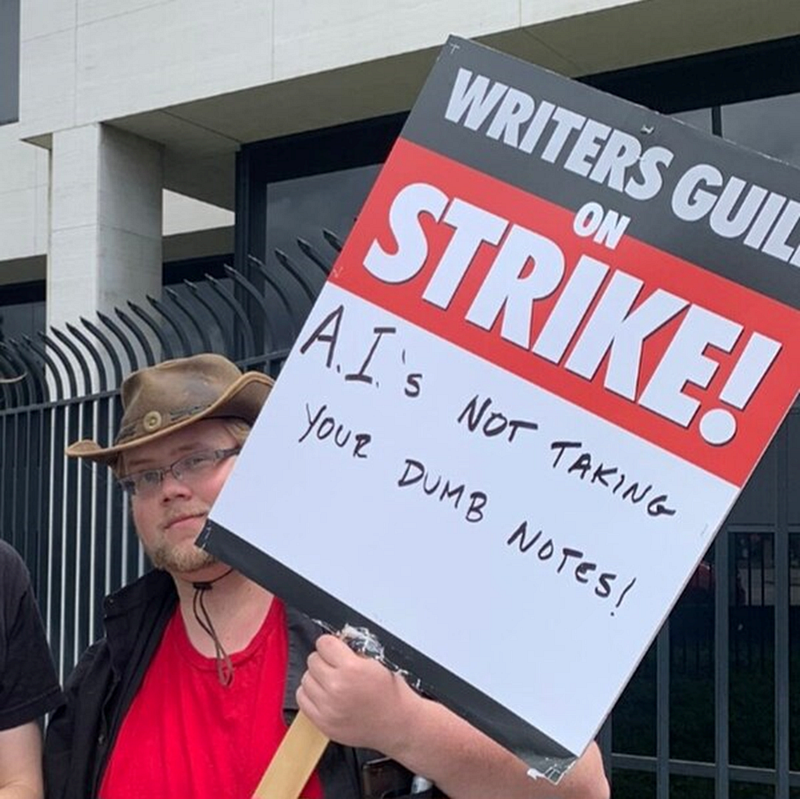
The picture above is a writer who decided to take his distaste for AI further. He had plenty of company as in 2023, the union that represents 11,500 film, television, and other entertainment writers went on strike. It was the first writers’ strike and the first Hollywood strike of any kind in 15 years.
At the center of the dispute was the streaming industry growth with increased budgets and writers not capitalizing on the increase. In fact, many writers claimed that their pay was shrinking,
The strike lasted 5 months and ended when the Alliance of Motion Picture and Television Producers and Union membership negotiated a new three-year contract. Negotiators won concessions on writers’ payment, terms with streaming shows, and the use of artificial intelligence.
Human Intelligence Defined
Human Intelligence (HI) is a mental quality that consists of learning from experience, adapting to new situations, understanding and handling abstract concepts, and using knowledge to manipulate our environment. HI is the intellectual capability we humans possess. (“Intelligence,” “2024, January 1) (2, 4)
Cognitive feats and high levels of motivation and self-awareness mark HI. HI gives humans the mental ability to learn, form concepts, understand, and reason. (“Intelligence,” 2024) (2,3)
The degree of Intelligence decides a person’s work efficiency. Colom et.al., 2010 12 (4) 489–501)(3)
Intelligence Defined
Intelligence includes capacities to recognize patterns, innovate, plan, solve problems, and employ language to communicate. Intelligence enables humans to experience and think. (“Intelligence,” 2024, January 21) (2)
Emotional Intelligence
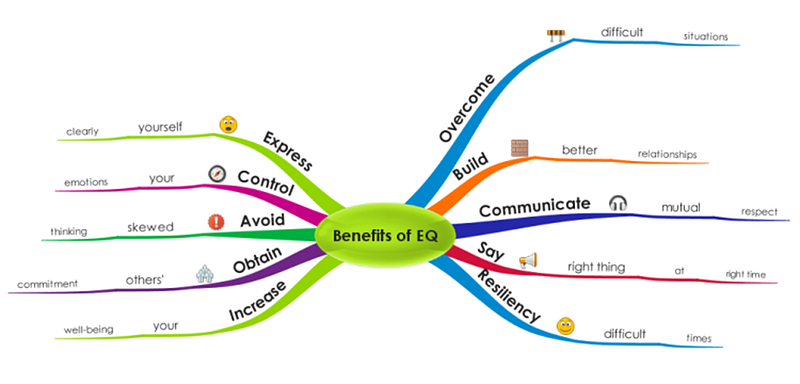
Emotional Intelligence is the ability to convey emotion to other people in an understandable way and to read the feelings of others. Salovey’s Heightened emotional Intelligence can lead to faster generation and processing of emotions and accuracy. Mayer stated that It can also help us manage emotions and improve our problem-solving ability. Emotion can rule the day in writing and marketing. (“Emotional Intelligence,” 2024)(5 7)
Being developed now is “Emotion AI.” Researchers are hopeful it will be able to analyze voices, images, and other kinds of data to recognize, simulate, monitor, and respond to humans. Right now, it is incapable of understanding or responding to human feelings. (5) (“Emotional Intelligence”, 2024)
Emotion AI is a Theory of Mind AI in development. Researchers hope it will be able to analyze voices, images, and other kinds of data to recognize, simulate, monitor, and respond to humans. To date, Emotion AI cannot understand and respond to human feelings. (5)

Social Intelligence
Social Intelligence is the ability to understand social cues and motivations of others and us in social situations. Social Intelligence, with other studies, focuses on how we make judgments of others. We use our judgment to determine positive and negative social behavior.
We view other people as positive or negative in social character. Social Intelligence is related to cognition and emotional Intelligence. Daniel Goleman, a Popular Science writer, has written that social Intelligence consists of social awareness and social facility.
Social awareness involves synchrony, self-preservation, influence, and concern. Further, he states that social awareness includes empathy, attunement, emphatic accuracy, and social cognition. Our social relationships affect our health, with deeper relationships having a more profound impact. (“Social Intelligence”, 2023) (8)
Moral Intelligence
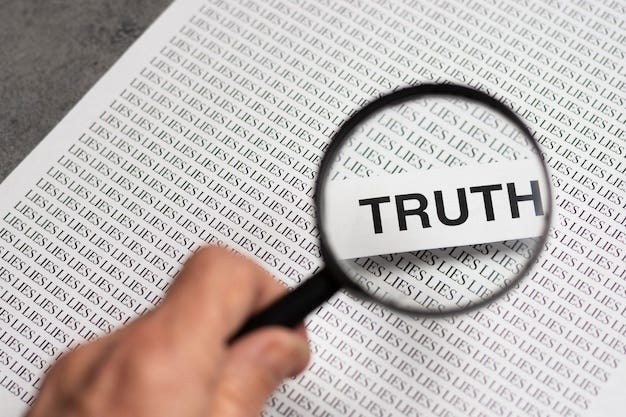
Moral Intelligence is the ability to understand right from wrong. Positive Moral Intelligence is behavior believed to be correct. Doug Lennick and Fred Kiel, authors of Moral Intelligence and originators of the term, identified four competencies for moral Intelligence: integrity, responsibility, forgiveness, and compassion. (“Moral Intelligence”, 2024) (9)
Different types of Human Intelligence

Spatial Intelligence
This Intelligence is the ability to think in an abstract manner and in multiple dimensions. Howard Gardner’s theory of multiple intelligence states that Intelligence provides the ability to solve problems or create products valued in a specific culture. The application of this theory covers a product range from scientific theories to musical compositions to successful political campaigns. (“Spatial Intelligence,” 2023) (10–12)
Nora Newcombe and Andrea Frick applied the concept of spatial intelligence to education. Spatial intelligence is evolutionary and adaptive. Mobile organisms must navigate the world to survive; the human ability to make tools is an example. Spatial thinking is the principle that complements verbal thinking. An essential application of spatial thinking is to science, technology, engineering, and mathematics.

Bodily Kinesthetic Intelligence
Bodily-kinesthetic Intelligence is using your body to demonstrate physical and athletic prowess. People with good bodily-kinesthetic Intelligence demonstrate skill and ability in sports, dance, and making things. People with this Intelligence are sensitive to others’ moods, feelings, temperaments, motivations, and ability to work as part of a group. (“Theory of multiple intelligences”, 2024) (13,14)

Linguistic Intelligence
Linguistic Intelligence is the ability to use language in an effective and creative manner. Problem-solving, abstract reasoning, and working memory are all part of Linguistic Intelligence. Understanding this intelligence requires knowledge of the mechanisms that control speech and language.
There are four major groups of mechanisms, including speech generation (talking), speech comprehension (hearing), writing generation (writing), and writing comprehension (reading). Think of linguistic Intelligence as the extent to which a person can use language in written and verbal format to achieve goals. (“Verbal Intelligence”, 2024)(15)

Wechsler Intelligence Scale
One method of determining the measurement of Intelligence and cognitive ability is using the Wechsler Adult Intelligence Scale. The Wechsler Adult Intelligence Scale is an IQ test. The original Wechsler Scale included intellective factors, while the Binet-Simon Scale (the first recognized intelligence test) could have included those factors better.
Wechsler argued that the Binet-Simon scale items were invalid for adult test takers. Wechsler purported that the developers of the Binet scale test chose items specific for use with children. The Binet scale emphasized speed with timed tasks and tended to handicap adults. (Wechsler, 1997) (16)
All could have been better with the Wechsler scale, too. Revisions were made to the test, culminating in the WAIS-III scale. It provided Verbal IQ, Performance IQ, and Full-Scale IQ scores with four secondary measures: Verbal Comprehension, Working Memory, Perceptual Organization, and Processing Speed. (16)
I read about these IQ tests and could not help but wonder what data scientists might be trying to accomplish by getting AI to mimic them. I think there is a long way to go to get AI to act and think like this.
This is article one of a four-article series. This article examined some definitions and examples of different intelligence types and discussed IQ tests. We sincerely hope the article provided useful information so that your reading time was enjoyable.
We would love to hear from you if you enjoyed reading this or another article in the series. Meanwhile, we are off now to article two, please follow us so you can get more of this important information about human and artificial intelligence.
Please check out the AI vs. HI articles in Dancing Elephants Press
✍ — Published by Dr. Gabriella Korosi, at Dancing Elephant Press. Click here for submission guidelines.


.jpg)


.jpg)