
The Use of Awe-Inspiring AI Technology Made Revolutionary Results Happen
Some Writers Love Attractive AI Technology — Others Hate It Article Two of a Four Article Series. DEP AI vs. HI book
Introduction
Welcome back! This is article two of a four-article series. In this article, we will discover more about IQ tests and intelligence, examine artificial intelligence (AI), different types of AI, Deep Learning, AI based on capability, Types of AI-based Functionalities, theory of mind AI, and Self-Aware AI. We hope that some (if not most) of the information presented are topics you may not have been aware of prior to reading. If so, we are happy you are learning new information and hope you feel your time reading has been well spent.
The WAIS-IV consists of 10 core subtests and five supplemental subtests. Four index scales represent significant components of intelligence. There are the Verbal Comprehension Index, the Perceptual Reasoning Index, the Working Memory Index, and the Processing Speed Index.
Two broad scores are derived to summarize general intellectual ability. The Full-Scale IQ is the total combined performance of the indexes. The General Ability Index comes from the six subtests provided by the Verbal Comprehension Index and the Processing Speed Index. (Wechsler, 1997) (16)
Logical Mathematic Intelligence
Logical-mathematic intelligence is the ability to reason logically and solve mathematical problems. It is sensitivity to and capacity to discern logical or numerical patterns and the ability to handle long chains of reasoning. This area involves logic, abstractions, reasoning, numbers, and critical thinking. (“Theory of multiple intelligences,” 2024) (13, 14)

Artificial Intelligence (AI) Defined.
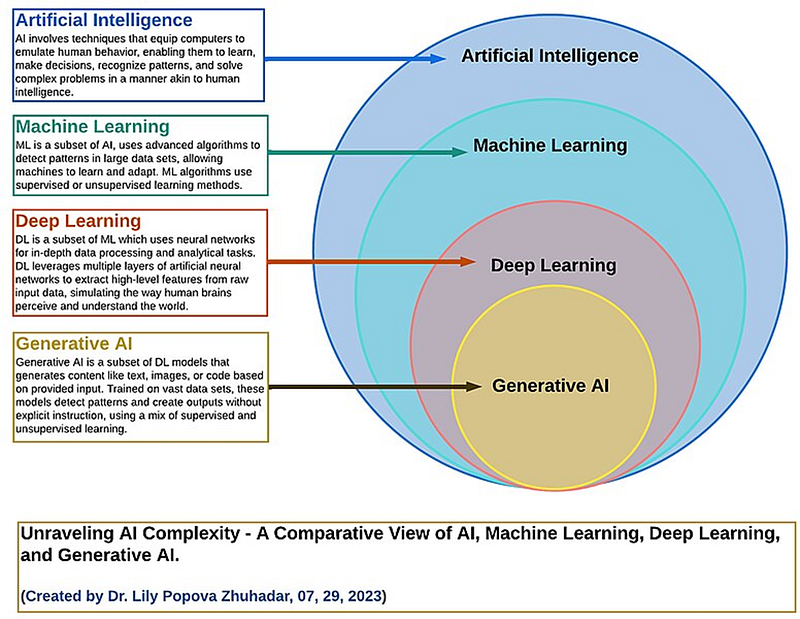
Artificial intelligence is the intelligence of machines or software as opposed to the intelligence of humans or other animals. Industry, government, and science use AI technology. Traditional goals of AI research include reasoning (Intractability), knowledge representation (knowledge), planning (classical planning), learning (learning), natural language processing (natural language processing), perception (computer vision), and support for robotics (robot rights and Evans). General intelligence (the ability to do any task that a human can) is one of the long-term goals of AI (Copeland). (“Artificial intelligence,” 2024) (17,18)
Different Types of Artificial Intelligence
Many people are concerned about how artificial intelligence (AI) may interact with them from personal and commercial perspectives. The applications that most people interact with today are termed “traditional machine learning models.” These models depend on learning algorithms developed and maintained by data scientists.
It is essential to understand that these models require human intervention to process new information and perform new tasks outside the baseline of training already provided. An example is Apple’s Siri application, a built-in application into their Internetwork Operating System (IOS). Any time Apple wants to expand Siri’s knowledge base, human intervention is required. When Apple wants to update the IOS’s Siri knowledge base and functionality, they do it with new system releases. (“Artificial intelligence,” — 2024) (17,18)
Traditional machine learning models with AI are what we see when we use AI applications today. These models depend on learning algorithms developed and maintained by data scientists. In other words, traditional machine learning models need human intervention to process new information and perform any new task outside their initial training.
For example, Apple made Siri a feature of its iOS in 2011. Apple trained the early version of Siri to understand a set of particular statements and requests. Human intervention is required to expand Siri’s knowledge base and functionality. (“AlphaGo,” 2024) (19)
Deep learning
Deep learning is a type of machine learning that uses artificial neural networks to enable digital systems to learn and make decisions based on unstructured, unlabeled data). Deep Learning allows AI applications to know how to perform new tasks that require human intelligence, engage in new behavior, and make decisions without human intervention. Deep learning has enabled tasks to be automated, content to be generated, predictive maintenance to be scheduled and performed, and other capabilities across industries. (“Deep Learning,” 2024) (20)
Machine learning trains AI systems to learn from acquired experiences with data, recognize patterns, make recommendations, and adapt. With deep learning, instead of responding to sets of rules, digital systems build knowledge from examples and use that knowledge to react, behave, or perform.) (“Machine Learning”) 2024) (21)
Because of deep learning, the field of AI stays in a constant, fast-paced state of change. We can understand the types of AI by examining two categories: AI capabilities and AI functionalities. (“Deep Learning” 2024) (22)
Three Kinds of AI Based on Capability
1. Artificial Narrow AI

Artificial Narrow AI is the AI that exists today. Other forms of AI are theoretical. Data Scientists train Artificial Narrow AI to perform a single or narrow task, often faster and better than a human can.
The requirement here is that the task must be well-defined. Narrow AI targets a subset of cognitive abilities and advances. Apple’s Siri, Amazon’s Alexa, and IBM Watson are examples of Narrow AI. OpenAI’s ChatGPT is a form of Narrow AI because it is limited to the single task of text-based chat. (“Weak artificial intelligence,” 2024) (23,24)
2. General AI
Artificial General Intelligence (AGI), or Strong AI, is theoretical. AGI can use previous learnings and skills to accomplish new tasks in a different context without requiring human beings to train the underlying models. This ability allows AGI to learn and perform any intellectual task that a human can.
Most people are concerned by the potential to enable their replacement by AI. If this becomes possible, there will be no reason for a human to be involved in production processes. (“Artificial general intelligence,” 2024) (24)
3. Super AI
Super AI is superintelligence, and right now, it is theoretical. Super AI would think, reason, learn, make judgments, and possess cognitive abilities better than humans. The applications possessing Super AI capabilities will have evolved beyond the point of understanding human sentiments and experiences.
They will feel emotions, have needs, and possess beliefs and desires of their own. If that doesn’t scare you, you need to rethink this. (“Superintelligence,” 2023) (25,26)
Types of AI-based Functionalities
Underneath Narrow AI, there are two functional AI categories:
1. Reactive Machine AI
Reactive AI systems cannot form memories or use past experiences to inform current decisions. This type of intelligence involves the computer perceiving the world and acting on what it sees. These systems work with available data. Reactive AI accelerates statistical math and can produce an intelligent output by analyzing vast data.
Examples of Reactive Machine AI
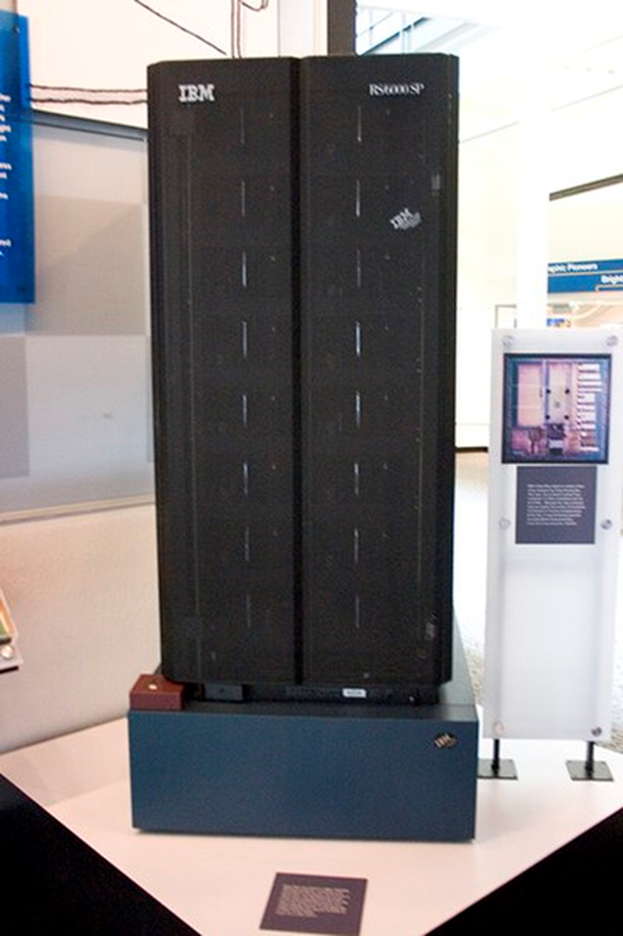
- IBM Deep Blue: Most chess players know IBM’s chess-playing supercomputer. This system defeated chess grandmaster Garry Kasparov. The AI analyzed chess pieces on the board and predicted the outcome of each move.
- The Netflix Recommendation Engine: When viewers watch Netflix, AI processes collect data sets to form a history of the programs watched. AI then provides viewers with the content they will enjoy watching. (“Recommender system,” 2024) (27): (Wurman et al., 2022). (28)
2. Limited Memory AI
This AI recalls specific objects or situations relative to events and outcomes. It uses past and present data to determine a course of action that helps achieve a desired result. A limiting factor with this form of AI is that it cannot retain past data in a library of past experiences over a long period. Limited Memory AI improves performance when trained on more data. (Pasick, 2023) (29)
Examples of Limited Memory AI
- Generative AI: Tools like ChatGPT, Bard, and DeepAI depend on limited memory AI capabilities and predict virtual elements, words, or phrases within the content they generate. Here, writers must consider allowing AI to use the data in applications like Medium.com. (“Open AI,” 2024) (30)
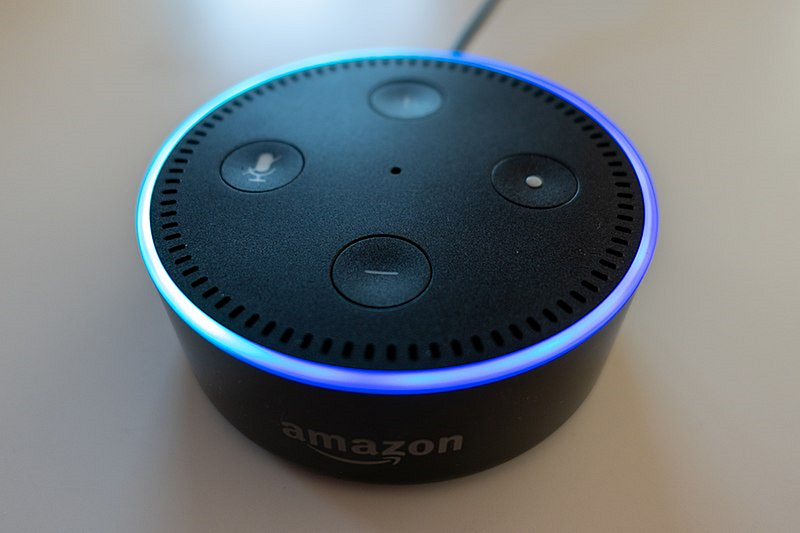
- Virtual assistants and chatbots: Siri, Alexa, Google Assistant, Cortana, and IBM Watson Assistant merge natural language processing (NLP) and Limited Memory AI. AI can better understand questions and requests, act, and compose responses. (“Virtual Assistant,” 2023) (31–34)
Self-driving cars
Some vehicles use Limited Memory AI to understand the world in real-time and make informed decisions on when to increase or decrease speed, perform braking, make turns, etc. (“Self-driving car,” 2024) (35–37)

Theory of Mind AI
This AI is a functional class of AI under the General AI type. This AI will understand the thoughts and emotions of other entities. This understanding can affect how the AI interacts with those around them. (Cuzzolin et al., 2020) (38)
The theory would allow AI to simulate human-like relationships. It could infer human motives and reasoning and personalize individual interactions based on unique emotional needs and intentions. Theory of Mind AI would also be able to understand and contextualize artwork and essays, which is not possible with generative AI used today. (Cuzzolin et al., 2020) (38)
Self-Aware AI
Self-aware AI is the ability to comprehend your thoughts, feelings, or behaviors connected to yourself and the outside environment. This functional AI will possess super AI capabilities. Right now, it is theoretical.
It could understand its internal conditions, traits, and human emotions and thoughts when achieved. It would also have its feelings, needs, and beliefs. Self-aware robots have the potential to improve diagnosis and treatment and customize education.
dep There are challenges to achieving self-aware AI that include technical limitations and obstacles, philosophical and ethical issues, and the effects it will have on culture and society (AI Renaissance, 2023) (39)
Conclusion
This is the end of article two of a four-article series. In this article, we looked at IQ tests and intelligence. We examined artificial intelligence (AI), different types of AI, Deep Learning, AI based on capability, Types of AI-based Functionalities, theory of mind AI, and Self-Aware AI. Please follow us now as we move to article three of a four-article series.
✍ — Published by Dr. Gabriella Korosi, at Dancing Elephant Press. Click here for submission guidelines.


.jpg)
