
The Urge to Be Seen Through Neuroscience
Exploring the Brain’s Symphony in Our Timeless Search for Connection and Recognition
“Out of suffering have emerged the strongest souls; the most massive characters are seared with scars.” — Khalil Gibran.
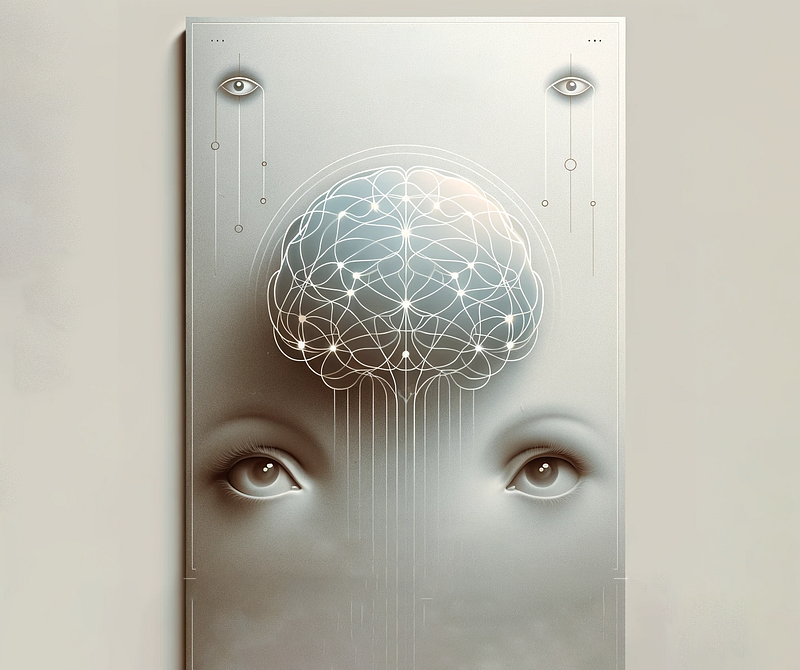
In a world where light and shadow interplay to create the human experience, Khalil Gibran’s wisdom resonates with profound truth. His poetic musings on the human condition reflect an ancient need, one deeply embedded in the labyrinth of our neural pathways — the need to be seen and acknowledged. But why did Gibran, with his keen eye for the human soul, hit the mark so precisely? This question invites us to embark on a fascinating journey through the corridors of neuroscience, illuminating the primal urge to be recognized from a perspective that intertwines the elegance of poetry with the rigor of science.
As we delve into the mysterious depths of the human brain, we uncover a story that is not just about neurons and synapses but about the very essence of our social existence. Like a skilled artist, neuroscience paints a vivid picture of how our brains, those masterful conductors of thoughts and emotions, orchestrate our deep-seated desire for social connection. Through the lens of scientific inquiry, we explore how this ancient need, eloquently captured by Gibran, is intricately woven into our biological, psychological, and social fabric.
Join me in this exploration, where we shall dance through various realms — from the evolutionary ballet that shaped our social brains to the symphony of cognitive and emotional development. We will uncover how the need to be seen is not just a fleeting desire but a cornerstone of our very being, etched into our DNA like a timeless poem. Let us unravel the mystery of why Khalil Gibran was right as we journey through the rich and multifaceted landscape of neuroscience, discovering the eternal urge to be seen.
1. The Social Brain Hypothesis: The Evolutionary Tango
“No man is an island, entire of itself; every man is a piece of the continent.” — John Donne
In the grand theater of evolution, the human brain has emerged as a maestro of social orchestration, conducting a complex symphony of interactions that resonate deeply with John Donne’s timeless words. The Social Brain Hypothesis takes us on a journey to a time when our ancestors were like players in a symphony orchestra, each one with a unique instrument to play, but all working together in perfect harmony to produce a beautiful piece of music called “group living.” It was here, amid the hustle and bustle of ancient social networks, that the human brain evolved into a sophisticated organ dedicated to social interaction and recognition.
Imagine the brain, not as a static organ but as a dynamic social tool, evolving and adapting like a ship skillfully navigating through uncharted waters. The prefrontal cortex and amygdala, akin to the captain and first mate of this ship, took charge of processing social information and emotional responses. This development was not a mere chance occurrence but an evolutionary adaptation as crucial for survival as a lighthouse is to a ship on a foggy night.
Our ancestors, much like actors on a stage, relied on social cohesion for survival. The ability to recognize and be recognized within a group, to understand and be understood, became as essential as air to breathe. This intricate dance of social interaction sculpted our neural pathways, forging connections that would echo through generations.
The desire for recognition and validation, then, is not a modern vanity born of contemporary culture but a deeply rooted evolutionary trait. It’s a thread that has been woven into the very fabric of our being, a fundamental aspect of our nature as social creatures. Just as a flower instinctively turns toward the sun, so too does the human psyche gravitate toward social acknowledgment.
In this first act of our exploration, we recognize that the urge to be seen is not a whim of the ego but an echo of our evolutionary past. It is a primal call that has been sounding through the ages, a siren song luring us towards connection and community. As we continue our journey through the fascinating realms of neuroscience, let us keep in mind this evolutionary backdrop, a testament to the enduring power of our social nature.
2. The Reward System: The Brain’s Applause
“We are what we repeatedly do. Excellence, then, is not an act, but a habit.” — Aristotle.
Did you know that the brain’s reward system plays an absolutely crucial role in our desire to be recognized? It’s truly incredible how much this impacts our behavior! If the Social Brain Hypothesis is the opening act, the brain’s reward system is the enchanting second act, akin to a captivating ballet that rewards each perfect pirouette with thunderous applause. This system, particularly the dopamine-rich pathways, functions much like an internal applause meter, responding with vigor to the curtain calls of social recognition.
Picture, if you will, a scenario as common as birds in spring: a ‘like,’ a comment, a share on social media. Each of these seemingly trivial interactions triggers a cascade of dopamine in our brain, akin to a pat on the back or a standing ovation. This release of dopamine is the brain’s way of saying, “Bravo! Encore!” It creates a sense of pleasure and satisfaction that is as sweet as a perfectly ripe fruit on a hot summer day.
This biochemical response is not just a fleeting moment of joy but a powerful reinforcement tool. It’s like an internal coach, encouraging us to repeat behaviors that earn us social approval. This reinforcement is so potent that it shapes our behaviors, pushing us towards actions that garner positive social stimuli. In essence, our brains are hardwired to repeat actions that make us feel good, a principle as old as time but as fresh as each new dawn.
However, just as every coin has two sides, so too does the brain’s reward system. This quest for social validation, while a source of pleasure, can also lead us into a labyrinth of seeking external approval. The constant chase for the next ‘like,’ the following comment, can become as consuming as a moth drawn to a flame. It’s a delicate balance, one that requires us to be as mindful as a tightrope walker in the circus of social interaction.
So, the brain’s reward system underpins our most basic human desires — to connect, to be appreciated, and to belong. As we explore further into the neuroscience of being noticed, let us appreciate the complex interplay of our brain’s reward system. It is a dance of dopamine that motivates us towards social recognition and, ultimately, a feeling of belonging in this vast and interconnected world.
3. The Concept of ‘Social Pain’: A Neural Shakespearean Tragedy
“He who has felt the deepest grief is best able to experience supreme happiness.” — Alexandre Dumas
Let’s delve into the concept of social pain, which can be as devastating as a Shakespearean tragedy. The human brain, a canvas as complex and sensitive as the most intricate artwork, does not differentiate much between the sting of physical pain and the ache of social rejection. This realization paints a picture that is both sad and enlightening, revealing the depth of our need to be seen and acknowledged.
Neuroscience has thrown open the curtains to reveal that the brain regions activated by social exclusion — areas such as the dorsal anterior cingulate cortex and the anterior insula — are alarmingly similar to those involved in processing physical pain. This neural overlap is akin to a poignant melody that resonates in both the joys and sorrows of our social interactions. The pain of being ignored or rejected, therefore, is not just a metaphorical hurt but a tangible, neural reality, as natural and acute as a wound.
This discovery brings a new understanding of the old adage, “Sticks and stones may break my bones, but words will never hurt me.” Words, or the lack thereof, can indeed hurt, echoing in the chambers of our brain with a resonance as profound as any physical injury. The drive for social validation emerges not merely as a desire but as an essential component of our psychological well-being, as vital as the air we breathe.
In the grand narrative of our existence, the experience of ‘social pain’ underlines the crucial role of social connections in our lives. It underscores the fact that our quest to be seen and accepted is not a superficial yearning but a deep-seated need intertwined with our very survival. This understanding shifts the lens through which we view social interactions, highlighting the importance of empathy, kindness, and inclusion in the tapestry of human relationships.
Thus, understanding the neural basis of social pain and recognition experiences not only deepens our self-awareness but also fosters greater compassion for others in their quest to be seen. Each individual has the power to either alleviate or exacerbate the social pain around them. So, our actions contribute to a narrative that can either uplift or unravel the delicate fabric of our shared humanity.
4. Mirror Neuron System: The Brain’s Empathy Ballet
“Any man’s pain diminishes me because I am involved in mankind.” — John Donne
The mirror neuron system is a fascinating ensemble in the brain’s ballet of empathy. This remarkable network of neurons, akin to mirrors reflecting not just light but emotions and actions, plays a pivotal role in how we connect and empathize with others.
Imagine a neuron that fires not only when you perform an action but also when you witness someone else performing the same action. This is the essence of the mirror neuron system. It’s like an echo in a mountain range, where the actions and emotions of others resonate within our own neural pathways. These neurons are the unsung heroes in the theatre of social interaction, allowing us to understand and empathize with others, to literally feel and mirror their joy, pain, hopes, and fears.
Therefore, the act of being seen and seeing others is not just a superficial exchange. It engages this mirror neuron system, creating a bridge of empathy and understanding. When someone acknowledges our existence, our efforts, and our essence, it’s not just a social nicety — it engages a deep neurological process that fosters connection and empathy.
This system may also explain the contagious nature of emotions. Like a yawn that spreads through a room, emotions too can ripple through a crowd, mediated by these mirror neurons. When we share our lives, our joys, and our struggles and receive acknowledgment, it’s as if these neurons create a symphony of shared understanding, a communal dance of empathy and connection.
In our digital age, where much of our interaction occurs through screens, the mirror neuron system plays a crucial role. It helps bridge the physical gap, allowing us to connect, empathize, and feel a part of a larger community, even from a distance. This system is a testament to our inherent interconnectedness, a biological reminder that we are, indeed, a part of something much larger than ourselves.
Thus, the mirror neuron system influences our social experiences. It underscores the importance of being seen and seeing others, not just as a social exercise but as a fundamental human need that fosters empathy, understanding, and connection. So, these neurons ensure that nobody behaves alone in the intricate complexity of life.
5. Cognitive and Emotional Development: The Social Symphony of Growth
“The child is the father of the man.” — William Wordsworth
Let us talk about the developmental stage, where the interplay of cognitive and emotional growth composes the melody of our social selves. From the cradle to the digital cosmos, the feedback we receive from our environment shapes not just our actions but the very essence of who we are.
In the tender years of infancy, the human brain is like a sponge in a vast ocean of stimuli. Each interaction, gaze, and acknowledgment from caregivers and peers is absorbed, shaping the developing mind. This process is akin to an artist painting on a blank canvas, with each stroke contributing to the eventual masterpiece of the adult personality.
As we grow, this canvas of selfhood gets more intricate. The social feedback we receive — the nods of approval, the smiles of recognition, the warmth of inclusion — serve as crucial brushstrokes in this ongoing work of art. This process is vital in the formation of our self-concept, our understanding of where we fit in the social jigsaw puzzle. It’s a dance of development, where each step, each turn, each leap, is guided by the reflections we see in the eyes of others.
In today’s digital age, this dance has extended onto a new stage: social media. Platforms like Facebook, Instagram, and Twitter have become modern mirrors, reflecting back to us not just images of our physical selves but snapshots of our social and emotional being. The likes, comments, and shares we receive are the new nods of approval, the modern pats on the back, contributing to our sense of self in a world increasingly lived online.
However, this digital landscape is double-edged. While it offers unprecedented opportunities for connection and recognition, it also presents new challenges in the form of social comparison and the quest for digital validation. Navigating this landscape requires a new kind of social and emotional literacy, an understanding that, like all art, our self-concept is subjective and ever-evolving.
Thus, our cognitive and emotional development is a lifelong symphony, with each social interaction contributing a note to the grand musical score of our existence. In this digital era, our challenge is to ensure that these notes harmonize, creating a melody that is authentic, resilient, and reflective of our true selves.
6. Stress and Coping Mechanisms: The Social Safety Net
“In the depth of winter, I finally learned that within me there lay an invincible summer.” — Albert Camus
In this point, we explore the role of social interaction in times of stress, akin to a safety net unfurled beneath the high-wire act of life. The need for social support and validation, particularly in times of uncertainty, activates a complex interplay of neurological and psychological responses, offering both solace and strength.
When faced with stress, our brains and bodies embark on a formidable challenge, akin to a ship braving a stormy sea. Neuroscientific studies have illuminated how social support can modulate the body’s stress response, much like a lighthouse guiding the ship to safety. Sharing our experiences and receiving acknowledgment from others can act as a powerful coping mechanism, reducing the physiological and psychological impacts of stress.
This social buffering, as it is known, is not just a psychological balm but a biological one. When we connect with others, our body releases a cocktail of hormones, including oxytocin, sometimes known as the ‘cuddle hormone,’ which plays a crucial role in fostering feelings of trust and relaxation. This release can counteract the effects of stress hormones like cortisol, bringing a sense of calm and comfort, as soothing as a warm blanket on a cold night.
In the digital age, this phenomenon has taken on new dimensions. Social media and other online platforms can serve as virtual support groups, offering a sense of belonging and validation even when physical presence is not possible. The double-edged sword of digital communication, however, presents unique challenges. While it can be a source of support, it can also be a source of stress, with the pressures of social comparison and the pursuit of digital perfection adding to life’s burdens.
Now, let us acknowledge the power of social interaction in our stress response. In the modern world, where isolation and stress are prevalent, understanding and harnessing this power is more important than ever. The ability to share our lives and to seek and offer support is not just a social skill but a vital coping mechanism, a beacon of light in the often stormy seas of life. Our connections with others are the source of our strength. It is within our collective spirit that an invincible summer resides. Let’s embrace our interdependence and harness its power to overcome any obstacle.
Conclusion: The Neurological Symphony of Being Seen
“The whole is more than the sum of its parts.” — Aristotle
In conclusion, the need to be seen becomes clear that this urge is not a mere footnote in the narrative of our existence but a central theme in human life. Now, we understand that the concepts of neuroscience have revealed a complex interplay of evolutionary adaptation, reward processing, social and emotional development, and coping mechanisms, all harmonizing to create the profound human experience of seeking acknowledgment.
This ancient urge, now finding new expression in the digital realm, is not just a cultural phenomenon but a fundamental aspect of our neurological makeup. The desire to be seen transcends time and technology, echoing in the halls of our ancient ancestors and resonating in the clicks and swipes of our modern existence.
From the Social Brain Hypothesis to the intricate dance of the brain’s reward system, from the poignant reality of social pain to the empathetic ballet of the mirror neuron system, and finally, to the crucial role of social interaction in cognitive and emotional development and stress management, each element plays a vital role in the story of who we are as social beings.
Neuroscience teaches us a compelling narrative about our intrinsic need for social connection and validation. It’s a reminder that our well-being is deeply rooted in our connections with others, as essential to our survival as the very air we breathe.
Now, let us carry with us the understanding that the need to be seen is not a weakness but a strength, a testament to our shared humanity. In the words of Khalil Gibran, whose wisdom inspired this exploration, our need to be seen reflects the dual nature of our existence, where light and shadow, joy and pain, individuality and community, are forever intertwined.
In the end, the urge to be seen and acknowledged is a melody that plays in each of us, a song as old as humanity itself. It is a reminder that in the vast orchestra of life, each of us is both a soloist and a member of the chorus, contributing our unique notes to the shared harmony of human experience.


