The Upcoming Experiment in Degrowth — What Can We learn?
How the Ukraine war could teach us about living with less
Degrowth is the idea that the world can solve its environmental problems by reducing consumption. As a theoretical solution, the degrowth thesis could work. However, there is a problem: Most people don’t want to have their lifestyles change. Degrowth requires a lifestyle change, and if people don’t want such change, they will not voluntarily participate. Hence, as a practical solution, it cannot work.
While these are mere assertions, we have a grand, global experiment about to unfold. We already had one such experiment, but it was short-lived. Remember when COVID hit? Some commentators called it “The Great Pause” as traffic disappeared, everyone slowed down, and we lived different lives among a massive economic shutdown. It was a short-lived social experiment driven by exogenous factors — namely, COVID.
Remember how much people loved it? We were trying to get through a short-term problem. Millions — like half the US population — just refused to wear a mask and went carelessly into bars, churches, and other gathering places. Protests broke out in school board meetings. Vaccines became available and rather than uniting everyone, they became the target of intense disinformation campaigns. All because no one wanted to change their freedom-loving lifestyle. It went on for two years and may keep going, even while nearly 1 million Americans died from the virus.
And some say we just need to get the message out about degrowth. Somehow, it is hard to see that happening.
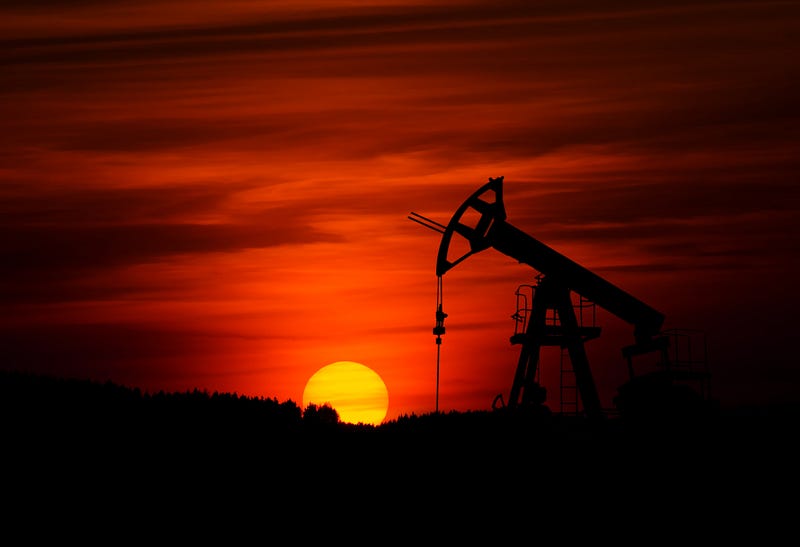
But we are going to have another forced experiment with degrowth. The next experiment is driven by the war in Ukraine. Shortages of many commodities are going to force a reduction in consumption. According to CNN Business, Goldman Sachs is out with a report that oil could go to $240 a barrel this summer. That’s likely the equivalent of $8–10/gallon gas. We can thank Mr. Putin.
Oil, however, is not the only thing being hit. Nickel prices have skyrocketed because Russia supplies 20% of the high-grade nickel in the world — a material desperately needed for today’s electric vehicles and battery technology. Wheat prices are spiking as well because Russia provides 17% of world production and Ukraine provides 12%. Particularly as this war spreads and endures, more and more commodities the world needs could be impacted.
In other words, we are facing an economically induced reduction in consumption — i.e., forced degrowth. We will consume less because there is less available to consume — less gas, less food, less industrial parts, less of just about everything, it seems. In a capitalist world, that degrowth will be forced by higher prices.
People are not going to like this.
In my area, gas is already $4.50 per gallon. I’ve seen somewhere it is over $7. As prices go up on more and more of the goods and services people need, people will feel it in the hard economic choices they need to make. By necessity, they will consume less.
The question is, how will society respond? There are three questions I will be following.
First, watch how angry people get when they cannot consume at the levels to which they are accustomed. Watch the frustration when they can’t have what they thought they should have or deserved.
Second, watch how they go for alternatives. Do people get creative? Or despondent? And what is the impact of the new choices on climate and the environment?
Third, does it spill over into political protest and instability? History is replete with governments that crashed when the price of bread doubled or tripled. Hungry bellies want change.
If we pay attention to this, we can learn something about people’s inner attitudes regarding consumption, and it just might give us a hint as to why “degrowth” as a strategy will not be embraced by very many people to solve climate change.
You can find my newsletter Intertwine: Living Better in a Worsening World here.
Anthony Signorelli
Ideas, insights, and imagination to help you live better in a worsening world. Topics include Men, #MeToo, and Masculinity; Postcapitalism; Climate Change; Digitalization and Cryptocurrency; Green Energy; Retirement and financial planning… basically everything that addresses making life better in this challenging time of history.
To help me continue this work and find other insightful writing, join Medium here. It’s only 5 bucks and Medium pays me half to keep this work going. Much appreciated.