
The Untold Story of Brazil’s Snake Island
Exploring the Deadly Charm
Snake Island, or Ilha da Queimada Grande, is a small but famous island off the coast of Brazil. It’s known for being home to thousands of deadly Golden Lancehead Vipers. Due to the danger of these snakes, the Brazilian government has made it illegal for people to visit the island. Only a few scientists are allowed to go there for research.
This has made Snake Island a place of mystery and legend, with stories of pirates, hidden treasures, and tragic deaths. Despite being off-limits, the island has caught the attention of people from all over the world. Many are curious about this dangerous place where snakes rule the land.
The Venomous Guardians of the Island
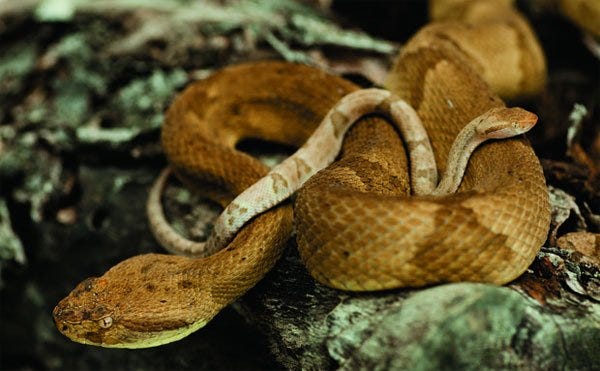
The Golden Lancehead Vipers are the stars of Snake Island. These snakes are famous for their powerful venom, five times stronger than their cousins on the mainland. They have adapted to the island’s environment, hunting birds that stop there during migration. The snakes’ yellowish-brown color helps them blend in with the leaves on the forest floor, making them hard to spot. This camouflage is perfect for catching prey and staying hidden from any threats.
Despite their deadly reputation, the Golden Lancehead Vipers play a crucial role on Snake Island. They help control the bird population and are important to the island’s ecosystem. Scientists are very interested in these snakes because their venom could be used to make new medicines. This makes the Golden Lancehead Vipers not just guardians of the island but also potential helpers for human health.
Medical Breakthroughs from Deadly Snakes
The venom of the Golden Lancehead Vipers might be dangerous, but it also holds the key to saving lives. Scientists have discovered that the venom can be used to make medicines for treating health problems like high blood pressure and blood clots. This is because the venom has special proteins that can affect how blood flows and how the heart works.
Researchers are working hard to understand how these proteins can be used to create new drugs that can help people with heart diseases and other health issues. The study of snake venom is a great example of how nature can provide solutions to human problems. By studying the venom of the Golden Lancehead Vipers, scientists hope to make breakthroughs in medicine. This shows that even the most dangerous creatures can positively impact our lives.
Conservation Challenges
Snake Island is facing conservation challenges that threaten its unique ecosystem. The island’s isolation is both a blessing and a curse. On one hand, it has allowed the Golden Lancehead Vipers to evolve without interference from humans or predators. On the other hand, changes in the environment, like fewer birds visiting the island, can have a big impact on the snakes. If there are fewer birds, the snakes have less food, which can lead to a decline in their population. This concerns scientists who want to ensure the snakes and the island’s ecosystem stay healthy.
Protecting Snake Island and its snakes is important for many reasons. The island is a special place for scientific research and a home to a species found nowhere else in the world. To keep it safe, it’s important to limit human activity on the island and to keep an eye on the health of the snake population. By caring for Snake Island, we can ensure it remains a mysterious and valuable part of nature.


