
The unmistakable signs you are participating in Fake Agile theater!
Help, I’m trapped in a swamp of agile mumbo jumbo…
It’s 8.25 AM. I’m 5 minutes early for the Daily Scrum. It’s my first day at this company. I’m invited to attend and observe one of the Daily Scrums as part of my onboarding.
The beginning
Meet Team Spaghetti: the Scrum(?) team that consists solely of software engineers. Just down the hall, I see another group huddling together. That is team Bug Busters, the QA team. In the room next door, I hear muffled laughter from the UX team: Perfect Pixels.

Henry, the Senior Lead Architect, shakes my hand. He is the only architect in the company and is a one-person team: ‘Cloud One Zero’. He joins the Daily Scrum of each team once a week.
The next person to walk over to me is the head of PMO, VP of Product, Director of Agile Transformation Program, and Chief Product Portfolio Owner, Kate, bearing titles worthy of a French renaissance king. Kate stops next to Jim, the Product Owner and ‘Senior’ Scrum Master of Team Spaghetti and Bug Busters.
Jim jokingly hums the Darth Vader Star Wars tune as Henry the architect enters. “Dahh Dah Dah Dum Da Dum Dum Da Dum”. Oh boy, I’m in for a treat.
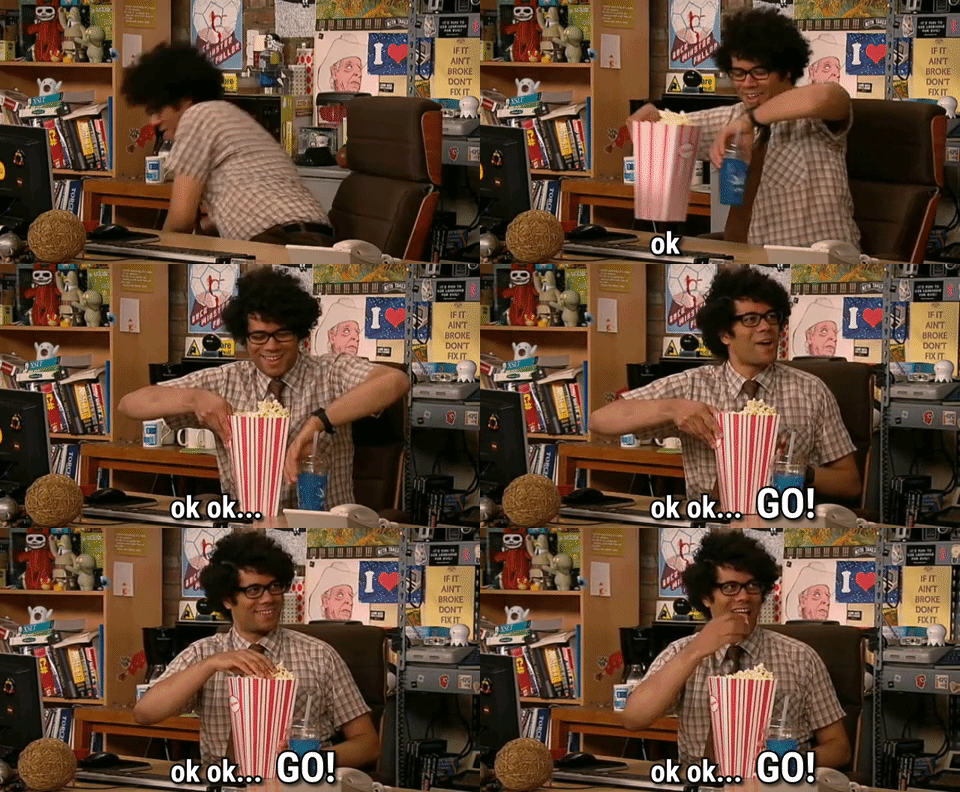
It’s 8.37 and waiting for the queue of engineers at the coffee machine to resolve. At 8.42 everyone stands in front of a big screen showing Jira. Jim leads us into the event. “We don’t have to wait for Brent. He is busy fixing critical bugs reported this morning.”
I observe how Jim stands in front of the screen, presenting the team’s Jira Sprint Backlog. Jim walks the board with the items he wants to be “done” today.
I observe how Jim calls the names of each engineer. They each give a brief status update on their tasks using the colors of the Italian flag: = Completed (green), On Track (white), or Delayed (red).
Jim cuts anyone short who uses ‘technical words’ or ‘excuses’. Jim wants to protect the 15-minute timebox and ensure no more productivity time is wasted on this status update.
Jim enlightens us with a speech, “we are far behind and still working on the features from our prior PI Planning. These are the tasks that absolutely must be completed today. The Bug Busters are doing great work on the Buglog. I selected these ones that urgently need fixing today”.
Hol’ up 👀 did Jim say ‘bug’ log?
I vowed to remain silent and just observe, for now. I couldn’t resist sneaking in one question at the end: “What’s your Sprint Goal?”. There was a brief yet awkward silence. Jim shrugs: “Well, we have had the same Sprint Goal for a few Sprints now, and that is to get back on track with the roadmap”.
I check the number of in-progress ‘stories’ on the Jira Sprint Backlog. It reads ‘55’… 55 for a team of 6 engineers.
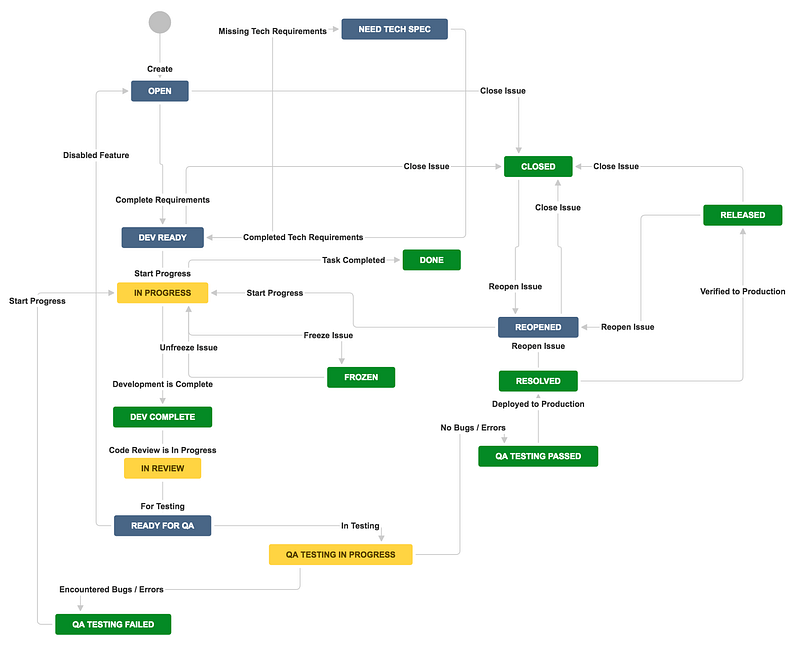
Right after the end of the Daily S… Status update, Henry (the architect) drills the team on the new guidelines for deployment to a pre-staging environment while Jim explains the changes he made to the Jira workflow.
Help! I’m trapped in an Agile Terminology Charade!
Kate, the PMO director, pulls me out of the room and asks me to walk with her. As we are walking, she explains, “See, it’s good that you joined. The team is demotivated, as you can see. They show absolutely no proactivity and don’t care about quality. They are unpredictable, always over-promise and under-deliver.”
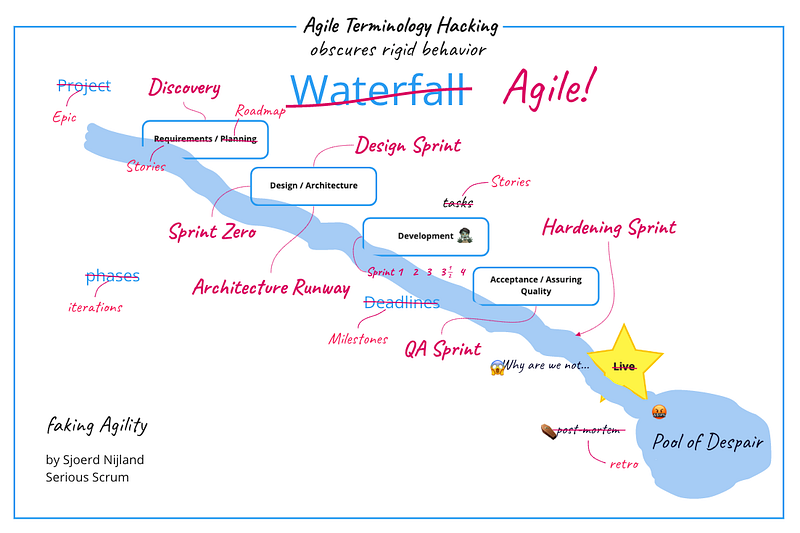
I ask Kate what her experience was with the Scrum Events. “All these unproductive Agile Ceremonies are not effective. We agreed to skip Retros the last few Sprints, so we had more production time to catch up. But I want you to facilitate a Post-Mortem meeting next week.”
😵 Who died?
“We need someone experienced like you to take charge and show them the right way.”
She walks over to a large Obeya room. “This is the Adrenaline Room. Here you can see the entire Roadmap of all the products in our portfolio. This is our year planning. I must deliver on schedule, or the board will pull the plug out of the Agile Transformation Project. That includes you too! We’re in a pressure-cooker situation”.
She shows me a massive Gantt chart, showing a list of projects or ‘epics’ and ‘features’, with milestones and different colors for each phase. It is titled “Agile Projects Roadmap”.
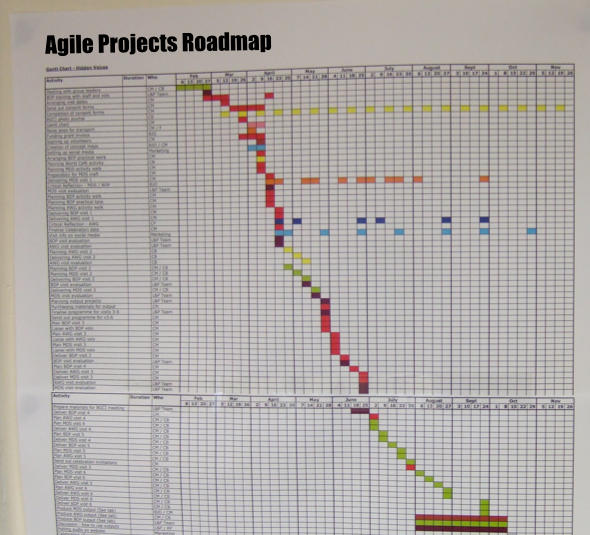
Kate places her finger on the chart. “This is Q3, where we are now; or at least, where we should have been right now…”. She shifts her finger to an earlier point in time. “See, this is where we actually are. We should be completing our QA by now and begin commissioning the features. There is almost nothing to test. What we can test just doesn’t work. Bugs! Bugs everywhere! The engineers just don’t care. The Bug Hunters are very upset with Team Spaghetti because they don’t check if their code works.”
Now she directs me to a red-white-green dashboard. “Look, everything with team Spaghetti is red. If I had an even redder marker, I would use it. We will show this tomorrow during the Increment Review. During this big event, we will run over these deadlines, or Iteration Goals, as we call them, and we will discuss the status of each team. Team Spaghetti will be caught with their pants down in front of the whole management team. Maybe that will wake them up.”
I’m checking if she is either joking or rhetorical. She is dead serious.

She continues, “We will then run through all the committed stories. Given the poor quality, I can already tell you that we won’t sign off on any of them. The staging environment is a mess and in no condition to show to our Management Team.”
“How so?”, I ask.
“I just don’t understand,” Kate shrugs, “We spent a month on an Architecture Runway and a Sprint Zero to solidify our pipeline and quality standards. We even did a Hardening Sprint last month, but that only got us further behind in schedule, and our Buglog is bigger than before.”
Ouch.
“The staging environment is a mess, but we are working on it. So we cannot demo anything in real-time. Believe me, we tried. Instead, we will just show more of the UX designs. MT is pleased with the UX designs. What do you think?”
Jeesh. What DO I think! “I gotta run…”. I say to her, checking my watch, resisting the urge to add ‘to another country’, “run through the Product Backlog with Jim.”
Jim is ready to meet me. He is in a merry mood. He is proud of his Backlogs (and his recent Scaled Agile certificates). He shows me how explicit and exhaustive all the requirements are. “Each item in the Jira Portfolio Backlog is called a ‘feature’, which belongs to a Project, or ‘Epic’ as we call it. This Backlog is specifically for team Spaghetti only and contains only the development tasks for these Features.”
Jim opens a Jira Feature. Attached to the Feature is an entire library of by-products. There are links to numerous confluence pages, excel sheets, system architecture diagrams, database models, UX designs, Miro boards, visual designs, and PowerPoint presentations. They did put a lot of the budget, energy, effort, and time into preparing all this.
“Look, we are very strict on the ‘Definitions of Ready’, we make sure that team Spaghetti only starts when all of these things are clear in the Feature, so there can be no more room for discussion. When all these items are checked off, only then do I add them to this Backlog. I then write all the Stories in Jira for each Feature and assign them to each engineer after they estimated Story Points. Team Spaghetti must now be using a time-tracker to encourage them to predictably meet their estimates.”
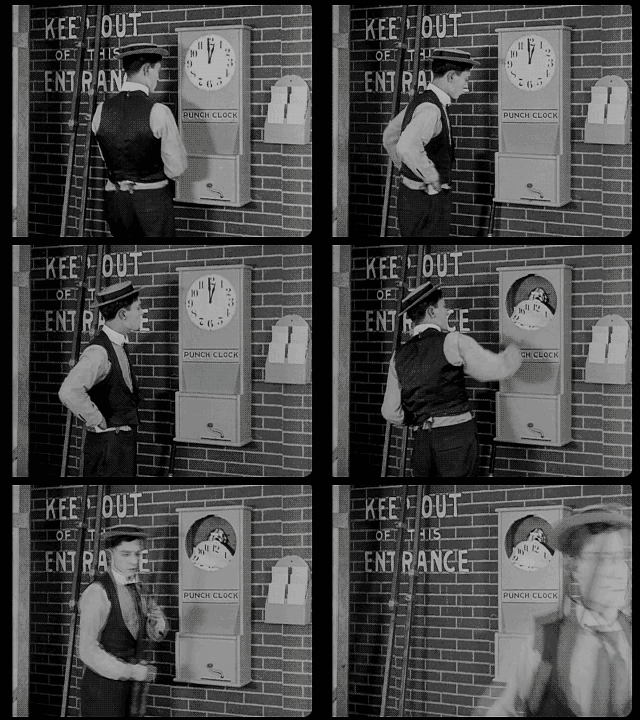
I inquire about the definition of Done. “Well, that’s easy,” Jim explains, “For team Spaghetti, it’s ‘done’ when the code is ready for testing on the staging environment! We now also have a pre-staging environment, enabling us to test and deploy multiple times a day.”
A Pre- staging environment?! 🤦♂️
“Henry configured a DevOps CI/CD pipeline, so we can deploy multiple times a day without worrying about breaking the actual staging environment! If the code works in pre-staging, we push it to the actual staging environment, so we don’t mess it up again like what happened during previous Reviews. Inspect and adapt, see!”.
I also asked Jim to show me the new Jira workflow that he imposed on the team this morning:
I sit back, rub my ears and allow myself a brief moment of mindfulness 🧘♂️ before asking Jim to return to the Product Backlog. “How many Stories in this Product Backlog are actual stories told by actual users that define valuable outcomes?”
This question draws Jim right out of his proud mood. He frowns and leans forward. “Well, you see, this is the ‘Development’ Backlog. This is not UX! If you want to know where to find those Stories, you can look them up by clicking here and opening up this Powerpoint.”
I give Jim a puzzled look.
Jim continues, “If you go down a few slides, yes… yeah, over there, now there you can find a link to the meeting notes and pictures from last year’s Discovery and Design Sprints. There you will see some stickies of the User Stories. See, we photographed them just in case. If you want to know more, talk to Perfect Pixels.”
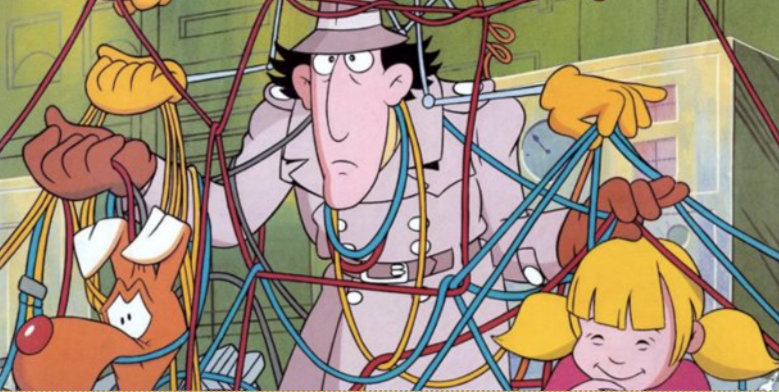
It’s only lunchtime and I’m daydreaming about going home to my wife and kids. “How was your first day, dear?”
How will I escape this swamp of agile mumbo jumbo?
As I continue daydreaming, I’m painting a picture in my mind about this company’s modus operandi:
Commentary
Richard Pascale once wrote: “People are more likely to act their way into a new way of thinking, than think their way into a new way of acting”. The evidence of this is all around us.
The sooner we have actual deliverables, the faster we can learn and optimize. When we release early we can inspect and adapt. By releasing early we can find better ways. That’s the true spirit. Finding better ways, by doing it, and helping others do it. How this is done will vary.
But… how can we guide others out of the fake theater and mumbo jumbo swamp?
And for that my friends, stay tuned and discover how this story progresses. 🍿
Thanks to Maarten Dalmijn, Erik de Bos, Kunal Shah, and Matt DiBerardino for their review and contributions to this story.
Join me on the Road to Mastery!
