
The Universe Within: Nisargadatta’s Teachings on Advaita Non-Duality
(The Universe Within and Advaita Non-Duality)
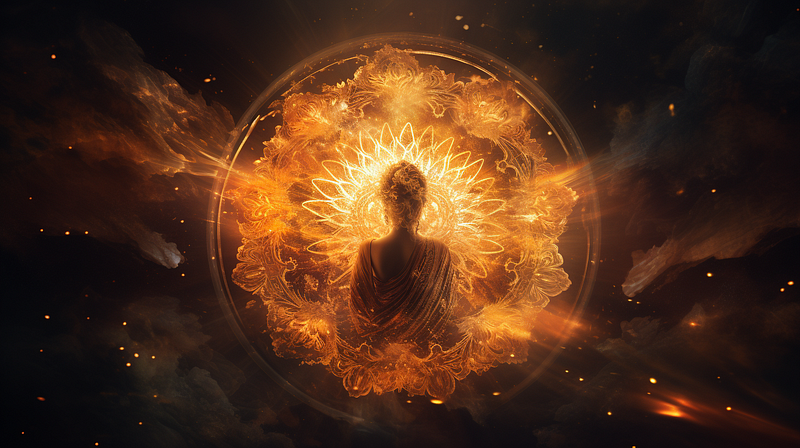
In the realm of ancient Indian philosophy, there’s a profound understanding of the self that transcends physical existence. This perception is rooted in the belief that the essence of an individual is neither born nor dies, transcending the cycles of birth and death. It suggests an existence that is beyond the confines of memory and forgetfulness, where every experience is seen as a part of a larger, interconnected reality.
This perspective views the universe as a vast network of life, where the demise of a physical form does not impact the whole. The concept that “the whole is real, the parts come and go,” captures the essence of this philosophy. It posits that individual existence is just a temporary state in the continuum of the universal consciousness. The reality, in this sense, is seen as a constant, unchangeable truth that underlies all change and transformation.
Central to this philosophy is the idea of witnessing the self. This involves developing an awareness that is detached yet observant, allowing individuals to transcend the limitations imposed by their minds. Such detachment is said to bring about a sense of control and empowerment. In this state of heightened awareness, one can experience the duality ceasing to exist, as the mind and the witnessed merge into one entity.
The journey to this state of consciousness, or ‘Sadhana’, is seen as an inward quest. It’s about self-discovery and not relying on external sources for self-realization. The guidance from a teacher or a guru is to turn the seeker’s gaze inward, to discover the truth that lies within. The fundamental teaching is that the same essence of life and wisdom exists in everyone, and one must draw from their inner well of knowledge.
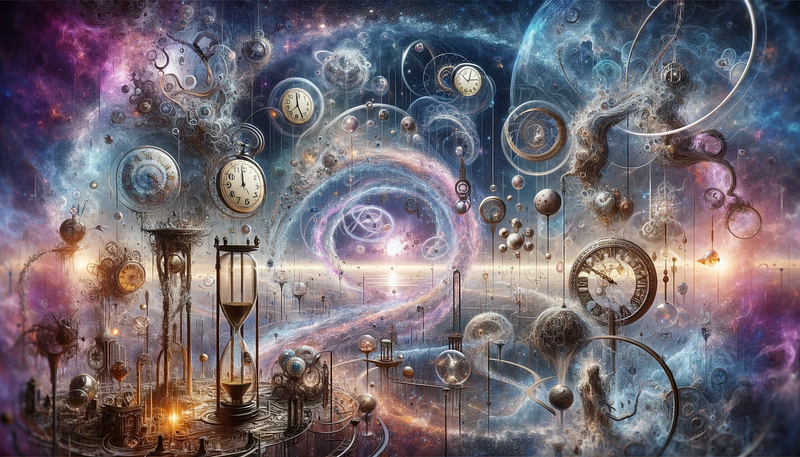
This philosophy also talks about the limitations of the mind and the misconceptions it can create. The mind is often seen as a barrier to realizing one’s true nature, and therefore, knowing the mind well is crucial. This doesn’t imply harnessing the mind for one’s ends but understanding its nature to prevent it from becoming an impediment. The emphasis is on not forming opinions or impressions, as they can overshadow the present reality and hinder the true experience of life.
Moreover, this perspective rejects the notion of proclaiming one’s greatness or uniqueness. True wisdom, or ‘Jnana’, is characterized by humility and normalcy, staying true to one’s real nature. Those who claim to be extraordinary or possess special powers are seen as lacking true realization.
Understanding life as a dream is another significant aspect of this philosophy. Treating everything as ephemeral and illusory helps in attaining liberation from the attachments and emotions that bind one to the physical world. By seeing the dreamlike quality of consciousness, one can find the light of true awareness and become free from the dream’s grasp.
Lastly, this worldview acknowledges the presence of calamities and challenges in life but advises detachment and acceptance. It encourages seeing the bigger picture where every event, however significant or trivial, is just a part of a larger cosmic play. In this understanding, life itself is an illusion, a ‘make-believe’, and what truly matters is the unchanging essence of being, consciousness, and bliss that one embodies.
In essence, the ancient Indian philosophy offers a pathway to understanding the true nature of existence, emphasizing the unity of the self with the universe. It’s a journey of self-awareness, leading to the realization of one’s true essence that is beyond the transient nature of the physical world.