
The United States of America is a Failed State
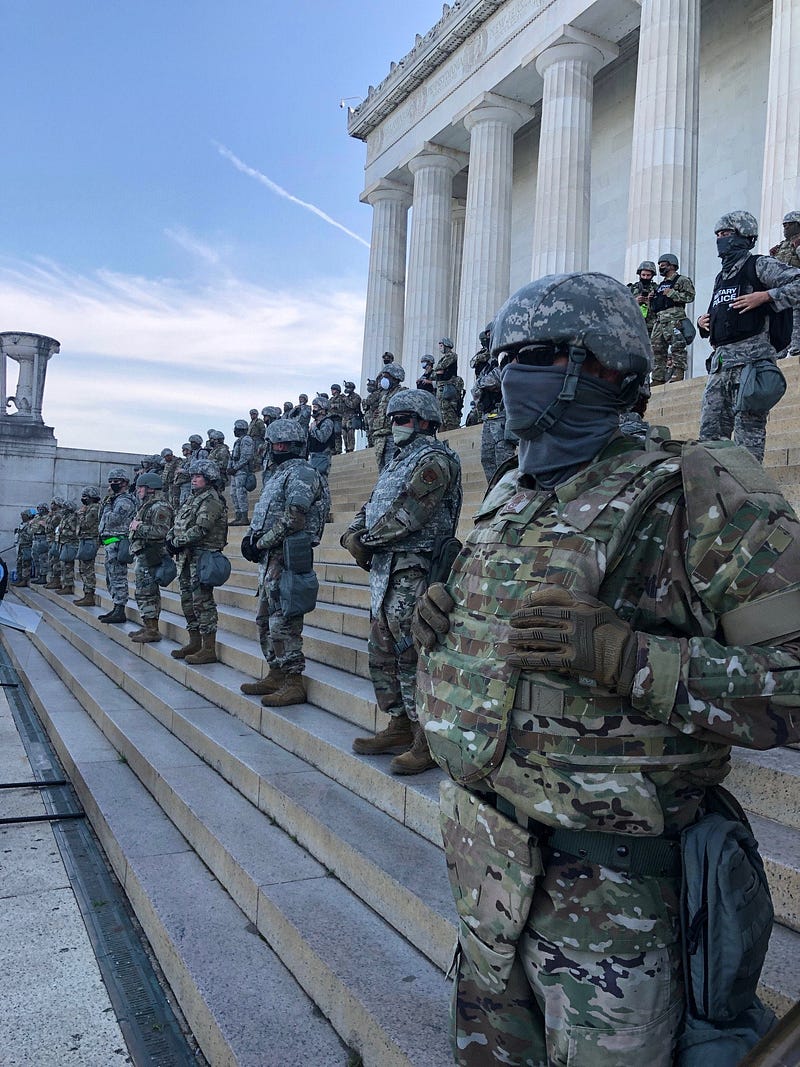
The United States of America, the so-called, ‘Land of the Free’. The idea of America being ‘great’ is nothing more than a facade, in reality, it is a dystopia. The country which proclaims to be better than the rest, in actuality, has a tremendous amount of catching up to do. We are fed this idea of the US via Hollywood and other forms of entertainment which construct this benevolent and exceptionalist image of America as the ‘Land of the Free’ where ‘Liberty’ and the ‘American Dream’ resides. The concept of the ‘American Dream’ is the myth of meritocracy. A myth which is used by the American ruling class to obscure the source of their wealth. This false reality of the ‘American Dream’ does nothing more than legitimise the accumulation of the obscene levels of wealth by the ruling elite, which then proclaims “you can also win, all you got to do is play the game”. But you will not win, the game is rigged. So as Malcolm X suggested, the ‘American Dream’ is rather the ‘American Nightmare’. A failed state which is doing all it can to retain its position and status, but is crumbling from within. Throughout this story, we will break the US down into sections. Covering topics such as healthcare, education, work, politics, and society, to better understand how America is a failed state and is not as great as it claims to be.
Healthcare
The idea of universal healthcare is one which has deeply troubled America, often regarded by conservatives and Trumpians as a socialist or communist plot. While in other regions of the world — which are developed — universal healthcare is provided for their citizens, such as the UK, Germany, Finland, France, Italy, and the list goes on. But, the US is wholly against it, well the government is, as according to a 2020 poll conducted by CBS News, the majority of the population want some form of universal healthcare (Backus, de Pinto, CBS News, 2020). The desire of the public for universal healthcare is not radical, as many politicians claim, but rather logical and something which an apparently developed nation should be able to ensure its citizenry. The ongoing Covid-19 pandemic has also unveiled the shambolic healthcare system in the US as those with health insurance, which is often tied to their job — totalling to almost half of the entire US population — are now at risk of losing their access to healthcare, during the midst of a pandemic (Glenza, The Guardian, 2020). A stupid system right?
Healthcare in the US continues to be a failed system, which needs rapid change to enable it to reach the level seen by the rest of the developed world. A study by The Common Wealth Fund has found that despite the United States spending far more on healthcare than other developed nations, the US population has poorer overall health than the rest. The study also reveals how, out of the countries examined (US, Australia, Norway, New Zealand, UK, Canada, the Netherlands, Germany, France, Sweden, and Switzerland) the US ranks last in the overall effectiveness and performance in healthcare, with the top overall systems being in the UK, the Netherlands, and Australia (The Common Wealth Fund, 2017).
The cataclysmic failure of healthcare in the US is affecting the overall health of the nation as a report by Reuters indicates, seeing life expectancy fall for the past three years. Something which Dr Steven Woolf, of Virginia Commonwealth University, referred to as “an emergent crisis” and that “it is a uniquely American problem since it is not seen in other countries.”. Woolf, later on, went to say, how “in other countries, there are more support systems for people who fall on hard times. In America, families are left to their own devices to try to get by.”(Carroll, Reuters Health, 2019). To add further, studies by the National Center for Health Statistics and the U.S. Mortality Database have shown how life expectancy has been decreasing since 2014, something unseen in other developed nations of the world (Carroll, Reuters Health, 2019).
Not only is the inadequate healthcare system in the US reducing life expectancy, but it's also charging grossly over-inflated prices for basic life-saving medicines and hospital fees. Take something simple, like insulin, the four most popular types of insulin have tripled in price over the past decade and have continued to rise (Rosenthal, JAMA Internal Medicine, 2019), seeing as many as one in four people with diabetes now skipping or skimping lifesaving doses (Herkert, Vijayakumar, Luo, et al, JAMMA Internal Medicine, 2019). Another study by the non-profit Health Care Cost Institute has revealed how a person with type 1 diabetes paid on average $5,705 annually, in 2016. An increase of roughly half from 2014, when the average annual cost was $2,864 per patient (Respaut, Terhune, Reuters, 2019). Now hospital fees have also been grotesquely inflated in price, for instance in the US just giving birth will cost you between $30,000 to $50,000. While in other countries, such as the UK, the average price is around $2,400, with more complicated procedures costing $3,400 (Bloom, CNBC, 2017).
Education
Yes, the US does have some of the best universities in the world, with the likes of Stanford, MIT, Harvard, Yale, Princeton, and more; all the while literacy rates in the country are falling. According to the National Center for Educational Statistics, a study states that 21% of adults in the US (around 43 million) fall into the category of illiterate/functionally illiterate. Compare this to other nations, such as Japan, UK, Canada, Republic of Korea (South Korea), and all Scandinavian countries, the US is lagging well behind. The falling of literacy rates throughout America will also contribute greatly to increasing levels of poverty and poor health, a damaging cycle which will eventually cripple the US from within (Rea, Libary Journal, 2020).
University debt is also a major factor paralysing many graduates and preventing others from even applying to University. Yet, nothing is done and in consecutive years the fees of universities have only increased, as is seen by a CNBC report which shows over the past ten years university fees have increased by 25% (Hess, CNBC, 2019). The student debt crisis has reached a staggering total in 2020 of about $1.56 trillion, leaving many graduates burdened with crushing debt before they have even established a career and made it into the workforce (Friedman, Forbes, 2020). While in comparison to other countries, which are developed, are able to provide free university education to their population. Take Sweden for instance, which does not charge tuition for private nor public universities; in Denmark, the government spends 0.06% of its GDP on subsidies for students; in Ireland, tuition fees are paid by the government and have been since 1995; in Norway, 1.3% of their annual GDP is spent on university subsidies. The result of making University available to more people, by removing the fiscal barrier, allows more people to attend, seeing that more than 50% of all young people from the countries mentioned will attend university (OECD, 2011). Therefore, having a higher educated population, creates a more effective workforce, bettering the entirety of society, it’s a method of helping your population develop, rather than to profit off them. All the while the US has commodified education, resulting in the US charging the most for higher education in the OECD, seeking to rinse the younger generation leaving them drowning in debt, rather than assisting them (OECD, 2011).
Not only is it higher education which is experiencing problems, but so are public schools which are being ravaged, with a lack of funding and neglect. The lack of support of the public schools in the US has caused teachers — who do not earn much — to buy school supplies without reimbursement. The New York Times reports that according to a federal Department of Education survey, 94% of public school teachers from 2014 to 2016 said it is mostly expected of them to purchase supplies, like pencils, paper, textbooks, etc, shelling out an average of $479 annually. There have also been reports of teachers going to crowdfunding websites in order to generate cash for supplies, projects, and extracurricular activities, truly putting the American school system to shame (Chokshi, The New York Times, 2018). Compare this to other high income earning nations, such as Finland for example, which according to the World Economic Forum provides one of the best educations systems in the world. Finland offers free meals to students, the majority of teachers hold masters degrees, even basic-ed teachers are expected too. Many of the teachers are also simultaneously pursuing even higher levels of education, meaning public schools in Finland often have PhD students teaching elementary and high school students, generating an environment based and focused on learning (Dickinson, World Economic Forum, 2019). Something which is not as apparent in the US, as they do not invest in their younger generations but rather leave them ill-equipped for the future.
Work
In many states throughout the world, workers are provided rights, simple ones at that, like paid sick leave and maternity leave, while in the US — as you've probably gathered —they are not. Employers are left to determine whether or not their staff are entitled to sick pay. The fact that the US does not guarantee its workers inalienable employee rights like paid sick leave and maternity leave only intensify the ever-growing job insecurity in the US. Which according to The New York Times, has caused workers to continue working even undergoing cancer treatment and other illnesses, out of fear of losing their job; they reported that in 2016 45% of Americans have taken no paid sick leave at all — that's 145,395,000 people (Moore, The New York Times, 2019). The US according to the World Policy Centre is also one of three high-income countries not to offer paid sick leave (the other two countries are South Korea and Palau) and leaves workers suffering from kidney failure or cancer, while continuing to work as bills have to be paid. With the lack of access to healthcare, poor quality of food and housing, the socio-economic system in the US is a vicious cycle which appears to only degrade its citizens rather than pick them up (Byrant, The Guardian, 2020).
Maternity leave is something which you'd imagine essential, but not in the US, which leaves this US policy on maternity leave one of the worst in the world; according to a 2019 report by Unicef, which analysed the family friendliness of the worlds richest states. The US ranked last and was the only country in the study to offer zero weeks leave, and the only state not to offer national paid leave (Chzhen, Gromada, Rees, Unicef, 2019). The report reveals that countries like Mexico (offers 12 weeks total), Chile (offers 30 weeks total), Sweden (offers 56 weeks total), are some of the best and Estonia are at the top of the list offering 84 weeks of full pay and a total of 166 weeks of leave (Bryant, The Guardian, 2020). Which put the US to great shame, and does not fit the narrative of them and their American way of life as being exceptional, rather a relatively oppressive and exploitative system, not caring for their populations well being but rather the desires of big business.
Other problems in the US also affect workers, such as low wages, and with as much as half of the American workforce in low wage paying jobs according to CBS News (Picchi, CBS News, 2019), this is a major problem which isn’t being addressed, and in many cases actually worsening; as is seen by wage growth falling below targets and showing signs of slowing in early 2019 (Nominal Wage Tracker, Economic Policy Institue). The evidence put forward by a 2019 study from the Economic Policy Institute has stated that the real value of the federal government's minimum wage has, in fact, dropped 17% since 2009, seeing an even larger drop of 31% since 1968. This means that workers earning the federal minimum wage today have $6,800 less than their counterparts did in 1968 (Cooper, Gould, Zipperer, Economic Policy Institue, 2019). All the while house prices have increased and rents have risen, it’s no wonder that in 2017, 39.7 million Americans lived in poverty (Center For Poverty Research, 2018).
The ongoing Covid-19 pandemic has also shown the weakness and lunacy of the American system, which does not warrant any praise. As the US does not offer any job security to its workers, the unemployment rate has skyrocketed, in April alone 20 million Americans became jobless (Rushe, Holpuch, The Guardian, 2020). The federal government's response was to offer the populace a measly $1200 package, which most people are expected to live off — clearly, the government does not understand how much rent, bills, debts, and food actually is. While in comparison to the US various high earning nations introduced a furloughing scheme and some like Spain even introduced a universal basic income. In the UK for instance, the government (which have done one right thing during the pandemic, which is this) introduced a scheme of paying 80% of employees pay up to £2,500, with a similar programme for those self-employed. The BBC now reports that over a quarter of the UK workforce is now supported by the scheme (BBC, 2020). Also, compare the rise of unemployment in the UK with the US, the UK only has a 0.01% (Office for National Statistics, 2020) increase in unemployment than the previous year; while in the US, the unemployment rate rose 4.4% (701,000 jobs lost) in March alone (Rushe, The Guardian, 2020).
Politics
Well, politics in the US, let's start with their President Donald John Trump; a neo-fascist who does not care about his citizenry and refers to white supremacist terrorists as ‘very fine people’ while referring to Black Lives Matter protestors — who are seeking to end the murderous regime implemented against them by a militarised and overfunded police force — as ‘thugs’ who are ‘looking for trouble’. The idea that Trump is a man of the people and wanting to ‘Make America Great Again’ is nothing more than a facade as he is utilizing his position as President to increase revenue for his businesses, using the weight of his presidency to secure new contracts. A prime example comes from journalist David Fahrenthold, who states that the Kuwaiti Embassy in Washington DC, once Trump was elected, moved their annual National Day party — which costs hundreds of thousands of dollars and is one of the highlights of the diplomatic year — to the Trump Hotel and have come back every year, since the start of Trump’s presidency (NPR, 2019). The reason for the Kuwaiti Embassy moving their National Day party to the Trump Hotel, according to the non-profit research group, the Center for Responsive Politics, is to win favours of the president and not only by donating to his reelection campaign but also holding galas and spending money at his resorts— the proceeds of which benefit him and his family directly (Center for Responsive Politics, 2020). This practice is not uncommon according to the Center for Responsive Politics, as Republican candidates, elected officials and leadership PACs, spent in 2018, $754,664 at Trumps properties, with the Republican Party also spending $1,620,553 at the president's properties, all in one year (Center for Responsive Politics, 2020). While four years earlier in 2014, when Trump was not president, Republican candidates, elected officials and leadership PACs, only spent $25,553; implying that money is being spent at his properties to win over his influence — Trump is directly profiting off his presidency (Center for Responsive Politics, 2020).
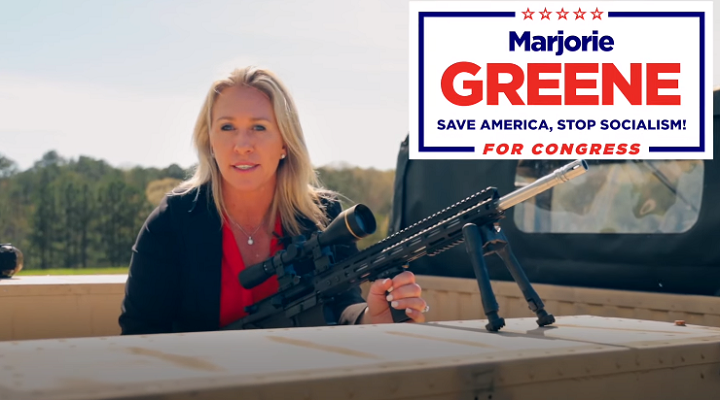
The xenophobic, Islamophobic, anti-Semitic, and racist rhetoric used by Trump and his allies, has given rise to a new kind of politician within the US. Politicians who seek to stoke divides amongst the diverse American population and those which are allied with the far-right, and more often than not use and latch onto Alt-right terminology and ideas. Let's look at Marjorie Greene, for example, a Republican primary candidate and close ally of Trump, who in her recent TV ad was wielding a gun (the notorious AR-15 rifle to be exact) in front of her home, claiming “Antifa terrorists have declared war on America,” and then carrying on to say “Rioting, looting and burning our cities, George Soros, Hollywood elites and Joe Biden’s staff are funding Antifa.”. Majorie Greene also often voices her support for the Alt-right conspiracy theory QAnon — that began on 4chan and purports that a group of left-wing paedophiles have taken over the US government — these Alt-right conspiracy theories which she peddles are a major part of her campaign and are at the core of her rise to political prominence (Karpal, Center for Responsive Politics, 2020). Marjorie Greene is one of the dozens of candidates who are running for federal office across the US, who have supported the Alt-right QAnon conspiracy theory (Kaplan, Media Matters, 2020). I believe it is fair to say that the US is, in fact, devolving in terms of politics, while the rest of the world is progressing, the apparent ‘leader of the free world’ is deep in a cesspool of Alt-right and white supremacist conspiracy theories which have engulfed its politics; only ceasing to prove my point of America being a dystopia.
Society
Society in the US is no better off than its politics in all honesty. For instance, public trust in the government is near historic lows according to Pew Research Center, with only 17% of Americans saying they can trust the government in Washington. This has occurred across all racial lines as well, seeing the diverse demographic of the US all express historically low levels of trust in government (Pew Research Center, 2020). This should be of no surprise, seeing that 60% of Americans would be unable to pay a $1,000 emergency, pushing the majority of Americans into debt; which has left most of the country living paycheck to paycheck (Nova, CNBC, 2019).
Not only is the majority of the country struggling economically and have virtually no trust in government, but the state has brutalised and committed violations and abuses to human rights over the treatment of recent protestors. According to The Hill, the international community and advocacy groups, such as The American Civil Liberties Union (ACLU), Humans Right Watch, and the United Nations (UN), have called the US out for numerous violations by the police force, with some critics even referring to the police breaking international law. The UN high commissioner for human rights, Michelle Bachelet, has even questioned the strength of the US justice system, suggesting that the system has far to often justified the killing of US citizens on questionable grounds and that the role of racial discrimination in these killings must be examined (Kelly, Beavers, The Hill, 2020).
Society in the US continues to be abused in various ways, take the prison population, the highest number in the world, a total of 2,121,600 people imprisoned, as of July 2019 (Statista, 2019). To put it into context, the US population is at around 330,901,704, about 4.25% of the total world population (Worldometers, 2020), but holds 22% of the overall prison population of the world; so how could this be the apparent land of the free? (Walmsley, International Centre for Prison Studies, 2013). With the ongoing protests and the spike in arrest rates, you will likely see the prison population rise, along with America's percentage in the global total.
The number of problems within US society could be listed over a mile long. In Flint, Michigan, citizens are still unable to access clean drinking water, due to cost-cutting measures (that's neoliberalism for you) and have led to most of the population experiencing health issues due to the consumption of lead riddled water. Other issues like the numerous school shootings which are more or less a monthly occurrence in the United States, with solutions being to provide children with bulletproof backpacks rather than introduce new laws on guns or even ban the sale of them entirely. With the easy access to military-grade weaponry, you see deranged lockdown protestors storming state buildings with AR-15’s demanding to open up and their right to get a haircut (these groups are not met with tear gas and rubber bullets, but Black Lives Matter protestors are?). Do all these examples not reveal to you that there are deep-rooted problems within the United States which need to be addressed and that America's apparent image is not exceptionalist but rather a neoliberal dystopia founded on white-supremacist beliefs and structures.


