
The Unforeseen Challenge
Critical Thinking & The Human Mind
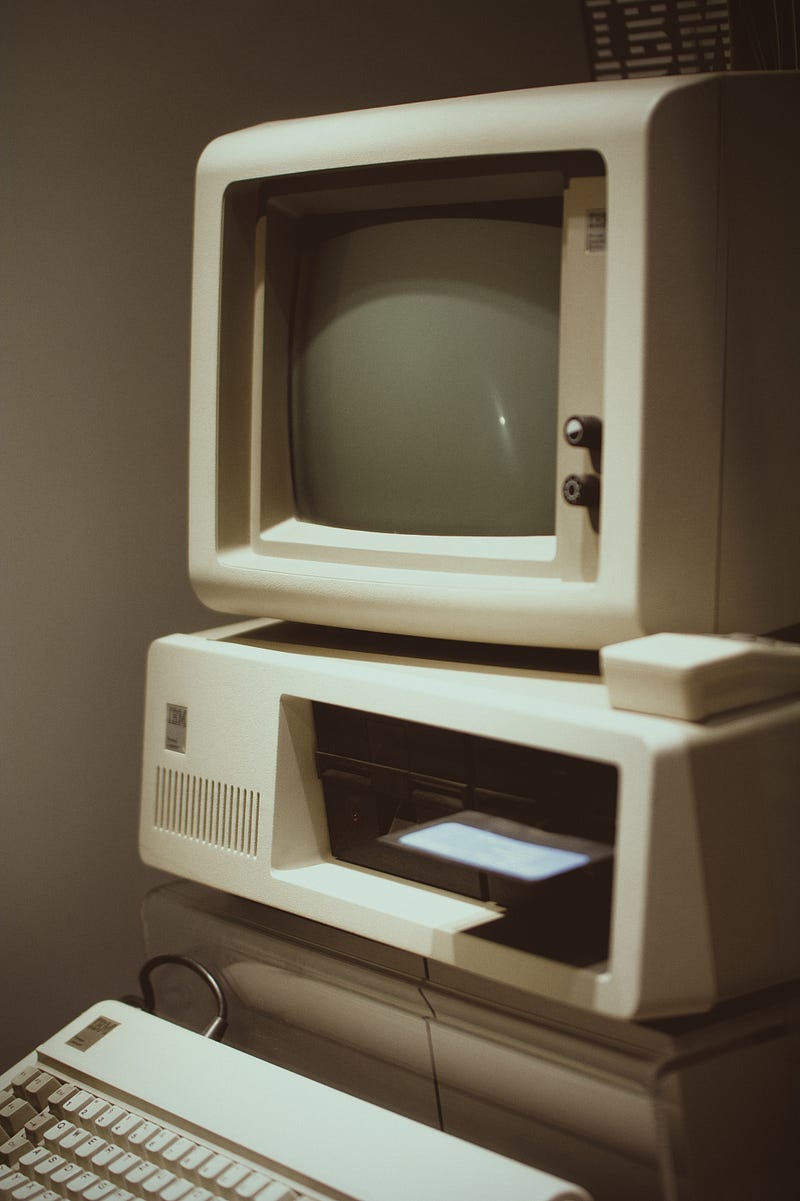
Critical Project
Imagine you and a team of your best workers have been assigned to complete an important project that is crucial to your company’s survival. This project will require your team to quickly compute large spreadsheets, write lengthy documents, edit videos, and research and review copious amounts of data. And with COVID-19, your team will have to work remotely, communicating and collaborating via the internet. The task is highly complex and it will be difficult to complete the project before the impending deadline. Still, the project is so critical that failure is not an option.
The day before the project kicks off, your team receives a shipment of equipment that must be used to complete the project. You open the box, full of excitement, your mind racing with thoughts about how you will set up your workspace. As you start pulling out the equipment, however, you notice something very peculiar. The computer equipment is twenty-five years old, with bulky, monochrome monitors and a black and white dot matrix printer. There are Windows 95 floppy disks and other outdated programs full of glitches. You find out your internet will be provided through a dial-up service using a Netscape browser.
Now, you have two difficult problems to solve, the first is completing the project, and the second is trying to figure out how to do that while using old technology.
Old Technology
This is the challenge we all face daily. Everyday, we use our minds to analyze, evaluate, make decisions, and take actions that will move us along our goals in hopes of completing important, personal projects. Like the team above, we are trying to accomplish these difficult tasks with outdated, slow, and glitchy equipment we loosely refer to as the human mind. And just like the team above, we end up having two different challenges to overcome, the first being the project we are trying to complete, and the second, conquering the obstacles our own minds produce. Some people go through their entire life without ever realizing this predicament that critical thinking both illuminates and seeks to remedy. If you have never been taught critical thinking skills, then you might be oblivious to the fact that there is a problem that needs to be remedied before you can efficiently and effectively accomplish your goals.
Human beings evolved slowly over the last two-hundred thousand years to survive and thrive in a world very different from the one we live in today.
We are operating in an information overloaded, fast-paced, modern world with old hardware, painfully slow processing speeds, and software that has not been updated to meet the requirements of our new environment.
Danger May Appear Close
For example, we developed a keen sympathetic nervous system response to stress which causes us to fight or flee during life and death situations. This fight or flight response was crucial to our survival as it helped us overcome danger that threatened our existence. For most modern cultures, however, we no longer face regular physical threats to our survival.
Even though we no longer face regular, physical threats, modern living still offers plenty of challenging experiences that our old brains can erroneously perceive as actual physical danger.
Losing status at work or getting laid off can trigger a stress response that makes us feel like we are fighting for our lives, even though no real physical threats exist. In fact, most things you ruminate about that make you feel anxious are treated as real threats by your mind, even if they are only visualized or imagined. When the mind feels threatened, then it will activate harsh physiological responses in our body, just like early humans experienced when having to face an impending attack from a saber-toothed tiger. Maybe it is an uncomfortable conversation with a loved one or maybe someone cut you off in traffic. Even though it is completely irrational, you’re brain is going to trigger some level of a fight or flight response.
These responses put stress on the body and were meant for helping us face occasional, short-term threats. But our minds are free to ruminate on negative thoughts and emotions for pretty much every waking moment. This can cause prolonged stress on the body that can run us right into the ground. It is ironic that the very mechanisms that evolved to keep us alive are the very same mechanisms that are starting to kill us through stress-related illnesses and diseases. This is just one example of how our old brains, our old hardware, have trouble functioning in the modern world.
Critical thinking has identified several sensorial limitations, cognitive biases, and logical fallacies that influence every decision we make.
The Need For Critical Thinking
Critical thinking is a discipline that teaches us how our instincts and assumptions sometimes work against us. Once we become aware of these natural limitations, then we can start to recognize patterns and implement tools that help us to mitigate or manage these deficiencies. These natural deficiencies include limitations in how much of the world we can physically perceive, how are minds process data that is too vast for our cognitive ability, and how our minds developed a type of software that has front end (conscious mind) and back end (subconscious mind) programs that were written with priorities and goals that often contradict the very things many modern humans would like to achieve.
I encourage you to take up Critical Thinking to learn about these limitations and how to implement thinking tools and techniques which can help you to better manage a mind that often works against you. To not do so is to go through life at a disadvantage, unintentionally hobbling your own potential. Once you address the challenges the human mind presents, then you can more easily move forward towards your goals and objectives.