
The Unexpected Delight of “Dead To Me” Season Two
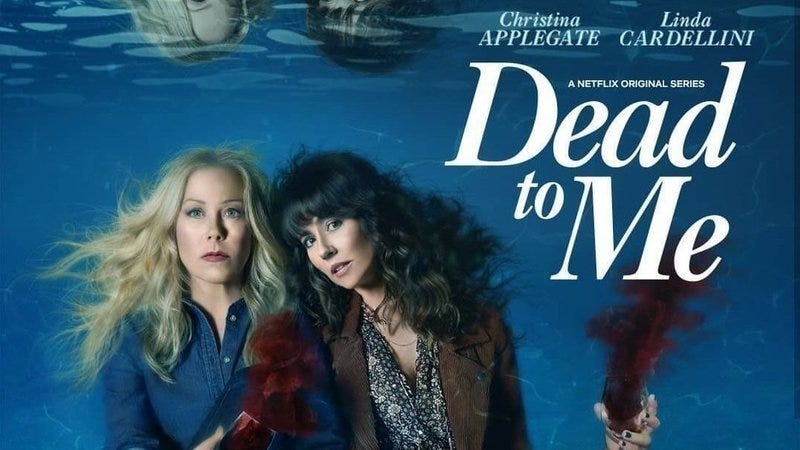
The second season of the Christina Applegate-led Netflix tragicomedy dropped two weeks ago and — much to my surprise — marked a notable uptick in quality from its first.
[Author’s note: This article contains spoilers about the first and second seasons of Netflix’ Dead to Me. If you have not watched all 20 episodes currently available and plan to, I highly recommend you bookmark this article to be read once you have finished them.]
The Origin of Dead to Me
When I first saw the trailer for Dead to Me in the Spring of 2019, my curiosity was piqued. I could instantly tell that it was up my alley given its obvious inclusion of numerous qualities that I love in films and series — domestic drama, black comedy, complicated female relationships, and an ensemble led by underrated and underutilized female actors. I devoured the first 10 episodes shortly after they premiered on Netflix on May 3, 2019, but found myself somewhat underwhelmed.
The “black comedy,” which is really better described as a half-hour drama with a vein of dark humor running through it, was created by comedian Liz Feldman and executive produced by the powerhouse combination of big screen superstar Will Ferrell (Anchorman, Elf) and Oscar-winning filmmaker Adam McKay (The Big Short, Vice). The series focuses on recently widowed real estate agent Jen Harding (Christina Applegate) and her friendship with the free-spirited Judy Hale (Linda Cardellini). They become fast friends after meeting at a grief support group in the pilot, but it is revealed at the end of the pilot that Judy was driving the car that killed Jen’s husband and she attended the support group specifically to befriend Jen out of guilt. What follows is a season of revelations involving extramarital affairs, emotional meltdowns, infertility, cancer, money laundering, lies, and (more) murder.
Sounds hilarious, right?
Well, maybe not. But, the first season certainly did have moments of humor. These mostly come from the committed performance of Applegate who is willing to be wholly unlikeable and explore Jen’s darkest elements. After a long series of comedies that were nowhere near worthy of her level of talent (e.g., Married … with Children, Jesse, Samantha Who), Applegate finally got a role that showcases her superb acting talent. As Judy, the chronically underrated Linda Cardellini (Freaks and Geeks, ER, Green Book) delivers a unique creation with her quirky performance as an insecure artist whose current moral crisis infiltrates every aspect of her being.
The first several episodes each end with a jaw-dropping cliffhanger that are deliciously satisfying and end otherwise mixed quality episodes on a high note. As the season progresses and the show runners dig deeper into the characters the show became less gimmicky, but the plot also gets a bit more unwieldy. The soapy elements, suburban drama, and the tendency to find mordant humor in tragedy were reminiscent of Desperate Housewives and Weeds but it never as captivating or singular a creation as either of those shows were (at least in their early years). Furthermore, the aesthetic was basically a slightly brighter Big Little Lies and the show’s most unique asset — the character of Jen — at times played a bit Fleabag light. This is all to say that although it was consistently entertaining, it all felt overly familiar.
The first season’s dramatic elements worked decidedly better than its comic ones and many of the scripts were disappointingly uneven and failed to reach their potential. Thankfully, the ensemble was more than up to the task of overcoming uneven material. In addition to Applegate and Cardellini’s superb performances, recurring characters played by television legend Edward Asner (as a crotchety resident of the assisted living facility that Judy works at) and the highly underutilized Valerie Mahaffey (as Jen’s immensely narcissistic mother-in-law) were award-worthy highlights. As Jen’s sons, Sam McCarthy and Luke Roessler were excellently cast but felt a bit like retreads of other child characters on similar shows. The two weak links of the ensemble were undoubtedly James Marsden, who was never as irresistible or intimidating as the script needed him to be and Max Jenkins, who existed in some awkward universe between painfully stereotypical sassy gay best friend and moral center for the series as Jen’s real estate partner.
The first season of Dead to Me was undeniably a highly entertaining and immensely binge-able show that was at times truly captivating. For me, however, it was never scintillating enough drama, sharp enough comedy, or fresh enough in concept or execution to truly set it apart as something uniquely great.
But this conclusion did make me wonder if maybe my standards have gotten a bit too high in the era of Peak TV. Maybe a well-acted show chocked full of surprise twists is enough, even if elements were uneven and the whole thing felt a bit familiar. I was certainly on board for a second season, but wasn’t waiting on the edge of my seat.
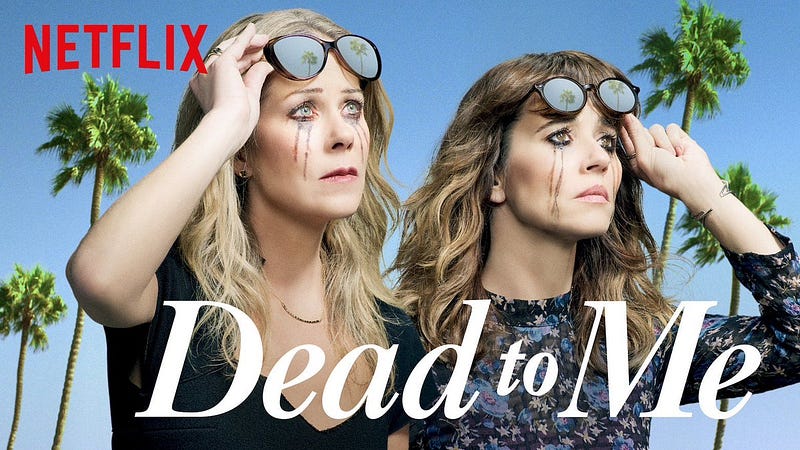
Dead to Me Season Two Review
The timing of the release of the second season of Dead to Me was quite fortuitous. It premiered about two weeks ago on May 8, just as quarantine fatigue was hitting fever pitch in our COVID-plagued country. As other shows wrapped their runs prematurely or had their premieres delayed due to COVID-related production disruption, Dead to Me was ready to deliver ten binge-worthy episodes of a highly entertaining new season.
The second season of Dead to Me doesn’t stray too far from the first in terms of plots, aesthetic, tone, or ensemble. It still has its twisty, cliff-hanger-driven plots; sun-drenched Southern California aesthetic (the show takes place in Laguna Beach); tragicomic tone; and essentially the identical ensemble. But, unexpectedly (to me at least) it all just works much better in its second season. The dramatic moments are more raw and affecting, the eruptions of comedy are sharper and funnier, the twists are built up to and spaced out more effectively, and the scripts are much tighter and more consistent. The result is a season that feels more cohesive and higher quality across the board than the first.
It should be noted that Dead to Me is not the type of show that typically ages well. Shows like this tend to require frequent reboots in the forms of new mysteries and new characters to survive. However, Dead to Me doubles down on nearly every aspect of its first season successfully. All of the crimes and complex character dynamics from the first season remain unresolved and they get messier and higher stakes with each passing episode, yet it never feels muddled or meandering from a narrative standpoint.
The main plot arc here is that Jen enlists Judy’s help in covering up her murder of Judy’s ex-fiancee Steve in the Season One finale. Everyone is confused by the pair’s reconciliation following their explosive falling out, including them. Over the course of the season, Jen makes frantic attempts to suppress her own guilt and be a competent mother to her children, while Judy starts a romantic relationship with a chef named Michelle (played by Natalie Morales). Meanwhile, Jen’s older son continues to rebel, we learn a great deal more about Laguna Beach Police Detective Perez (Diana-Maria Riva, who is superb), and Steve’s semi-identical twin brother (also played by Marsden) arrives to complicate things. We also get two fantastic guest appearances by industry veterans Frances Conroy (the Six Feet Under and American Horror Story alum plays Steve and Ben’s grieving mother) and Katey Sagal (the Married … with Children and Sons of Anarchy star is superb as Judy’s estranged mother).
Somehow, even with the increasingly dense plotting and ludicrous twists (come on, the dead guy’s never-before-mentioned twin brother shows up in the final moment of the premiere!?), the season works terrifically. The show-runners seem fully in control of the narrative with a clearly cohesive vision. Remarkably, nearly every subplot that seems like a detour ends up coming back in a meaningful way, underscoring the increasingly tight plotting. In the second season, everyone involved also seems more fully aware of the ridiculousness of the premise and the contrived nature of the twists. This increased self-awareness is a boon to the show. There’s a great moment in the season that emphasizes this. After another absurd twist is revealed, Judy says, “Crazier things have happened.” Jen replies with her deadpan sarcasm, saying, “Literally, they have not.”
As much improved as the scripting is this season, the show’s main asset remains its lead characters and the lead actresses who portray them. Much of the critical attention for Season Two has gone to Cardellini, who in each episode mines new depths of her uniquely quirky character. But as terrific and deserving of this praise as she most certainly is, the show still belongs to Applegate in my view. Her absolutely savage line readings, moments of quiet heartbreak, and vanity-free commitment to the role is astounding and finally gives the Emmy winner (for her guest appearance on Friends) and Tony nominee (for her work in the musical Sweet Charity) a character worthy of her immense talents.
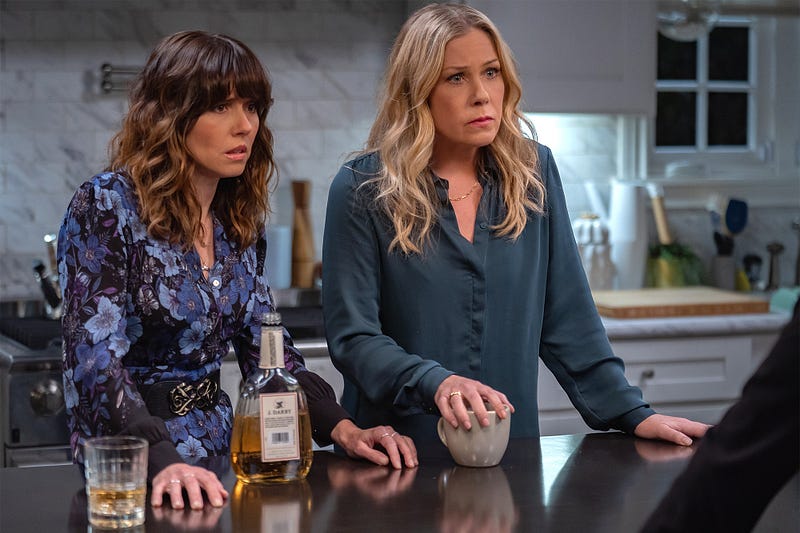
I am apparently not alone in this assessment that the second season was a notable step up from the first. The first season scored an 86% approval rating on Rotten Tomatoes and an average score of 67/100 from Metacritic, whereas the second season scored a 97% approval rating on Rotten Tomatoes and an average score of 72/100 from Metacritic. The second season also appears well-poised to far exceed the first with regard to Emmy nominations. The show scored a single major nomination last year — Outstanding Lead Actress in a Comedy Series for Applegate. This year, with its uptick in quality and the competition lessened due to the absence of last year’s heavyweights Fleabag, Barry, and Veep, it looks likely to pick up major nominations in a number of categories, including Outstanding Comedy Series and an additional Lead Actress nomination for Cardellini.
The Future of Dead to Me
Given the critical reaction to the second season, the third season of Dead to Me will most certainly be announced soon and go into production when COVID-19 lessens its grip on the country and Hollywood opens up for business again. However, as good as the second season is and as eager as I am to get more, I hope that the show-runners and Netflix execs know that less is likely to be more when it comes to Dead to Me. The weight and complexity of the multiple mysteries will become too unwieldy very quickly and by its very design the show doesn’t have the narrative universe required for repeated refreshers and expansions (a la Desperate Housewives). But for now, I will just revel in the fact that a solidly entertaining show managed to defy the odds by unexpectedly becoming a great one in its second season and that the new episodes fell into our laps when we desperately needed a diversion.
Follow the author of this article on Medium and Twitter.
Check out recent articles by this author on the art of making a good series finale and the series finales of Schitt’s Creek, Modern Family, Will & Grace, and Homeland.


