
The Uncanny Valley of Words
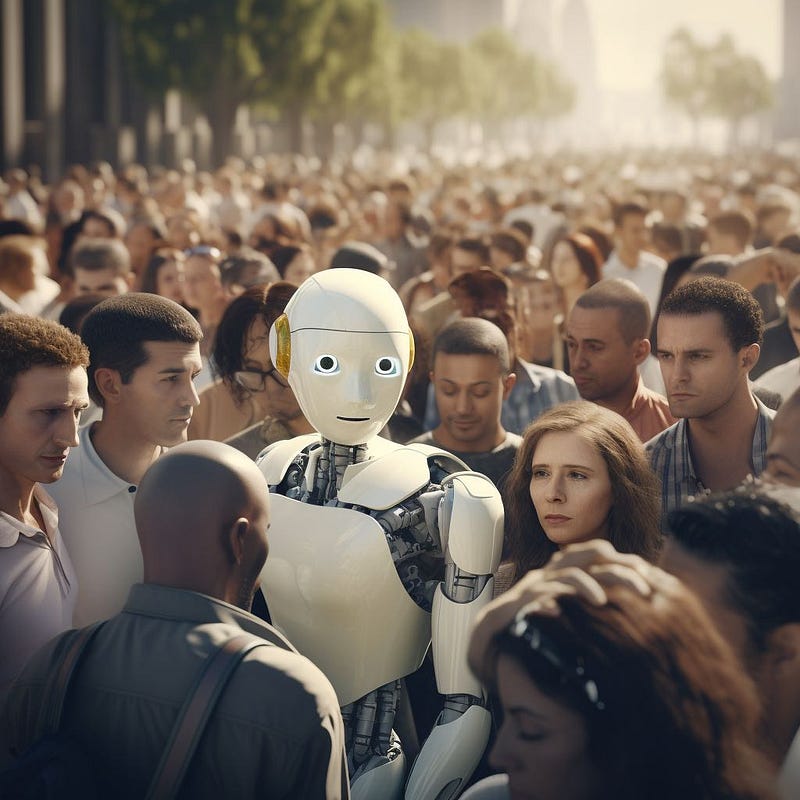
With the proliferation of AI in the modern Zeitgeist, I think it’s due time that we have a discussion about the use of it in the literary world. I get an uneasy feeling when I am scrolling through Medium and I find an article that has the title that reflects the subject I want to read about only to click on it and it follows the exact same formula every AI generated article has.
It always goes something like this:
In today’s digital age, Medium has emerged as a beacon for writers, offering a platform where voices, both seasoned and new, can share their stories, insights, and expertise. But with millions of articles published every month, how does one not only rise above the noise but also create a lasting impact and achieve success? Whether you’re just starting out or looking to refine your approach, this blog post will delve into the intricacies of Medium, offering actionable strategies and insider tips to help you navigate the platform effectively, grow your readership, and establish yourself as a standout writer. Join us as we unravel the secrets to making it big on Medium!
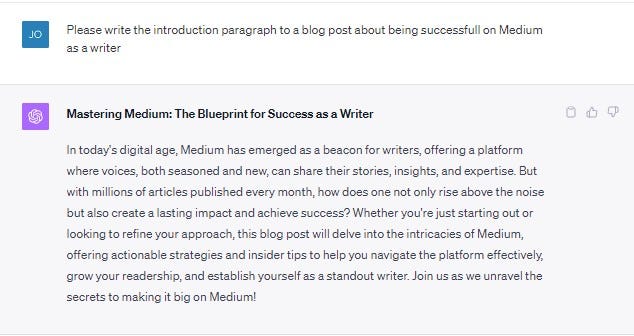
Notice the soulless, cookie cutter nonsense? The technically perfect formula of words that lack any human edge?
Where’s the grit or pizzazz? It’s not there. Here is where some ChatGPT evangelists will say I am just not prompting it enough.
Ironically when I thought of the title of this article I searched Medium to see if anyone had written about how the Uncanny Valley applies to the modern AI generated content. The first thing I found was specifically talking about the subject but lo and behold was clearly AI generated generic crap.
Let us back up and talk a little about the term I used in the title. I am sure most of you are aware of what it means but for the few that aren’t, the Uncanny Valley is a term coined by Masahiro Mori in the 1970’s.
The core idea behind it is that as robots get more and more life-like we begin to feel emotions similar to human-to-human interactions towards them to a point. Past that point we feel a sense of revulsion.
There are a number of hypotheses for why they create such an uneasy feeling in us. The most common are mate selection, pathogen avoidance, and a distortion of perceptual cues.
Whatever the reason, it’s unsettling to see the emergence of AI driven avatars online promising to be our best friends for $9 a month.
That’s not what this story is about. I want to talk about the use of ChatGPT in modern internet content creation and the homogenization of online content for the worse.
Let me start by saying that I am not a luddite that thinks ChatGPT is the worst thing that has ever happened to humanity.
I think open source AI models and large individual data sets that are not black boxes could revolutionize humanity and its access to information.
This is the first time in human history that everyone with access to the internet can consult with a brilliant “mind” that is well versed in almost every subject on earth.
I have learned so much from ChatGPT. I ask it all sorts of questions. It’s been my doctor, therapist, lawyer, and it’s also a pretty damn good chef.
That said, I have caught it in a number of hallucinations. This brings me to an interesting thought. I was always told that one of the marks of true intelligence is knowing when you are wrong.
ChatGPT never admits when it’s wrong, it speaks confidently about things even when it’s confidently incorrect. It always apologizes when you tell it it’s wrong, but it never says, “I am unable to answer that question without making something up.”
I want to talk about some of the ways you can spot an AI written article and then I want to give you some productive ways to leverage AI.
4 Signs You are Reading AI Content
Key words and phrases
AI likes to use some words and phrases that you will come to notice if you spend any amount of time on the internet reading. “In Today’s day and age.” “Now more than Ever.” “In this article we will delve” All of these trigger my Uncanny Valley response.
They get the Spidey sense tingling. Usually, once you see one, you do not have to read long for others to appear. These are clear signs that you are not reading something that someone put time into. You are reading the result of a prompt that you can generate for yourself for free.
Lack of Personality
My writing is crap, in a way that I am ok with. It’s imperfect. No AI would write like I do. I write like that intentionally. In a world of mass-produced AI word jumbles, a little imperfection goes a long way.
It’s not hard to spot AI articles because they either have zero personality or personal experiences or they have forced ones that seem off and contrived.
Perfect Grammar
This one is similar to the one above. AI will not be mixing up the “there’s” anytime soon. They will not accidentally misspell a word. The writing will be oddly perfect without any real depth or soul.
This is one of the ways I spot AI. If I am a few sentences in and it is the same style and pattern as all other AI articles and there isn’t a single mistake I begin to realize that it’s not the work of a human but AI.
No Strong Opinions
Maybe one day someone will take the guardrails off an LM and train it to speak without being a bland combination of perfectly formulated sentences that don’t actually say anything.
No AI will say your idea is shit and that it thinks you are a fucking idiot. That is a unique ability of humans. I often think that ChatGPT is thinking that when I ask it to proofread my writing and make suggestions but it is always polite and tepid.
These are 4 different telltale signs that AI wrote the piece that you are reading.
Can you spot AI written content?
3 Ways a Writer can Leverage AI
Brainstormer
AI is great at generating tons of ideas. Some good, some great, some crap. The beauty is you can just ask it to make a list of ideas in a specific subject and then cherry-pick the ones that you are interested in elaborating on.
Grammar and Spell Check
I write all of my articles in Google Docs and then I copy them and paste them into an ongoing conversation that I have with ChatGPT. The prompt is “do not rewrite my content, please review for all spelling and grammar mistakes and list below.” I then review the list to confirm they are mundane and are not stripping my writing of particular human nuances and I will then prompt ChatGPT to implement the changes or omit ones that I do not want to change.
Research Assistant
I use ChatGPT with the plugins to scour the internet for source material. I also use it to fact-check claims I make and then back them up with sources. I’ve read countless books and have so much random information rolling around in my head. Sometimes I will make a claim because I read it somewhere and I want to confirm that I am not full of shit. I can ask ChatGPT to verify that claim and it will.
Do you use AI in a novel way in your workflow? I would love to learn about it.
Closing Thought Experiment
I will wrap this up with a little writing experiment that I attempted with ChatGPT when I first discovered it. If you are familiar with these two works of literature this will be much easier to follow. If not I will do my best to explain.
In the Sci-fi novel Hyperion, there is a tribe of people that crash land hundreds of years on the planet of Hyperion and are infected with a thing called the Cruciform. What this infection does is grant them immortality.
They still die, but when they do they regenerate to a younger version of themselves and little by little each time they regenerate they lose a little bit of themselves.
By the time they are discovered hundreds of years after they landed on the planet they are sexless little hobbit-like creatures that have the cognitive capacity of a person who is severely mentally disabled.
Alright if you are still reading great.
Now the other piece of literature that I need to mention is the book Metamorphosis by Kafka. This is one of my favorite pieces of literature ever written.
Kafka is brilliant because his writing in that book devolves. You as the reader are taken on a journey as the protagonist of the story wakes up as a bug one day and then over the course of his short life devolves.
The first person narrative progressively degenerates and you are left with this unsettling feeling as the protagonist’s thoughts become simpler and less sophisticated.
Now that we have discussed these two pieces of literature, I want to talk about the writing exercise that I gave ChatGPT that it failed miserably.
The first thing I did was ask ChatGPT if it was familiar with the book Hyperion and the three score and ten? It promptly said yes. I then asked it if it was familiar with Metamorphosis and the subtle way Kafka’s writing reflects the devolution of thought the protagonist experiences. It said it was.
I then asked it to write a first person narrative in the style of Kafka’s Metamorphosis but through the experience of an individual from the three score and ten.
It failed miserably. It told me it was familiar with the nuance, as well as the plot of Hyperion but it failed to even remotely capture the targeted short story.
It was a tall order. I couldn’t do it, but I am not a brilliant AI trained on Billions of words and parameters.
That’s when I realized that humans will continue to reign in the realm of words and it will be a long time coming before AI can generate works of art like Kafka and Simmons.
Thank you for reading, I hope this helps you navigate the sea of AI written content we will inevitably be swimming in for the next few years.
