
Unraveling a Presidential Mystery
The Unbelievable Truth About JFK’s Missing Brain
Delving into the Shadows of History to Uncover the Fate of a Crucial Piece of Evidence
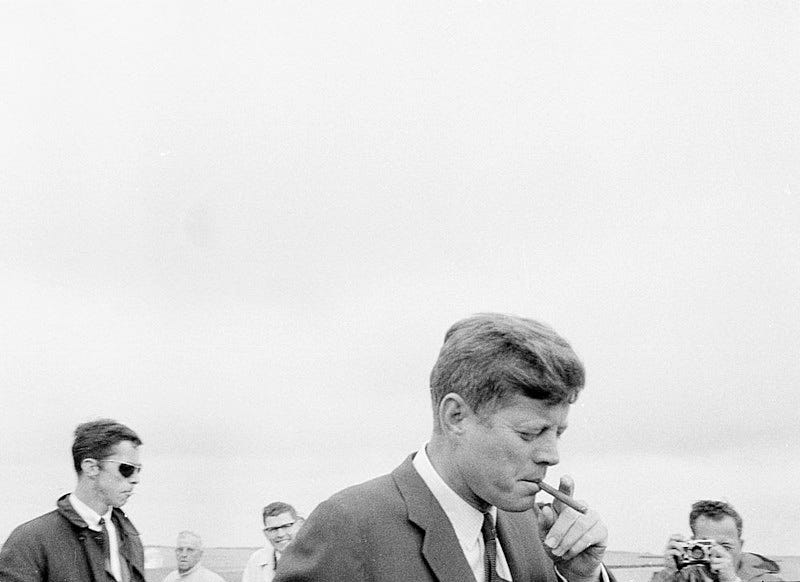
On November 22, 1963, President John F. Kennedy Sr. (D-Massachusetts) was assassinated in Dallas, Texas, an event that shook the world.
While numerous investigations, including the Warren Commission, attempted to unravel the circumstances surrounding his death, a peculiar detail often goes unnoticed: the disappearance of Kennedy’s brain following the autopsy.
This brain, which could have provided invaluable forensic evidence, mysteriously vanished from the National Archives, sparking a slew of questions and theories.
The Assassination and Autopsy
Kennedy’s assassination was followed by an immediate and chaotic response. His body was rushed to Bethesda Naval Hospital for an autopsy, where his brain was removed and preserved for further examination.
This procedure was standard for gunshot victims, particularly given the nature of Kennedy’s head wounds. The brain was initially stored at the hospital, then later transferred to the National Archives for safekeeping, along with other autopsy materials.
However, in 1966, during a routine inventory, officials discovered that the brain, along with several other autopsy specimens and photographs, had disappeared.
The news stunned both the public and officials, leading to a flurry of speculation and conspiracy theories. The Warren Commission, which had concluded that Lee Harvey Oswald acted alone in assassinating Kennedy, did not have access to the brain, raising doubts about the thoroughness and accuracy of its findings.
Theories and Speculations
The enigmatic disappearance of JFK’s brain has spawned a myriad of theories, each more intriguing than the last.
A prominent theory suggests that the brain was deliberately stolen to suppress evidence that could challenge the official account of Kennedy’s assassination. Proponents of this view argue that the brain could have offered clues about the trajectory and number of bullets, potentially supporting or debunking conspiracy theories that posit multiple shooters.
Another disturbing speculation is that it was taken by an individual within the government as a grotesque keepsake or to forestall further examinations. This line of thought leans on the idea that additional analysis might divulge undisclosed aspects of Kennedy’s health or provide new insights into the exact manner of his death.
Alternatively, some theorize that the brain was either misplaced or unintentionally destroyed amid the tumultuous aftermath of the assassination and the handling of autopsy materials. This theory, however, struggles to find acceptance, mainly due to the high-profile and sensitive nature of the case. Critics argue that such an important piece of evidence would have been guarded with utmost care, making accidental loss less plausible.
Adding to the intrigue, some have posited that powerful figures within the government may have orchestrated its disappearance to prevent the emergence of uncomfortable truths about the assassination or Kennedy’s health issues, which were often kept private. This theory feeds into broader narratives about government secrecy and manipulation in the wake of the assassination.
Despite the various theories, the true fate of JFK’s brain remains a perplexing mystery, enhancing the enigmatic aura surrounding one of America’s most discussed historical events. The lost brain continues to be a source of speculation and debate, embodying the enduring mysteries and unresolved questions of the Kennedy assassination.
Investigation and Aftermath
Despite various investigations into the disappearance, no conclusive evidence has ever been found to explain what happened to Kennedy’s brain. This event, among others, has led historians to generally regard the Kennedy autopsy as the worst government investigation ever.
The National Archives conducted an internal investigation but failed to determine the brain’s whereabouts. This missing piece of evidence remains one of the many unsolved mysteries surrounding Kennedy’s assassination, adding another layer of intrigue to an already complex and controversial chapter in American history.
References & further reading:
- Bugliosi, Vincent. Reclaiming History: The Assassination of President John F. Kennedy. New York: W.W. Norton & Company, 2007.
- Lifton, David S. Best Evidence: Disguise and Deception in the Assassination of John F. Kennedy. New York: Macmillan Publishing Company, 1980.
- Menninger, Bonar. Mortal Error: The Shot That Killed JFK. New York: St. Martin’s Press, 1992.


