
The Unauthorized, Unofficial Road Map to Writing a Novel
A totally universal guide.
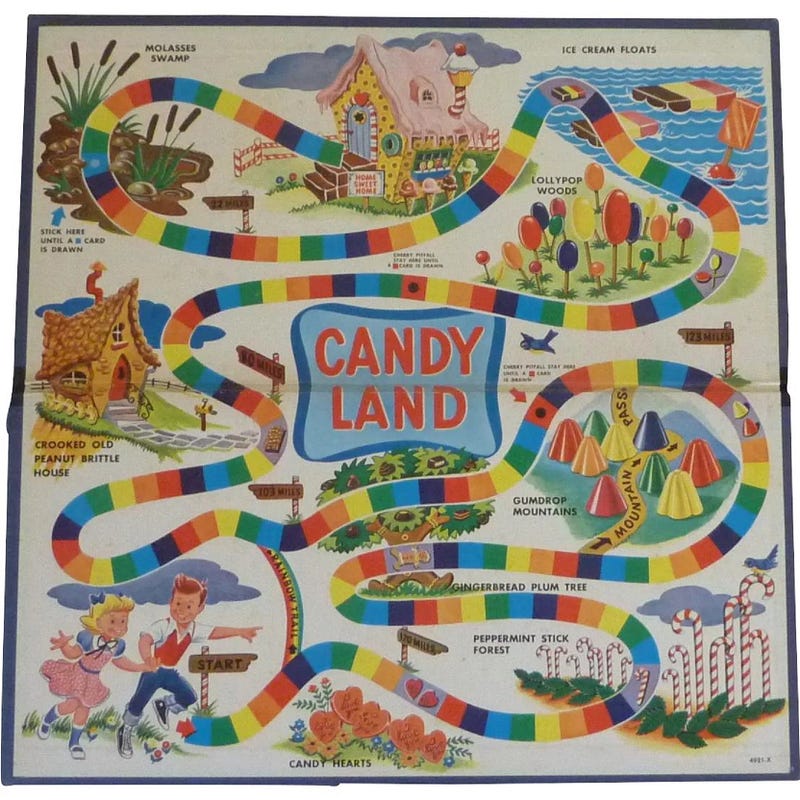
0–5000 Words
Blink. Pretty much all you have to do at this point is sit down at the computer and start writing. Once you’ve got an idea swirling around in your head, one of those precious and grand ideas that you know is going to change the world, this part comes as natural as breathing. You spend a few hours in front of a blank document, and damn. The words flow like magic.
This is pretty much the easiest time that you’ll ever spend sitting in front of a computer as a writer. The words flow through your fingertips. Not only do the words fly out onto the page, but you actually love the words that are coming out.
If this is what writing a novel always felt like, there’d be a lot more people who finish them.
5,000–20,000 Words
This is the danger zone. This is where most novels come to die.
All of a sudden, you become immediately aware of everything that’s wrong with your novel. You had a great premise, a great idea, but what the fuck is supposed to happen now? You keep repeating that question to yourself, over and over again.
But it’s okay. You’re still getting bright ideas. Unfortunately, those bright ideas mean that you have to rewrite the entire beginning of the novel in order to make those ideas fit.
But it’s okay. You haven’t written that much. You can go back and start over, loosely following what you’ve written already, but making the changes you need. And it’s good that this keeps happening. You keep having new ideas. The story keeps getting better and better and better.
You can write 250,000 words, just writing the first 20,000 words of your novel over and over again. But it’s alright. It’s okay. The world is coming to life. You’re getting to know your characters. Or, at least, that’s what you tell yourself.
20,000–50,000 Words
You know that part of The Bible where they talk about the Valley of the Shadow of Death? I’m pretty sure this is what they’re talking about.
This is the middle of your book. This is where every idea, every thought, every plan you ever had falls apart. It’s where nothing makes sense, and you have to fight, hand, nail, and tooth to keep going forward.
If you haven’t done an outline for your book yet, this is going to be the segment that makes you go back and outline the whole thing. If you don’t just quit. Because, honestly, quitting is easier.
But, even once you have a guide going forward, you begin to second-guess everything. You’ve done too much work to go back and start over again, but you haven’t done enough to feel like you’ve accomplished anything.
So you stay here and you fight. Word by word, sentence by sentence, thought by thought. It’s painful. You grind it out. You can spend an entire sentence feeling like you’ve written a marathon, only to discover that it’s actually 200 words.
And then you feel like crying. But you keep going anyway.
50,000–80,000 Words
All of a sudden, you get out of the Valley of the Shadow of Death, and you feel like you’re on a waterslide. You’ve gotten through the hard part of writing the novel, and now you’re at the end of the second act and going into the third.
You’re at the end of everything. You’re landing the aircraft. You’re so close to being done with this book, you can taste it. But even then, even if you aren’t done yet, you’ve accomplished something, goddamn it!
You remember back to high school, when you complained about having to write a 500 word essay. It felt like you would never meet that word count, hit that goal. You’re laughing at old you now. You’re laughing at your weakness. You eat 500 word essays for breakfast. You’ve got this bitch!
Mama’s bringing the airplane home. You can taste that book deal.
80,000–120,000 Words
Shit, shit, shit, this should be over now.
You keep telling yourself that as you keep on writing. Sure, things are resolved, but it doesn’t feel like they’re resolved enough. You have more you want to say. More moments that you want to sprinkle in.
It’s not enough that your characters survived their ordeals and got their happily ever after; you want to add in an extra epilogue where they get to go to New York City, see Hamilton, and even meet Lin-Manuel Miranda. Everybody loves Lin-Manuel, dammit! He has universal appeal. This is sure to make your book sell!
You’ve spent so much time with these characters, and now you don’t want to leave them alone. You put them up a tree, set the tree on fire, and somehow, they found their way out. Now you want to give them the entire universe on a platter as their reward.
You can’t make yourself say goodbye.
And that’s why we revise.
Zach J. Payne writes poetry and novels for young adults. He is currently 28,246 words into his next novel. Please send help. http://zachjpayne.net


