
The Ultimate Tribute to ‘Tooth Relic’
‘Kandy Esala Perahera’
Sri Lanka is a tiny island in the Indian Ocean and is well known for its ancient culture, rich traditions, and unique festivities. Among all, the ‘Kandy Esala Perahera’ is the most iconic festival in the country. The Perahera evolve around the Buddhist culture and is popular among Sinhalese, the indigenous of Sri Lanka.
Kandy is a city of Sri Lanka, which is a UNESCO world heritage site, due to its ancient heritage. ‘Esala’ is another name for August as per the Sinhalese calendar. The meaning of the ‘Perahera’ is a line of people. But in Perahera it’s not just a line of people, it includes traditional dancers, musicians, elephants, and many more. This ‘Kandy Esala Perahera’ is an annual event, which is taken place in gratitude to Lord Buddha’s Tooth relic, which is kept at the Temple of Tooth Relic at Kandy.
There are many interesting historic stories around the Tooth Relic. Out of allof them, the story of escorting the Tooth Relic to Sri Lanka is fascinating.
Lord Buddha’s Tooth Relic was brought to Sri Lanka from India. Nearly 800 years after Lord Buddha’s death the tooth relic of Buddha became a possession of King Guhaseeva in Kalinga, India. King Guhaseeva’s kingdom was under enemy attack and the enemies surrounded the kingdom to capture the king. The enemy’s objective was to destroy Lord Buddha’s tooth relic. The wise King Guhaseeva requested his daughter and son-in-law to take the tooth relic to a safer place to protect it, which is Sri Lanka. Hence, King’s daughter, princess ‘Hemamala’ and prince ‘Dantha’, disguised as a Brahmin couple and Princess Hemamala hid the Lord Buddha’s relic in her hair ornament. The royal couple set sail from the port at the mouth of the Ganges river and reached the port Lankapatuna in Sri Lanka after few days. At that time the King of Sri Lanka was ‘Kithsirimewan’. The King was delighted to hear the arrival of two royals and welcomed them to Sri Lanka with a royal ceremony.
Lord Buddha’s Tooth Relic became a treasure of Sri Lanka thereafter. It became the utmost important thing in the Sri Lankan culture. At one time the Tooth relic symbolizes the kingship of the country. A King without possession of the Tooth relic was not considered as the rightful king of the country. Hence, all the kings who came to power protected the tooth relic as if it were their own life.
From the day the tooth relic reached Sri Lanka, it was treated as if the Lord Buddha was alive. There are separate workers to offer food, to clean, and to protect the tooth relic day and night. Throughout the period almost all the kings allocated agricultural lands, paddy fields, and separate people to serve the temple of Tooth relic. Most of the people work voluntarily and most of them pass their responsibilities from one generation to another.
During the colonial period, Sri Lanka became politically unstable. Buddhist monks feared that invaders would destroy the relic as that was the symbol of kingship. They secretly took the tooth relic and hid inside the jungle to protect it. As the people didn’t accept the British as their leader without the tooth relic, finally they agreed to take care of the Buddha’s tooth relic as the Sinhalese did earlier. Thereafter even if there’re no kings in the country, every president gives his/her priority to worship and take care of the tooth relic.
During the Civil war in Sri Lanka, terrorists attacked the temple of Tooth relic and set a bomb to blast inside the temple. Their objective was to destroy the Tooth relic. However, the bomb blast didn’t affect the area where the tooth relic was kept. It was saved even without a small damage.
From historic times to today, it’s common that people donate their precious wealth to the Tooth relic. This includes lands, luxury goods like gold ornaments, and jewelry. They show their respect and heartfelt gratitude to Lord Buddha through all those donations. The Tooth relic is kept inside a beautiful ‘Stupa’ replica which was built in pure gold. Most of the donated luxuries are kept outside the cover. The Tooth relic is displayed to the general public once in five years.
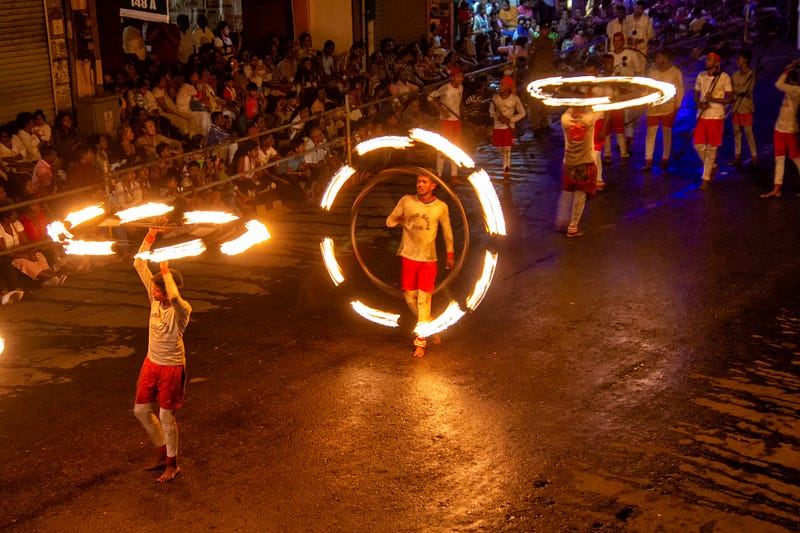
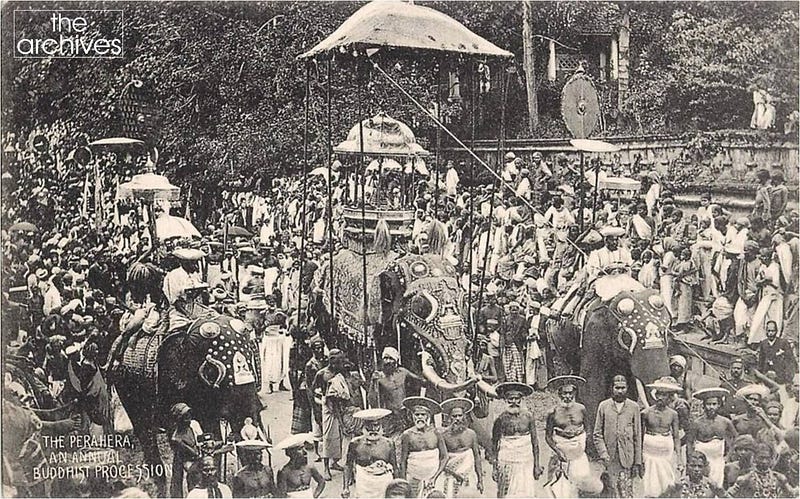
As people donate to the tooth relic their finest possessions, the kings started to show the tribute through the Perahera. The Perahera is not just a line of people it includes the dancers, musicians, elephants, flagmen, and many other items. The Perahera is very picturesque with the traditional coconut shell lamps and traditional music. Among all the replica of the Tooth relic is also include in the perahera. The tooth relic is carried by a tusker and these tuskers are so careful about their responsibility of taking the tooth relic.
Most of the dancers and musicians in the Perahera are participating in the Perahera continuously, every year. All of them consider it a lifetime honor. Traditional dancing and music go from generation to generation. For example, a traditional dancer most probably would be a son of a previous dancing master in the Perahera while his grandson also will be a dancer in the Perahera in the future. Apart from that, all the elephants who are taken in the perahera are given good care and nourishment. There are dedicated doctors, caretakers for almost all elephants and there are traditional dressmakers to sew colorful dresses for these elephants as well.
The history of Perahera runs more than a thousand years and by doing the Perahera, people expect good health, prosperity, and wellbeing to all the individuals in the country. If by any chance the Perahera couldn’t display, it’s known that undesirable things would happen to the country and its people. During the colonial period, one year the British failed to have the Perahera and a devastating flood came to the city of Kandy. Being a hill country, floods were unusual to the city. The flood affected many more individuals and the British were also fearful of the tragedy. Hence, even during the British colonial period, the Perahera was conducted every year as if before the colonial era.
The ultimate objective of this year’s Perahera was to relieve Coronavirus as it spread fast across the country. So, all the Sri Lankans wish good health, prosperity, and well-being to everyone, by conducting the ‘Kandy Esala Perahera’.