
The Ultimate Guide to Sunscreen: Stay Protected, Stay Beautiful
Intro
Like so many other families on the East Coast, my annual beach vacation is the highlight of my summer. A week spent lounging on the beach, eating crab leg dinners, and boardwalk browsing is just what the doctor ordered to relax.
When I was a much younger woman, I worshiped the sun like many of the girls I see now with tiny bathing suits, tanning oil, and not a care in the world about skin cancer.
Now in my 40s, I am much more aware of how harmful the sun can be. I come prepared for the beach with a large umbrella, coverup, sunscreen, and a wide-brimmed hat. Skin cancer should be the number one enemy but let’s be real, I want to keep those wrinkles and age spots away as long as possible.
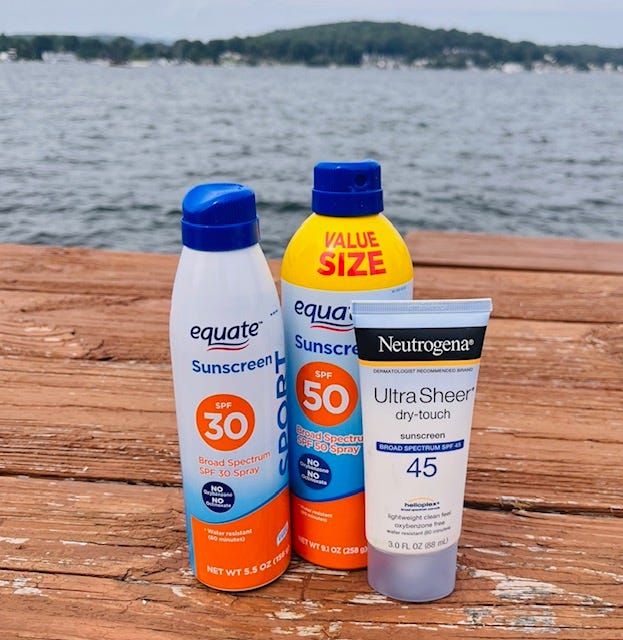
I stand bewildered in the sunscreen aisle of the beachside pharmacy. Which offers the best protection? What is on sale? This year as I debate between a higher SPF or a waterproof option, I realize how little I know about sunscreen. I know some of the basics but shouldn’t we take some time to learn more about something we use so often?

Prevalence of Skin Cancer in the U.S.
Did you know that skin cancer is the most common cancer in the U.S.? According to the American Academy of Dermatology, one in five Americans will develop skin cancer by the age of 70. This is a shocking statistic because skin cancer is one of the most preventable types of cancer.
Wearing protective clothing and proper sunscreen can prevent you from becoming one of the two people that die of skin cancer every hour in the U.S. Now that is a sobering thought, isn’t it?
Understanding Sunscreen — More than Just SPF:
A. How Skin Damage Occurs From the Sun
Before diving into the benefits of sunscreen, it’s helpful to understand how the sun can potentially damage our skin. Sunlight contains two types of harmful ultraviolet (UV) rays: UVA and UVB rays.
- UVA Rays: These rays have longer wavelengths and penetrate deep into the skin’s dermal layer. They are responsible for premature aging, wrinkles, and age spots.
2. UVB Rays: These rays have a shorter wavelength and mostly affect the skin’s outer layer. They are primarily responsible for sunburn and play a significant role in the development of skin cancer.
B. What is Sunscreen and How Does it Work?
Sunscreen is a topical product designed to protect the skin from the sun’s harmful UV rays. There are two main types of sunscreen.
- Physical Sunscreen — Also known as mineral sunscreen, this type contains natural minerals like titanium dioxide and zinc oxide. When applied, physical sunscreen forms a protective barrier that blocks and scatters the rays before they can penetrate the skin.
2. Chemical Sunscreen — Contains organic compounds like avobenzone and octisalate that absorb UV rays like a sponge before they can damage your skin. A potential downside of these compounds is that they may cause irritation in people with sensitive skin.
C. Understanding SPF
SPF stands for Sun Protection Factor. A sunscreen SPF is a measure of how well it can protect you from getting a sunburn if applied correctly. The SPF number represents the multiplier of time you can stay in the sun without getting sunburned compared to unprotected skin.
SPF only refers to protection against UVB rays only which is not something widely known by the public.
~It is essential to use sunscreen that is broadspectrum so it will protect you from both UVA and UVB rays.~
Choosing the right sunscreen can also be confusing if you don’t understand how much coverage the numbers represent. To make things a little easier, here are the two most common SPF numbers with their amount of protection.
SPF 15 protects skin from 93% of UVB radiation
SPF 30 protects skin from 97% of UVB radiation
~It is important to mention that NO sunscreen can provide 100% protection from UV radiation so be sure to reapply every two hours, especially after swimming or sweating. ~
Benefits of Wearing Sunscreen
- Skin Cancer Prevention
The most significant benefit of wearing daily sunscreen is how it protects the skin from harmful radiation which reduces the risk of skin cancer. The 3 most common types of skin cancer are Basal cell carcinoma, Squamous cell carcinoma, and melanoma.
Exposure to UV rays is the most preventable risk factor for all skin cancers so it’s recommended to stay out of indoor tanning beds, seek shade, wear sunscreen daily, and wear protective clothing to significantly decrease the risks of skin cancer.
All three of the most common skin cancers are highly treatable if detected early and treated properly.
~It is so important to do frequent full-body skin checks and see a dermatologist regularly since most skin cancer is treatable with early detection.~
2. Preventing Premature Aging
The other main benefit of wearing sunscreen regularly is its ability to prevent premature aging. Applying daily sunscreen helps maintain youthful-looking skin by preventing fine lines, wrinkles, and age spots.
How to Properly Apply Sunscreen
To reap the rewards associated with daily sunscreen use, you must apply it correctly.
Here are several good practices to apply sunscreen effectively:
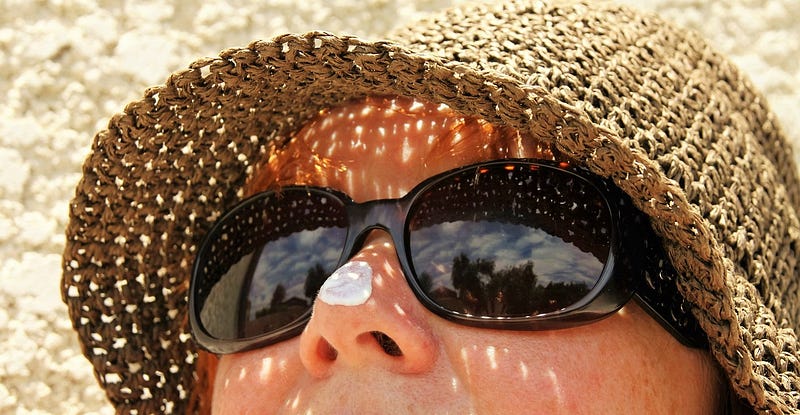
- When? Apply sunscreen at least 20–30 minutes before sun exposure.
- How much? For an average size adult, apply a quarter size amount to the face and a shot glass full for the body. Adjust according to body size.
- How often? Reapply every 2 hours or more frequently when swimming or sweating
- Where? Apply EVERYWHERE UV rays may touch. Apply to lips, ears, hands, feet, hair part, bald spots, back of neck, under straps, etc. Everywhere!
- Keep sunscreen until it expires or replace it every 3 years.
Lesser Known Facts About Sunscreen
Historical Facts
- Ancient Egyptians created potions to protect their skin from the sun. They used extracts from rice, jasmine, and lupine which we actually put in sunscreen today to absorb UV rays. Isn’t that incredible??
- In the 1930s Swiss chemistry student Franz Greiter invented the first modern sunscreen after getting sunburned climbing the Alps. He mixed zinc oxide with petroleum to create a thick white paste he could wear while climbing/skiing.
- In 1936 the first commercial sunscreen was invented by Eugene Schueller who is the founder of L’Oreal.
Educational Facts
- NO sunscreen is waterproof or sweatproof!
- Children under 6 months old should not wear sunscreen.
- Broad Spectrum Sunscreens are Best!
- Spray on sunscreens are convenient but not always effective. They are also not as regulated by the FDA as lotions are.
- Despite what some say, Sunscreen IS SAFE!
- People of ALL skin colors are at risk for skin cancers, sunburn, and premature aging.
- There is NO such thing as a healthy suntan!! Any change in your natural skin color is a sign of skin damage.
- People with darker skin do not burn as easily but skin cancer is often not detected until later stages when it is more dangerous.
- Studies show that people with large numbers of freckles and moles are at increased risk of developing skin cancer.
Conclusion
As this summer heats up and the UV Ray Index climbs, keep your sunscreen readily available. Skin cancer may be the most prevalent cancer but it is also the most preventable. Working sunscreen into your daily routine is a win-win. You decrease your chances of developing skin cancer while preventing nasty signs of aging like wrinkles.
Since we are in the era of 60 is the new 40, you can help keep your youthful glow by applying some sunscreen year-round. Educating yourself on which sunscreen to buy and how to apply it could improve your looks and also save your life.

Sources
1.”Skin Cancer”, American Academy of Dermatology, April, 22, 2022, Http://www.aad.org/media/stats-skin-cancer/
2.“Skin Cancer Facts & Statistics”, SkinCancer.org, Jan 2023, Http://skincancer.org/skin-cancer-information/skin-cancer-facts/
3.”Sunscreen: How to Help Protect Your Skin from the Sun”, FDA.gov, May 24, 2023, Http://fda.gov/drugs/understanding-over-counter-medicines/sunscreen-how-help-protect-your-skin-sun/
4.”The Science of Sunscreen”, Harvard.edu, Feb 15, 2021, Http:// www.health.harvard.edu/staying-healthy/the-science-of-sunscreen/
5. “Ultraviolet (UV) Radiation and Sun Exposure”, Epa.gov, July 6, 2023, Http://www.epa.gov/radtown/ultraviolet-uv-radiation-and-sun-exposure/


