
The ultimate Asian secret to staying young: Eat the chicken feet.
The American diet is not just making you fat, it’s also making you old.
The number one vegetable that is consumed by Americans is potato. French fries to be exact. That’s pretty sad.
Second to that would be…ketchup. Even sadder.
Sometimes, when you start to connect the dots, it’s a moment of clarity that feels like Neo waking up in the Matrix — a “whoa, dude” moment — and here in America, it is all tied to consumerism, including what we consider “healthy.”
Ladies, eat all that chicken breast to stay slim, amirite?
Chicken breast being “better for you” is actually just a marketing ploy. Back in the day, there was an overabundance of chicken breast that couldn’t get sold because chicken breast is, frankly, bland. So to turn that around, the genius marketing plan to market it towards women as a “healthy, stay slim, low fat, better for you” option was hatched.
In reality, women actually need the dark meat more (legs and thighs). Our bodies require more taurine than men and taurine is found in dark meat. We also require more fat, and also, more of the omega fatty oils are found in the skin and the dark meat. Not to mention collagen in the connective tissues found surrounding the dark meat. But to get housewives to buy chicken breast, white meat was marketed as being “better for your figure.”
I remember in the 90s and the early 2000’s the chicken breast craze. That marketing push to consume chicken breast, that it was the healthier option, that it was better for you was pushed on every talk show and in advertisements.
In the end though, corporate greed got what they wanted. Women were buying and eating more chicken breast, which eventually made their bodies deficient in those key youth-keeping nutrients. This in turn meant that women then had to spend money elsewhere to maintain. Women then invested in multi-vitamins, creams and lotions, and plastic surgery and injections simply to maintain what their bodies no longer naturally could.
There’s a lot of privilege here in America, including food privilege, even when it comes down to our poorest. Most Americans have never seen the butchered head of the mammal they consume. They’ve never tasted liver or kidney or heart. Most Americans are squeamish about the truth about their meat. They like it nice and tidy, wrapped in plastic and sitting on a cold shelf. But the truth is, the most nutritious parts of the animal are the parts that most Americans will never eat and will turn their noses at.
There’s a reason why women who eat a lot of ethnic foods tend to fight off the hands of aging better than your standard American woman. They eat all the “undesirable” parts of the animal. Tongue, feet, oily and greasy, red meat, organs, ears and snouts.
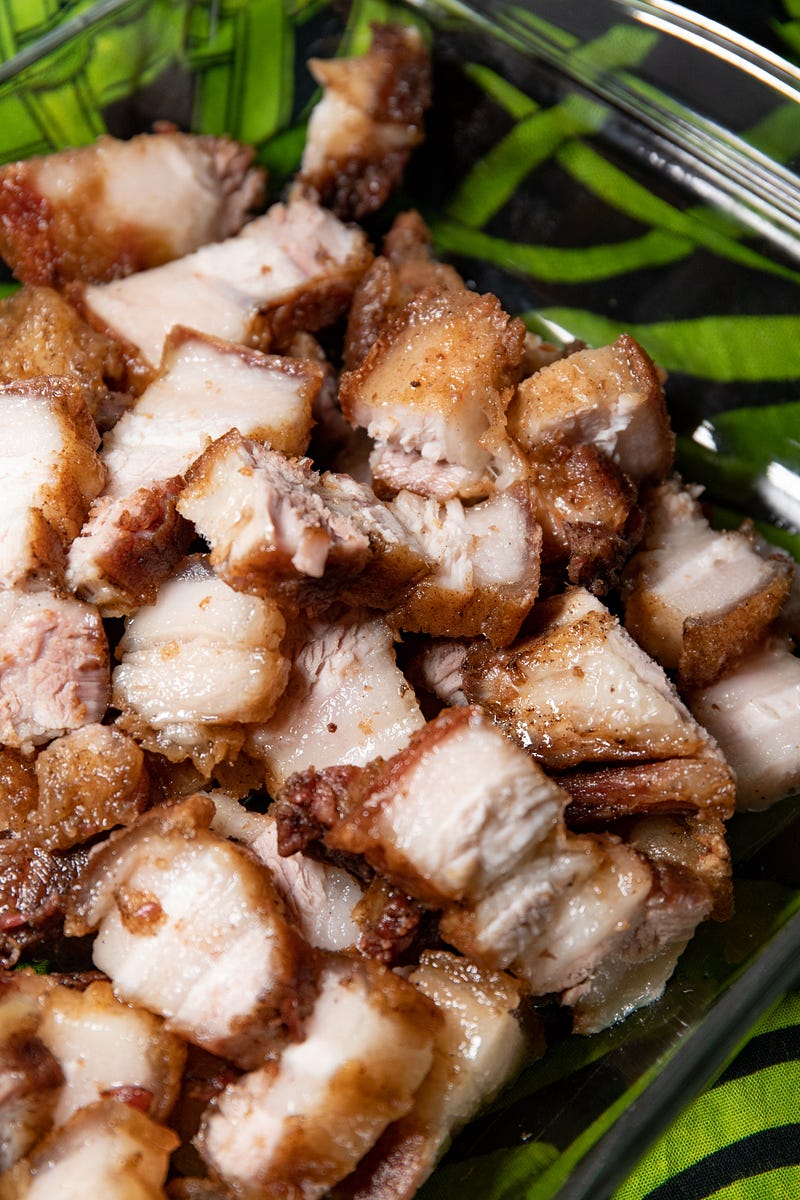
These women don’t fear the fat. Eat the pork belly. Eat the nut butter. Eat the sardines. They don’t shy away from fatty foods like oils and nuts. They eat a lot of greens — mustard greens, bok choy, collard greens, etc. And this seems to be universally true for ethnic women, whether they are Asian, Latin, Mediterranean, African, etc.
After all, the current science tells us it’s not really the fat that makes us fat. It’s the sugar and carbs. Fats in moderation are actually good for you and are essential. It keeps your body operating at peak performance and is necessary for your brain to work. Back in the old world, consuming fat could be the difference between life and death (just ask any survivalist), but that’s another story for another day.
So let’s break down some quick things (because this could end up a book if I keep going):
All the stuff most Americans turn their noses at.
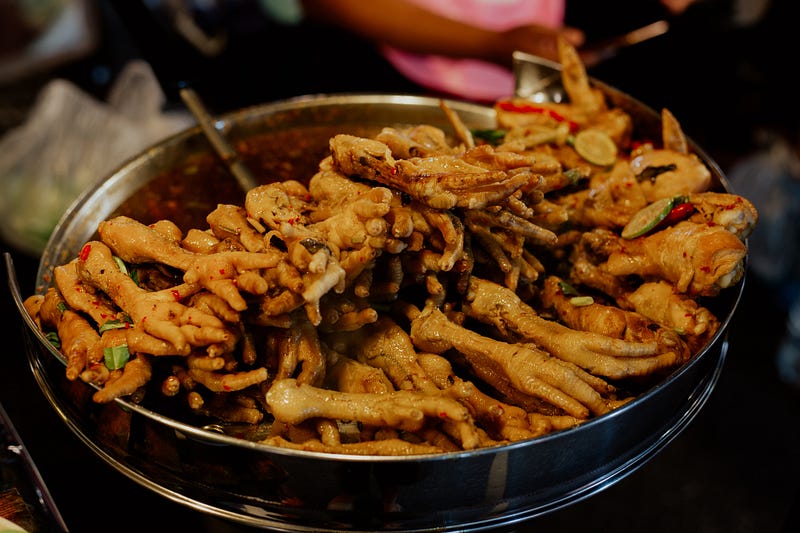
Asian ethnic foods include a lot of organ meats, a lot of red meat, a lot of tendons, feet, and connective tissue. Not only is this where flavor and umami live, but it is also the most nutrient-dense parts of the animal. The feet of animals are where you’ll find a lot of collagen.
Ethnic cooking also stews a lot of their food because their meat isn’t pumped full of hormones for faster growth. This means unless the animal is young, the meat will be tougher. It also explains why Americans are so big compared to everyone else. Those hormones fed to livestock does make its way into us. There hasn’t been a study into whether it makes us age faster, but I’m pretty sure if someone ran a study, there would be a correlation. Speeding up growth doesn’t just affect our kids, after all.
I love chicken feet. I love it stewed or steamed. It’s my favorite dish when I go for dim sum. I also love pig’s feet stewed with ginger and green onions, drizzled with chili oil. Pressure-cooked tendons are literally my favorite part of Asian soups. I could die happy in a bowl of oxtail soup. And perhaps this proclivity is a genetic inheritance, but perhaps it is also nature’s way of ensuring that I get the proper nutrition I need. The sticky “jello” that comes from these cuts of meat are literally the building blocks of healthy joints, tight skin, and the ability to fight off aging and bone loss.
Stinky and smelly, sour and salty.
Asian women eat a lot of fermented foods. The reason why Koreans eat kimchi with everything isn’t just because it tastes good. It’s because it’s been fermented and carries good bacterias for digestive health. You’ll find across the board that Asians eat a lot of sour/pickled/high acid and fermented foods. The most universal of them all is probably fish sauce.
Each nation and culture has its own specialty, but it is an essential part of their diet. You’ll also find this in a lot of Latin American foods too. Latinas have some of the most beautiful complexions out there, and when you break down their diets, it is very rich in tomatoes and vinegar.
Bring on the heat.
Asian women eat a lot of heat. Ginger, galangal, turmeric, chili peppers all have one thing in common: anti-inflammatory and circulation aid.
Bone soup
Asians eat a lot of soup. Why is this important? First, there is a distinction to be made here. The western idea of “soup” is more involved than many basic Asian “soups.” Growing up, my family ate “soup” with just about every meal, but making it isn’t an hour-long process like many American recipes.
It was simply whatever meat we had on hand boiled with greens and some lemongrass and ginger. Done in 15 minutes. 90% of the time, that meat is on the bone and the entire thing is cooked and served. Bones are nutrient-dense, as is marrow. Glucosamine and chondroitin is great for joint health, but also are important elements to skin health as well. And again, a great source of collagen.
It’s now a fad to buy “bone broth” to sip for the collagen, but you could literally make your own for pennies on the gallon.
Perhaps the most famous Asian soup of all is pho; and this one does take a lot of time to make. The broth often simmers for an entire day, but the base of this soup isn’t just the aromatics and fresh herbs. It takes pounds of beef bones to make the stock. Pho broth is perhaps the fountain of youth. High in collagen, anti-inflammatories, immuno-boosters, amino acids, glucosamine and chondroitin, calcium…no wonder Vietnamese women age so slowly. But Vietnamese noodle soups are probably some of the most nutritious out there, especially for circulatory health because of the herbs and spices that are universally used in their stock.
Low on processed, high on process.
The traditional Asian diets are high on making from scratch. We don’t eat a lot of processed foods with artificial additives. In comparison, what is considered the American diet is mostly processed foods. Quick and easy, zap it in the microwave, defrost and eat meals. When you read the ingredients on the average American boxed meal, it is loaded with preservatives and words you can’t pronounce and things you can’t identify. That, and yellow #5.
Even when we make American dishes from scratch, the sauces we use, the ingredients often have a mish-mash of artificial additives. Things are starting to turn away from this as Americans wizen up, but it’s still slow to catch on, especially in the south and the midwest where options can be limited.
Additionally, high fructose corn syrup can be found in just about anything. It is just now coming to the forefront how unhealthy it is. Sweeter than sugar and cheaper to add, it’s found in bread, soda, juice, sauces, etc. Even most commercial maple syrups are simply flavored corn syrup. There are a lot of studies coming out about just how unhealthy HFC is, but still, it is in everything. European food administrations actually restrict a big number of items that our FDA allows because they are considered to be dangerous or unhealthy, including food dyes and in some nations, high fructose corn syrup.
Growing up, the only time my family ever had “American” food was our public school lunches and on grandma’s birthday, where we’d get KFC (just the chicken — eaten with rice) and Pizza Hut, because grandma loved Pizza Hut. All other meals were homemade, simple dishes with simple ingredients. Real food that didn’t come with preservatives and expiration dates.
Growing up a Hmong kid, we often also butchered our own animals bought directly from small farmers. Asians love the flavor of wild game so we often had hunters in our families too. Our chickens were also not the commercial breeds. We often preferred silkies, raised without hormones. They were smaller and leaner, but the meat was succulent and I’d bet more nutrient-dense than commercial chicken.
Majority Vegetable based diet
In America, the meat takes center stage, but in the longest-lived communities in the world, the meat is the side dish. It is the accompaniment to the vegetables. Even when you look at stir-fries, the majority of the dish are vegetables.
Even the starch components of the dish generally only take up 25% of the meal.
But what does all of this have to do with health and beauty?
Quite frankly, most of us don’t have the millions of dollars to pay for plastic surgery and facelifts. But even so, changing your diet to be more nutrient inclusive and cutting out artificial additives not only benefits your face but the rest of your body as well.
As I’ve grown older, I’ve really come to appreciate the ethnic foods I grew up with. It might sound conceited, but I do see the benefits of it compared to some of my friends as we go into our middle ages. My joints aren’t as achy. I still feel like I’m in my twenties. I don’t have any gray hairs, and my face hasn’t really started to show signs of drooping and fine lines just yet, despite being in my forties now. And I notice that this is common amongst many of my Asian peers, so there must be something there beyond just genetics, right? I really do think what we eat has shown itself in how our bodies have aged.
.
.
.
.
Hey there! Like my stuff? Read all of it by becoming a member: https://yiavue.medium.com/membership
You can also subscribe here to be notified of all my new work: https://yiavue.medium.com/subscribe
Or help me finance research and other writing initiatives by supporting my patreon: https://www.patreon.com/yvuewriting


