
The Twisted Road I Took toWriting My Memoir
How I Learned a Writing Life Lesson.
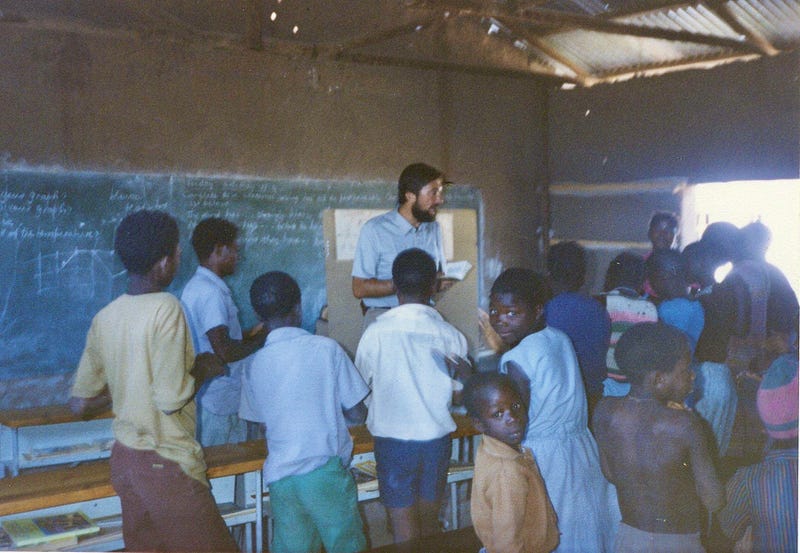
I was a Catholic Priest who left “the service” to get married. I left because my soon-to-be wife was pregnant! We were both missionaries in Africa. She was a physical therapist from Australia working in a large city in Zimbabwe, and I was a missionary in a remote village called Binga. We met while I was visiting the city where she lived and worked in order to rest and to buy supplies. We hit it off. The details are in the book I wrote: Stumbling into Happiness.
A New Life
After we left Africa, we moved to Lima, Ohio, where I found a job in a foster care agency. Over the next few years, we had two more children. I earned a Master’s Degree in Social Work from The Ohio State University, found a new job in mental health, and settled into married life. In 1992 I received a dispensation from the Pope who released me from my vows and gave me the OK to be a regular member of the church. The unspoken deal was that if I wanted to continue to be a member-in-good-standing of the church, there were some rules to follow.
1. I couldn’t take on any leadership positions in the church.
2. I couldn’t teach religion in a college or university.
3. I should lead a quiet life.
In other words, don’t cause us any more problems. That was fine with me since I was already moving forward in my career in mental health, and starting a new life.
We Duck the Questions
Many people we encountered asked us why we moved to Lima. They were curious about how we met. It was incredible to them that an Australian and an American who lived in Africa wanted to move to this small town. I said vague things like I was doing economic development in Africa and decided to come here because of a job. Then I changed the subject. I didn’t want to confess that I was a priest, and my wife was a nun. We both created a blank period in our lives of about twenty years. Or so we thought.
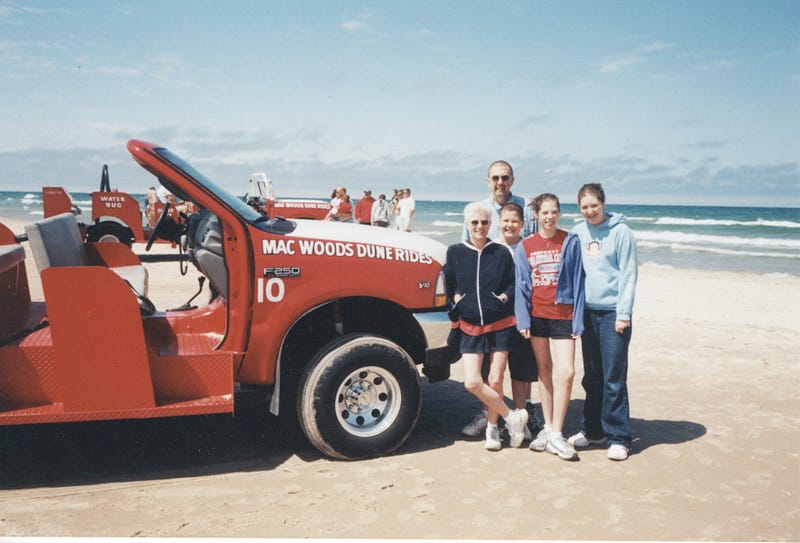
We Discover the Story
In 2004, an event occurred that changed all of this. At dinner one evening, my son complained about the assignment he received from his sixth-grade teacher. “I don’t know why I have to do this. I told her she’s already heard the story twice from my sisters.”
We became interested in his dilemma. “What is the assignment?”
“I have to tell the class how you guys met. And I told her she already knew.”
“What did she say to that?”
“I just love to hear the story,” she said.
Mary and I were in shock. For thirteen years, we remained quiet, deferring and deflecting every question about our churchy backgrounds and experience. But there was more shock to come.
Stephanie, the eldest, piped up, “Oh yea, we tell all of our friends,” Kara is nodding enthusiastically by now, “we call it THE STORY.”
Our mouths were wide open, our eyes staring blankly, “You tell everyone?”
“Yep,” they all answered.
Here we were blanking out this part of our lives from the past while our children were telling the entire world. “So, what do you tell them?” They told us a brief form of “The Story;” bullet points, just the highlights.
I said, “that is good; it’s not what happened; it’s better.” They’d taken bits and pieces of what we told them about our life in Zimbabwe and stitched together a story that was plausible but not accurate. No wonder everyone loved it.
In 2006 my mother died, and in her effects, I discovered a box of letters I wrote to her which was a month by month diary of everything that happened to me in college, in graduate school, and during my six years in Zimbabwe. All I had to do was to take the letters I wrote and stitch them together into a story. Easy, I thought.
I completed a men’s retreat at our church in 2008. The men who made the retreat met afterwards to present the next retreat. I told them my version of “The Story.” Their reaction stunned me. They were so overwhelmed that they appointed me the spiritual director. “I don’t think I’m allowed to do that,” I said. It didn’t matter. And it relieved the local priests from another duty. Later a group promoting careers as priests and nuns asked Mary and me to tell “The Story.” “Why would you want to hear from us? We failed.” They told me the story sounded interesting. After we presented it at one of their dinners, they gave us a standing ovation. We were shocked.
I Finally Began to Write
I labored over “The Story” for eight years. I wrote at least four versions, and at the end of version four, I knew I needed help. It was pure serendipity when I mentioned my struggles to my daughter Kara and her friend whose sister wanted to become a book editor. “My sister would love to be your editor. She works for a company publishing magazines in New York City,” Kara’s friend said.
I contacted the sister, and as soon as we agreed on a price, I sent her the manuscript. A month later, the edited copy came back with every sentence on the 200 pages marked up for changes. It was only then that I realized that I did not know how to write.
For the next year, I worked on the manuscript every weekend and read every book and article I could find on the craft of writing during the week. I deleted thousands of adverbs, adjectives, and passive voice verbs. I wrote dialogue, detail, and description. I deleted 20,000 words and added 20,000 more words. The second editing had even more markups and suggested changes. Then Mary and I read the manuscript out loud twice, and I made even more changes.
Finally, in October 2017, thirteen years after I discovered my mother’s trove of saved letters, I self-published my memoir: Stumbling into Happiness. I’ve sold over 500 copies, and I imagine that many more people have read a borrowed copy. One friend told me that 25 people were waiting to read his. I wanted to tell him that they could read it faster if they bought a book.