
The Turbulent Childhood of Vlad The Impaler
The moments that made him a killer.
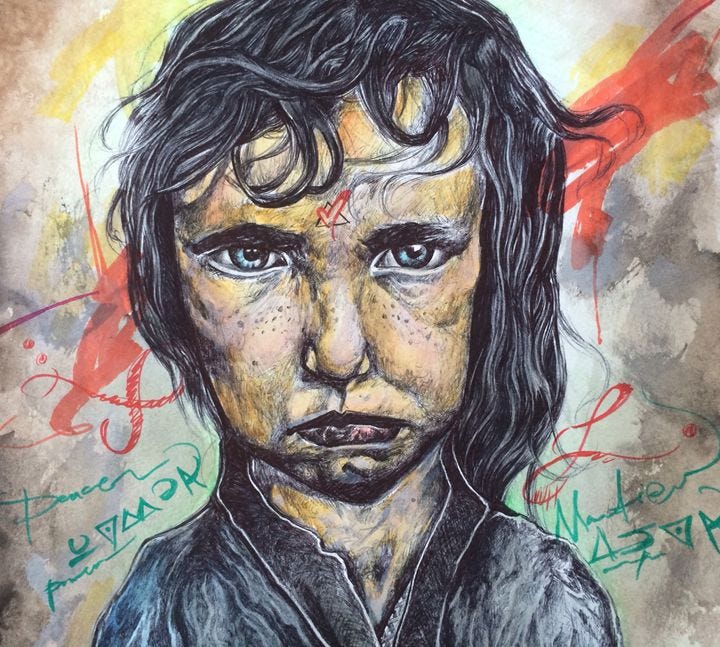
The Easy
The little boy who would later become known as “Dracula” was born during a Transylvanian winter in the year 1431.
Deep inside the Carpathians, inside a house that still stands today, Vlad Dracula came screaming into this world. His home town was a medieval city called Sighisoara in Romanian or Segesvar in Hungarian. In Vlad’s time, however, it would have been referred to using its German name: Schassburg.
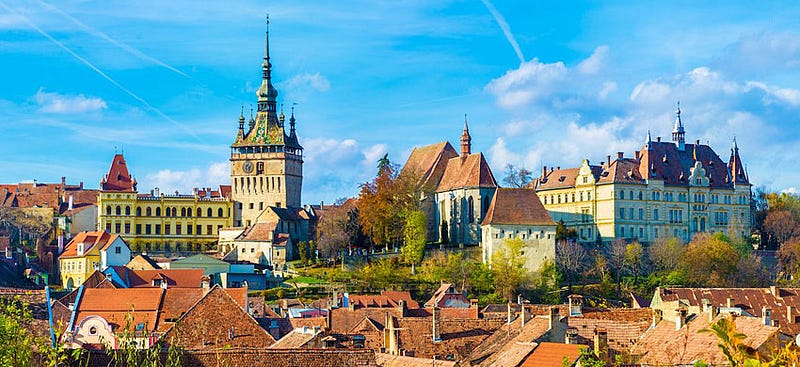
The culture of Schassburg was predominately German-Saxon, with little influence from Romanians or the Romanian language. Keeping in mind, German-Saxons had their own municipal structure, their own laws, and their own military.
Being born in such a place was much like being born in a foreign country. He was not born in Romania — he was born in de facto Germany. This influenced the societal rules and norms he would have learned in early childhood, which weren’t anything like his Dacian forefathers.
German-Saxons have a great sense of duty to one another. Since the 11th century, they have formed tightknit neighborhoods and communities which were self reliant. They also had an extremely low rate of corruption and crime.
The city itself was heavily fortified, with watch towers and thick walls all around. Compared to Wallachia, Schassburg was a veritable paradise. It was moderately wealthy and one of the safest places to live in medieval Europe.
Vlad was born into a two-parent household. His father, Vlad Dracul, and his elder brother, Mircea, accompanied his mother. Making them a family of four (minus the servants and courtiers).
The “Old Dracul” as I have dubbed their father had a stable job. He provided his family with a pleasant house and made good money (literally, he minted his own coin). He was also in good favor with both “The Old Hungarian Governor” Janos Hunyadi and The Holy Roman Emperor.
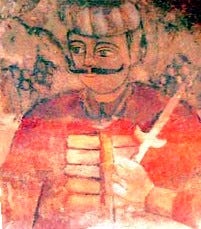

This was by far the best time of Dracula’s life and the most stable.
The Mother
Nobody knows who Vlad’s mother was. Even worse, she died/disappeared mysteriously from his life when he was about 7 years old. Which was a big deal.
Traditionally, Romanian boys were raised only by their mothers for the first decade of their lives. They would live, eat, bathe, all in the same area of the house where the women were until a certain age. According to Dacian custom, Vlad lost his mother — whom he presumably loved — much too early in life.
Out of all the “innocent” people Dracula killed (aka for non-political reasons) they were almost always young families, and mothers with small children or infants. It may be inferred that Dracula so resented the death/disappearance of his mother, that it motivated him subconciously to kill women by impaling them.
The Move
When his mother died, the “old Dracul” moved them from Transylvania all the way to Targoviste in Wallachia (as he had become Prince).
Targoviste was a very different place.
Not fortified, save for some measly wooden palisades and a wooden gate. The city was poor and run down — unless you were a wealthy boyar who could afford to build a Byzantine style compound, as was the “norm” amongst the nobility. Corruption with rampant crime and scheming boyars all around also made it a pretty mid place to live.
Not to mention, there was no sense of community, nor duty. It was a place overrun by highly cynical people scheming against one another. This change of scenery would have been traumatic for a young Dracula.
Since Dracula didn’t have a mother anymore, they prematurely thrust him into the “world of men” and warfare. Being expected to fend for himself.
Dracula spent the major part of his adolescence in Wallachia, in conditions very different from those of his childhood. His father’s ascent to the throne coincided with Vlad’s transition from childhood (puer), to the next stage of life (adulescens), where a young man leaves the society of women and enters that of men. For Vlad, this change came about at the moment his mother disappeared, which might have inflicted psychological trauma. — Matei Cazacu, Dracula, 2017.
Throughout his career, Dracula often punished women, especially women who found themselves mothers during the time of his reign. Dracula seemed to have a morbid fascination that could be better understood as a vendetta toward mothers and young women.
The Difficult
After the death of his mother, Vlad was more alone in the world than ever before.
His elder brother Mircea, whom he grew up with, was already entering the mature phase of his life. He started leaving home more often, going on military raids with his father.
The Old Dracul himself had remarried. It was a political marriage, and she wasn’t particularly chummy with either of the elder boys.
Vlad soon had two new siblings at home. A boy, Radu (who would later become Radu The Handsome) and a sister, Alexandra.
Considering Radu was about 9–10 years younger than Vlad, we can safely say they were not very close. There wasn’t much of an emotional connection there because they hardly knew each other.
Radu was kept in a separate part of the estate alongside his mother and her courtiers. While the two elder boys would have been kept in another portion of the home. “Under the care” of their father, which is tragic, considering he was away almost all the time.
That being said, Vlad loved his elder brother, Mircea. He admired him. Vlad and Mircea grew up together, share the same biological parents, and are close in age.
Vlad and Mircea also had the same tutor; an old boyar (eng. nobleman and landowner) in his 70s. Therefore, they received the same education and were educated together, which implies they spent a large portion of time together.
When Vlad was eventually “sentenced” to go to The Ottoman Empire (around the time he turned 12 in the year 1444), the once bright relationship was ruined and gone. The two brothers never spoke to or saw each other ever again.
On top of this, Vlad felt slighted by his own father. Sultan Murad specifically asked for Mircea to be sent to the Ottomans — not Vlad. The Old Dracul loved his eldest son the most, however, which is why he conceded to send both Vlad and Radu. (Two heirs equal a first born)
Vlad’s father saw his children as nothing more than pawns in his political game. The even sadder bit is, it’s true. They were just pawns. That’s the whole reason they were born.
These are two big components of Dracula’s childhood.
Vlad never saw his beloved elder brother again after he left for the Ottoman Empire, but he also had a difficult relationship with a father who really did not care for him in the slightest. This, coincidentally, fed into Vlad’s core frustration and a sense of lack of control — which he would later overcompensate for by killing/impaling.
The Turks
Vlad Dracula had to leave behind a homeland, a mother language, a family home, and his elder brother to go to a country that was completely foreign to him in both regime and religion.
To an empire that they had taught him to hate from birth. A place that took “butchery and murder” to new heights, where piles of tongues and male genitalia were piled up at the sultan's palace after a successful military operation.
Let’s not forget, it was also a place where the sexual assault and molestation of young boys was socially acceptable and condoned behavior.
The Ottoman Empire was not kind to Vlad Dracula.
His insecurity, fear, and confusion got the best of him, even on good nights. He had frequent episodes of fits. His Turkish captors noted multiple occasions of indignant behavior so severe it resulted in his brief imprisonment.
How do you think he would have felt in those moments? Was he a “troublemaker” or was he just scared, alone, confused, and unloved? Was he just experiencing emotions he did not understand, taking them out on those around him instead?
Not to mention — there is a genuine possibility that he was molested and/or sodomized whilst in The Ottoman Empire. Which might explain why impalement was his preferred “method” of killing.
Beloved Brother
There is no understating how much Vlad loved his elder brother and how devastated he was when news arrived that Mircea had been assassinated (by being buried alive and blinded with hot pokers).
When Vlad returned to Wallachia, he asked the locals where his brother had been buried by his murderers. Once he found the place, he borrowed a shovel and began digging and scraping the dirt. For hours he toiled until he found his brothers corpse — barely decayed considering it was winter and Vlad got to it within a month.
The story goes that the corpse was face down. That fact, combined with the scratch marks on the inside of the coffin, left no question as to how he was killed. Vlad burst into anger and tears.
His brother had died a horrible death and he had been powerless to stop it. Again, Vlad felt a lack of control, this time in stopping somebody he desperately loved from dying.
Inclined to Impale
It didn’t start in the Ottoman Empire, and it didn’t end there, either. Throughout his brief childhood, Vlad lost his beloved mother, his biological brother, and his father (who was toxic, narcissistic, and hard to please).
Vlad carried grudges all his life from his childhood and adolescence. Not just from the deaths — but from the lack of fulfillment, lack of connection, and lack of stability.
Instead of working those out healthily, Dracula was raised in a patriarchal, pro-masculine, anti-emotion society. It was all but forbidden for him, as a man and a noble, to seek emotional help from others.
In these types of situations, one imagines the bottled up emotions explode, causing episodes of rage and paranoid psychosis.
The sadistic behaviors we associate with Vlad, such as torture and impalement, are not a result of an outward, top of the lungs, red in the face rage — but a more subtle rage. Internal. Icy and sharp. Quiet and suffocating.
Life was cheap, and the world was unfair to him. He felt betrayed by his father for 1.) never being satisfied with him and 2.) for giving him over freely to The Turks. The boy also felt betrayed by his mother for dying and leaving him alone; loveless and defenceless. A child stranded in a man’s world.
Vlad didn’t just want to kill. He wanted to make his enemies suffer for making him suffer. However, some enemies existed only in his head (or they eluded him, in some cases). Hence why he had to take it out on others as a slow and torturous death. It was cathartic. Killing was the only thing that allowed emotional release.
All this added up to a consuming aura of anxiety and feeling beyond out of control of himself, his situation, and his emotions. Dracula impaled because at his core, he was frustrated, sad, and alone. These feelings intensified as he got older and ten fold after he became voivode (eng. Prince).
The possibility that someone would assassinate him like his father and elder brother before him was always on his mind. This fear was beyond well founded. The young man survived a multitude of assassination attempts before his 25th birthday, including one by the Hungarian Janos Hunyadi himself.
Adding to his depression and anxiety, Vlad couldn’t trust anyone fully. He had no one to turn to or speak to, just as a friend. This placed a veil of paranoia and suspicion over his eyes.
In Romania, Vlad’s mental unrest was well known among his subjects. Especially around the municipality of Targoviste, his capital city. The locals preserved this tale in particular, which further illustrates his general emotional malaise.
Vlad was feeling depressed and went to one of his mistresses in town. She felt bad seeing him in such an emotionally decrepit state. She lied and told him she was pregnant in order to cheer him up. He had the woman examined by bath matrons who confirmed that she was lying. Vlad then saw fit to punish her for her deceit by cutting her open from naval to breast, spilling her organs in the town square. Saying to everyone with a flourish and smile, “Now the world may see where I have been!”
A Maniac?
There were multiple occasions when Dracula impaled people. However, it wasn’t just “blood sport” like the modern media has led many to believe. No, some of his punishments — and other apolitical killing — had tangible motivation behind it.
For example: The Amlas Raid.
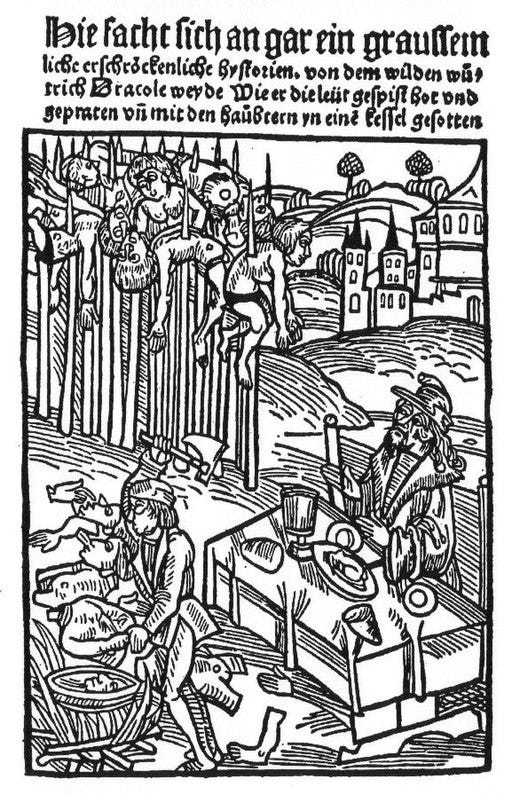
The Brasovan German-Saxons. A group of German ethnicity and language who lived scattered throughout Transylvania under Hungarian suzerainty. In this situation, we are talking about the ones living in Amlas (eng. “The Apple Orchard”)
In 1460, Vlad impaled a large portion of them and then supposedly ate dinner at a table surrounded by their corpses on stakes, which was the inspiration for the woodcut above.
“In the year 1460, on St. Bartholomew’s Day, in the morning, Dracula came with his servants over the forest, and, as is reported, he hunted down all the Wallachians of both sexes near the village of Amlaș. And he was able to bring together so many that he left them [piled up] in a bunch, and they were chopped up like cabbage with swords, sabers, and knives. And he brought home their chaplain and those he was not able to kill at that time, and had them impaled. He had the village with its goods completely burned, and, as is said, [those killed] numbered more than thirty thousand.” (German woodcut pamphlet c. 1463)
Most people today believe Dracula killed the German-Saxons because he hated them for some frivolous reason. The narrative goes that he was insane, mentally defunct, racist, or even perhaps a “Pro Romanian” nationalist. After all, there has to be a definitive reason he did all those things, right?
Wrong.
The point being; perspective is important. Layers are important. Dracula’s life wasn’t black and white. Largely, Vlad Dracula is a merciless serial killer only in our minds, enhanced by the morbidity of our own imaginations.
We may ask ourselves, “What portion of his childhood made him a murderer?” but it will never be that simple. He didn’t run around like a maniac; waving a saber, killing for sport, huffing paint all because he had a rough childhood.
Vlad’s psychological motivations can never be fully explained, except by that very man, and maybe not even then. Every time he felt the need to impale was different, every case was imbued with competing personal and political motivations.
Overall, Vlad III Dracula was worth his salt. He was an out-of-the-box thinker. Strategically gifted and well thought out, he was a military strategist and politician. Time and time again, he exhibited that his actions were clearly premeditated.
Still, he killed criminals and innocents alike. He impaled, tortured, and maimed them to an undeserved death.
Whether it was a personal reason (like when he felt sad, depressed, and frustrated) or a political one (where he might have something to gain, like money or an alliance) depends only on the time and place.
Was his childhood bad? Yes.
Was he traumatized? Beyond reason, probably.
Did he kill for justifiable reasons? Yes
Did he kill perversely for no reason at all? Yes.
Was he fully aware and in control of himself? Yes.
Will he always bear full responsibility for those actions, even in death? Yes.
The guy had a rough childhood, to say the least.
Best wishes and thanks for reading,
A.

Sources: “Dracula” by Matei Cazacu (2017, English Vers)