
The Tunguska Enigma: Unraveling the Mysteries of Earth’s Mysterious Celestial Encounter
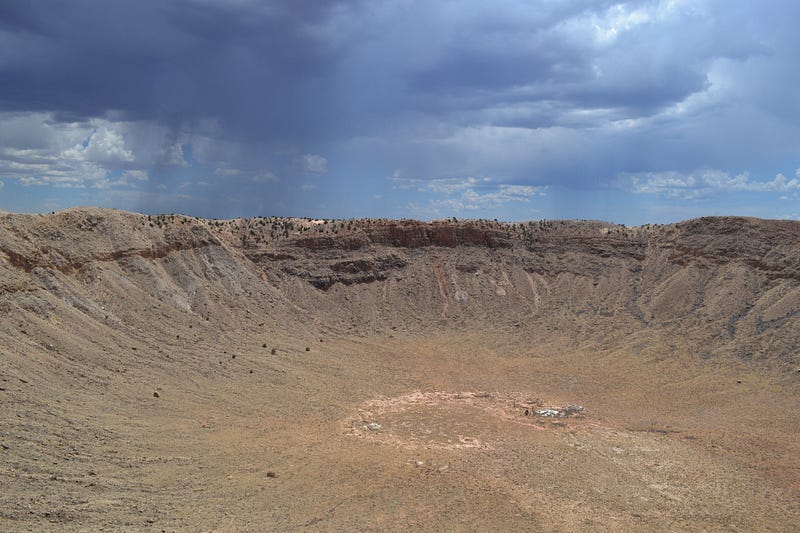
The Tunguska event, which occurred on June 30, 1908, in a remote area near the Tunguska River in Siberia, Russia, remains one of the most enigmatic and intriguing mysteries in scientific history. This event is characterized by a massive explosion that flattened an estimated 80 million trees over an area of 2,150 square kilometers. Despite its significance, the exact cause of the Tunguska event is still a subject of scientific debate, and various conspiracy theories have emerged over the years to explain the mysterious incident.
The Tunguska Event:
The Tunguska event is believed to have been caused by the airburst of a large meteoroid or comet entering Earth’s atmosphere. The explosion generated an estimated energy release equivalent to 10–15 megatons of TNT, which is hundreds of times more powerful than the atomic bomb dropped on Hiroshima in 1945. Eyewitness accounts reported a bright, blueish light in the sky, followed by a series of explosions and shockwaves that knocked people off their feet and shattered windows hundreds of kilometers away.
The most widely accepted hypothesis suggests that the object responsible for the Tunguska event was a stony asteroid or a comet, about 50–60 meters in diameter. As the object entered Earth’s atmosphere at a speed of about 27 kilometers per second, it rapidly disintegrated due to the intense heat generated by friction. The resulting explosion occurred several kilometers above the Earth’s surface, preventing a crater from forming.
Scientific Investigations:
In the aftermath of the Tunguska event, scientific investigations were hindered by the remote location and political turmoil in Russia at the time. The first scientific expedition to the site, led by Russian mineralogist Leonid Kulik in 1927, revealed a vast area of flattened trees radiating outward from the epicenter. However, due to the lack of a visible impact crater and the absence of large meteorite fragments, the exact nature of the object remained elusive.
Over the years, numerous expeditions have been conducted to study the Tunguska event. In the 1960s and 1970s, researchers found microscopic silicate and magnetite spheres in the soil around the blast area, providing evidence of an extraterrestrial origin. In 2013, a team of scientists discovered tiny fragments of material embedded in tree rings that dated back to the time of the event, supporting the hypothesis of a cosmic impact.
Conspiracy Theories:
Despite the scientific consensus surrounding the extraterrestrial origin of the Tunguska event, various conspiracy theories have emerged, challenging the official explanations. Some of the most notable conspiracy theories include:
1. Nikola Tesla’s Experiments:
One conspiracy theory suggests that the Tunguska event was not caused by a natural celestial object but was the result of an experiment conducted by the Serbian-American inventor Nikola Tesla. Proponents of this theory claim that Tesla was testing a wireless energy transmission system or a directed energy weapon that went awry, causing the massive explosion in Siberia. However, there is no credible evidence to support this claim, and it is widely considered pseudoscientific.
2. Black Hole or Antimatter:
Another speculative theory proposes that the Tunguska event was caused by the annihilation of a small black hole or an antimatter object colliding with Earth. This idea lacks empirical support and faces significant scientific challenges, as the annihilation of a black hole or antimatter object would produce distinct signatures that have not been observed.
3. Alien Spaceship or UFO:
A more sensational conspiracy theory suggests that the Tunguska event was the result of an extraterrestrial spacecraft crashing or deliberately exploding in Earth’s atmosphere. Some proponents claim that evidence of this theory is being suppressed by governments or secret organizations. However, there is no credible scientific basis for the involvement of aliens in the Tunguska event, and no verifiable evidence supports this hypothesis.
4. Time Travel or Parallel Universes:
Some fringe theories propose that the Tunguska event was caused by a time-traveling vehicle or an object from a parallel universe. These ideas are purely speculative and lack any empirical foundation within the framework of established scientific principles.
Scientific Responses to Conspiracy Theories:
The scientific community has consistently refuted the various conspiracy theories surrounding the Tunguska event, emphasizing the wealth of evidence supporting the impact hypothesis. The absence of a crater, the presence of microscopic particles associated with extraterrestrial material, and the consistent patterns of tree damage all align with the characteristics of an airburst caused by a celestial object.
Moreover, advancements in asteroid and comet tracking technology have allowed scientists to identify and monitor near-Earth objects (NEOs) that could pose a threat to our planet. Efforts such as NASA’s Near-Earth Object Observations (NEOO) program aim to track and characterize potentially hazardous asteroids, providing valuable data for planetary defense and risk mitigation.
Conclusion:
The Tunguska event remains a captivating scientific mystery that has sparked the imagination of researchers and conspiracy theorists alike. While the scientific community has converged on the consensus that the event was caused by the airburst of a celestial object, conspiracy theories persist, fueled by a combination of skepticism, misinformation, and a general fascination with the unknown.
It is crucial to approach these conspiracy theories with a critical mindset, recognizing the robust scientific evidence supporting the impact hypothesis. Continued research into cosmic threats, such as near-Earth objects, not only enhances our understanding of the universe but also contributes to efforts aimed at safeguarding our planet from potential future impacts. The Tunguska event serves as a reminder of the dynamic and sometimes unpredictable nature of our solar system, prompting ongoing scientific exploration and inquiry into the cosmos.
Sources
- britannica.com — What Is Known (and Not Known) About the Tunguska Event
- wnyc.org — Tunguska Event: The Truth is Out There
- sciencedirect.com — Airburst warning and response
- phys.org — Tunguska Event: New Details and Sensational Theory
- securityanddefence.pl — Near-Earth Objects (NEO) and other current space threats
- wikipedia.org — Near-Earth object