
The Myth of the Suffering Artist
The Truth Behind Pursuing My Ikigai
I thought I found my one purpose in life . . .
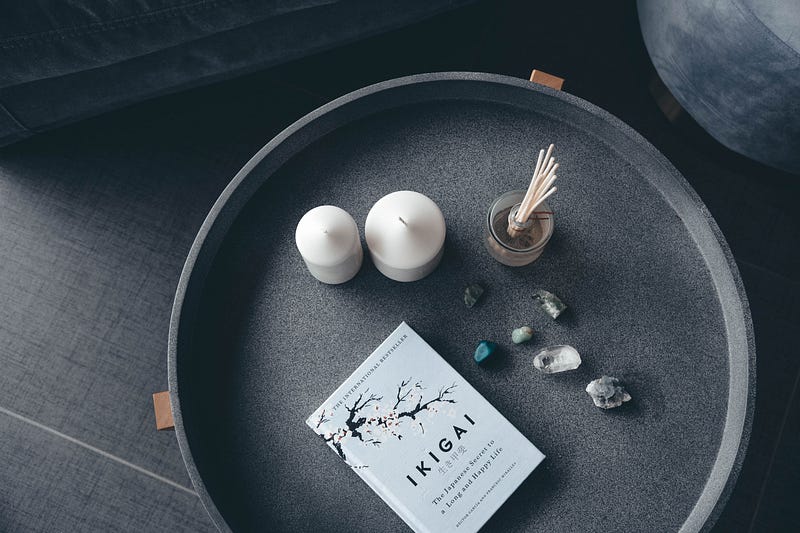
Roughly four years ago, I decided I wanted to be a musician, full-time. That was my ultimate goal in life. I wanted to be an opera singer, and that was that. It was my Ikigai (生き甲斐), my purpose, my ‘reason for being happy.’
And by extraction, I was convinced that anything else would only bring me misery.
Of course, this decision led to an unenviable amount of arguing within my family. My father wanted me to join him and the family business, and I wanted to let go of that and soar off into the world of classical music.
I then went on to do a full-time Masters in Opera, and here I am, in my third year of studies. Jobless, project-less, and grace à COVID-19, the future for the arts looks bleaker than ever — but I’m still chasing after my ikigai.
And every day I ask myself, is this really what I want?
When I decided to pursue this path, a friend of mine would always tell me, “Ah, you're so lucky, you found your purpose in life, your raison d’être! And you're so good at it. How wonderful life must be for you!”
She wished she had a purpose in life, she was just working at Facebook and Google (yes, that was sarcasm), and her life felt void of meaning.
I, on the other hand, look at her life and wonder if I made the right decision.
She’s constantly traveling, working with cool fun internationals, having a stable job, earning above and beyond the norm, supporting herself. Bonus, they have free A-Class food court at both of those companies — I can vouch for it, I've been a few times. (They even had oysters. Yes, they bribe their employees to work with amazing free food. To be honest, it would work on me.)
The way it works for most artists is like this: I apply for different gigs, competitions, productions, theatres, agents. I get a lot of rejections, maybe one or two things go well. They're usually pretty badly paid, but the opportunity is good and there’s some networking that could lead to future jobs. I’m always fluctuating between full-time work and no work at all (sometimes months). I never know in what country I’m going to be in two months time, or if I’ll have some important agent audition, so planning for the future is hard. Rather, impossible.
MY bonus? I usually have to pay to do this myself, through the money I earn doing something completely different.
She doesn't have to apply for jobs multiple times a year, she doesn't have to live through rejection after rejection, she doesn't have to motivate herself to work for months, without pay. She doesn’t have to always be in the status of the unknown, constantly in limbo, because she’s waiting for the decision of some old white dude (sorry white dudes) who doesn’t even give a shit.
She doesn't have people constantly telling her she isn't good enough.
The Question
The question I dread more than anything, the question that reiterates my failures, echos my fears, dampening any shred of self-esteem I once held: ‘Where are you singing right now?’
‘Where are you singing right now?’
‘Where are you singing right now? At the (insert-prestigious-sounding) Opera House?’
Or worse, ‘ARE you singing anywhere right now?’
Or, ‘Is that your full-time job?’ ‘Is that your job, or is that just like, for fun?’
It’s strange, people either assume I sing at the most incredible, competitive stage in the world, or that I'm crap and just sing for fun.
The most damaging to my already slightly damaged self-worth is when people start telling me that they're singers too (although I know quite well that they have full-time jobs as doctors or some other noble job, and they sing in the shower or for fun in an amateur group).
Then they proceed to give me tips and recommend websites where I could improve my singing, “for just 45 euros a month.” Gee, thanks.
Without even having heard me.
These conversations make me seriously dread situations where I need to meet new people and tell them what I do. I always try to weasel out of it by asking people about themselves. Most of the time, people love talking about themselves.
Otherwise, I have to play my biggest fan and talk about how I'm currently auditioning for opportunities. Or that I have something coming up in a few weeks. Or that I’m travelling to competitions.
And I always fear this translates to Ah, she's just a failure. She's just not good enough. She's just an amateur singer. She's just a nobody.
The Future
Life as an artist is hard because when you don’t have a specific job or project to work on, you are the only person that can keep motivating yourself. If you don't paint for a week, no one cares. If you don't sing, no one cares.
No one is waiting for you to do your art.
A month of self-motivation is fine. Two is okay. But when you get to 1 year, things look and feel pretty shitty.
During COVID-19 this becomes even harder because you really can't work with others. The scant opportunities dwindle to almost no opportunities, yet the supply of artists, the competition remains.
What am I doing about this? How do artists plan, during these crazy times?
I gave myself a deadline. It was one of the hardest conversations I’ve ever had.
My partner was asking me about the future and what my plan was, what my different possibilities were, and I told him: ‘future-me will deal with future-me problems.’
Eventually, he told me that I would need to give myself a deadline. The idea of just stopping was excruciatingly painful. I cried.
A lot.
It was like losing a limb. The part that I clung to, that I believed was my sole purpose in life. What would I do without my purpose?
My partner told me, “You can keep trying, but you can’t really keep trying for 8 years. Is that what you want?” Without having a stable career, I will constantly feel like I’m floating in the realm of the unknown. It just won’t work, and it can’t possibly be good for me.
That is what many artists do, but is that what I really want? Do I love opera and classical music so much?
The answer is, yes, I do. I love my purpose.
I love music. I love singing with people, pianists, orchestras, with conductors, and making music together. It feels like making love. We were once separate, but then through our music-making, we become one. We embody one piece of music, one thought, one note, one beat.
But I was gently reminded that I love other things too. There are plenty of fields that I could work in that would make me equally as happy and fulfilled, and possibly, help me earn a more stable income. And I’m sure it’s the same case for most people.
I love writing. I love yoga. I love languages. I love meditation. I love people. I love sharing knowledge. I love natural wine. I love cooking. I love tea. I love helping others. I love helping kids. I believe in all of these things. They’re good for the world.
And maybe that’s the truth about your ikigai. It changes. It’s not just one purpose that you will have to cling on to forever. It can be, but it doesn’t have to be. Ellen Degeneres didn’t start her own talk show until she was 40, and there are many examples of people who only started becoming successful ‘later’ in their life. You don’t have to find your ikigai at 24. You just have to stay open and listen. Listen to what your heart is telling you — as cheesy as that sounds —but also listen out for opportunities you never even knew existed.
There is always something waiting for you. That’s the good news for all my fellow struggling artists and non-artists.
Don’t get me wrong, I’m still trying. I still have auditions, concerts, competitions, recordings. I still practice for hours a day. But I’ve changed my mindset towards it. I no longer feel attached to the concept of having a single purpose. I no longer cry and feel down about a rejection. The idea that ‘without this one thing, my life would be meaningless, empty, devoid of happiness,’ can be quite damaging to my psychology, because if I do not succeed in that thing, where does that leave me? In emptiness.
And how are you supposed to create art in emptiness? As a singer, it does not work. Your larynx sits too high, feeling your discomfort and preparing for tears, and you can’t sing well when it’s in that position! I feel like we have all been duped about the suffering artist.
“Don’t be fooled by the myth of the suffering artist. A creative life includes pleasure, comfort, celebration, and long, peaceful exhales.” —(writer and award wining opera singer Corinne Winters aka Serve Your Muse)
Instead of focusing on my failures, and staying stuck to one ikigai, I’m extending my limbs of knowledge and staying open to all other opportunities that flow my way, whatever fields they may be.
Trees with branches are beautiful, why should humans feel they only have one branch to exist through?
I’m ready to grow and ready to learn new things. I’m accepting the fact that I might not be an opera singer. It’s still devastating, but I’m excited to see what other realms exist for me.
A new ikigai will find me, and I will find it, and should that moment come, I’ll be ready to accept it. I’ll be ready to say ‘Yes’.